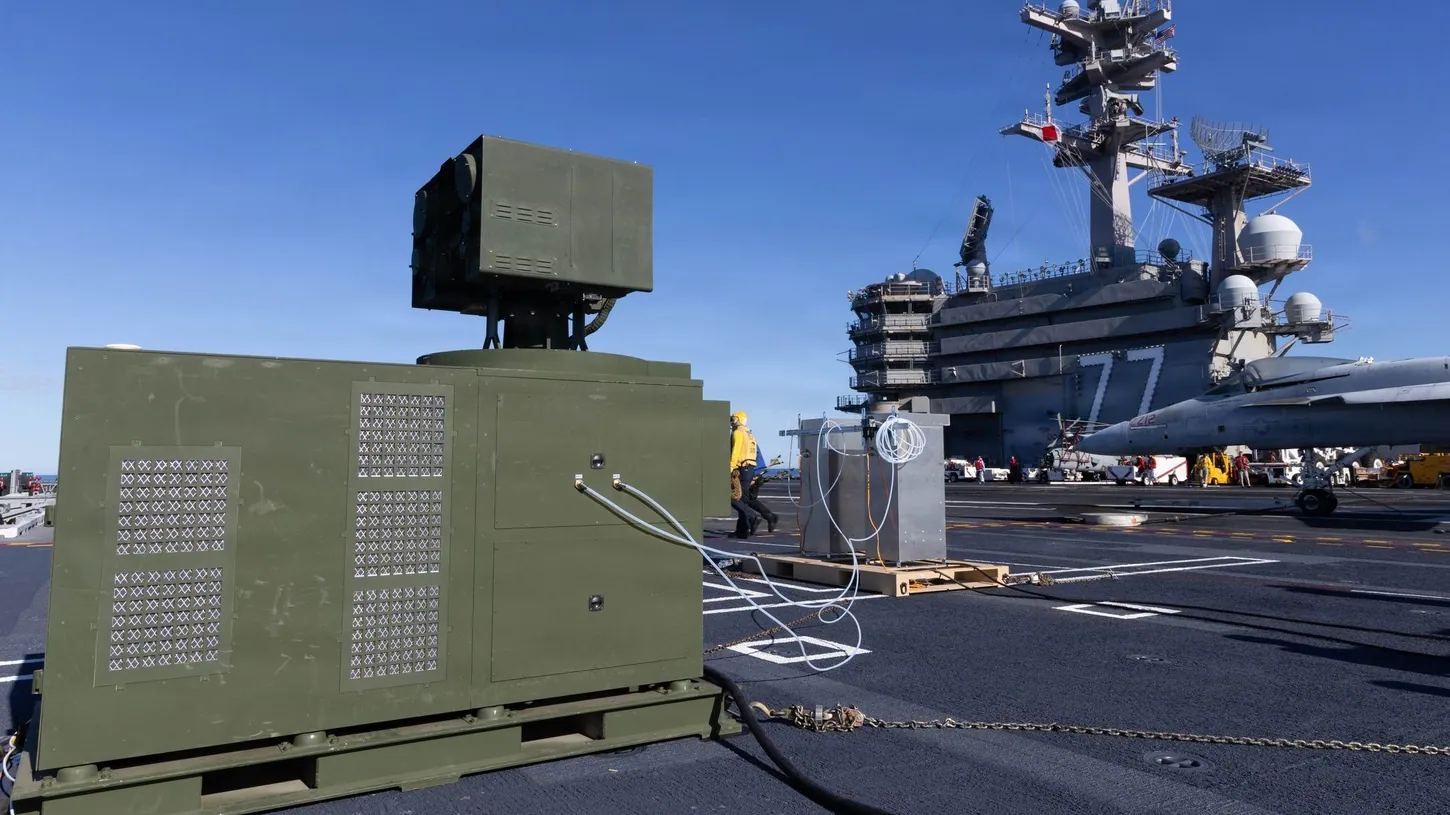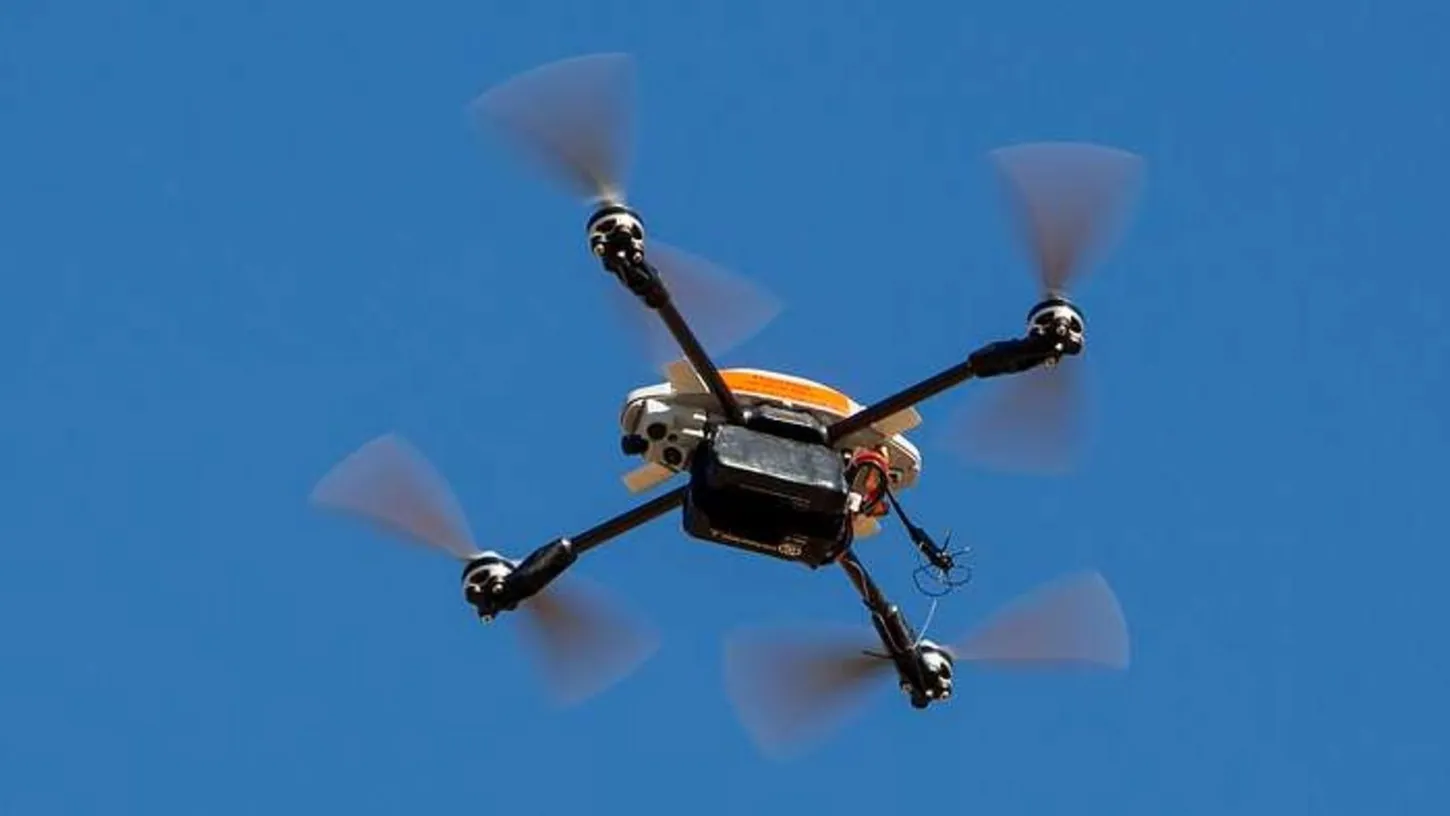
Engineers at Florida International University, Brookhaven National Laboratory and the University of Ruhuna in Sri Lanka have built a drone detector that transmits nothing and listens instead for the magnetic field leaking out of a drone’s motors. In outdoor tests it picked up small drones with up to 98.5% accuracy at ranges up to 49 feet (15 meters), and it told three drone models apart from each other and from an empty sky 83.5% of the time. FIU announced the results on October 23, eight months after the peer-reviewed paper appeared online in IEEE Sensors Journal.
FIU professor Arjuna Madanayake, who leads the group, puts the cost of developing the sensor at a few hundred dollars and says the team is now working with US industry on it.
Radar at an airport reaches for miles. This sensor reaches 49 feet, and the same team’s first version, a wooden frame wound with magnet wire, reached 16 feet in 2022.
Brushless Motors Leak A Magnetic Field That No Firmware Can Hide
Every multirotor flies on brushless DC motors, and each one spins a ring of rare-earth magnets past fixed coils. The steel shell around the magnets is meant to contain their field, but some leaks out, and that leakage pulses at the motor’s rotation rate and its multiples.
The team worked out the numbers on a DJI Phantom 3 in its 2022 paper. Its motors have 12 coils and 14 magnetic poles, so the leaked field pulses once per rotation and again at 14 times that rate, which puts the signal between a few hundred hertz and a few kilohertz. The electronic speed controller adds its own component at the 8 or 16 kHz switching frequency it uses to meter power to the motor. Those frequencies fall in the extremely low frequency band, which is where the method gets its name, ELF.
None of it depends on the drone talking to anyone. Radio-frequency detectors, DJI’s AeroScope among them, listen for the control and video link, and a drone flying a preloaded route in radio silence gives them nothing. The fiber-optic FPV drones DroneXL has followed since Ukraine fielded them carry no radio link at all. Their motors still spin, so they still leak.
“Every detection method currently in use gives something away,” Madanayake said in FIU’s announcement. Radar transmits, which tells an adversary where the sensor sits, and he says the ELF receiver could run continuously without the specialized support radar needs. Talon Avionics made the same silence argument for its acoustic SECTR system in April, and Madanayake’s answer to that approach is that acoustic systems get overwhelmed by background noise.
A Loop Antenna And A VGG16 Network Told Three Drones Apart 83.5% Of The Time
The receiver is a circular loop antenna 3.3 feet (1 meter) across, a custom analog front end and a Texas Instruments C2000 microcontroller sampling 3.46 million times a second. Software computes a spectral correlation function, which pulls repeating structure out of a noisy signal, and renders it as an image.
A VGG16 convolutional neural network, an image-recognition architecture from 2014, then classifies those images into four classes, three drone types plus no drone. The smallest of the three drones dragged the classification score down because its motors leak less field. The abstract does not name the three commercial drones. Dilshara Herath of the University of Ruhuna, the paper’s first author, uploaded the raw recordings and the processed images to IEEE DataPort in November 2025 as a subscription dataset.
The paper pitches the method as surveillance for critical infrastructure in places where transmitting is impractical or barred. Madanayake says knowing the type of drone matters because payloads and threat profiles differ. FIU’s release sets the work against the Department of War’s request for $74 billion for drone and counter-drone technologies in its fiscal 2027 budget.
The Same Team Detected A Phantom 3 With A Wooden Frame In 2022
Madanayake and Soumyajit Mandal, then at Case Western Reserve University, presented the first version at the National Radio Science Meeting in January 2022. Their magnetometer was 160 turns of 18-gauge magnet wire on a square wooden frame one meter on a side, feeding a JFET amplifier.
It detected a Phantom 3 at about 16 feet (5 meters) with no machine learning at all, and the spectrogram showed the rotor turning at 175 Hz, or 10,500 rpm, with the 14th harmonic clearly visible. The National Science Foundation part-funded that work under award CCSS-1904382. The 2026 paper triples the range and adds the classifier.
The next step is already written. Mandal, now at Brookhaven, hosts the code repository for a paper by R. Hapuarachchi and colleagues titled “Spatial ELF Sensing of Small UAS: Measured Signatures, Array Localization, and Vector Receiver Design,” submitted to IEEE Access. The repository describes arrays of loop receivers, four-loop grid recordings, locating the drone within the grid and a link-budget model of detection range for four drone classes. The paper is unreviewed and unpublished.
DroneXL’s Take
Forty-nine feet sounds like a toy until you look at what the sensor is listening to. The RF and acoustic sensors DroneXL has covered this year detect a choice the drone made, its radio link or its noise. This one detects the motor, and no firmware update switches that off. An RF sensor has nothing to hear from a fiber-optic drone, and the physics here does not care about the spool. My money is on the array paper rather than on a longer-range single loop, because a grid of cheap loops around a prison yard or a substation that says where the drone is would be worth more than one loop that hears it from 200 feet. Hobbyists are in this picture as well. A sub-250 gram drone flown recreationally registers nothing with the FAA and still shows up on a loop antenna, even if the paper’s smallest drone was the hardest one to name.
Sources: IEEE Sensors Journal, FIU News, USNC-URSI National Radio Science Meeting 2022, IEEE DataPort, GitHub
DroneXL uses automated tools to support research and source retrieval. All reporting and editorial perspectives are by Haye Kesteloo. Read our editorial standards.