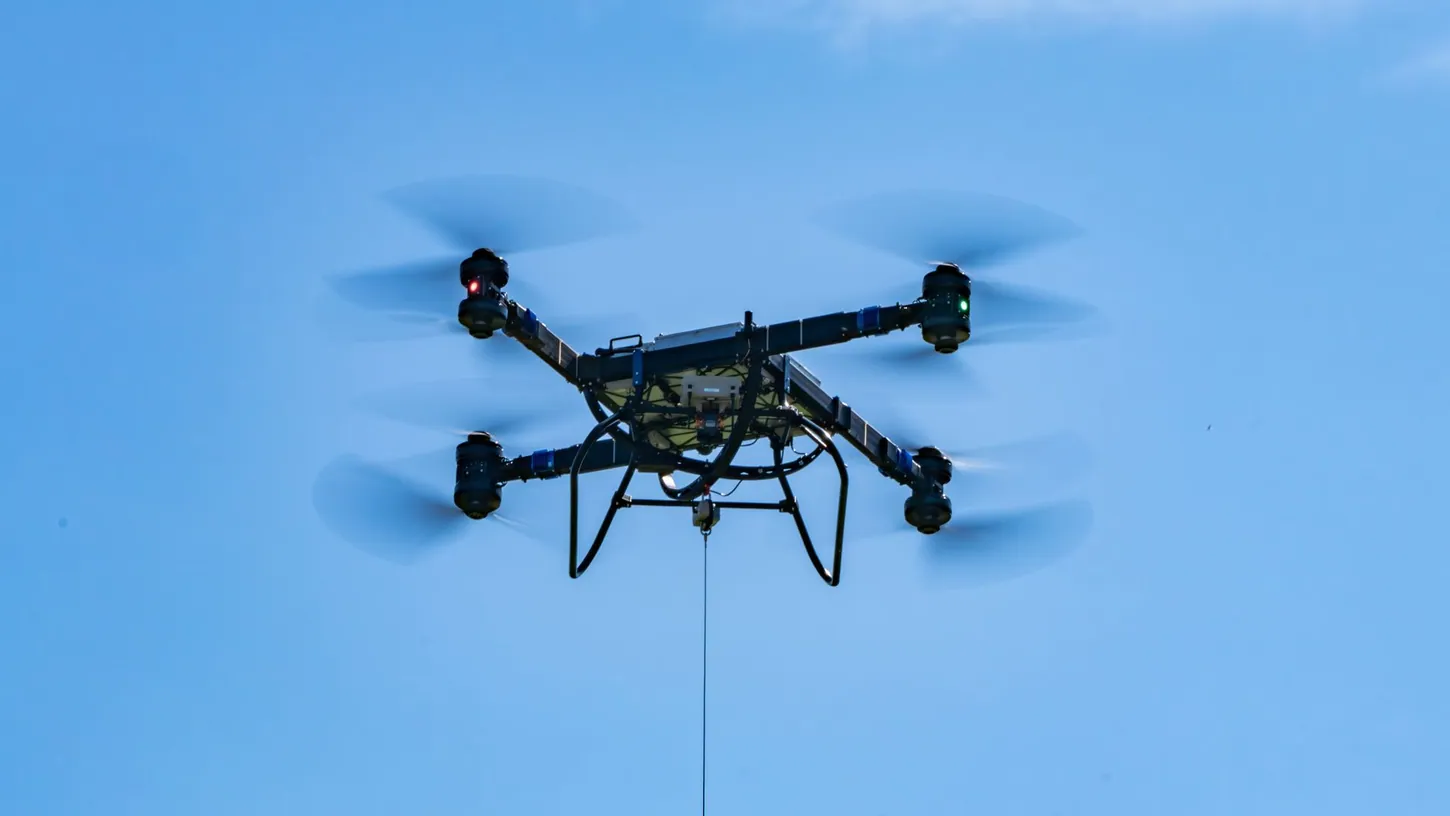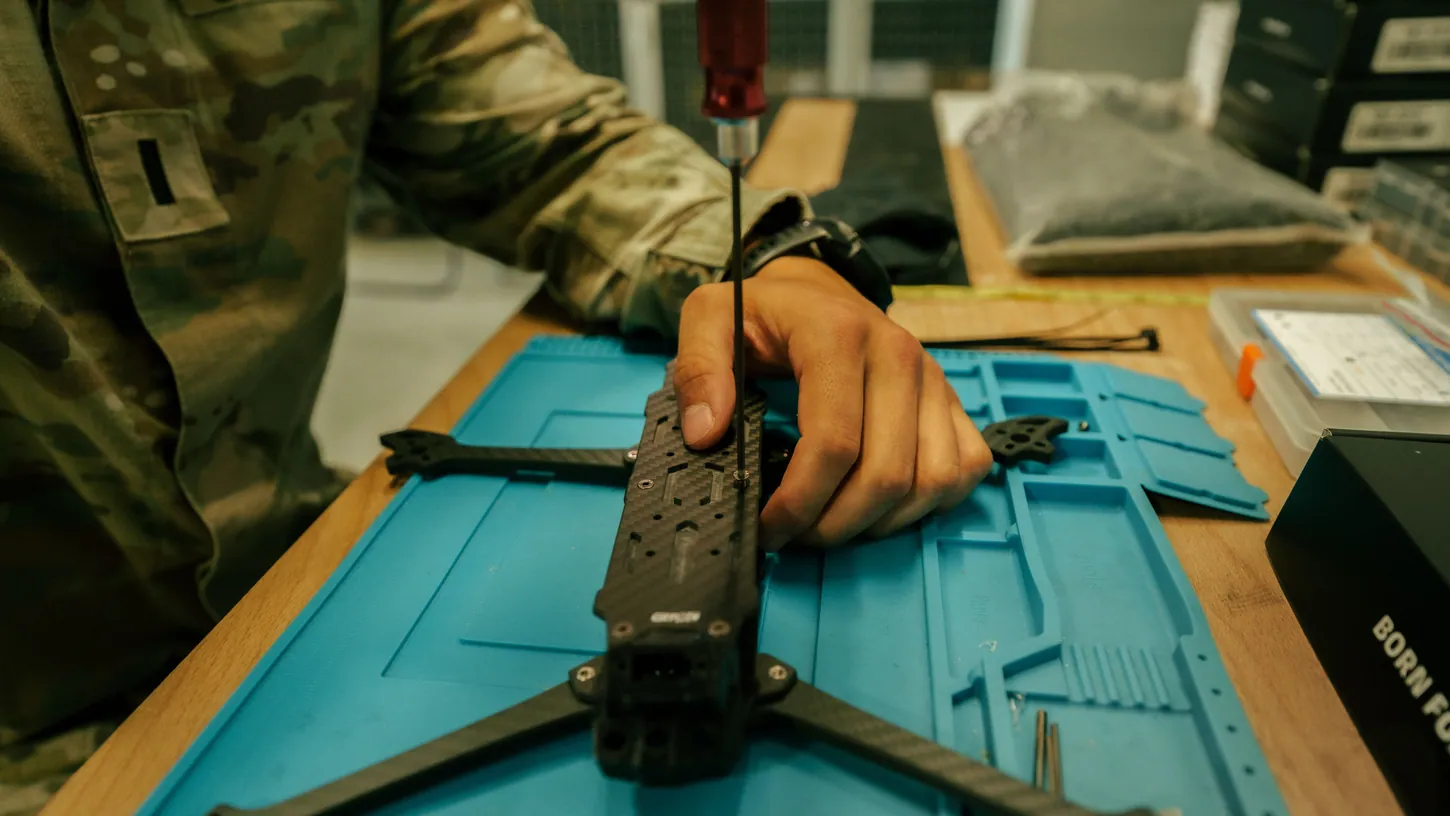
US drone makers have a supply gap in a part that appears on no critical components list, according to Accu Components, a British fastener supplier that opened its first US warehouse in Indianapolis this year. Lead engineer Patrick Faulkner says small drones are held together by metric screws, and the US fastener trade is largely geared toward imperial sizes.
Accu’s public relations agency sent Faulkner’s commentary to DroneXL on November 16 and followed up after our report on the FCC’s conditional approvals for 23 drone makers. The FCC says the 71 companies it has cleared, router and robot makers among them, have pledged $4.4 billion to build in the United States. Faulkner argues that assembly is the last step in a long chain. Accu sells the screws he is talking about, and it says its sales to drone and unmanned-systems companies more than tripled between its 2023 and 2025 financial years.
Screws are not among the drone parts the Federal Communications Commission (FCC) put on its Covered List on December 22, 2025.
Accu Says a Missing Screw Can Stop a Drone Line Like a Missing Motor
Faulkner names the hardware: M2 and M3 screws in motor mounts, and M4 and M5 bolts in the frame. He describes a risk to production and does not name a drone maker whose line has stopped for want of a fastener. Accu’s evidence is its own order book.
In his words, “a missing screw stops a line the same way a missing motor does.” His advice to manufacturers is to hold qualified stock close to the assembly line, to keep two or three trusted suppliers in the US or in allied countries, and to design around standard parts that more than one supplier can make.
The government’s lists look elsewhere. The FCC’s December order defined critical components as data links, communications systems, flight controllers, ground stations, navigation systems, sensors and cameras, batteries and motors. The Pentagon’s Drone Dominance Program had received 13,440 of the 22,320 drones in its first base orders by August 25, about 60%, and three of the 11 winning companies had delivered in full. Inside Unmanned Systems called a shortage of compliant sensors, motors, batteries, chips, speed controllers and navigation systems the likely culprit. Its report does not mention fasteners. Neros says the program later moved 800 undelivered drones to it.
Faulkner points to Ukraine, which he says scaled up through many suppliers and no single giant factory. Ukrainian drones were built almost entirely from Chinese components in 2022, and by 2025 the Chinese share was about 38%, according to Ukrainian Council of Defense Industry and Snake Island Institute data reported by Kyiv Post from The New York Times.
Accu Set Up a US Business After Its American Customers Grew Nearly 80%
Accu says the number of US customers ordering from it grew almost 80% between its 2023 and 2025 financial years, and it set up a US business, Accu Inc., in May 2026 before opening the Indianapolis warehouse. The company gave no dollar figures for any of this.
Faulkner says a typical order line from drone and unmanned-systems customers is now about three times Accu’s average, which he reads as a sign that many of them have moved from prototypes to production. About four-fifths of what they spend goes on stainless steel fasteners, mostly socket and Torx drive screws. Custom-made parts are the second-largest category.
Accu is based in Huddersfield, England, and was founded in 2012. Its Indianapolis site is a 10,000-square-foot warehouse, according to Distribution Strategy Group, which reported the opening on September 29. Faulkner says it shortens delivery times for US customers. The commentary does not say where the screws on those shelves are made.
DroneXL’s Take
Faulkner works for a company that sells screws, and his commentary arrived through a public relations agency. I still think he is right about the weak spot. The FCC counts pledged dollars and jobs, and the Pentagon counts delivered drones. Neither number shows whether a factory can get every part on its bill of materials from more than one place.
A screw carries no data and poses no security risk, so I don’t want it on any list. But a drone assembled in the United States with motors from one country and fasteners shipped in from another is assembled here, and that is a smaller claim than made here. I suspect most of the onshoring pledges will buy final assembly. Accu’s own answer to the screw problem is a warehouse in Indiana stocked by a British distributor, which is a faster supply line and still an imported one unless the screws are American.
Sources: Accu Components (commentary from lead engineer Patrick Faulkner, provided to DroneXL), Inside Unmanned Systems, Kyiv Post, Distribution Strategy Group
DroneXL uses automated tools to support research and source retrieval. All reporting and editorial perspectives are by Haye Kesteloo. Read our editorial standards.
Advertise with DroneXLYour company hereReach 200,000+ drone readers a month with a sponsored article, a banner on your beat, or a partnership.See the options →