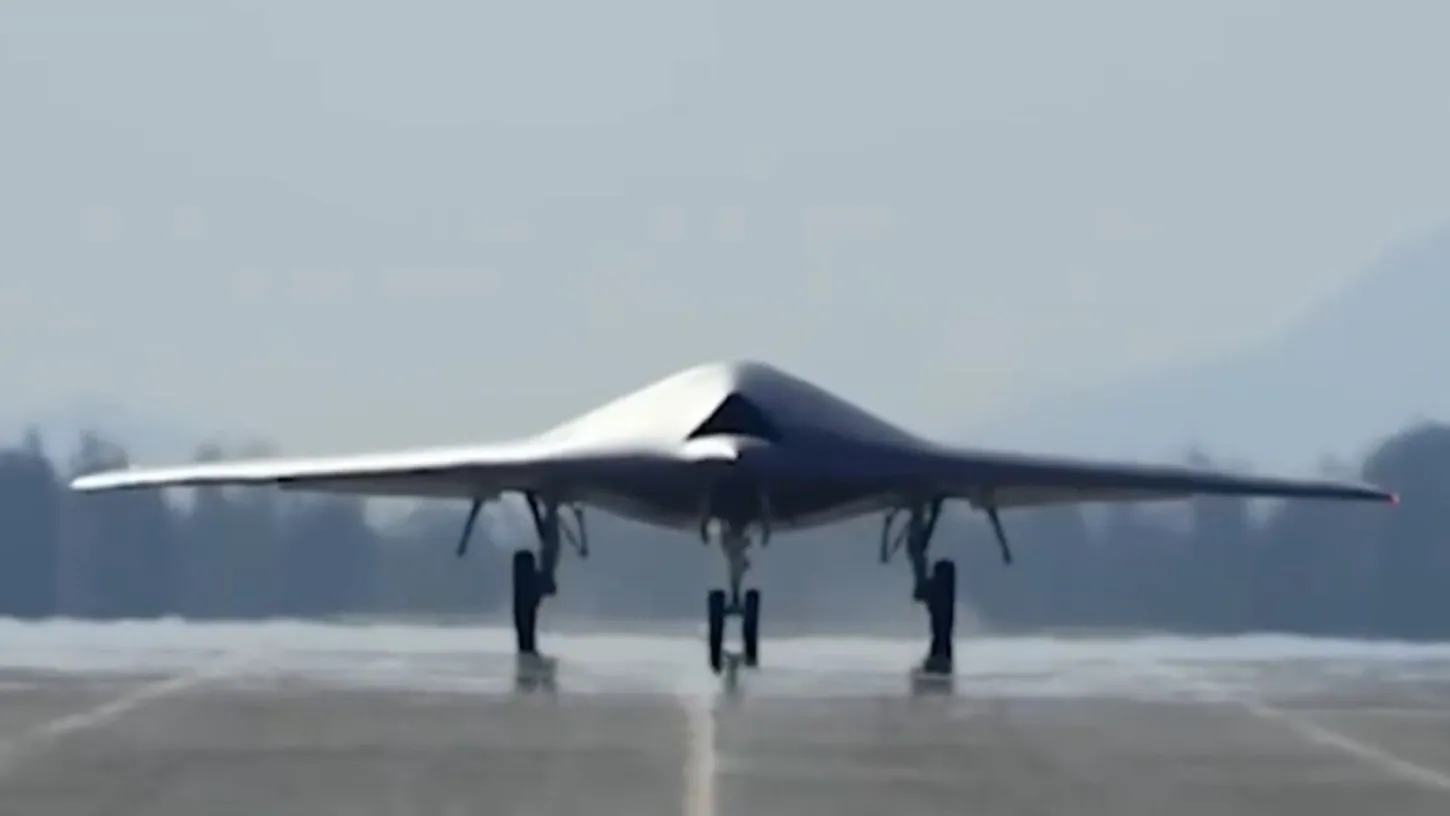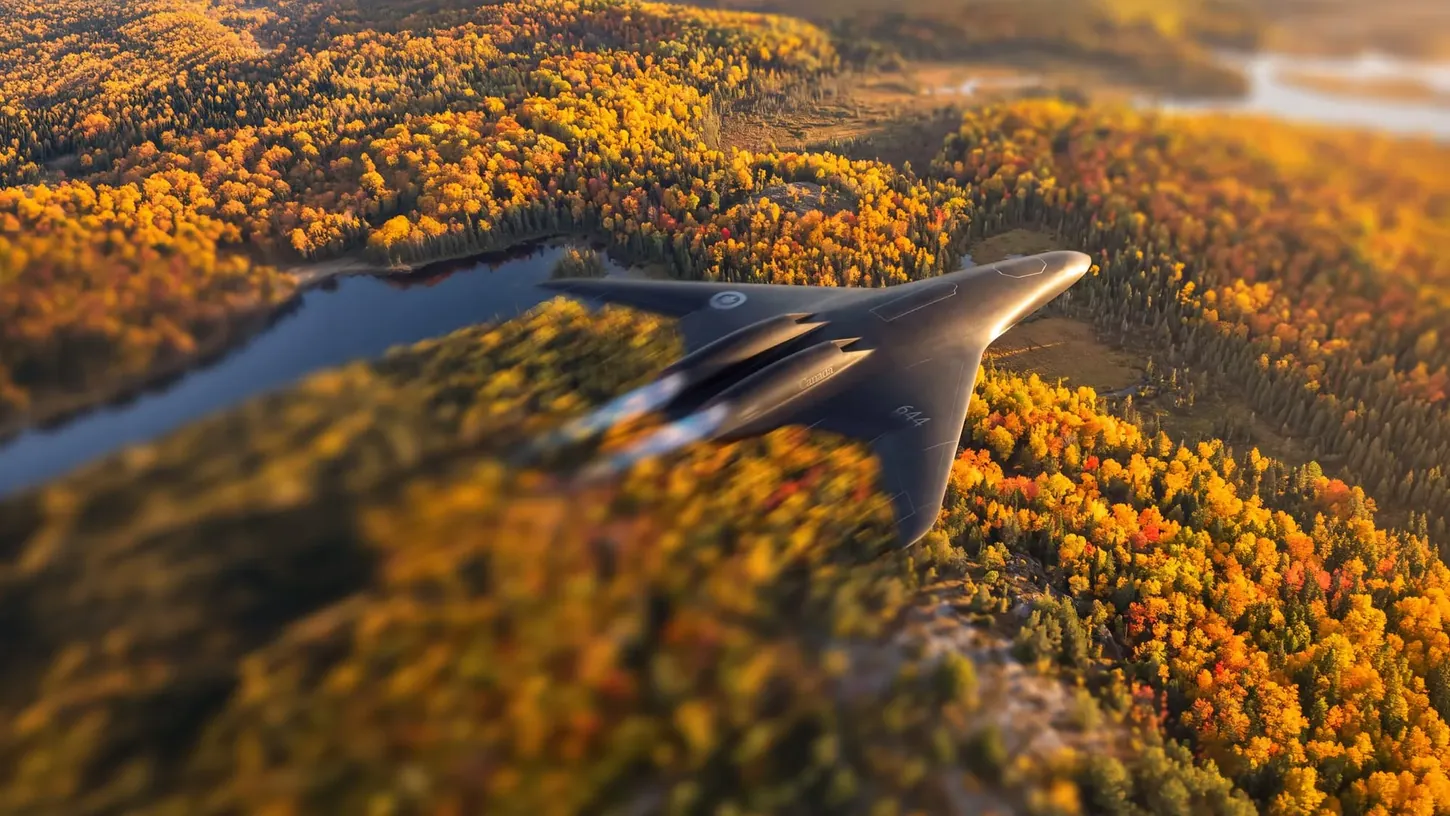
Dominion Dynamics has signed 12 aerospace and defense companies to help build Scout, an uncrewed combat aircraft meant to fly alongside Canada’s crewed fighter jets. The Ottawa company announced the group on November 20, 2026, three days after it named RTX’s Pratt & Whitney Canada as the engine supplier in a release DroneXL ran on the Wire.
Dominion was founded in 2025 by Eliot Pence, who led Anduril’s international team from 2018 to 2022. It calls Scout Canada’s first Autonomous Collaborative Platform, the same class of aircraft the US Air Force buys as Collaborative Combat Aircraft.
Dominion put out three Scout releases last week. They name an engine, a satellite link and a dozen suppliers, and none of them names a buyer for the aircraft.
Ten of the Twelve Partners Have No Stated Role
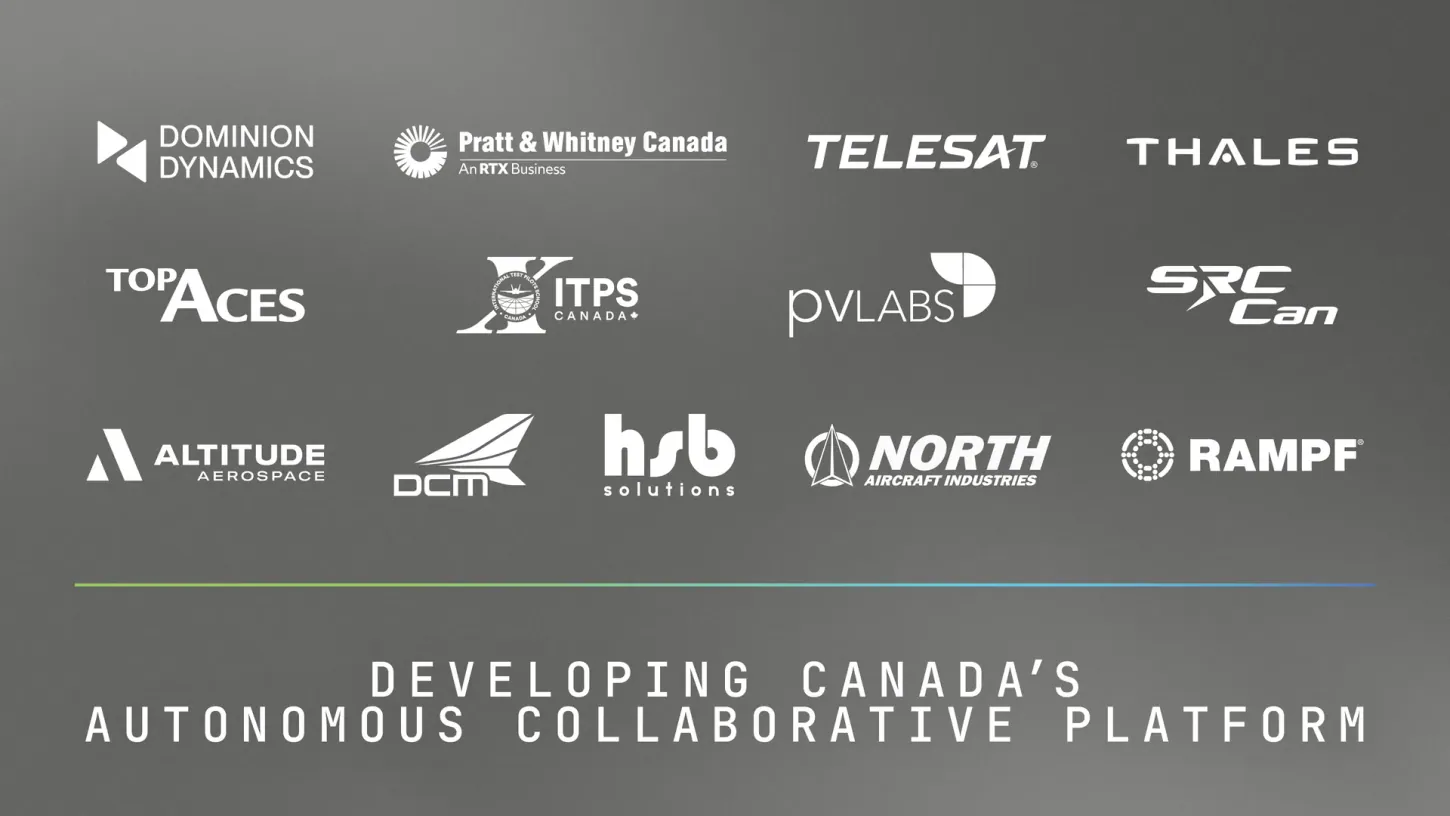
The partners are Pratt & Whitney Canada, Telesat, Thales Canada, Top Aces, ITPS Canada, PV Labs, SRC Can, Altitude Aerospace, Groupe DCM, HSB Solutions, North Aircraft Industries and RAMPF Composite Solutions. Only the first two have a disclosed job. Dominion has not said what the others will build.
The release describes the group’s skills collectively: structures and composites, landing gear, avionics and flight controls, engines, sensors, secure communications, flight testing, training and maintenance. Dominion adds that specialized suppliers from other NATO countries will complement the Canadian base. “The next generation of military aircraft will evolve at the speed of software,” Pence said.
Dominion sells Scout as a sovereign aircraft, and two of the best-known partners are Canadian arms of foreign groups. Pratt & Whitney Canada belongs to RTX in the United States, which the release states, and Thales Canada to Thales in France. Dominion does not hide that. Its Scout page says the aircraft is designed around components from Canadian and NATO suppliers and that its mission autonomy software is free of ITAR, the US export control regime. In August the company said it had built a non-ITAR supply chain for aerospace and autonomy.
The Engine Is the Only Hardware Dominion Has Named
Scout’s airframe is being designed around a Canadian-built PW300-series turbofan. Pratt & Whitney Canada lists that business-jet engine family at 4,700 to 8,000 pounds of thrust across 13 models. Dominion has not said which model it picked, and it has published no dimensions or performance figures for the aircraft.
The PW300 powers business jets such as the Cessna Citation Latitude and the Dassault Falcon 7X, according to Pratt & Whitney’s product page. The engine release puts production at more than 6,000 engines and 33 million flight hours. Anduril made the same kind of choice for Fury, which uses a commercial business jet engine chosen in part because the supply chain and maintenance network already exist. Scott McElvaine of Pratt & Whitney Canada gave a similar reason in the engine release: “we can deliver an innovative product more efficiently.”
The satellite link is further out. Dominion and Telesat announced on November 19 a C$2.2 million project (about US$1.6 million), part-funded by Canada’s National Research Council, to develop antennas for Telesat’s Lightspeed constellation. Dominion plans two prototype terminals after that first phase. One is small enough for a soldier to carry and the other is built for uncrewed aircraft, Scout included. Telesat expects Lightspeed to enter high-latitude commercial service around the end of the first quarter of 2028.
Dominion Funds Scout With Private Money and Canada Has Not Ordered It
Dominion committed an initial C$50 million (about US$36 million) to Scout in March 2026 and closed a C$139 million Series A in June, taking its total raised to C$169 million. Its online newsroom lists no government contract for the aircraft.
Public money has reached the edges of the program. The National Research Council supported Dominion’s AuraSim simulator and is part-funding the Telesat terminals, and the Telesat release calls the Canadian Armed Forces a potential first customer for those terminals. In September Dominion said it had qualified as a supplier in four streams of Canada’s Defence Drone Initiative marketplace, which makes it eligible to bid on future contracts.
In an August 14 update, Dominion said it was on track for first flight within 24 to 30 months. Counted from that date, the window runs from August 2028 to February 2029. The same update said the company had held dozens of briefings with government officials to line up with what it called emerging Canadian Armed Forces requirements.
Ottawa is spending on drones. In March it announced more than C$900 million for drone and aerospace technology, built around a Drone Innovation Center and a Bombardier test aircraft. As we reported it, that plan funds research capacity and names no combat drone program. Dominion’s own March release said Canada had no equivalent to the American and Australian wingman programs.
DroneXL’s Take
Anduril and General Atomics flew their wingmen against Air Force contracts both companies won in April 2024. Dominion is trying it in the other order, with venture money and no program to sell into. Pence knows that bet from his Anduril years, and my read is that it is the right one for a country that would otherwise buy this aircraft from the United States or Australia. The supplier list tells us less than it looks like, because Dominion has disclosed no contract values or work shares and ten of the 12 companies have no stated job. I’d watch Ottawa more than Dominion. Scout needs the Royal Canadian Air Force to write a requirement before that 2028 first flight window opens, because C$169 million does not carry a jet aircraft into production.
Source: Dominion Dynamics, AeroTime
DroneXL uses automated tools to support research and source retrieval. All reporting and editorial perspectives are by Haye Kesteloo. Read our editorial standards.
Advertise with DroneXLYour company hereReach 200,000+ drone readers a month with a sponsored article, a banner on your beat, or a partnership.See the options →