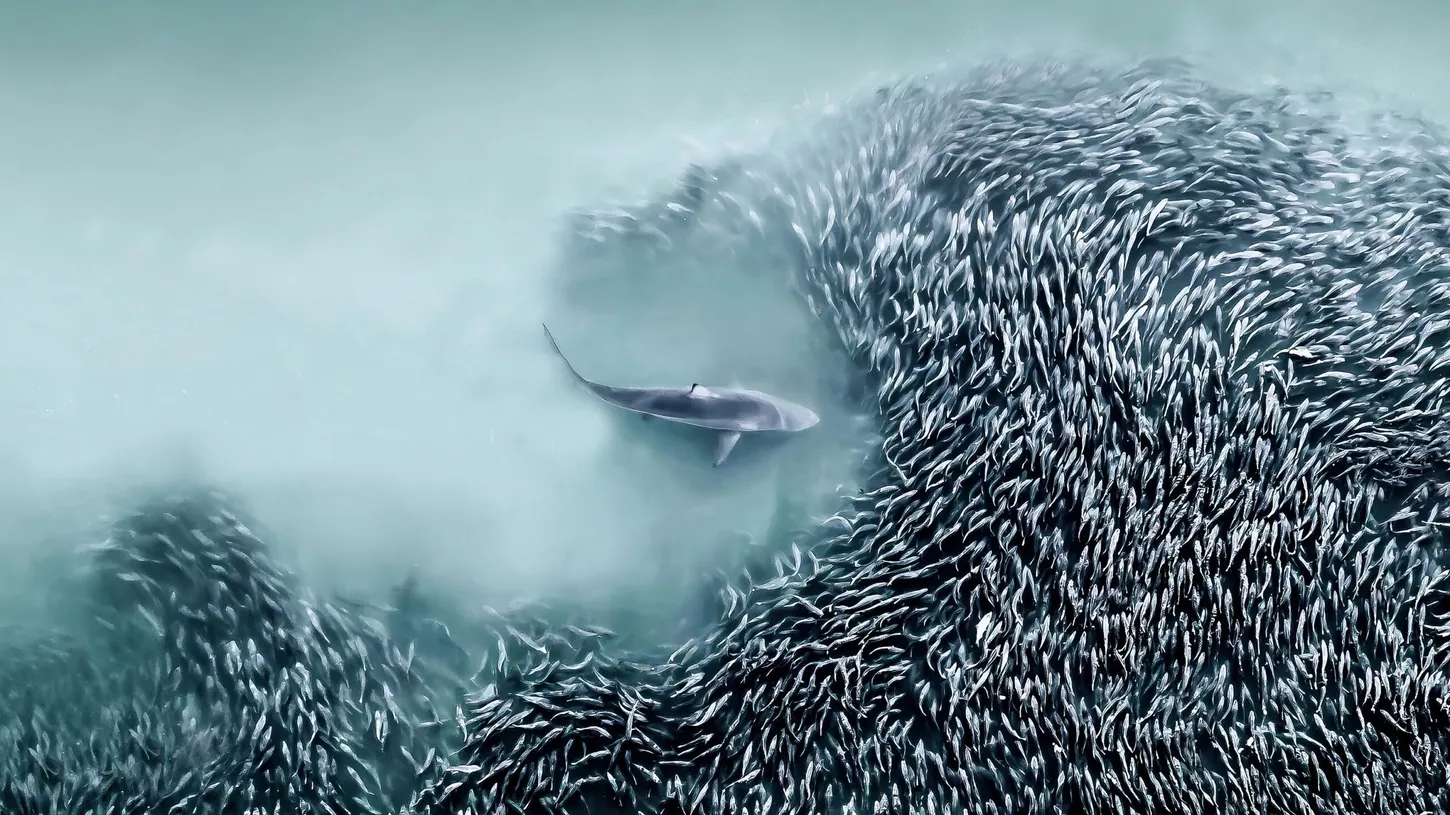
Southampton drone photographer Joanna Steidle has taken second place in Nature at the 2026 Global Lens Photography Awards with “The Gateway,” a top-down drone photograph of a spinner shark hunting in a school of Atlantic menhaden off Southampton, New York. The awards published their results on November 20 from Saint-Étienne, France.
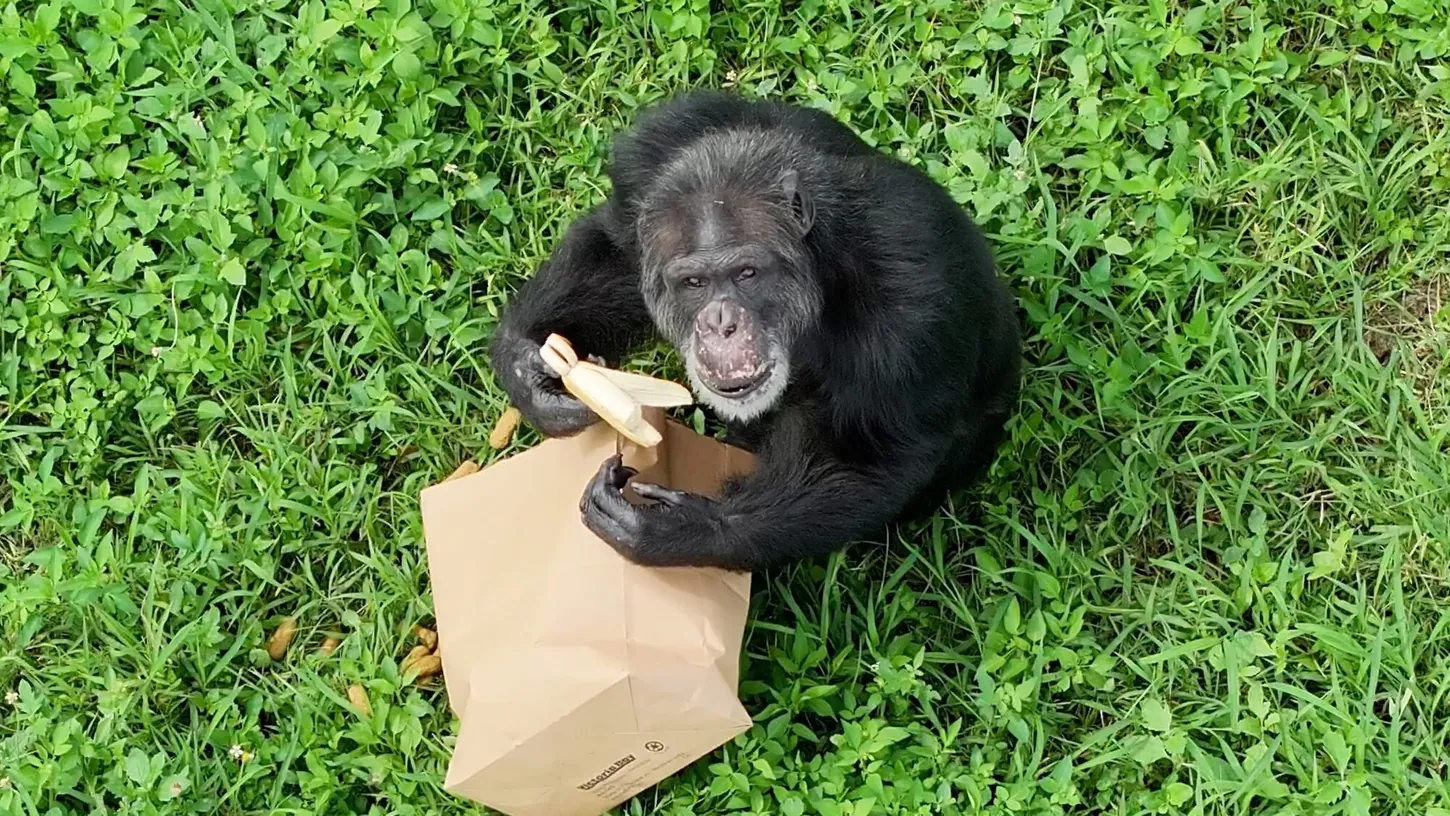
A second Steidle photograph, “Another World,” earned an Honorable Mention in the same category. That is the cownose ray picture that won her a SkyPixel Top 10 award last year, with a prize drone that US Customs never released. DJI’s replacement reached her in April.
Steidle followed the shark with her drone for about 20 minutes before she took the winning frame.
Steidle Held The Drone Over The Shark Until The Water Showed Both Animals
Steidle spent those 20 minutes waiting for the shark and the menhaden to come close to the surface at the same moment. In her entry statement she says that is where the water shows both most clearly, and she wanted them together in one composition.
The ocean helped. A westerly swell had just passed, which she says often leaves the water much clearer than normal. The wind came from the south and the sea was calm, and a bright sun in a clear sky lit the school from above. “Conditions could not have been more perfect,” she wrote.
She also explains why the flight was possible at all. Menhaden draw large predators close to the beach, and that let her reach the shark and still keep the drone in visual line of sight, which FAA rules require. The statement does not say which drone she flew.
Steidle describes herself as a drone pilot, artist and conservationist. In this statement she writes that she has spent six summers documenting a sharp rise and now a decline in marine life off the New York coast.
Global Lens Placed The Drone Photo Behind Only An Alaska Bear Series
The Gateway finished second in Nature to Samir Kamat’s On Shifting Ground, ten photographs of coastal brown bears in Alaska’s Lake Clark National Park. Kamat’s series also won Photographer of the Year, which carries €1,000 and a trophy. Petr Polách placed third with a diver in a flooded Yucatán cave.
Her entry page also lists second place in the Fine Art wildlife subcategory and an Editor’s Choice. This is not her first major prize. In July 2025 she was named the first International Aerial Photographer of the Year, for a portfolio that included spinner sharks and humpback whales off Long Island.
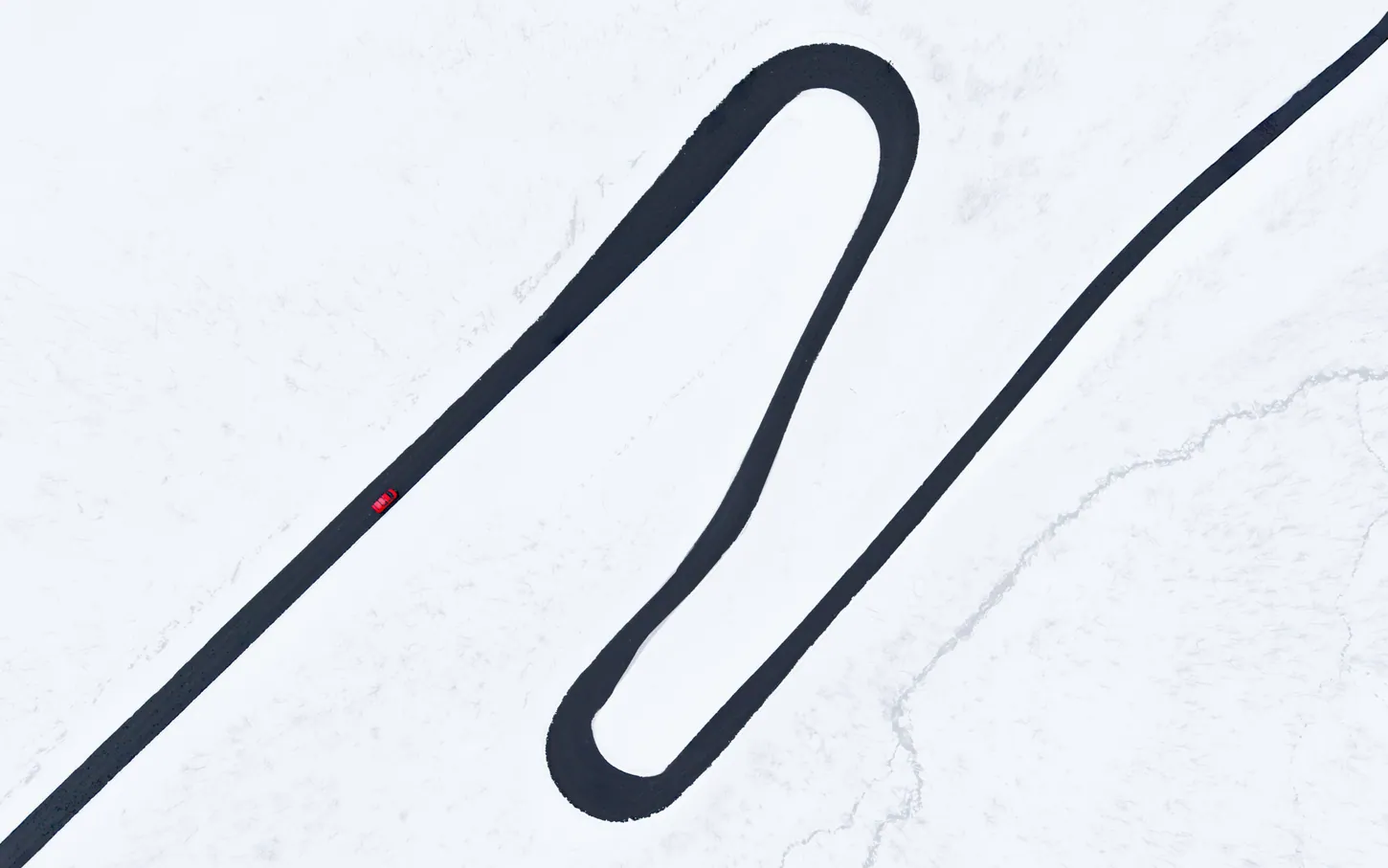
The awards cover nine main categories, according to the official results, and one of the nine went to another picture taken from straight overhead. Xu Dong won Minimalist with “The Arctic Pulse,” a top-down aerial of a red car on a mountain road on Senja, Norway.
DroneXL’s Take
Joanna is a friend of DroneXL, and we have covered her work since 2023, so read this with that in mind. I still think the wait is what other pilots should copy. By her own account she kept the drone where she could see it and let the shark and the fish come up to the surface on their own. When we wrote about her humpback whale photo in April 2025, she said she shot from far away to keep the NOAA distances. That patience got her a podium place. Pilots who buzz wildlife for a quick clip get nothing like it, and they give regulators a reason to close beaches to drones.
Source: Global Lens Photography Awards
DroneXL uses automated tools to support research and source retrieval. All reporting and editorial perspectives are by Haye Kesteloo. Read our editorial standards.
Advertise with DroneXLYour company hereReach 200,000+ drone readers a month with a sponsored article, a banner on your beat, or a partnership.See the options →