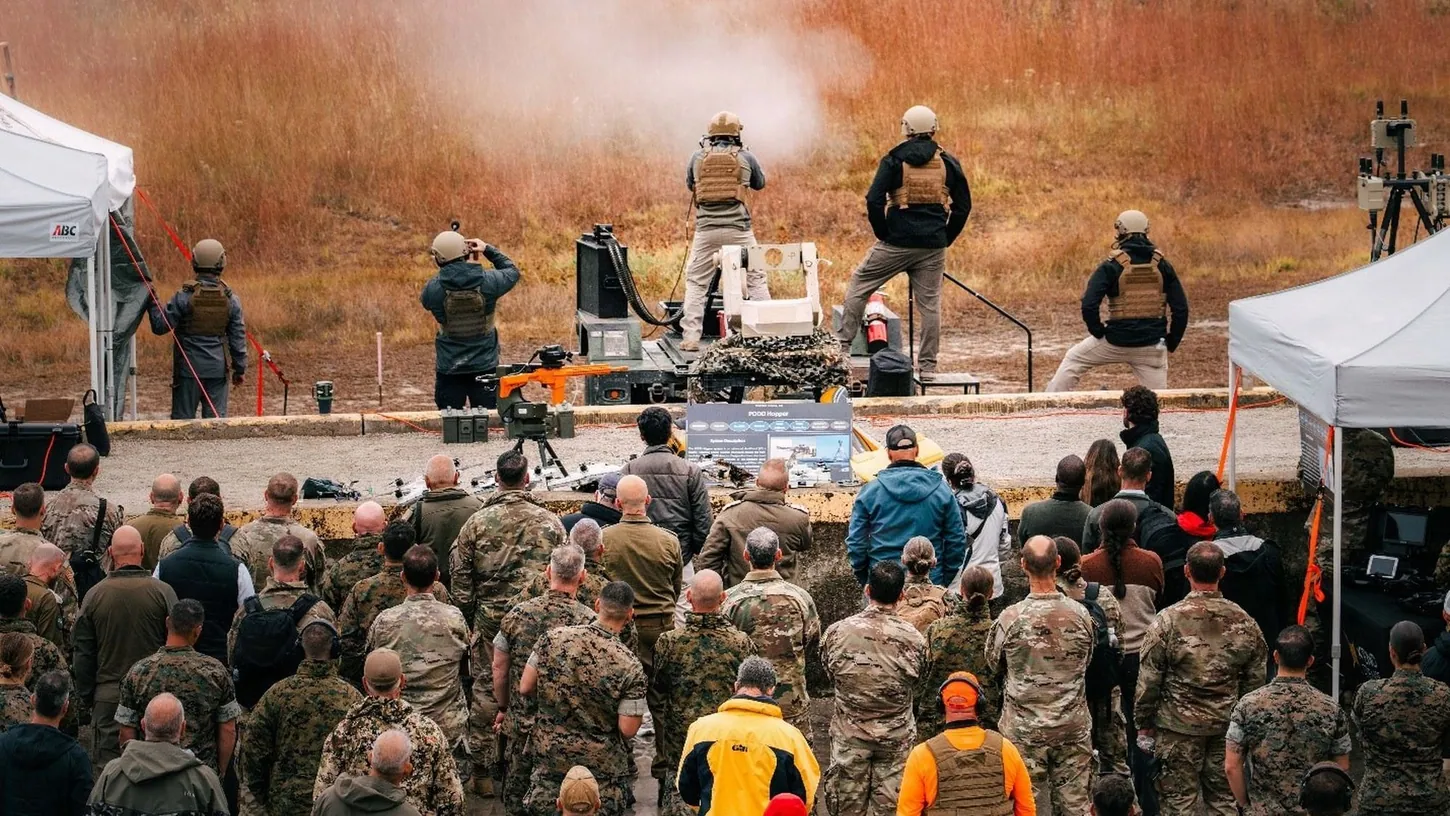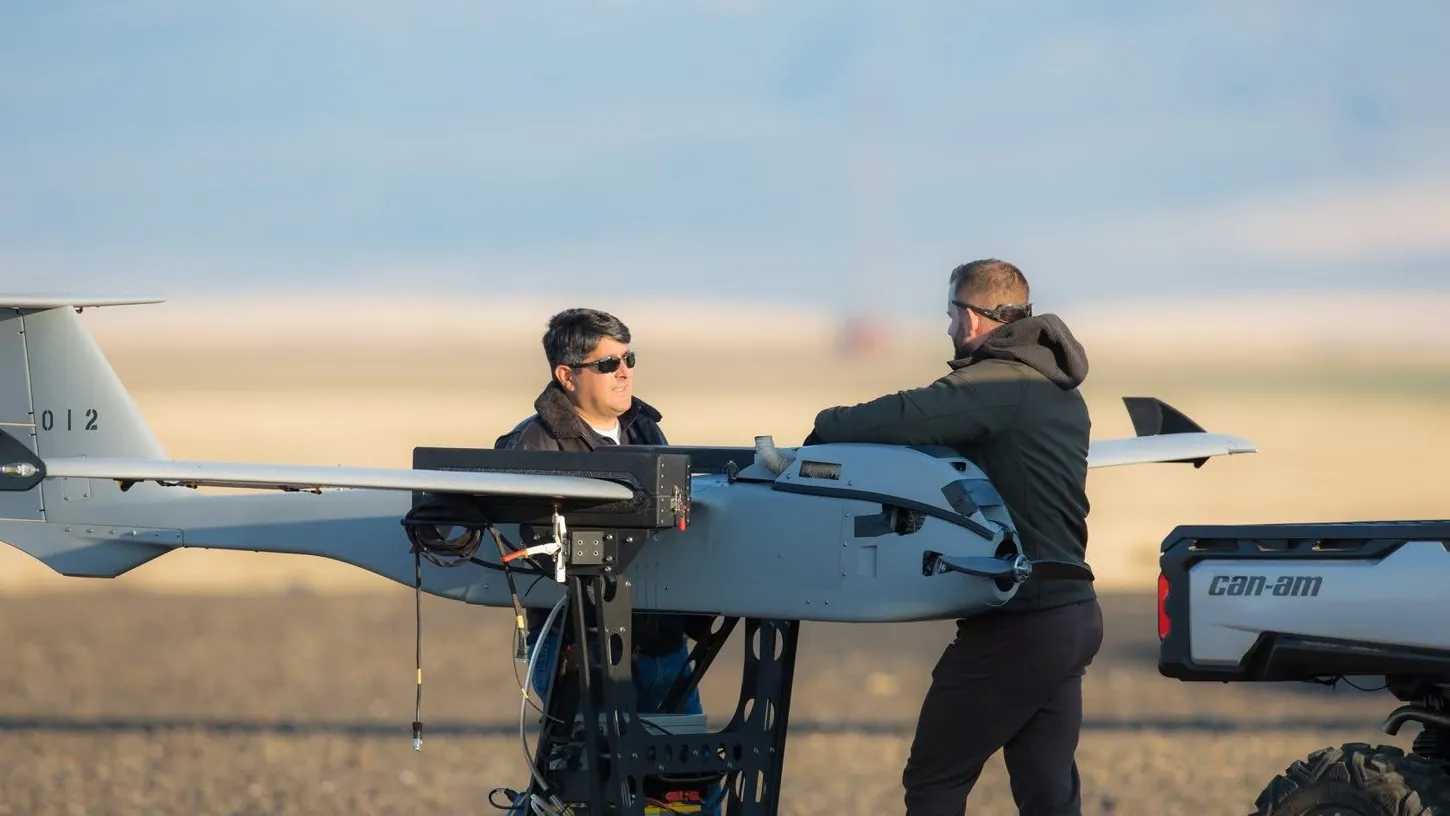
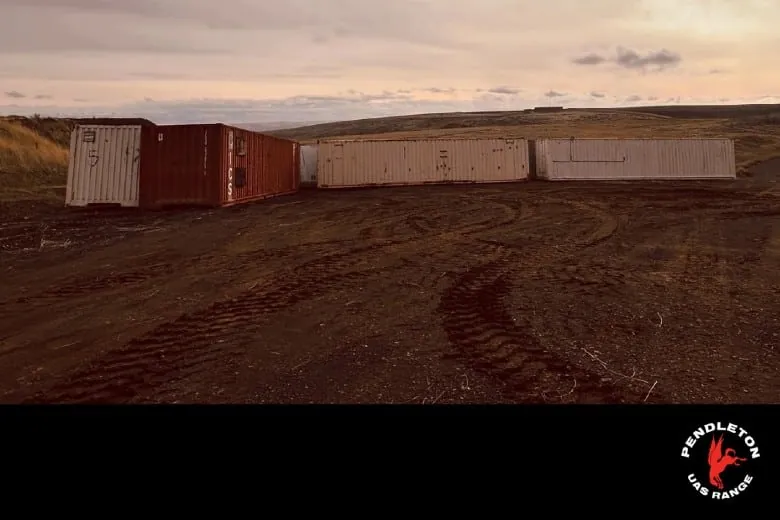
The Pendleton UAS Range in eastern Oregon has started building an Urban Operations Test & Training Facility, a mock town made of shipping containers where drones and ground robots can be flown and driven among walls and obstacles. The range, which the city of Pendleton owns and operates, has taken delivery of the first eight 40-foot containers.
Elkhorn Media Group reported the range’s announcement on November 25. As reported, it gives no cost, no funding source and no opening date, and says more details will follow as the work goes on.
The range’s first eight containers are on site
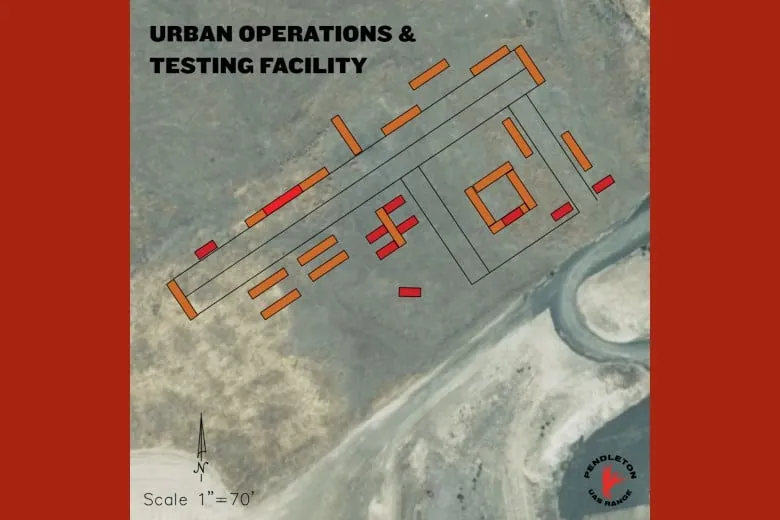
The eight containers, each 40 feet (12 meters) long, are only the first phase, according to the announcement Elkhorn Media Group carried. The range’s layout graphic shows many more of them arranged along streets and around a courtyard, and the range says the layout can be reconfigured.
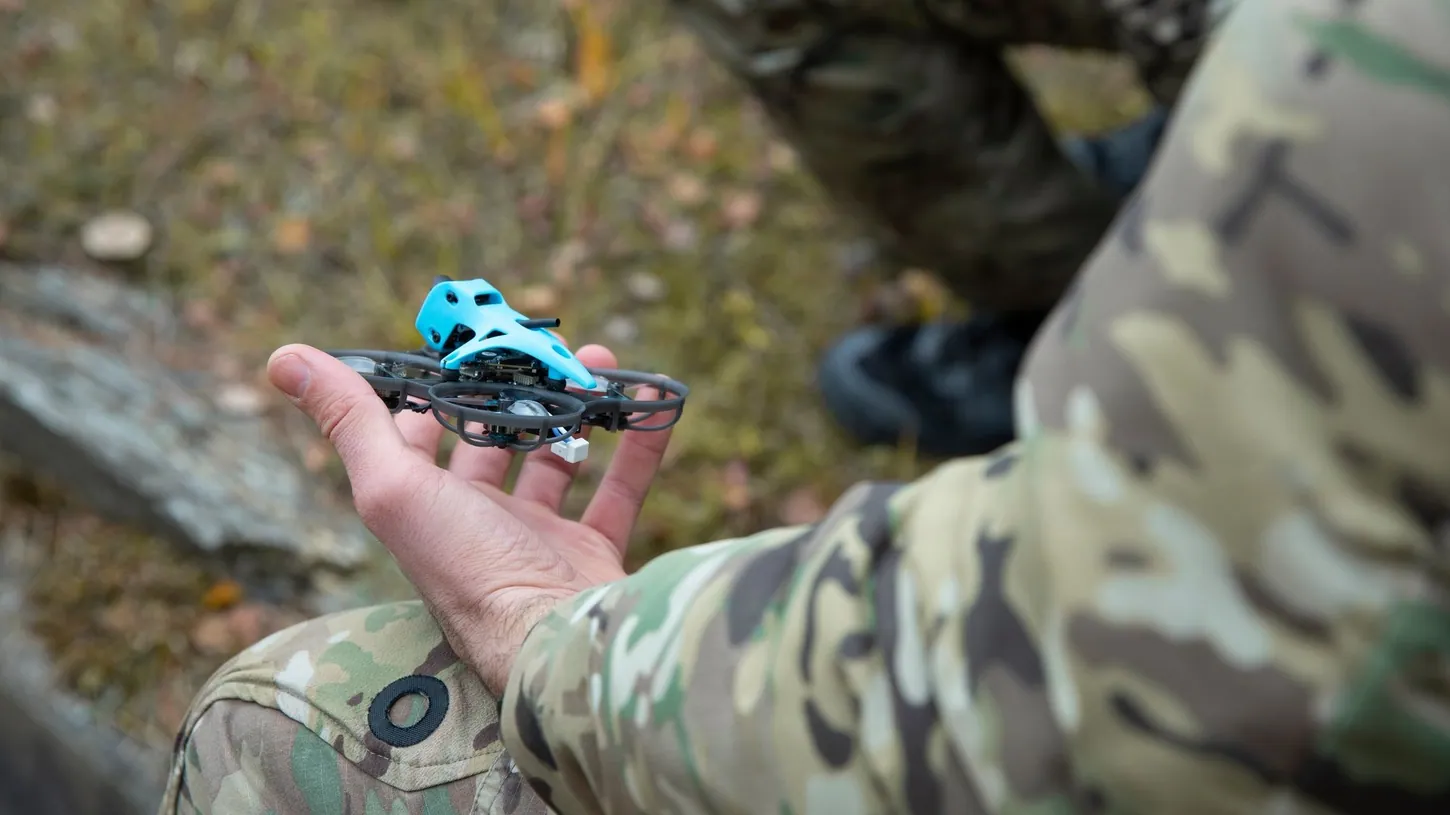
The range says it took the idea from the military’s urban-terrain training sites but is building for commercial, technology and public-safety customers too. It lists first-person-view (FPV) flying, intelligence and surveillance work, counter-drone technology, and operations that mix drones, ground robots and people.
Range manager Jesse Steele said customers will be able to train for scenarios “that can’t be fully replicated in open airspace.” The obstacles and simulated structures are there to test close-quarters flying, navigation, communications and sensors.
Pendleton police and fire crews can train in the container town
Pendleton Fire & Ambulance, the Pendleton Police Department and other public safety agencies that want to will be able to run exercises at the site, and the range lists search and rescue, emergency response coordination, building inspections, drone-assisted situational awareness and multi-agency training as the likely uses.
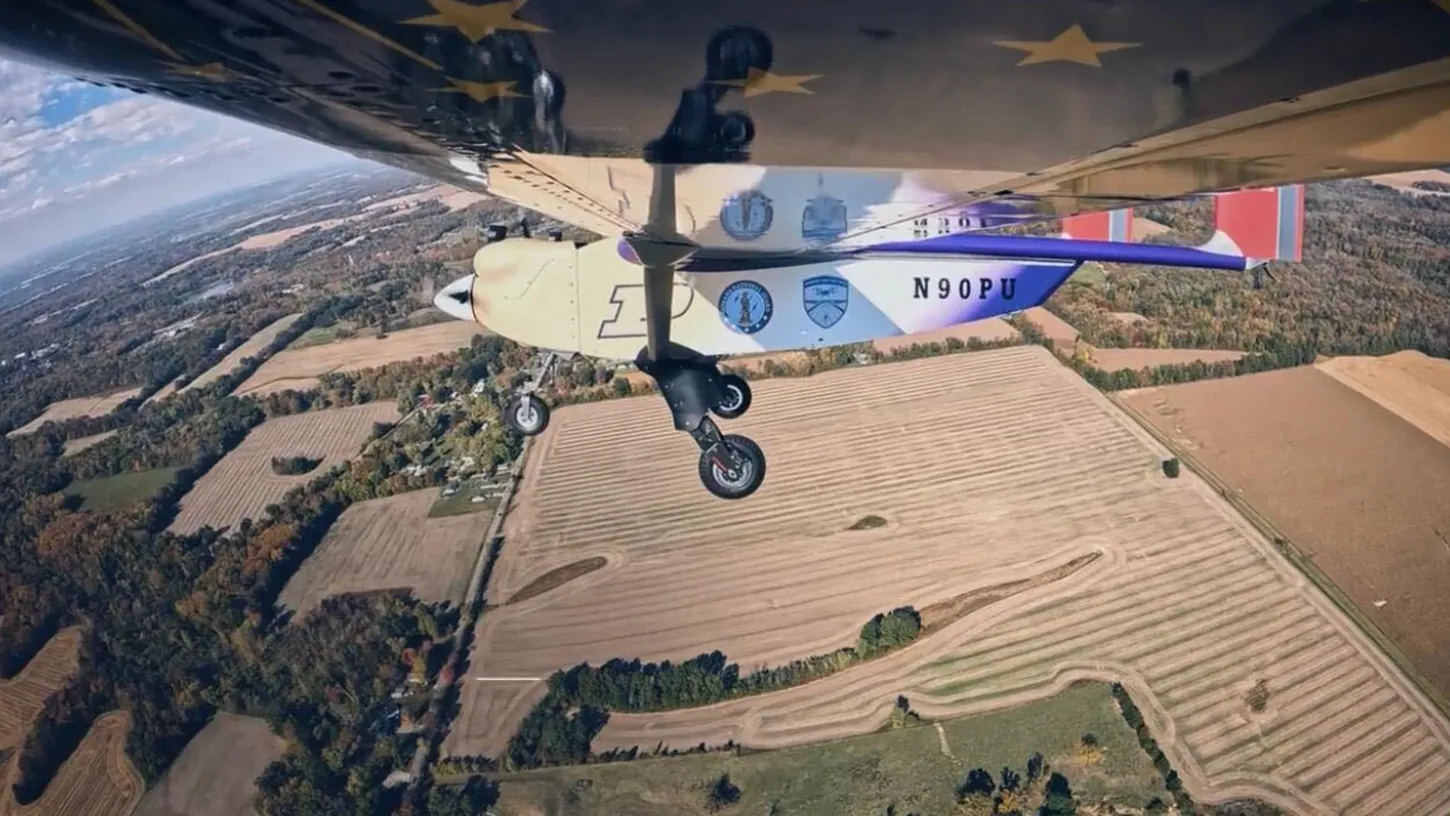
The range is better known for the opposite kind of space. The city says it has 14,000 square miles (36,260 square kilometers) of FAA-approved airspace, cleared up to 15,000 feet (4,572 meters) above sea level, and the range’s own site counts more than 180 customers and programs since 2014. It operates as part of the Pan-Pacific UAS Test Range Complex, one of the FAA’s drone test sites, the network the agency put $12 million of research awards into in October. Oregon’s aviation department drafted comments to the FCC in April arguing for drone test areas in real terrain.
DroneXL’s Take
Open sky is the easy part of drone testing, and Pendleton already has plenty of it. The hard flying is low and close: an FPV pilot threading a doorway, a counter-drone sensor trying to pick a quad out from behind a steel wall, a radio link bouncing between buildings. That’s where Ukraine’s war is being fought, and my read is that American drone companies get far less practice there. Eight containers are a small start and I’d hold the applause until there’s a budget and an opening date. But a city-owned range can sell time to a startup that would struggle to get time on an Army urban training site, and to a small-town fire department that needs to learn to fly inside a structure before the day it has to. Neither of those customers has many other places to go.
Source: Elkhorn Media Group
DroneXL uses automated tools to support research and source retrieval. All reporting and editorial perspectives are by Haye Kesteloo. Read our editorial standards.
Advertise with DroneXLYour company hereReach 200,000+ drone readers a month with a sponsored article, a banner on your beat, or a partnership.See the options →