US Debuts Affordable LUCAS Combat Drone to Challenge Iran’s Shahed-136

Check out the Best Deals on Amazon for DJI Drones today!
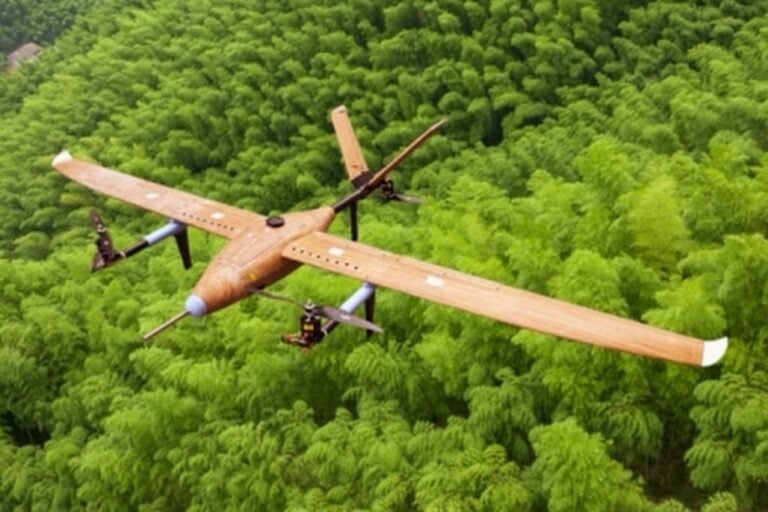
The United States has introduced a budget-friendly combat drone that directly competes with Iran’s Shahed-136, aiming to bolster accessible airpower in contested regions. Secretary of Defense Pete Hegseth showcased the Low-Cost Uncrewed Combat Attack System (LUCAS) during a Pentagon event on Wednesday, highlighting its potential to transform distributed operations. This development addresses the rising demand for expendable unmanned systems, as reported by the Associated Press.
Advanced Design and Capabilities
SpektreWorks, an Arizona-based defense firm, engineered LUCAS as a Group 3 Unmanned Aerial System (UAS). The drone thrives in harsh environments with limited support needs. Engineers equipped it with an open architecture, enabling seamless integration of diverse payloads for tasks like reconnaissance, strikes, and communications relay.
LUCAS operates in multiple modes, including as a target drone or a powered combat platform. Launch options range from Rocket-Assisted Take-Off (RATO) to truck-based systems, allowing quick deployment by general troops. Its FLM 131 attritable frame supports autonomous team missions and network-centric attacks, all at reduced costs compared to legacy aircraft.

The system meets tight size, weight, and power (SWaP) constraints, with guidance tech that ensures precision. Payloads connect via a network that permits in-flight system adjustments, drawing from 28V or 12V sources. This flexibility enhances operational efficiency in remote areas.
Enhancing Secure Communications in Contested Zones
LUCAS doubles as a relay in the Multi-domain Unmanned Systems Communications (MUSIC) mesh network. Forces can leverage it to maintain reliable links among U.S. and partner units, even when adversaries jam traditional signals. This feature proves vital in environments like the Indo-Pacific, where electronic warfare threats loom large.
Defense experts note that such capabilities fortify distributed maritime efforts. By enabling secure data sharing over vast distances—spanning hundreds of miles—LUCAS helps counter swarm attacks from low-cost drones. SpektreWorks has already tested the system successfully, positioning it for swift production and integration with allied forces.
Broader Industry Trends and Battlefield Impacts
The rise of affordable, disposable drones reshapes modern warfare, with Iran’s Shahed-136 gaining notoriety in conflicts across Ukraine and the Middle East. These loitering munitions, often called “kamikaze” drones, deliver strikes at low expense, prompting the U.S. to innovate counterparts like LUCAS with added reusability and modularity.
This shift emphasizes attritable platforms—systems designed for potential loss without high financial strain. LUCAS cuts costs dramatically, potentially saving millions in USD per unit versus conventional jets. Building on that, it supports non-specialized users, reducing training demands and logistical burdens in forward bases.
Analysts at the Pentagon view LUCAS as a key asset for U.S. Indo-Pacific Command (USINDOPACOM). It enables scalable responses to regional tensions, such as those in the South China Sea, where vast ocean expanses (over 1.4 million square miles) challenge traditional air dominance. The drone’s endurance and payload versatility could extend mission ranges beyond 500 miles (about 800 kilometers), amplifying strike options without risking piloted aircraft.

SpektreWorks describes LUCAS as “a reliable and cost-effective Group 3 Unmanned Aerial System (UAS) designed to perform in austere conditions with minimal logistical requirements,” underscoring its practical edge.
This development raises questions about future arms races in unmanned tech. As nations pursue similar systems, LUCAS positions the U.S. to maintain an advantage through superior integration and allied compatibility. With production readiness confirmed, deployments may occur soon, influencing tactics in ongoing and emerging conflicts.
LUCAS represents a strategic pivot toward economical, versatile drones. It not only rivals foreign designs but also adapts to evolving threats, ensuring U.S. forces stay agile on dynamic battlefields.
Photos courtesy of DD Geopolitics / X
Discover more from DroneXL.co
Subscribe to get the latest posts sent to your email.
Check out our Classic Line of T-Shirts, Polos, Hoodies and more in our new store today!

MAKE YOUR VOICE HEARD
Proposed legislation threatens your ability to use drones for fun, work, and safety. The Drone Advocacy Alliance is fighting to ensure your voice is heard in these critical policy discussions.Join us and tell your elected officials to protect your right to fly.

Get your Part 107 Certificate
Pass the Part 107 test and take to the skies with the Pilot Institute. We have helped thousands of people become airplane and commercial drone pilots. Our courses are designed by industry experts to help you pass FAA tests and achieve your dreams.

Copyright © DroneXL.co 2026. All rights reserved. The content, images, and intellectual property on this website are protected by copyright law. Reproduction or distribution of any material without prior written permission from DroneXL.co is strictly prohibited. For permissions and inquiries, please contact us first. DroneXL.co is a proud partner of the Drone Advocacy Alliance. Be sure to check out DroneXL's sister site, EVXL.co, for all the latest news on electric vehicles.
FTC: DroneXL.co is an Amazon Associate and uses affiliate links that can generate income from qualifying purchases. We do not sell, share, rent out, or spam your email.