Australian Drone Operator Sphere Scores Rare Self-Assessment BVLOS Approval

Check out the Best Deals on Amazon for DJI Drones today!
Sydney-based Sphere Drones has secured approval under Australia’s Civil Aviation Safety Authority (CASA) new Broad Area Beyond Visual Line of Sight (BVLOS) Self-Assessment framework, becoming one of the first operators nationwide authorized to independently evaluate operational areas for autonomous drone flights. The milestone approval dramatically accelerates deployment timelines from months to days while American operators continue navigating a proposed 650-page regulatory maze.
The approval allows Sphere to self-assess locations for conducting BVLOS operations across Australia without waiting three to six months for CASA to evaluate each individual site. This streamlined approach represents a fundamentally different regulatory philosophy than the FAA’s proposed Part 108 rules, which industry groups warn could eliminate existing waiver pathways and favor well-funded corporations over smaller operators.
Regulatory Fast-Track Enables Week-Long Deployments
CASA launched its 12-month BVLOS trial on October 15, 2025, introducing four approval pathways based on drone size and population density. The framework applies to small drones under 25kg (55 pounds) and uses the Specific Operations Risk Assessment (SORA) methodology that CASA adopted in 2017.
Elliot Cummins, Chief Remote Pilot at Sphere, emphasized the approval’s significance for scaling commercial operations.
“This approval is a watershed moment for our business, our clients, and the industry as a whole,” Cummins said in the company announcement. “It means we’ve built the systems, processes, and mindset to operate beyond traditional limits, so our clients and the industry can deploy with confidence, scale faster, and capture value in places they simply couldn’t before.”
The self-assessment capability eliminates what has historically been the primary bottleneck for commercial BVLOS expansion. Sphere can now deliver fully operational BVLOS systems on-site within one week through its Sidero Local manufacturing partnership, compared to the months-long approval processes that have constrained the industry.

HubX Platform Powers Autonomous Operations
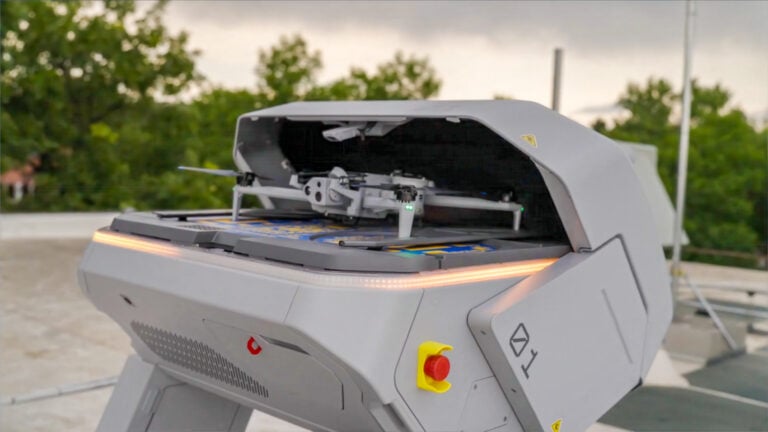
At the core of Sphere’s BVLOS capability sits HubX and HubT, the company’s remote operations systems that integrate connectivity, power, and control into deployable platforms purpose-built for autonomous missions. The systems enable live command and telemetry from field locations to Sphere’s Remote Operations Centre, making true remote drone operations viable at commercial scale.
Sphere has been operating BVLOS missions from its Remote Operations Centre since 2022, giving the company nearly three years of continuous operational experience that informed its approval application. The company already held a BVLOS Area Approval for operations near Wagga Wagga, New South Wales, received in May 2024.
Paris Cockinos, CEO of Sphere Drones and recently recognized by The Daily Telegraph as one of Australia’s Top 250 Young Entrepreneurs, called the approval “the culmination of years of innovation and investment in building Australia’s most capable BVLOS ecosystem.”
“It’s not just about flying further; it’s about enabling businesses to operate smarter, safer, and with greater confidence in what’s possible,” Cockinos said. “BVLOS is the future of enterprise drone operations, and we’re proud to be leading that transition right now.”
Supporting Enterprise Adoption Across Multiple Sectors
The broad area approval enables Sphere to rapidly deploy solutions for mining, utilities, infrastructure, and emergency services clients operating across geographically diverse locations. The company has assisted more than 13,000 businesses since its founding in 2014, including major clients like Rio Tinto, Fortescue, Ausgrid, Sydney Water, and South32.
To help organizations navigate CASA’s framework, Sphere developed the Broad Area BVLOS CASA Trial Guide, described as the only comprehensive resource of its kind in Australia. The guide outlines the approval process, key risks, and practical lessons learned from Sphere’s real-world BVLOS experience.
Sphere’s Flight Operations team delivers full-service BVLOS mission support, from planning and deployment to aerial data capture, processing, and delivery. The company’s vertical integration—combining regulatory expertise, Australian manufacturing, and operational execution—allows clients to transition from approval to active operations faster than competing solutions.
Australia Projected To Reach 60 Million Annual Drone Flights
Industry projections indicate Australian drone flights will surge from 1.5 million currently to more than 60 million annually by 2043. CASA’s trial framework aims to enable this growth while maintaining safety standards through performance-based regulations rather than prescriptive rules.
The trial runs through October 15, 2026, during which CASA will collect operational data to assess whether the pathways achieve anticipated safety and efficiency outcomes. The regulator has indicated it will adjust its BVLOS approvals policy based on evidence gathered during the trial period.
Only a handful of operators nationwide have received approval under the new framework. RocketDNA was reportedly the first company approved just hours before Sphere’s announcement, highlighting how limited these approvals remain despite the streamlined pathway.
The framework represents CASA’s shift toward corporate responsibility models, where qualified operators take greater ownership of safety assessments rather than relying entirely on regulator evaluations for each operational area. This approach mirrors trends in other advanced aviation markets but contrasts sharply with the FAA’s more cautious regulatory stance.
DroneXL’s Take
Australia’s self-assessment BVLOS framework represents exactly the kind of pragmatic regulatory innovation the U.S. drone industry desperately needs but seems unlikely to receive anytime soon. While American operators remain stuck debating a 650-page proposed rule that industry groups warn could actually eliminate existing BVLOS pathways, Australia is empowering proven operators to scale autonomous operations within days instead of months.
The contrast couldn’t be starker. Zipline’s nationwide BVLOS approval required years of overseas operations and a presidential executive order to achieve. Pilot Institute’s formal challenge to Part 108 warned the FAA’s approach would favor large, well-funded companies over smaller operators conducting safe BVLOS flights today under waivers. Meanwhile, Carbonix secured a U.S. nationwide BVLOS waiver—as an Australian company operating in American airspace.
CASA’s framework acknowledges a fundamental truth: experienced operators with proven safety systems shouldn’t need regulators to individually assess every operational area. The self-assessment model recognizes that companies like Sphere, with nearly three years of continuous BVLOS operations and 13,000+ clients, have developed institutional knowledge and operational procedures that make them better positioned to evaluate site-specific risks than bureaucrats working from checklists.
This isn’t regulatory recklessness—it’s regulatory maturity. CASA maintains oversight through the initial approval process, operational reporting, and the trial’s data collection requirements. But the framework trusts qualified operators to apply their expertise to new locations within defined parameters, dramatically accelerating commercial deployment while maintaining safety margins.
The implications extend beyond drones. Australia’s approach demonstrates how regulators can enable rapid technology adoption without sacrificing safety standards. As the country prepares for 60 million annual drone flights by 2043, the AIR-F testing facility in the Northern Territory provides infrastructure for innovation while CASA’s trial frameworks provide regulatory pathways for commercialization. This coordination between testing facilities, regulatory innovation, and industry capability building creates an ecosystem where drone technology can flourish.
For U.S. operators watching Australia’s BVLOS ecosystem mature, the message is clear: regulatory approaches matter enormously. Every month American companies wait for Part 108’s eventual implementation is a month competitors in Australia, Europe, and elsewhere build operational experience, refine technology, and capture market share. The FAA’s caution may protect against theoretical risks, but it guarantees real competitive disadvantages for American drone operators who could be conducting these operations safely today.
What do you think about Australia’s self-assessment approach compared to the FAA’s proposed Part 108 framework? Share your thoughts in the comments below.
Discover more from DroneXL.co
Subscribe to get the latest posts sent to your email.
Check out our Classic Line of T-Shirts, Polos, Hoodies and more in our new store today!

MAKE YOUR VOICE HEARD
Proposed legislation threatens your ability to use drones for fun, work, and safety. The Drone Advocacy Alliance is fighting to ensure your voice is heard in these critical policy discussions.Join us and tell your elected officials to protect your right to fly.

Get your Part 107 Certificate
Pass the Part 107 test and take to the skies with the Pilot Institute. We have helped thousands of people become airplane and commercial drone pilots. Our courses are designed by industry experts to help you pass FAA tests and achieve your dreams.

Copyright © DroneXL.co 2026. All rights reserved. The content, images, and intellectual property on this website are protected by copyright law. Reproduction or distribution of any material without prior written permission from DroneXL.co is strictly prohibited. For permissions and inquiries, please contact us first. DroneXL.co is a proud partner of the Drone Advocacy Alliance. Be sure to check out DroneXL's sister site, EVXL.co, for all the latest news on electric vehicles.
FTC: DroneXL.co is an Amazon Associate and uses affiliate links that can generate income from qualifying purchases. We do not sell, share, rent out, or spam your email.