FPV Pilot Joshua Bardwell: FCC Component Ban May Not Be as Bad as It Sounds

Check out the Best Deals on Amazon for DJI Drones today!
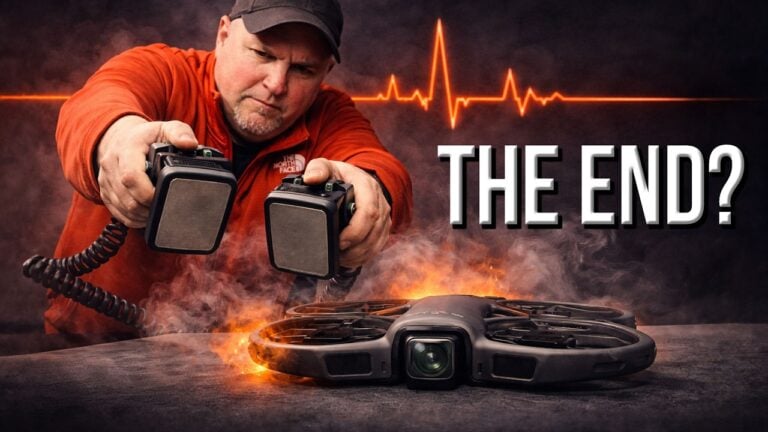
While the drone world panics over the FCC’s sweeping ban on foreign drones and components, FPV expert Joshua Bardwell is urging pilots to take a breath. His analysis raises a critical question that most coverage has missed: Does the FCC even have jurisdiction over half the components it listed?
In a video published December 23, Bardwell breaks down the FCC’s Public Notice and argues that the situation, while serious, may not be the apocalypse for FPV hobbyists that some are predicting.

The Jurisdictional Problem
The FCC’s National Security Determination lists “UAS critical components” that are now covered, including: data transmission devices, communication systems, flight controllers, ground control stations, controllers, navigation systems, batteries, and motors.
Bardwell points out an obvious problem: The FCC only regulates devices that transmit radio frequencies. Motors don’t transmit RF. Batteries don’t transmit RF. They’re not supposed to need FCC certification in the first place.
“It’s pretty weird that the FCC even mentioned them,” Bardwell says. “A strict reading of the actual letter of the law should indicate that anything that doesn’t need an FCC certificate isn’t affected by this, even though those words are in the document.”
The FCC’s fact sheet states that covered devices “are prohibited from receiving FCC authorization and are therefore prohibited from being imported.” But if motors and passive batteries never needed FCC authorization, how can lacking it prohibit their import?
The Uncertainty Is the Real Problem
Bardwell acknowledges that legal technicalities may not matter if the administration decides to enforce the ban broadly anyway.
“We’ve seen the administration do things that cause experts to say ‘that’s illegal, you can’t do that’ or ‘that’s not in the scope of that government body.’ And sometimes the administration does them anyway,” he explains. “The uncertainty is really the freaking kicker here.”
Even if the FCC technically lacks jurisdiction over motors and batteries, Customs and Border Protection might detain shipments anyway. Retailers might stop importing components out of caution. The chilling effect could be as damaging as an actual ban.
The FPV Hobby’s Dirty Secret
Bardwell makes another point that may comfort FPV hobbyists: many components used in the hobby already lack proper FCC certification, and nobody has cared.
“ExpressLRS receivers should have FCC certifications in order to transmit and be imported in the United States. RadioMaster is the only manufacturer who actually bothers to go get FCC certification. Everybody else just imports their receivers and sells them and uses them and no one notices.”
His prediction: “A likely outcome going forward, at least for the foreseeable future, is that no one will continue to care and we will still be able to import all of these things.”
“Foreign Countries” vs NDAA Countries
Bardwell identifies another significant shift in the new policy. Previous restrictions focused on “NDAA countries,” primarily China. Many manufacturers responded by moving production to Thailand, Malaysia, Croatia, and other non-NDAA locations.
The new FCC language bans components from all foreign countries, not just hostile nations.
“It’s very interesting because so far the key phrase has been NDAA,” Bardwell notes. Companies like HD Zero manufacture in Thailand. ImmersionRC manufactures in Croatia. They spent money to comply with NDAA requirements.
“And now they seem to be saying you can’t import foreign-made stuff. Well, that would mean all these foreign NDAA-compliant countries, these manufacturers are now screwed.”
He expects lawsuits: “A lot of companies who have spent a lot of money to try to comply with the previous policy will now be out that money and they’re going to sue.”
Ready-Made Drones vs DIY Components
Bardwell believes the real target is ready-made drones, not DIY components.
“The number one place I think this is going to be felt is in drones. And I think that’s the actual intent here,” he says. “I think the focus on components is potentially in large part because they don’t want to see components being brought in and then assembled into drones.”
Ready-made drones are easy to catch at customs. Individual flight controllers, motors, and ESCs shipped in small quantities to hobbyists? Much harder to police.
“As far as hobbyists building FPV drones out of standalone components, I think that is unlikely to be affected for the foreseeable future, unless this administration is way more aggressive than you would think,” Bardwell concludes. “How are you even going to catch that stuff?”
Retailers May Be the Bottleneck
The wildcard is how US-based retailers respond. Bardwell says he’s reached out to companies like GetFPV, Race Day Quads, and Pyro Drone for statements but hasn’t received responses yet.
“Theoretically, I could see a company like GetFPV saying ‘we’re not going to risk trying to import this stuff if theoretically it might be prohibited,'” he says. “But even if that were to happen, it just means that hobbyists would be ordering from AliExpress instead.”
DroneXL’s Take
Bardwell raises a legitimate jurisdictional question that most coverage has glossed over. The FCC regulates radio frequency devices. Motors and passive batteries aren’t RF devices. The FCC listing them as “critical components” may be legally unenforceable.
But we’d add one important caveat: DJI’s Intelligent Flight Batteries aren’t passive. They contain active battery management systems with communication chips, firmware, and authentication systems. Those active BMS components could legitimately fall under FCC jurisdiction in a way that generic LiPo cells would not.
For FPV hobbyists building their own quads with standard LiPo batteries, Bardwell’s analysis is probably correct. For DJI owners hoping to import replacement Intelligent Batteries, the situation is murkier.
The broader point stands: the uncertainty is the real damage. When nobody knows what’s legal, cautious businesses stop importing, and the chilling effect accomplishes what the law itself might not.
Discover more from DroneXL.co
Subscribe to get the latest posts sent to your email.
Check out our Classic Line of T-Shirts, Polos, Hoodies and more in our new store today!

MAKE YOUR VOICE HEARD
Proposed legislation threatens your ability to use drones for fun, work, and safety. The Drone Advocacy Alliance is fighting to ensure your voice is heard in these critical policy discussions.Join us and tell your elected officials to protect your right to fly.

Get your Part 107 Certificate
Pass the Part 107 test and take to the skies with the Pilot Institute. We have helped thousands of people become airplane and commercial drone pilots. Our courses are designed by industry experts to help you pass FAA tests and achieve your dreams.

Copyright © DroneXL.co 2026. All rights reserved. The content, images, and intellectual property on this website are protected by copyright law. Reproduction or distribution of any material without prior written permission from DroneXL.co is strictly prohibited. For permissions and inquiries, please contact us first. DroneXL.co is a proud partner of the Drone Advocacy Alliance. Be sure to check out DroneXL's sister site, EVXL.co, for all the latest news on electric vehicles.
FTC: DroneXL.co is an Amazon Associate and uses affiliate links that can generate income from qualifying purchases. We do not sell, share, rent out, or spam your email.