Zipline’s $7.6B Bet: The Economics of Delivering Burritos vs. Saving Lives

Check out the Best Deals on Amazon for DJI Drones today!
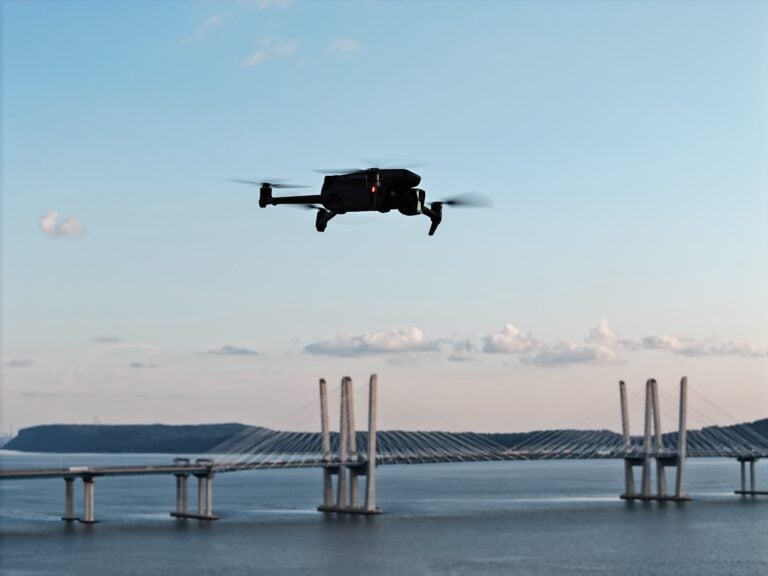
The Verge’s Tim Stevens stood on a lawn in Rowlett, Texas last year and watched a strange-looking craft clear the trees, hover overhead, and lower a brown paper package on a thin rope. His lunch had arrived by drone. The whole experience lasted less than 30 seconds. It was, by all accounts, magical. But watching coverage like this unfold from the drone industry’s perspective raises an uncomfortable question that mainstream tech journalism rarely asks: Does any of this make economic sense for a $7 burrito?
Zipline just announced a $600 million funding round, pushing its valuation to $7.6 billion. The company has surpassed 2 million deliveries. Investors are piling in. But there is a fundamental tension in Zipline’s business model that deserves scrutiny: the same company that built its reputation delivering blood and vaccines to remote Rwandan hospitals is now racing to drop Chipotle bowls in Texas suburbs. One mission saves lives. The other saves you a trip to the drive-through.
The Development: Zipline raised $600 million at a $7.6 billion valuation on January 20, 2026, with plans to expand into Houston and Phoenix while continuing U.S. consumer delivery growth at 15% week-over-week.
The “So What?”: The company that revolutionized medical logistics in Africa is betting its future on delivering low-value consumer goods in American suburbs, a market where the economics remain deeply uncertain, or perhaps represent a calculated infrastructure play.
The Source: The Verge’s January 2026 feature provides a firsthand look at the consumer delivery experience, while Zipline’s official announcement confirms the funding details.
Rwanda’s life-saving model established Zipline’s credibility
Zipline’s medical delivery network in Rwanda represents one of the most compelling use cases for autonomous drone logistics ever developed. The company’s fixed-wing aircraft, launched via catapult and recovered mid-air, have delivered blood, vaccines, and essential medicines to more than 400 hospitals and clinics across the country since 2016. Research from the University of Pennsylvania documented an 88% decrease in in-hospital maternal fatalities due to postpartum hemorrhage at Zipline-supported facilities. More mothers are alive today because of this technology.

The value proposition in Rwanda is unambiguous. Remote clinics sit hours away from paved roads. Power grids are unreliable. Refrigeration fails. The cold chain breaks down, and vaccines spoil. According to University of Birmingham research, nearly one in four vaccine doses in rural Africa are thrown away simply because they fall outside the narrow temperature range required for effectiveness. Zipline’s drones can reach anywhere in Rwanda within 45 minutes. Medical staff send a text message, and before patient registration paperwork is finished, the drone is overhead, releasing a shoebox-sized package by parachute.
This is drone delivery at its absolute best. The U.S. State Department recognized this value when it committed up to $150 million to expand Zipline’s medical network across five African countries, with African governments contributing an additional $400 million in utilization fees. Independent research confirmed maternal deaths dropped by up to 56% in Zipline-supported health facilities. When the problem is distance, infrastructure, and urgency, drones offer an elegant solution.
The Texas pivot reveals a different calculation entirely
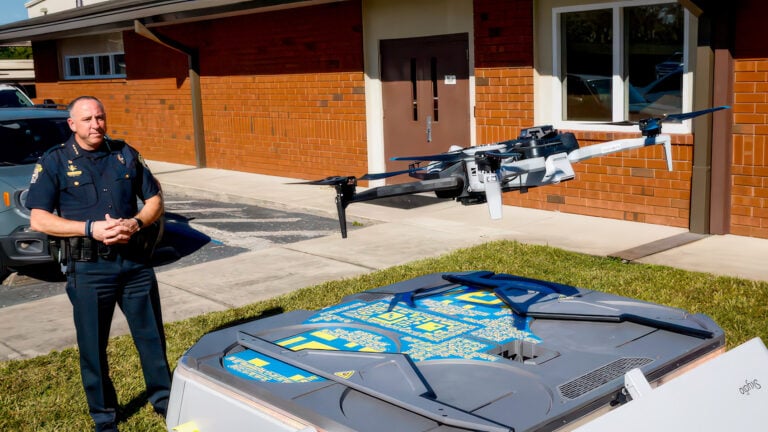
Zipline’s Platform 2 system, now deployed across the Dallas-Fort Worth metroplex in partnership with Walmart, uses the same core technology that saves lives in Rwanda. The five-motor hybrid aircraft transitions from hovering to horizontal flight, carries payloads up to 8 pounds, and lowers packages via a tethered “Zip” droid with what CEO Keller Rinaudo Cliffton calls “dinner plate-level accuracy.” The engineering is genuinely impressive. The operational execution, with 125 million autonomous miles flown and zero serious injuries, speaks for itself.
But the use case has shifted dramatically. The Verge’s Stevens received his lunch, a burrito, via Zipline drone. The delivery fee was $0.99 plus a 20-percent service fee capped at $6. He could currently order from Blaze Pizza, Buffalo Wild Wings, Crumbl, Little Caesars, Walmart, and Wendy’s. His food arrived fresher and hotter than any burrito delivery he had ever received. It was convenient. It was fast. It was also a $7 meal delivered by a $7.6 billion company backed by Fidelity, Baillie Gifford, Tiger Global, and Valor Equity Partners.
The economics here appear fundamentally different from medical delivery. In Rwanda, a single blood delivery can mean the difference between life and death. The value per drone delivery is essentially infinite when measured against the alternative. A Zipline flight might cost $1 at scale, as CEO Rinaudo Cliffton has claimed, but the value it creates for a mother who would otherwise die from postpartum hemorrhage is immeasurable. A burrito is not immeasurable. A burrito is $7.

The “Gateway Economy” thesis deserves serious consideration
Before dismissing consumer delivery as economically irrational, the counterargument deserves a fair hearing. You do not build a national autonomous infrastructure starting with heart transplants. The volume is not high enough to iterate the hardware, train the algorithms, or establish regulatory precedent. Burritos provide the high-frequency data needed to perfect the safety and frictionless nature of the system before scaling to higher-value applications.
The comparison between drone delivery and ground delivery also obscures significant externalities. When we cite McKinsey’s $9 to $11 cost for traditional ground delivery, we ignore the full picture: a 3,000-pound internal combustion vehicle, traffic congestion, road wear-and-tear, carbon emissions, and the opportunity cost of a human driver making a single trip for a single small item. If Zipline hits its $1 per delivery target, it does not merely compete with UberEats. It renders the entire concept of a human driver for small-item delivery obsolete.
There is also the density argument. In suburbs like Rowlett, the “last mile” represents the most expensive component of logistics. Zipline is not trying to save lives in Texas. It is trying to solve the last-mile inefficiency that costs retailers billions in “dead-head” miles and labor. The drone does not care about traffic. It does not sit idle between deliveries. It does not demand healthcare benefits or a living wage.
Perhaps most compelling is the network effects argument. Once a Zipline nest sits atop a Walmart, that same infrastructure can deliver blood to a local clinic, baby formula to an overwhelmed parent, and a burrito to a teenager. The burrito subsidizes the availability of the medical drone. High-frequency consumer deliveries build the operational density that makes urgent medical delivery economically viable in markets that would otherwise lack coverage.
Industry-wide delivery costs tell a more complicated story
The drone delivery industry has struggled to demonstrate unit economics that work at scale for consumer goods, but the trajectory matters as much as the current state. Amazon Prime Air’s internal projections, revealed through reporting in 2024, showed delivery costs around $63 per package while the company charged customers $9.99 for Prime members and $14.99 for non-members. That math only works if you believe massive scale will eventually compress costs by an order of magnitude. Zipline believes exactly that.
A 2023 McKinsey study estimated single-package drone delivery costs around $13.50, more expensive than delivery via electric or gas vehicles at $9 to $11. But that comparison treats ground delivery as a static baseline. It is not. Labor costs rise. Fuel prices fluctuate. Traffic congestion worsens. The cost curve for human-operated ground delivery bends upward over time. The cost curve for autonomous drone delivery, at least in theory, bends downward.
Dublin-based Manna claims to be the only drone delivery service currently turning a profit on each delivery, with costs around $4 per flight and projections of $1 per delivery at scale. The company has raised only $64 million compared to the hundreds of millions invested in competitors, and it focuses on operational efficiency: hot-swapping batteries, single operators overseeing up to 20 drones, and a lean staffing model. Manna’s approach suggests the economics can work, but require ruthless operational discipline.
Amazon has documented six significant Prime Air incidents in 2025 alone: the January grounding following Oregon crashes, a May apartment landing, a July pool drop, the October crane collision that sparked a fire, a sidewalk landing 10 days later, and a Waco cable strike in November. The contrast with Zipline’s safety record is stark. Whatever else might be said about Zipline’s economics, the company has proven it can operate autonomous aircraft at scale without killing anyone. That operational competence has value independent of per-delivery margins.

Zipline’s growth metrics require context
Zipline announced that U.S. deliveries have grown approximately 15% week-over-week for the last seven months. The company beat its Q3 daily delivery volume target by roughly 30%, hit its Q4 target six weeks early, and continues to accelerate. New sites now reach 100 deliveries per day in just 2 days, compared to 10 weeks for the first Dallas location. These are impressive operational metrics that demonstrate genuine learning-curve effects.
But 2 million total deliveries, while more than all other companies in the sector combined, represents a fraction of daily package volumes in any major metropolitan area. Amazon alone delivers billions of packages annually. Walmart’s traditional logistics network dwarfs any drone operation. The question is not whether Zipline can scale from thousands to tens of thousands of daily deliveries. The question is whether the economics improve or deteriorate as that scale arrives.
The Verge’s coverage captured something important: The Rowlett Mayor noted approval and permitting took about five months, helped by Zipline working to keep its footprint minimal. Some deliveries needed a bit of manual help from Zipline employees dashing between retailers to ensure pickups went smoothly. Some pickups needed a few attempts. The system works, but it is not yet frictionless. That friction represents cost.
Stevens also documented the competitive landscape. Wing, Zipline’s primary competitor in the retail drone delivery space, has managed an impressive 750,000 deliveries, but that is fewer than half of Zipline’s tally. Amazon Prime Air, meanwhile, recently suspended testing after a pair of crashes. For the moment, nobody looks set to challenge Zipline’s early lead. Market leadership creates its own momentum.

The venture capital subsidy question remains open
Zipline’s $7.6 billion valuation represents a bet that autonomous delivery will become standard within the next five to ten years.
“In the next five, 10 years, deliveries made by autonomous aircraft will become standard,” said Antonio Gracias, Valor Equity Partners’ founder and CEO.
The question is not whether that vision is technically achievable. Zipline has already proven the technology works. The question is whether the business model works without perpetual venture subsidies.
The contrast with Zipline’s African operations remains instructive. In Rwanda, Ghana, Nigeria, and Kenya, governments and NGOs pay for delivery services because the value proposition is clear: saved lives, reduced vaccine wastage, improved maternal health outcomes. These are measurable results that justify public investment. The U.S. consumer market offers different value propositions: convenience, speed, novelty. Whether those values translate to sustainable unit economics at scale is the $7.6 billion question.
As we wrote in 2024, it is difficult to justify drone delivery for non-essential items like toothpaste within 30 minutes from a local retailer when measured purely against current ground delivery costs. But that analysis assumed static cost structures. If Zipline’s thesis proves correct, if autonomous delivery costs decline while human delivery costs rise, the crossover point may arrive sooner than skeptics expect.

DroneXL’s Take
Zipline has built something genuinely remarkable. The company’s safety record, with 125 million autonomous miles and zero serious injuries, sets an industry standard. The technology works. The operational execution in Dallas-Fort Worth demonstrates that drone delivery can scale in complex metropolitan environments. The recent $600 million raise proves that sophisticated investors remain believers. The “Gateway Economy” thesis, that burritos today enable blood delivery tomorrow, has intellectual merit.
But intellectual merit and proven unit economics are different things. The honest assessment is that consumer drone delivery remains a venture-subsidized experiment whose ultimate profitability depends on cost curves that have not yet materialized. Zipline’s growth metrics are impressive, but growth funded by $600 million in fresh capital is not the same as profitable growth. The network effects argument cuts both ways: if burritos subsidize medical delivery, medical delivery also subsidizes the PR value of burritos.
The African operations demonstrate clear value creation with measurable outcomes: lives saved, maternal mortality reduced, vaccine wastage eliminated. The Texas operations demonstrate clear technology capability and operational excellence. Whether they demonstrate a sustainable consumer business model remains genuinely uncertain.
My prediction: Zipline will continue dominating both markets, but the revenue mix will shift. Healthcare partnerships, pharmaceutical delivery, and high-value logistics will increasingly drive margins. Consumer delivery will continue for volume, data, and infrastructure density, but the unit economics will require either dramatic cost compression or quiet acceptance that burritos are a loss leader for the medical business. The most likely outcome is that Zipline succeeds precisely because it refuses to choose between saving lives and delivering lunch. The same network serves both. The question is which one pays the bills.
The same drone technology delivering groceries and fast food in the U.S. is already safeguarding vaccines in Rwanda. One use case feeds convenience, the other saves lives, and both prove the same thing: drone delivery is no longer experimental. It is infrastructure. Whether that infrastructure supports a profitable consumer business or merely a venture-funded bridge to healthcare dominance will determine whether the $7.6 billion valuation looks prescient or absurd in five years.
Editorial Note: AI tools were used to assist with research and archive retrieval for this article. All reporting, analysis, and editorial perspectives are by Haye Kesteloo.
Discover more from DroneXL.co
Subscribe to get the latest posts sent to your email.
Check out our Classic Line of T-Shirts, Polos, Hoodies and more in our new store today!

MAKE YOUR VOICE HEARD
Proposed legislation threatens your ability to use drones for fun, work, and safety. The Drone Advocacy Alliance is fighting to ensure your voice is heard in these critical policy discussions.Join us and tell your elected officials to protect your right to fly.

Get your Part 107 Certificate
Pass the Part 107 test and take to the skies with the Pilot Institute. We have helped thousands of people become airplane and commercial drone pilots. Our courses are designed by industry experts to help you pass FAA tests and achieve your dreams.

Copyright © DroneXL.co 2026. All rights reserved. The content, images, and intellectual property on this website are protected by copyright law. Reproduction or distribution of any material without prior written permission from DroneXL.co is strictly prohibited. For permissions and inquiries, please contact us first. DroneXL.co is a proud partner of the Drone Advocacy Alliance. Be sure to check out DroneXL's sister site, EVXL.co, for all the latest news on electric vehicles.
FTC: DroneXL.co is an Amazon Associate and uses affiliate links that can generate income from qualifying purchases. We do not sell, share, rent out, or spam your email.