Iran’s drone blueprint gave Russia a mass-production weapon it could never build alone

Check out the Best Deals on Amazon for DJI Drones today!
The wreckage of a new high-speed drone found in Ukraine in early January confirmed what we’ve been tracking for months: Russia’s Iranian-designed drone fleet is evolving faster than Western sanctions can contain it.
A new analysis from Amy McAuliffe, former assistant director of the CIA for weapons and counterproliferation and now at the University of Notre Dame’s Keough School, published in The Conversation, lays out the full scope of Tehran’s role in building Moscow’s drone war machine.
Here’s what you need to know:
- The development: Iran didn’t just sell Russia finished drones. Tehran provided the blueprints, technology transfer, and ongoing technical support for Russia to mass-produce the Geran-2 (Russia’s designation for the Shahed-136) at a factory in Tatarstan.
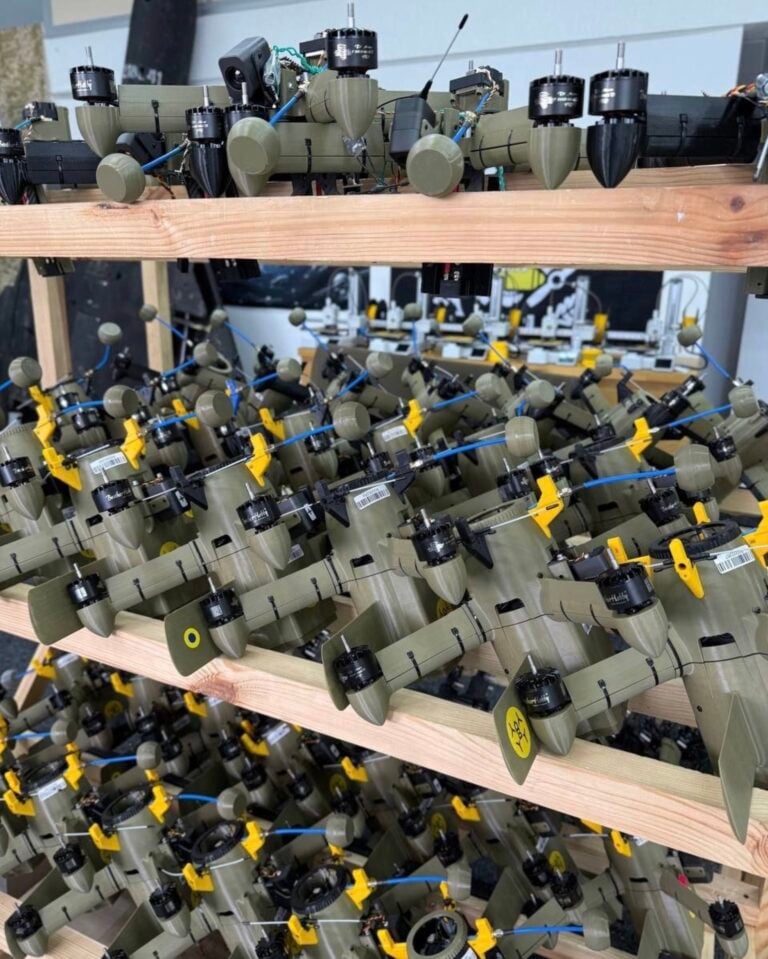
- The scale: Russia now produces hundreds of Geran-2 drones per day, with Ukrainian intelligence warning that Moscow may soon hit 1,000 units daily. Zelenskyy told the World Economic Forum on January 22 that Ukraine produces about 1,000 drones a day and “it’s still not enough.”
- The evolution: Russia has moved well beyond the original design, adding jet engines, remote-control capability, heavier warheads, and new navigation systems across at least five Geran variants.
- The source: McAuliffe draws on open-source intelligence and her decades-long CIA career to map the full Iran-Russia drone pipeline (read the full analysis here).
Iran traded drone expertise for cash Russia paid partly in gold
Iran’s involvement in Russia’s drone program goes far beyond a simple arms sale. Tehran provided the complete technical package for Russia to domestically manufacture the Shahed-136, including engineering blueprints, production tooling, and ongoing technical assistance, enabling Moscow to build what it could not design on its own. The deal, valued at an estimated $1 billion to $1.75 billion, is reportedly being paid partly in gold bullion.
The relationship started around early 2022, when Moscow realized it lacked the ability to build large numbers of kamikaze drones. Russia had invested in traditional weapons and initially didn’t grasp how long-range strike drones could reshape the battlefield. Iran had the expertise, an existing defense relationship with Russia, and a sanctions-crippled economy that desperately needed revenue.
By late 2022 or early 2023, the two countries signed a deal to build a production plant in Tatarstan, according to leaked documents from Iranian company Sahara Thunder first reported by Haaretz. That facility now churns out the Geran-2 at industrial scale. The drone’s delta-wing design carries 90 to 110 pounds of explosives over hundreds of miles at roughly $20,000 per unit. Compare that to a cruise missile costing millions, and the math becomes obvious.
Five Geran variants show how fast this program is accelerating
Russia’s drone fleet has expanded from a single Iranian import into a family of at least five distinct variants, each building on the original Shahed-136 design with Russian modifications that have progressively increased speed, range, lethality, and targeting precision. The pace of iteration is the real story here.
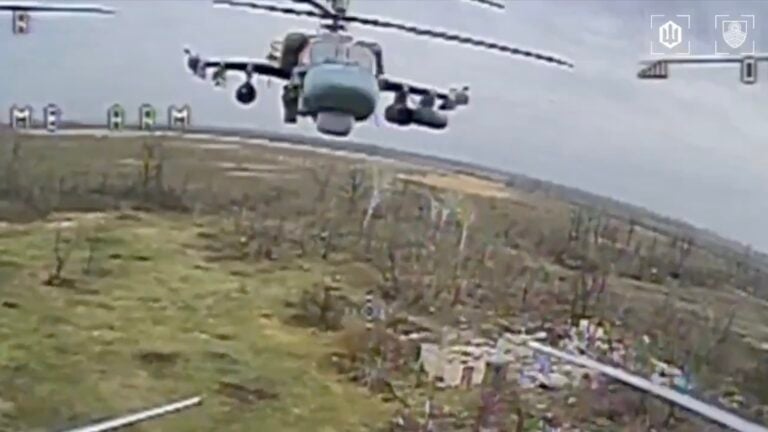
The original Geran-2 is the workhorse: slow, loud, cheap, and effective in swarms. But Russia has layered on modifications we’ve been tracking all year. In September, we reported that Moscow was adding cameras, modem antennas, and remote-control capability to enable real-time piloting. That transformed what was a dumb GPS-guided munition into a man-in-the-loop weapon.
Then came the Geran-3, a jet-powered variant based on the Iranian Shahed-238, capable of roughly 230 mph. That’s double the speed of the propeller-driven Geran-2. Ukraine’s interceptor drone teams have shown they can still catch it, but the margin is shrinking.
In January, Ukrainian intelligence identified the Geran-5, which ditches the familiar delta wing entirely for a fixed-wing airframe resembling Iran’s Karrar drone. It can hit 373 mph, carries a 200-pound warhead, and contains more than a dozen foreign-made electronic parts, including at least nine from American companies. Russia may even launch it from Su-25 fighter aircraft.
The most alarming upgrade came last month. We reported that Starlink-connected Shaheds hit a moving Ukrainian passenger train, killing five people. A Starlink satellite link eliminates both GPS jamming vulnerabilities and the inability to track moving targets. Ukraine’s drone interception rate dropped from 98% in February 2025 to 80% by October.
Sanctions have failed to cut the parts pipeline
Despite multiple rounds of U.S. Treasury sanctions targeting Iran’s drone procurement networks, Western and Chinese components continue flowing into Russia’s production lines. Iran uses networks of brokers and shell companies, primarily routed through the UAE and India, to acquire engines, fuel pumps, GPS systems, semiconductors, and antenna components that neither country can manufacture domestically.
The procurement web is staggering in its complexity. The original deal was brokered through an Iranian company called Sahara Thunder, which used shipping firms in the UAE and India. The U.S. sanctioned Sahara Thunder, so Iran created new fronts. In November, we covered how the Treasury Department sanctioned two Ukrainian companies based in Kharkiv and Kyiv for supplying critical aerospace components to Iran’s drone manufacturer HESA. Ukrainian firms supplying parts for the drones that Russia uses to bomb Ukrainian cities.
Days later, the Treasury sanctioned 32 more individuals and entities across eight countries for operating procurement networks feeding Iran’s drone production. The sanctions keep coming. The parts keep flowing.
The U.N. has called Russia’s drone strikes a war crime
Russia uses its Geran fleet to deliberately target civilians and civilian infrastructure in Ukraine, including residential housing, first responders, and humanitarian aid distribution points, according to the United Nations. In October 2025, the U.N. concluded that Russia’s use of short-range unmanned aerial vehicles against civilians in southern Ukraine constituted both a crime against humanity and a war crime.
The human cost is relentless. McAuliffe highlights a two-day attack in May 2025 on Kharkiv and Odessa, where Russia launched over 100 drones. Three city blocks in Kharkiv burned down, including 90 shops, and two people were injured. In Odessa, the drones killed one person and damaged residential buildings. Our own July reporting documented how nightly Shahed attacks force Ukrainian civilians into shelters, with the drones’ distinctive moped-like whir giving just enough warning to spark panic.
The strategic logic is cold. Cheap drones absorb air defense resources. Expensive missiles are saved for high-value targets. The population is terrorized around the clock.
Iran profits while learning from Russia’s battlefield data
This arrangement is not charity. Beyond the billion-dollar-plus price tag, Iran gains real-world combat data on its drone designs that no amount of testing could replicate. Every Geran modification Russia develops feeds back into Iran’s own military drone capabilities. Tehran watches what works against Ukrainian air defenses, what gets intercepted, and what gets through.
That two-way learning cycle explains why the Shahed design has sparked a global arms race. The U.S., China, France, and the UK are all developing their own versions of the triangular-winged drone. The Pentagon’s LUCAS drone was literally built by reverse-engineering a captured Shahed. Iran’s $20,000 drone forced every major military power to rethink how it builds and buys unmanned weapons.
DroneXL’s Take
We’ve covered the Shahed story from every angle over the past year, from captured drones displayed in the UK Parliament to Starlink-enabled strikes on moving trains. McAuliffe’s analysis pulls it all together into a clear picture: Iran didn’t just sell Russia a weapon. It built Russia a weapons industry.
What keeps me up at night is the iteration speed. In 2022, Russia was launching basic GPS-guided Geran-2s at fixed coordinates. By January 2026, it’s fielding a Geran-5 with a jet engine, American electronics, and the potential for air-launch from fighter jets. Five numbered variants in under four years, all built on what started as a $20,000 airframe.
Sanctions aren’t working fast enough. The Treasury keeps designating new entities, and Iran keeps spinning up new fronts. The procurement networks span eight countries. The components are commercial, off-the-shelf, and almost impossible to fully restrict.
Expect Russia to reach 1,000 Geran units per day before mid-2026. When it does, the calculus changes. Ukraine’s interceptor drone teams have been brilliant, but even a 20% leak rate means 200 drones hitting Ukrainian territory every single day. The cost-per-intercept math that has defined this war is about to get much worse.
Editorial Note: AI tools were used to assist with research and archive retrieval for this article. All reporting, analysis, and editorial perspectives are by Haye Kesteloo.
Discover more from DroneXL.co
Subscribe to get the latest posts sent to your email.
Check out our Classic Line of T-Shirts, Polos, Hoodies and more in our new store today!

MAKE YOUR VOICE HEARD
Proposed legislation threatens your ability to use drones for fun, work, and safety. The Drone Advocacy Alliance is fighting to ensure your voice is heard in these critical policy discussions.Join us and tell your elected officials to protect your right to fly.

Get your Part 107 Certificate
Pass the Part 107 test and take to the skies with the Pilot Institute. We have helped thousands of people become airplane and commercial drone pilots. Our courses are designed by industry experts to help you pass FAA tests and achieve your dreams.

Copyright © DroneXL.co 2026. All rights reserved. The content, images, and intellectual property on this website are protected by copyright law. Reproduction or distribution of any material without prior written permission from DroneXL.co is strictly prohibited. For permissions and inquiries, please contact us first. DroneXL.co is a proud partner of the Drone Advocacy Alliance. Be sure to check out DroneXL's sister site, EVXL.co, for all the latest news on electric vehicles.
FTC: DroneXL.co is an Amazon Associate and uses affiliate links that can generate income from qualifying purchases. We do not sell, share, rent out, or spam your email.