FPV drones strike Myanmar passenger plane at Myitkyina Airport in second attack this month

Check out the Best Deals on Amazon for DJI Drones today!
An ATR-72-600 turboprop operated by Myanmar National Airlines was hit by multiple FPV suicide drones while passengers were boarding at Myitkyina Airport on the evening of February 20, 2026. No one was killed or injured, but the attack marks the second time in eight days that drones have targeted the airport, and what appears to be the first FPV drone strike against a civilian passenger aircraft in Myanmar’s civil war.
Here is what we know so far:
- The incident: At approximately 8:12 PM local time, several FPV kamikaze drones targeted the ATR-72-600 (registration XY-AMI) as it prepared to operate flight UB662 from Myitkyina to Mandalay, according to Eleven Media via The Star. At least two drones struck the aircraft, causing shrapnel damage to the nose, mid-fuselage, and tail section. AeroTime reports the drones were equipped with RPG-type warheads.
- Who is blamed: The Myanmar military junta accuses the Kachin Independence Army (KIA) and allied People’s Defense Force (PDF) units. KIA spokesman Colonel Naw Bu denied the allegations to the BBC, stating the group does not target civilian aircraft.
- Why it matters: ACLED data ranks Myanmar third globally for drone operations, behind only Ukraine and Russia. This attack on a civilian plane pushes the boundaries of how FPV drones are being used in the country’s conflict.
Air defenses intercepted some drones but failed to stop direct hits
Myanmar security forces claim air defense systems at Myitkyina Airport detected the incoming drones and prevented detonation inside the airport compound. Some drones were forced to crash on the runway and surrounding areas, where explosive devices were later defused, The Star reported, citing an official military press release.
But the defense was not complete. Open-source imagery shared on social media shows visible damage to the aircraft’s rear fuselage, where at least one drone impact reportedly started a small fire. The frontal area near the cockpit also shows signs of impact.
All passengers were evacuated safely. No crew members were harmed. The junta’s press release called the attack on civilian aviation infrastructure “a war crime under the Geneva Conventions and international law.”
Myitkyina Airport faced a nearly identical attack on February 12
This was not the first attempt. Just eight days earlier, on February 12, FPV drones targeted the same airport in a morning strike. That attack was intercepted before drones could reach their targets, Mizzima News reported. No damage to people, buildings, or infrastructure occurred, but all evening flights from Myitkyina were canceled as a precaution.
The February 12 attack came just days after the KIA-led coalition reportedly destroyed a radar station at Nant Paung Air Base in Myitkyina on February 8, using a drone strike. Taken together, the three incidents in less than two weeks show a concentrated campaign against junta air infrastructure in Kachin State.
Myitkyina Airport is the sole reliable air link from Kachin State to Yangon and Mandalay. Road conditions in the region are poor, making the airport critical not just for military logistics but for civilian transport, medical evacuations, and goods. When flights were suspended after the February 12 attack, local sources told NP News that critically ill patients, travelers with international connections, and people who could not be treated at local hospitals were stranded.
The KIA denies involvement but has a track record of anti-aviation operations
KIA Colonel Naw Bu told the BBC that his organization has no policy of attacking civilian airlines and denied any role in the February 20 attack. The denial carries weight. When the KIA carried out drone strikes on the junta’s capital Naypyidaw in 2024, it publicly claimed credit.
But the KIA’s track record with FPV drones against aircraft is well documented. In May 2025, KIA fighters used a fiber-optic FPV drone to strike a junta Mi-17 transport helicopter near Shwegu as it hovered feet off the ground while resupplying troops during the battle for Bhamo. Colonel Naw Bu himself confirmed that attack to The Irrawaddy, saying “KIA troops bombed the helicopter on a football pitch near Infantry Battalion 56’s headquarters in Shwegu town.” Video footage showed the drone hitting the helicopter’s rotor blades, causing it to crash. The Irrawaddy reported that KIA soldiers found 19 bodies at the wreck site, including a captain identified by name tag.
That May 2025 helicopter downing was considered possibly the first confirmed instance of an FPV drone bringing down a manned helicopter anywhere in the world, as The War Zone reported. The technique mirrored FPV kamikaze tactics developed in Ukraine, but Myanmar’s resistance fighters were the first to successfully apply them against a helicopter.
Myanmar’s drone war has evolved from 3D-printed munitions to fiber-optic FPV strikes
Following the February 2021 military coup, Myanmar’s resistance forces rapidly adopted drone warfare. Data from the Armed Conflict Location & Event Data Project (ACLED) now ranks Myanmar third globally for drone operations, behind only Ukraine and Russia, according to Al Jazeera. What started as tech-savvy students and engineers dropping 3D-printed munitions from modified agricultural drones has become something far more sophisticated.
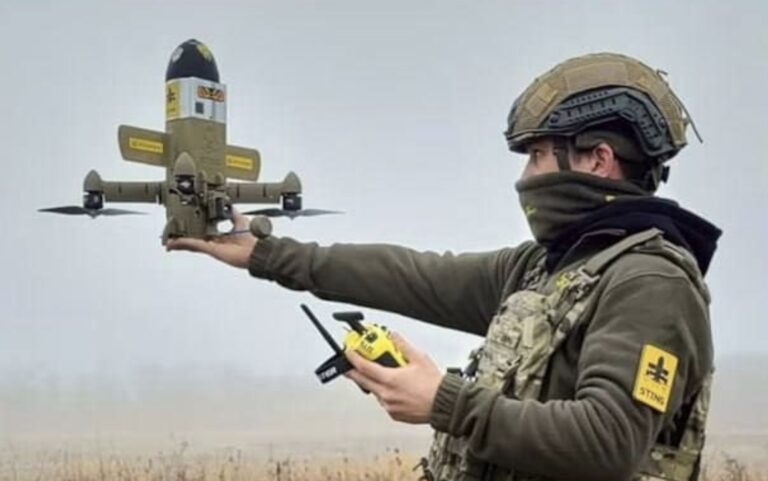
Rebel units now field agile FPV racing drones modified to carry explosive payloads, turning them into low-cost loitering munitions. Some, like the drone used in the May 2025 helicopter attack, use fiber-optic control links that are immune to electronic warfare jamming. That detail matters. A 2025 report by Conflict Armament Research found that the junta had integrated European-made anti-jamming modules into its own drones, showing both sides are locked in a technological arms race.
Meanwhile, the junta has not been passive. It fields thousands of Chinese-made drones, including armed CH-4 platforms, and Russian Orlan-10E systems for surveillance and electronic warfare. Myanmar’s military has also imposed draconian punishments for drone possession, including a lifetime prison sentence handed to documentary filmmaker Shin Daewe for simply owning one.
DroneXL’s Take
This is a line that hasn’t been crossed before in Myanmar. I’ve been covering Myanmar’s drone war since the first reports of 3D-printed munitions in 2022, and the escalation from dropping grenades to fiber-optic FPV strikes on helicopters to now hitting a civilian turboprop has happened faster than most analysts expected. FPV drones have been used against military helicopters, against army headquarters, against airbases. But hitting a civilian turboprop while passengers board for a domestic flight? That is a different category of risk.
The KIA’s denial is worth taking seriously. Colonel Naw Bu has been open about military operations before, including the Shwegu helicopter downing. A false flag operation by the junta to justify crackdowns in Kachin State is not outside the range of possibility, though there is no evidence for that either. What we can say is that whoever launched those drones created a scenario that international law clearly prohibits.
The bigger picture here is about proliferation. The same FPV drone tactics that transformed the battlefield in Ukraine are now being applied in Southeast Asia against civilian aviation infrastructure. That is a global aviation security problem, not just a Myanmar problem. If a $500 FPV drone with an RPG warhead can hit a taxiing turboprop at a regional airport in Kachin State, it can do the same anywhere with similarly thin air defenses.
Expect international aviation bodies to start paying closer attention to Myanmar’s airspace. If attacks on civilian aircraft continue, I would not be surprised to see ICAO issue advisories within the next three to six months that effectively ground international carriers from operating into conflict-affected Myanmar airports. The drone threat to civil aviation is no longer theoretical. It just put shrapnel holes in an ATR-72.
Editorial Note: AI tools were used to assist with research and archive retrieval for this article. All reporting, analysis, and editorial perspectives are by Haye Kesteloo.
Discover more from DroneXL.co
Subscribe to get the latest posts sent to your email.
Check out our Classic Line of T-Shirts, Polos, Hoodies and more in our new store today!

MAKE YOUR VOICE HEARD
Proposed legislation threatens your ability to use drones for fun, work, and safety. The Drone Advocacy Alliance is fighting to ensure your voice is heard in these critical policy discussions.Join us and tell your elected officials to protect your right to fly.

Get your Part 107 Certificate
Pass the Part 107 test and take to the skies with the Pilot Institute. We have helped thousands of people become airplane and commercial drone pilots. Our courses are designed by industry experts to help you pass FAA tests and achieve your dreams.

Copyright © DroneXL.co 2026. All rights reserved. The content, images, and intellectual property on this website are protected by copyright law. Reproduction or distribution of any material without prior written permission from DroneXL.co is strictly prohibited. For permissions and inquiries, please contact us first. DroneXL.co is a proud partner of the Drone Advocacy Alliance. Be sure to check out DroneXL's sister site, EVXL.co, for all the latest news on electric vehicles.
FTC: DroneXL.co is an Amazon Associate and uses affiliate links that can generate income from qualifying purchases. We do not sell, share, rent out, or spam your email.