Parallel Flight Firefly Clears FAA Hurdle, Heads to Market
Check out the Best Deals on Amazon for DJI Drones today!
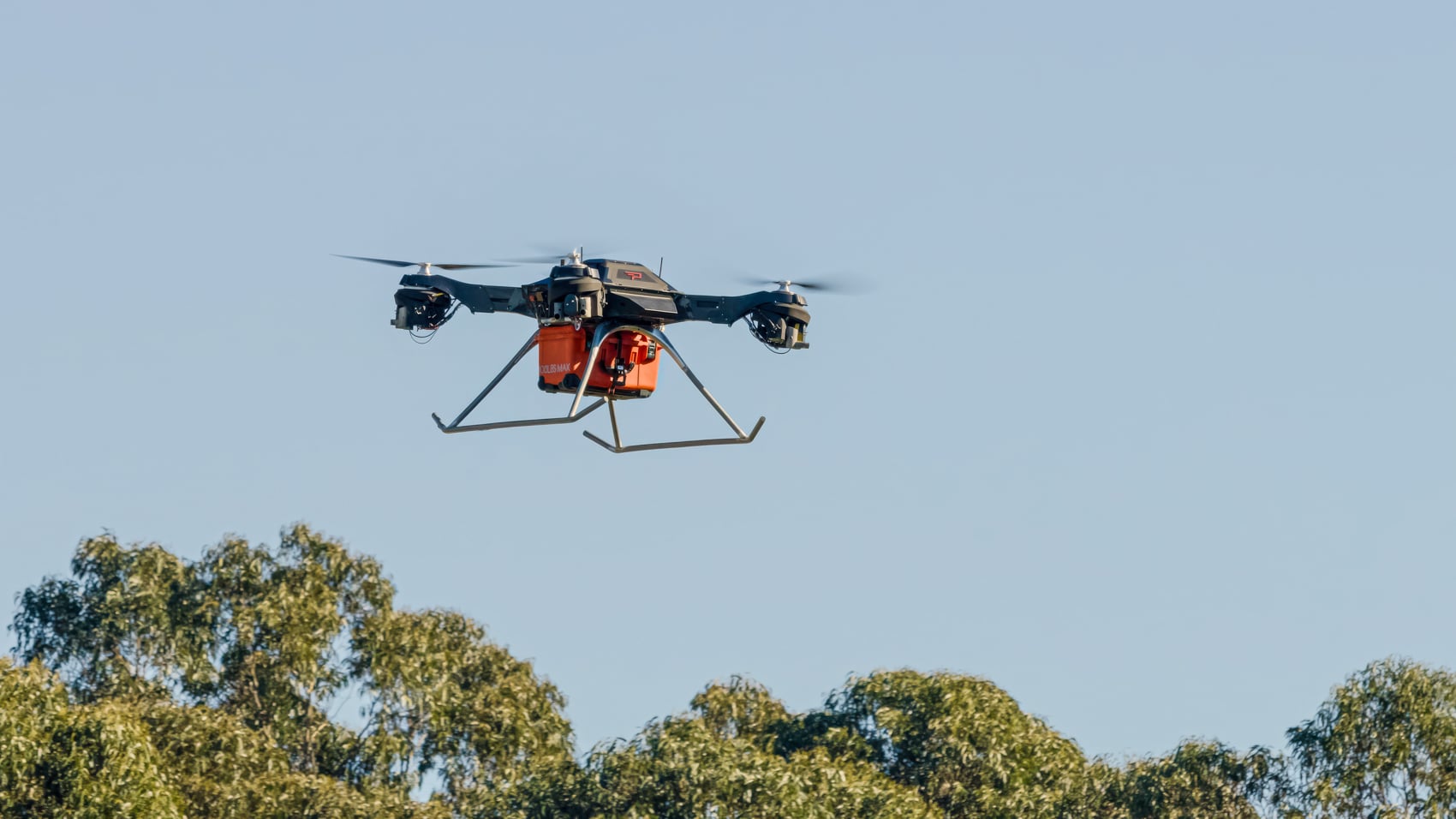
California’s Parallel Flight Technologies just received the regulatory green light that changes everything for the company. The FAA has granted the Firefly heavy-lift drone a Section 44807 exemption, authorizing commercial operations in U.S. airspace, as UAVHQ reported.
This is not a small milestone. The Section 44807 exemption is the specific legal pathway for unmanned aircraft that exceed 55 pounds at takeoff, putting them outside the standard Part 107 small UAS rule.
Getting one requires demonstrating rigorous safety architecture, documented operational procedures, and genuine platform maturity to FAA reviewers. Parallel Flight did all of it. The Firefly is cleared to work.
What the Firefly Actually Is
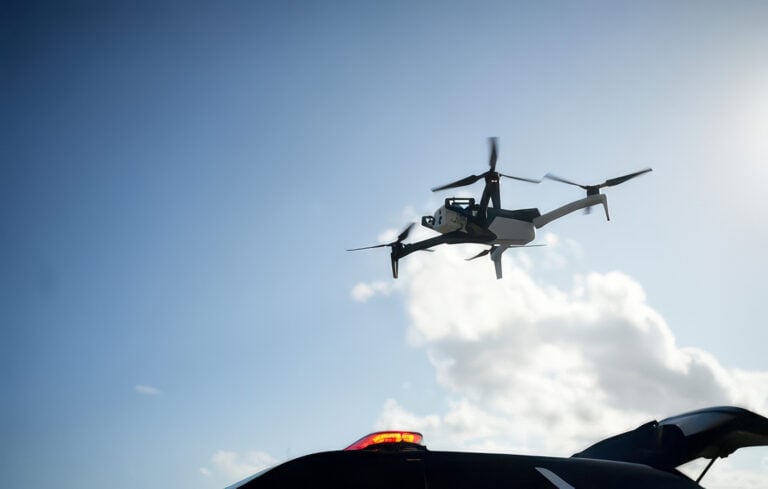
Forget everything you think you know about what a drone looks like. The Firefly is a Group 3 quadcopter that two people can carry, transport in the bed of a pickup truck, and deploy with no ground infrastructure whatsoever.
Refueling takes under five minutes. The full aircraft maintenance cycle runs 30 minutes. It is built for the kind of environments where you do not have the luxury of a hangar, a charging station, or a support crew.
And then the specs kick in.
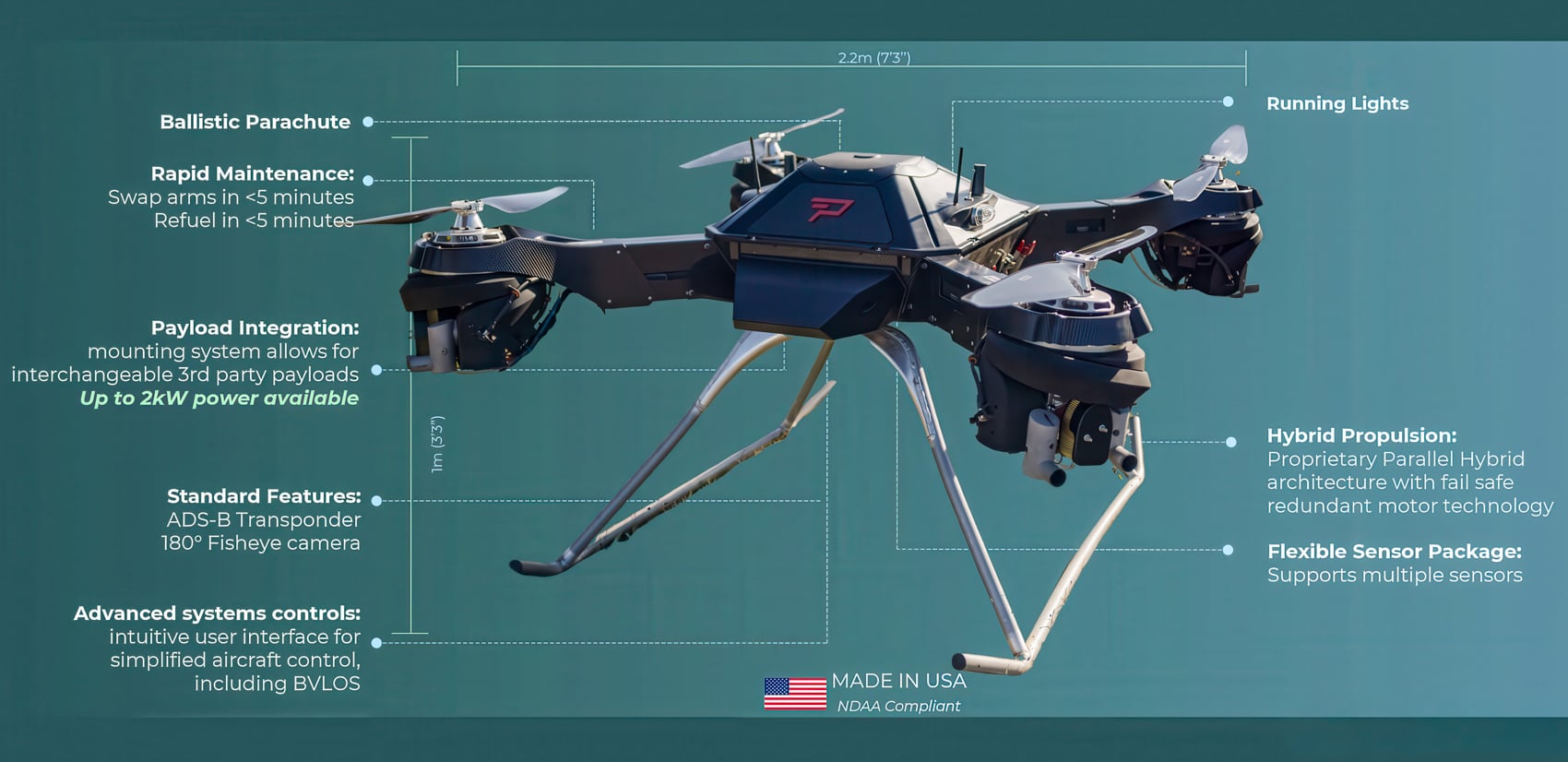
The Firefly carries 100 pounds of payload for 1.4 hours of flight. That endurance figure is roughly ten times what a comparable all-electric drone can manage.
The propulsion system also delivers 2 kilowatts of continuous in-flight power to onboard equipment, which matters enormously for sensor-heavy missions where cameras, communications gear, and specialized payload systems are drawing power the entire time the aircraft is in the air.
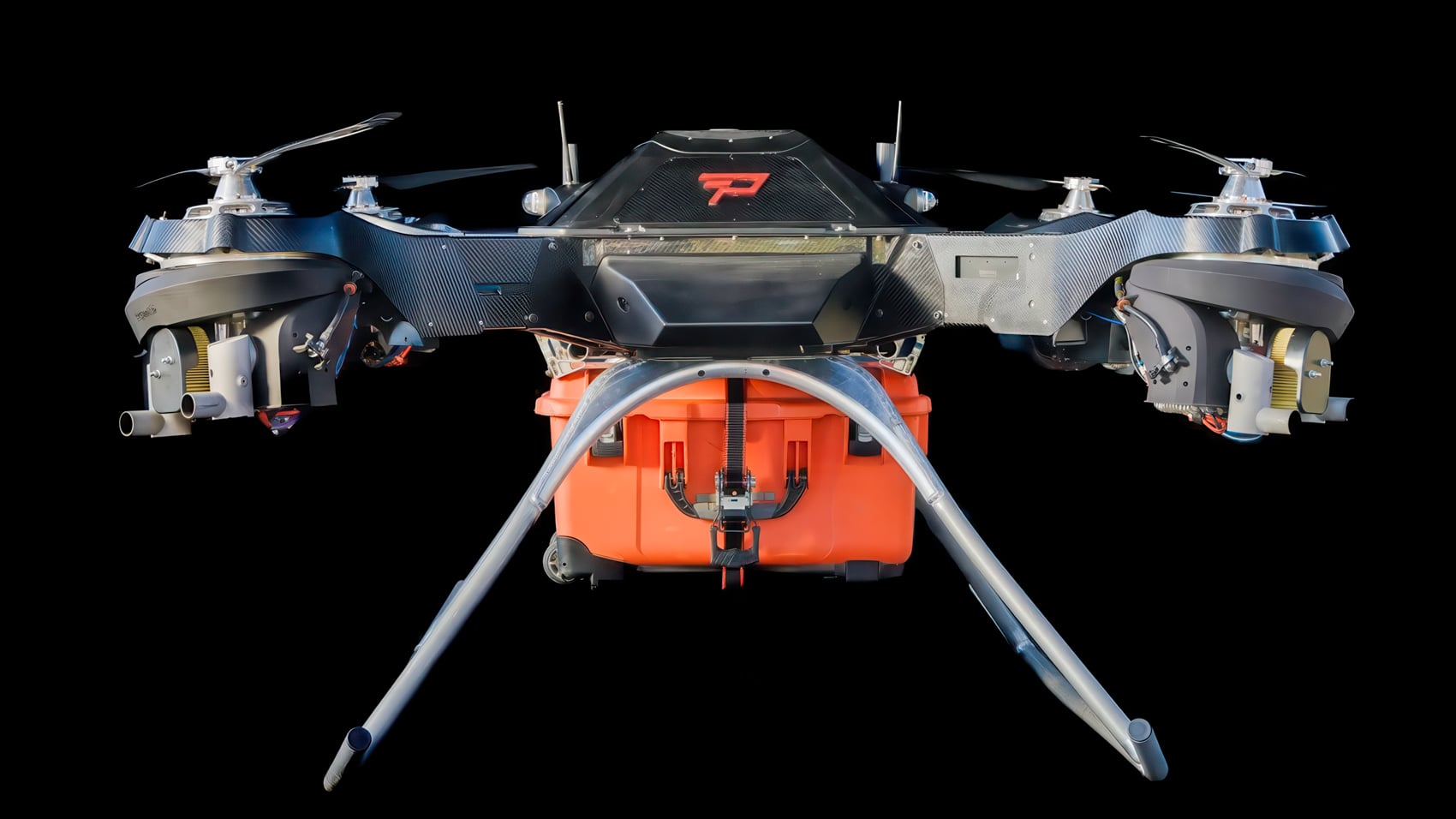
The secret is the Parallel Hybrid Electric Multirotor system, or PHEM, which the company has protected with five patents. Each of the four arms houses a 120cc fuel-injected engine paired with a brushless electric motor.
Total continuous output across the system is 23 kilowatts, with significantly higher burst capacity available when the mission demands it. If any single engine stalls, the remaining modules supply power to keep the failed arm running. The aircraft keeps flying. The payload stays safe.
The ballistic parachute option takes that redundancy one step further. No batteries to charge. No infrastructure to set up. No charging windows between missions. Just fuel it, launch it, and go.
The Missions Nobody Else Can Handle
The FAA exemption opens Firefly to commercial work across several sectors that have been waiting for a platform like this.

Wildland firefighting is the most immediate application. Helicopter resources in active fire conditions are expensive, limited, and sometimes grounded by smoke.
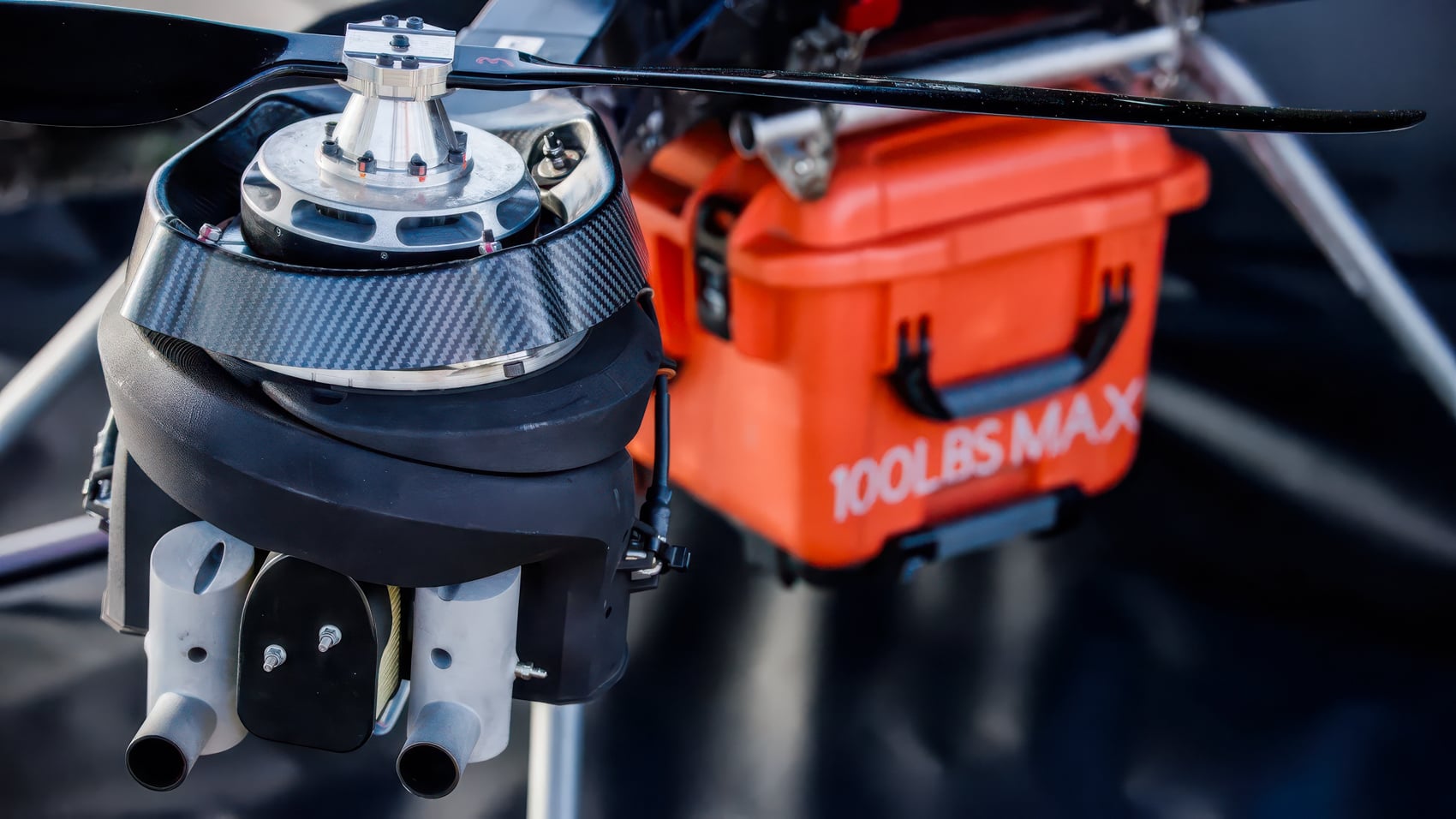
A drone that can carry a heavy sensor package, loiter for over an hour, deliver real-time thermal imaging to ground crews, and be refueled and relaunched in under five minutes changes the calculus of aerial fire support significantly. Parallel Flight has been developing this use case for years.
Industrial inspection is the second major lane. Firefly’s ability to carry large, power-hungry sensor arrays makes it a candidate for infrastructure inspection jobs that smaller drones simply cannot handle. Power lines. Pipelines. Cell towers. The 2 kilowatt onboard power delivery means sensors run continuously and at full capability, not in power-saving modes.
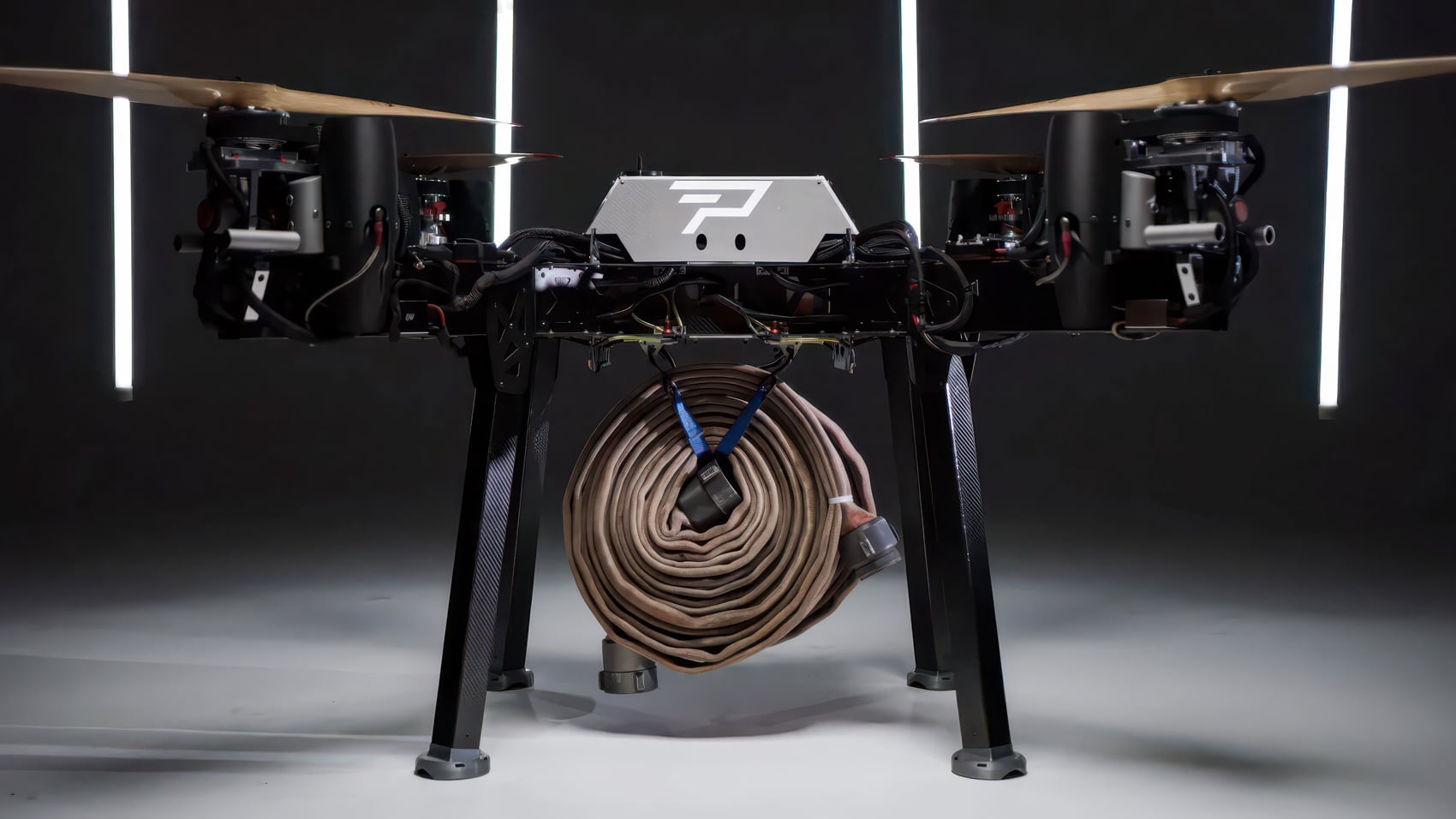
Remote logistics is the third. The combination of heavy payload capacity and genuine endurance opens supply chain routes to locations where road access is unreliable and helicopter logistics are cost-prohibitive. Medical supplies. Emergency equipment. Critical parts. Firefly can cover that ground.
The U.S. Navy took notice before the FAA exemption even came through. The Office of Naval Research awarded Parallel Flight a $3.74 million contract to adapt the Firefly for shipboard operations, including autonomous deck landings on moving vessels, JP-5 fuel compatibility for naval use, and extended BVLOS capability for maritime surveillance.
The Defense Innovation Unit, NASA, USDA, National Science Foundation, and the Office of Naval Research have all backed the platform at various stages.
DroneXL’s Take
Here’s the honest part: the drone industry has no shortage of companies announcing platforms that promise to revolutionize wildfire response, transform industrial inspection, and redefine logistics. Most of them are still doing test flights.
Parallel Flight is different, and the FAA exemption is the evidence. Section 44807 is not handed out for press releases. The FAA reviewed the safety architecture, the operational procedures, and the platform maturity, and said yes. That is a real signal.
The PHEM propulsion system is the genuine engineering differentiator here. Serial hybrids charge a battery with a generator. Parallel hybrids run the gas engine and the electric motor simultaneously on each rotor, which is fundamentally more efficient and delivers true per-rotor redundancy.
Five patents protect that architecture. The Navy is paying $3.74 million to adapt it for shipboard use. These are not the markers of a company guessing at the future.
Firefly ships to first customers this summer. Watch this one closely.
Photo credit: Parallel
Discover more from DroneXL.co
Subscribe to get the latest posts sent to your email.
Check out our Classic Line of T-Shirts, Polos, Hoodies and more in our new store today!

MAKE YOUR VOICE HEARD
Proposed legislation threatens your ability to use drones for fun, work, and safety. The Drone Advocacy Alliance is fighting to ensure your voice is heard in these critical policy discussions.Join us and tell your elected officials to protect your right to fly.

Get your Part 107 Certificate
Pass the Part 107 test and take to the skies with the Pilot Institute. We have helped thousands of people become airplane and commercial drone pilots. Our courses are designed by industry experts to help you pass FAA tests and achieve your dreams.

Copyright © DroneXL.co 2026. All rights reserved. The content, images, and intellectual property on this website are protected by copyright law. Reproduction or distribution of any material without prior written permission from DroneXL.co is strictly prohibited. For permissions and inquiries, please contact us first. DroneXL.co is a proud partner of the Drone Advocacy Alliance. Be sure to check out DroneXL's sister site, EVXL.co, for all the latest news on electric vehicles.
FTC: DroneXL.co is an Amazon Associate and uses affiliate links that can generate income from qualifying purchases. We do not sell, share, rent out, or spam your email.