Zelenskyy’s UK Parliament Speech Puts Ukraine’s Drone Deal Back on the Table — and Trump’s Dismissal on the Record
Check out the Best Deals on Amazon for DJI Drones today!
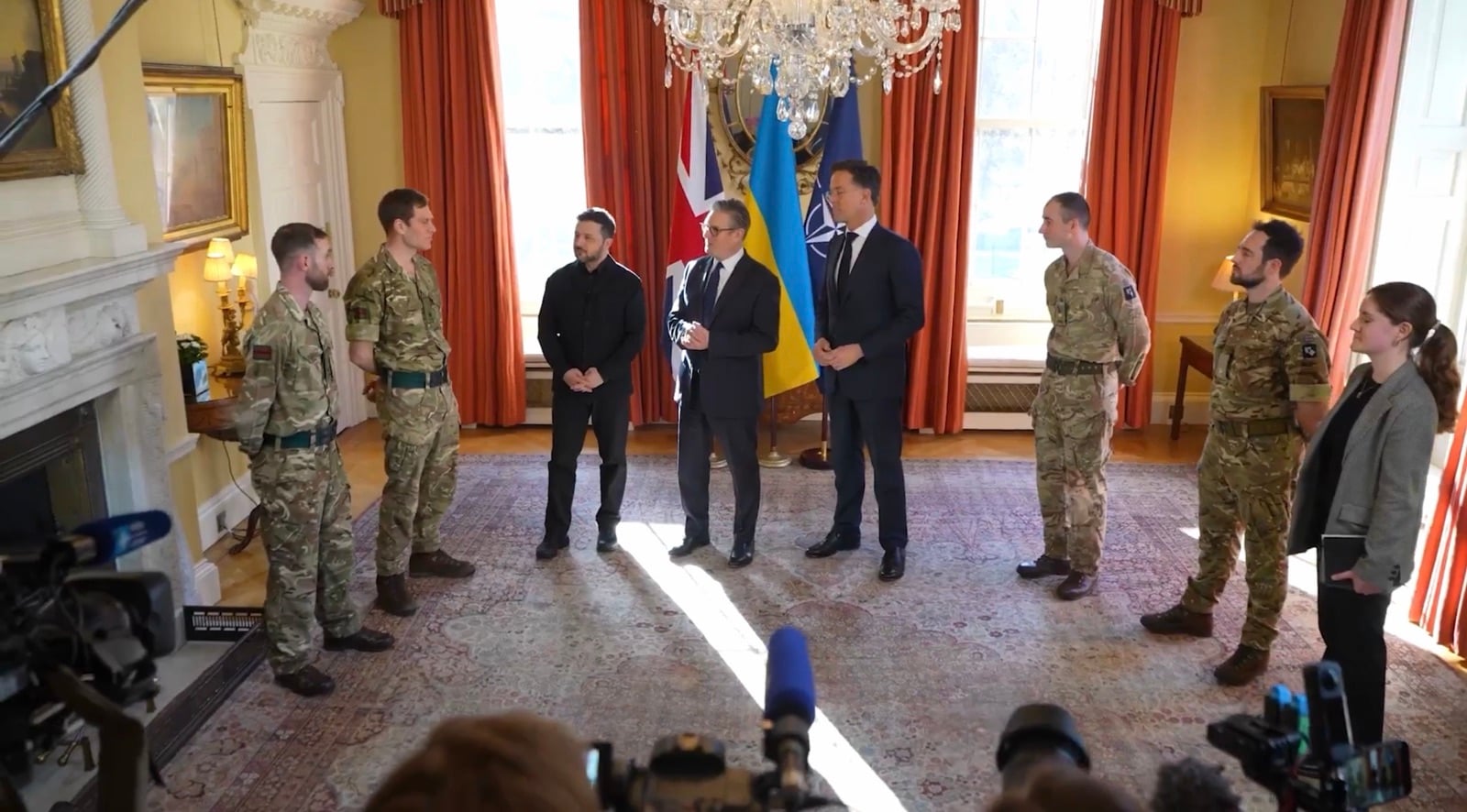
Speaking before the UK Parliament today, Ukrainian President Volodymyr Zelenskyy laid out the most detailed public case yet for Ukraine as the world’s essential drone defense partner — and made clear that the Drone Deal proposed to the United States is still waiting for a signature.
The address covered ground we’ve been tracking for weeks, but the setting mattered. This wasn’t a press conference or an X post. It was a formal address to a NATO ally’s legislature, and Zelenskyy used it to put numbers on the table that make Trump’s “we don’t need their help” position harder to sustain.
Here’s what he confirmed, per Ukrainska Pravda’s direct transcript of the speech:
- The Deployment: 201 Ukrainian military experts are now in the Middle East and Gulf region specifically to help defend against Shahed drones. Another 34 are ready to deploy. Teams are already operating in the Emirates, Qatar, Saudi Arabia, and en route to Kuwait.
- The Production Claim: Ukraine can produce at least 2,000 combat-proven interceptors per day. It needs roughly 1,000 for its own defense and can supply the remaining 1,000 daily to allies.
- The Drone Deal: The proposal to the United States is still on the table, framed by Zelenskyy as a package covering interceptors, radar networks, acoustic detection, and electronic warfare software — a full system, not just hardware.
Ukraine’s Interceptor Economics Exposed the Missile Math Problem
Ukraine’s interceptor program exists because the math of missile-based air defense broke under sustained Shahed attack. Zelenskyy made that economics argument explicitly in London. In his Parliament speech, he put the Shahed’s cost at roughly $50,000 — a figure on the lower end of estimates that range up to $130,000–$150,000 depending on the variant and source — while the missiles typically used to shoot them down run $1 million to $4 million per shot. That gap is why Gulf states burned through more than 800 Patriot missiles in three days after Iran began its retaliatory strikes on February 28 — more than Ukraine received across four years of Western aid combined.
Ukraine’s answer is interceptors priced between $1,000 and $2,500 each. Wild Hornets’ Sting, at roughly $2,100–$2,500, has recorded nearly 4,000 drone kills since May 2025. SkyFall’s P1-SUN, a fiber-optic variant on a 3D-printed airframe, costs $1,000 per unit and has taken down more than 1,500 Shaheds and 1,000 other drones in four months. The Merops system, developed by a U.S. defense company backed by former Google CEO Eric Schmidt with direct Ukrainian combat input, runs $14,000–$15,000 per interceptor — but has been credited with 40% of all Shahed kills in Ukraine, destroying roughly $200 million worth of attack drones using approximately $15 million worth of interceptors.
By February 2026, interceptor drones accounted for more than 70% of Shahed kills over Kyiv alone.
Ukraine’s Command Layer Is the Real Offer — Not Just the Hardware
Zelenskyy’s most striking detail today wasn’t the interceptor numbers. It was the iPad.
He described — in his own words from the address — a software system running on standard iPads that he says gives commanders real-time visibility over every drone strike, every sea-area threat, and every long-range strike against Russia. He said he has one. His Prime Minister has one. His Minister of Defense has one. Top field commanders have them. According to Zelenskyy, the system shows confirmed enemy kills with video proof, tracks drone-caused losses on the front line, and allows real-time repositioning of air defense assets based on incoming attack vectors.
Ukraine hasn’t released independent technical documentation of the system, but the operational logic is consistent with what Ukrainian units have demonstrated publicly. And it points to what Ukraine is actually selling: not just hardware, but a command-and-control layer built under four years of live fire.
That distinction matters. As we reported when Gulf states first began queuing to buy Ukrainian interceptors, shipping hardware without the operational network around it is how you get expensive drones sitting in warehouses. Wild Hornets’ Alex Roslin put it plainly: training a pilot takes three days. Building the integrated air defense network takes orders of magnitude longer. Ukraine is offering both.
The Russia-Iran Drone Supply Chain — and Why It Makes Ukraine’s Expertise Relevant Everywhere
Zelenskyy used the Parliament address to publicly connect dots that U.S. officials have confirmed separately. Iranian Shaheds now hitting Gulf targets contain Russian components. Iran transferred Shahed technology to Russia after the 2022 invasion. Russia upgraded the design — producing the Geran-2 and eventually the jet-powered Geran-3 — and the technology transfer has since reversed, with Russian manufacturing know-how flowing back into Iranian production lines.
We’ve tracked Russia’s Shahed production surge in detail, including Commander-in-Chief Syrskyi’s January assessment that Russia was manufacturing 404 Shahed-type drones daily with a target of 1,000 per day. The Russia-Iran weapons loop is why Ukraine’s counter-drone expertise is directly relevant to Gulf security. The drones hitting Bahrain and Kuwait are cousins of the ones hitting Kyiv — same lineage, same vulnerabilities, same countermeasures.
The Deal Trump Won’t Sign — and the History He’s Rewriting
The Drone Deal’s paper trail makes Trump’s public dismissal difficult to square with the facts on the ground.
In August 2025, Zelenskyy’s team presented a PowerPoint to U.S. officials at a closed-door White House meeting. The presentation showed a map of the Middle East, warned that Iran was upgrading its Shahed design, and proposed “drone combat hubs” in Turkey, Jordan, and Gulf states where U.S. bases are located. Trump told his team to work on it. Nothing happened. One U.S. official told Axios: “We figured it was Zelensky being Zelensky. Somebody decided not to buy it.”
When Iran launched its retaliatory strikes on February 28 and U.S. bases started absorbing hits — including the March 1 strike at Port Shuaiba, Kuwait that killed six American service members — the Pentagon formally asked Zelenskyy for help. As we reported, Ukrainian specialists deployed to Muwaffaq Salti Air Base in Jordan shortly after. The U.S. also rushed 10,000 Merops interceptors — combat-proven in Ukraine — to the region.
Trump’s public line: “We don’t need their help in drone defense. We know more about drones than anybody.” His military’s actual behavior: requesting Ukrainian specialists and deploying Ukrainian-tested hardware. Worth noting: the Merops system is U.S.-developed, not a direct Ukrainian export — but it was built with Ukrainian combat input and tested in Ukrainian operations. Trump can argue the U.S. is using its own technology. The reality is that technology only exists because of Ukraine’s battlefield laboratory.
The broader deal Zelenskyy described to German journalist Gordon Repinski last week is valued at $35–$50 billion by Kyiv’s own estimate. It covers drone production and integrated air defense systems capable of defending against swarms of hundreds or thousands of Shaheds simultaneously. It still awaits White House sign-off.
DroneXL’s Take
I’ve been covering Ukraine’s interceptor program since the Sting was still a Wild Hornets volunteer prototype — before most Western defense media took it seriously. What Zelenskyy put before the UK Parliament today is the culmination of something that’s been building for over a year: Ukraine has quietly become the only country on earth with a proven, mass-produced, exportable answer to mass Shahed attack. That’s not a PR claim. It’s an operational fact backed by kill ratios, production numbers, and the Pentagon’s own procurement decisions.
The iPad command system detail is the part most outlets will skip, and it’s worth the most attention. Hardware gets replicated. A combat-refined command layer that shows you every incoming drone in real time, lets you reposition air defense on the fly, and delivers video confirmation of kills to every commander in the chain — that’s not something you reverse-engineer from a spec sheet. Ukraine built it under fire. No one else has it at scale.
Trump’s rhetoric and his military’s actual decisions have now diverged past the point of being easily reconciled. Within 60 days, watch for either a formal White House acknowledgment of the deal or Ukraine announcing a bilateral agreement with a Gulf state that forces Washington’s hand in public. The UK-Ukraine defense partnership signed today — specifically covering drone proliferation — is the opening move in that pressure campaign. It won’t be the last.
Editorial Note: AI tools were used to assist with research and archive retrieval for this article. All reporting, analysis, and editorial perspectives are by Haye Kesteloo.
Discover more from DroneXL.co
Subscribe to get the latest posts sent to your email.
Check out our Classic Line of T-Shirts, Polos, Hoodies and more in our new store today!

MAKE YOUR VOICE HEARD
Proposed legislation threatens your ability to use drones for fun, work, and safety. The Drone Advocacy Alliance is fighting to ensure your voice is heard in these critical policy discussions.Join us and tell your elected officials to protect your right to fly.

Get your Part 107 Certificate
Pass the Part 107 test and take to the skies with the Pilot Institute. We have helped thousands of people become airplane and commercial drone pilots. Our courses are designed by industry experts to help you pass FAA tests and achieve your dreams.

Copyright © DroneXL.co 2026. All rights reserved. The content, images, and intellectual property on this website are protected by copyright law. Reproduction or distribution of any material without prior written permission from DroneXL.co is strictly prohibited. For permissions and inquiries, please contact us first. DroneXL.co is a proud partner of the Drone Advocacy Alliance. Be sure to check out DroneXL's sister site, EVXL.co, for all the latest news on electric vehicles.
FTC: DroneXL.co is an Amazon Associate and uses affiliate links that can generate income from qualifying purchases. We do not sell, share, rent out, or spam your email.