FPV Drone Strikes U.S. Black Hawk at Baghdad Base
Check out the Best Deals on Amazon for DJI Drones today!
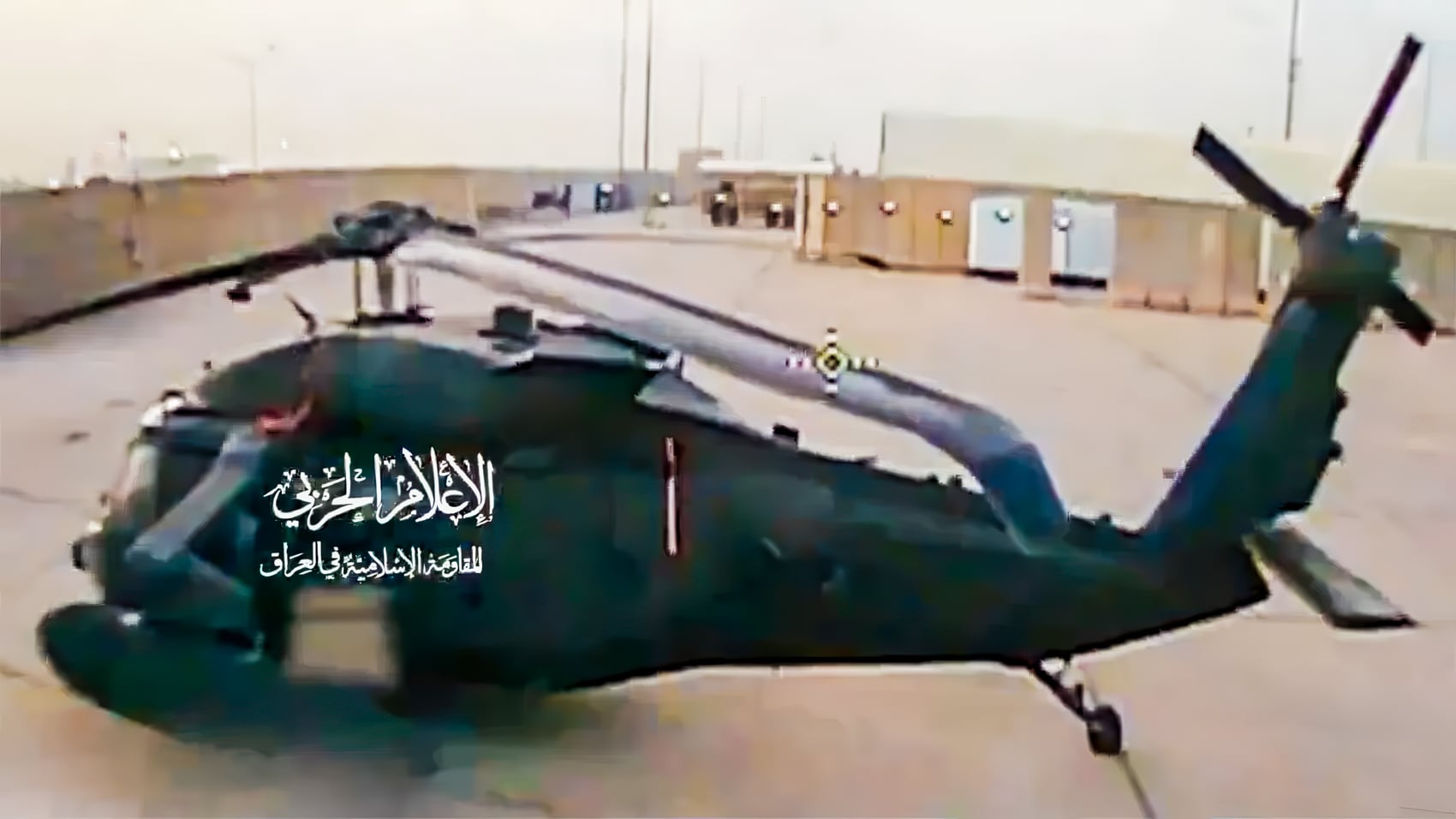
A small, low-cost FPV drone struck a U.S. Army HH-60M Black Hawk helicopter at a base in Baghdad, Iraq, in what appears to be the first confirmed successful drone attack on an American military aircraft, as reported by The War Zone. The U.S. military has no official comment yet, but the video says everything.
What Happened at Victory Base Complex
The attack took place at the Victory Base Complex, a cluster of American military installations surrounding Baghdad International Airport.


FPV Drone footage circulating online shows two Black Hawk helicopters sitting inside a compound, protected only by a low blast wall. The video feed, shot from the drone’s first-person view, cuts out just before impact on or near the main rotor. Based on the visible red cross identification panels on the airframe, the targeted aircraft appears to be an HH-60M configured for medical evacuation.
Whether the helicopter was destroyed or only damaged remains unconfirmed. What is confirmed is that a $6 million-plus medevac aircraft was engaged by a threat that costs a few hundred dollars to build. That gap is the story.
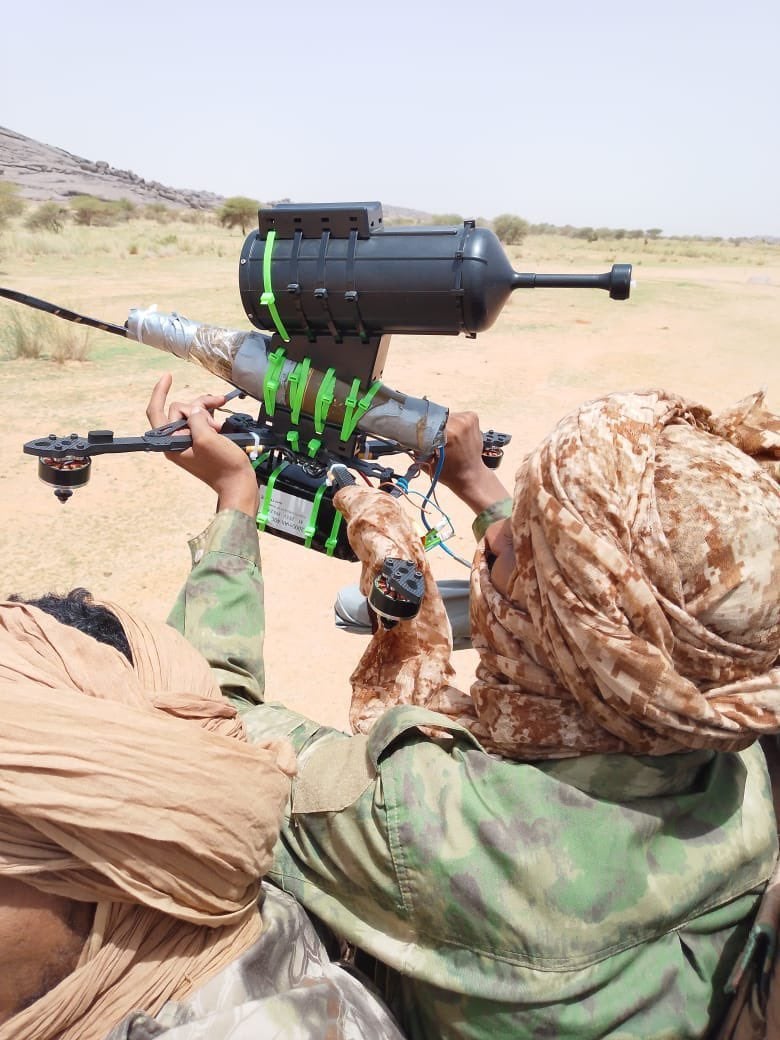
A second drone struck a Sentinel air defense radar at the same base during the same attack window.
Reports suggest the militia, believed to be the Iran-backed Kataib Hezbollah group, may have used some degree of coordination between drones, though the use of formal swarming tactics remains unconfirmed.
The Drone: Why No One Caught It
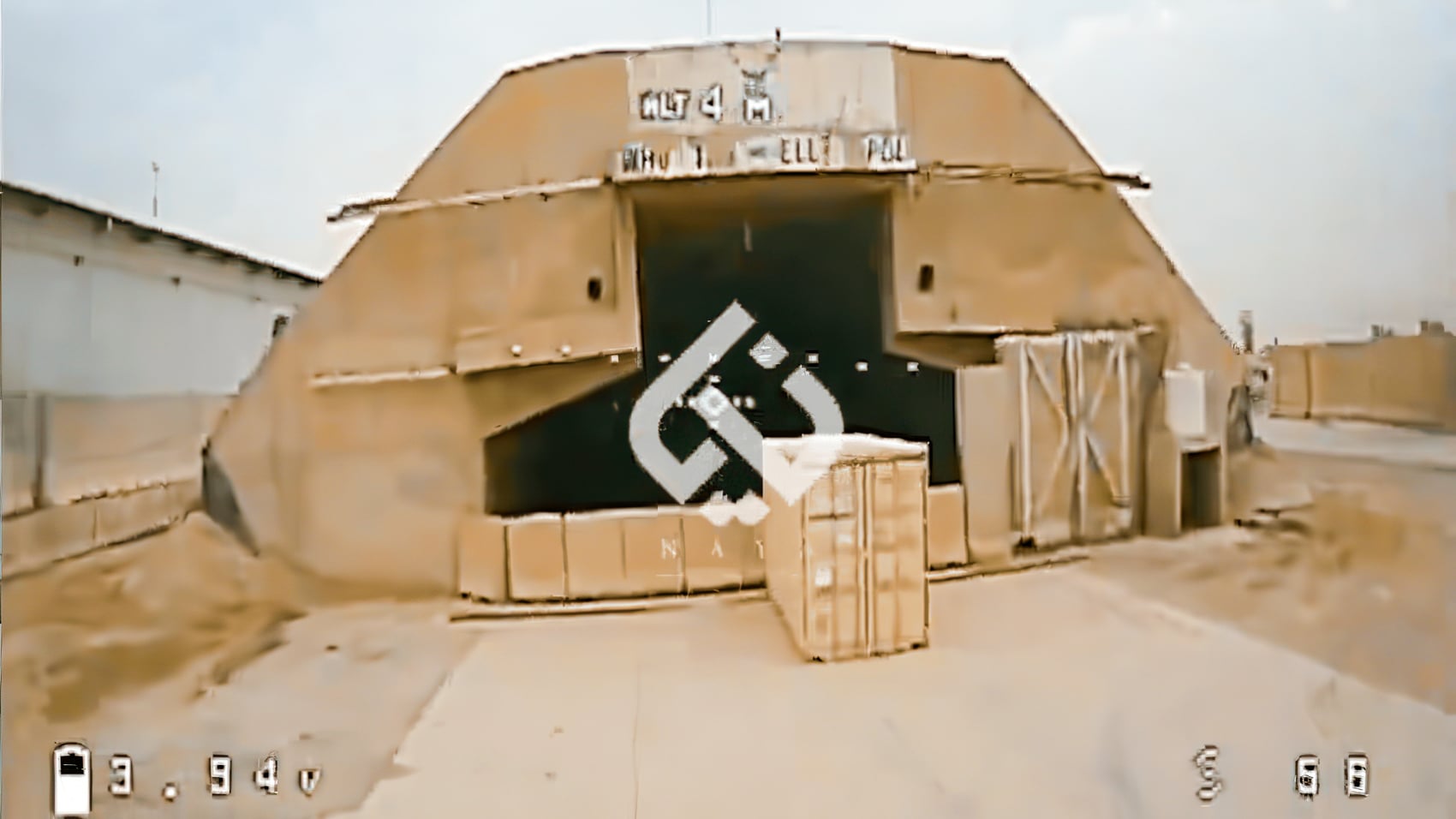
One of the most alarming details in the source footage is the absence of any signal degradation as the drones fly low over the base, even behind structures. That kind of clean video link, maintained at extremely low altitude, points to one of two scenarios: the drones were launched from very close to the target, or they used fiber-optic control links.
Fiber-optic FPV drones operate without radio frequency emissions. Passive sensor systems that listen for RF signals cannot detect them. Even microwave radars designed specifically for counter-drone work can struggle to track fast-moving, low-flying threats at near-ground altitude. Traditional air defense radar doesn’t register them at all. In the footage, there’s no visible attempt by ground forces to engage the incoming drone with any countermeasure.
This is not a new problem. Victory Base Complex has been targeted by FPV drones before. Earlier this month, footage surfaced of drones purportedly belonging to Kataib Hezbollah operating over the same installation. The U.S. military saw it coming. The defenses weren’t there.
The HH-60M Black Hawk: What Was on the Ramp
The HH-60M is the U.S. Army’s dedicated medevac variant of the UH-60 Black Hawk family, built by Sikorsky Aircraft. It’s the most advanced military air ambulance helicopter currently in service, and the U.S. Army has 346 of them in its inventory.
The aircraft is powered by two FADEC-equipped T700-GE-701E turboshaft engines and features a fully digital glass cockpit with four multifunction displays, dual digital flight control computers, a moving map system, GPS/inertial navigation, and a nose-mounted FLIR sensor for night and low-visibility operations.
It carries an empty weight of 14,470 lbs and a maximum gross weight of 21,414 lbs. Its cruise airspeed is approximately 87 mph, with a standard range of around 317 miles, extendable with an external 400-gallon fuel system.
The interior is configured around a dedicated medical evacuation mission equipment package, including capacity for six litters, an integrated oxygen-generating system, ECG machine, patient monitors, and an external electrical rescue hoist. Crew consists of a pilot, co-pilot, crew chief, and flight medic. It’s not a warfighting aircraft. It’s an air ambulance. That’s what was sitting on that ramp.
What This Means for U.S. Bases at Home
This attack isn’t just an Iraq story. The U.S. military has spent years watching drones fly over its most sensitive domestic installations without a clear answer for what to do about them. In December 2023, drones were reported over Langley Air Force Base.
Last year, incursions were reported at Wright-Patterson Air Force Base, Picatinny Arsenal, and multiple bases in England. Drone swarms harassed U.S. Navy ships off the California coast. Unidentified drones have been tracked over nuclear energy plants and military training ranges.
In a combat theater like Iraq, the lack of defenses is alarming. On an American base, with fewer active countermeasures and more limited surveillance infrastructure, the same near-field attack could be worse. Aircraft on ramps. Radars on pads. No blast walls high enough to matter.
Defense Secretary Pete Hegseth acknowledged the scale of the problem last year when he established a dedicated task force for counter-drone threats. “There’s no doubt that the threats we face today from hostile drones grow by the day,” he said. His directive was to prioritize speed over process. Based on what happened in Baghdad, the process is still winning.
DroneXL’s Take
Here’s what I find genuinely significant: this wasn’t a near miss. A small, cheap, commercially available drone found a gap in the defenses of a U.S. military installation, flew straight to a medevac helicopter, and hit it. The first known successful drone strike on an American military aircraft happened not with a missile or a rocket, but with a device that fits in a backpack.
That should stop everyone cold. The Victory Base Complex isn’t some remote outpost. It surrounds Baghdad International Airport. It’s a major hub. And a low-cost FPV drone, possibly flying on a fiber-optic link that made it invisible to passive sensors, walked right through whatever was supposed to stop it.
The broader implication is the one that keeps me up at night. If this can happen in Iraq, at a hardened, established installation, with U.S. forces present and aware of prior drone activity over the same site, then the question about American bases at home isn’t hypothetical anymore.
Aircraft are parked on ramps. Radars sit in the open. The same threat is already inside U.S. airspace, and we’ve watched it circle Langley and Wright-Patterson without a definitive answer.
The technology to defend against this exists. The urgency, apparently, did not. Until now.
Photo credit: X.com, Larry Adams.
Discover more from DroneXL.co
Subscribe to get the latest posts sent to your email.
Check out our Classic Line of T-Shirts, Polos, Hoodies and more in our new store today!

MAKE YOUR VOICE HEARD
Proposed legislation threatens your ability to use drones for fun, work, and safety. The Drone Advocacy Alliance is fighting to ensure your voice is heard in these critical policy discussions.Join us and tell your elected officials to protect your right to fly.

Get your Part 107 Certificate
Pass the Part 107 test and take to the skies with the Pilot Institute. We have helped thousands of people become airplane and commercial drone pilots. Our courses are designed by industry experts to help you pass FAA tests and achieve your dreams.

Copyright © DroneXL.co 2026. All rights reserved. The content, images, and intellectual property on this website are protected by copyright law. Reproduction or distribution of any material without prior written permission from DroneXL.co is strictly prohibited. For permissions and inquiries, please contact us first. DroneXL.co is a proud partner of the Drone Advocacy Alliance. Be sure to check out DroneXL's sister site, EVXL.co, for all the latest news on electric vehicles.
FTC: DroneXL.co is an Amazon Associate and uses affiliate links that can generate income from qualifying purchases. We do not sell, share, rent out, or spam your email.