The Verge Confirms What We’ve Been Saying: Nobody Is Replacing DJI, and Drones Are Now for War

Check out the Best Deals on Amazon for DJI Drones today!
The Verge published a major report today asking the question every American drone pilot has been asking since December: who fills the DJI-shaped hole? Senior editor Sean Hollister interviewed me, Vic Moss, cofounder of the Drone Service Providers Alliance, Antigravity US CEO Michael Shabun, and Skydio for the piece. The answer, laid out in detail for The Verge’s massive general-tech audience, matches what DroneXL readers already know: nobody is coming to save the consumer drone market.
The article’s subtitle says it plainly: “DJI is banned in the United States and nobody is coming to save you.”
Defense Money Pulled Every Startup Away From Consumers
The Verge piece confirms a pattern DroneXL has tracked across dozens of articles over the past year: the financial gravity of defense contracts has absorbed every company that might have built affordable consumer drones.
Hollister documents exactly how this happened. Teal Drones, founded by a teenage professional drone racer, now competes for Pentagon attack drone contracts as part of Red Cat Holdings. Rotor Riot and Fat Shark, brands that defined consumer FPV culture, are now subsidiaries of Unusual Machines, a company that advertises itself as a defense component supplier and features Donald Trump Jr. as a board member. Fat Shark’s website hasn’t featured a new product since 2022.
The pull is obvious. The Department of War allocated $1.1 billion through the Drone Dominance Program to field hundreds of thousands of weaponized one-way attack drones by 2027. The Gauntlet I competition already named 11 companies splitting $150 million in orders for 30,000 drones. Anduril landed a $20 billion ceiling contract for counter-drone systems. A Skydio X2 starts at $10,999. Why would any company build a $500 consumer drone when the Pentagon is writing checks with nine zeros?
As I told Hollister: “The issue is that the financial incentives are much, much greater in the defense market and the first responder market than they are in the consumer market.”
Skydio Confirmed It Will Not Return to Consumer Drones
Skydio made the most capable consumer drone I ever flew when it released the Skydio R1 in 2019. The obstacle avoidance was genuinely ahead of its time. But the company pivoted to enterprise and government over several years and never released another consumer model.
Hollister pressed them. Skydio’s response, through spokesperson Rob Terra, was definitive: “The FCC decision doesn’t change Skydio’s strategy, it reinforces the direction the market was already heading.” The company says its existing defense and enterprise business will “demand our full attention for the foreseeable future.” In March, the US Army ordered $52 million worth of Skydio X10D drones, the largest single-vendor tactical drone order in Army history.
Skydio had shipped fewer than 50,000 drones total as of March 2025. DJI likely moves that volume in weeks given its global dominance. The scale gap alone makes a consumer pivot impractical.
Antigravity Threaded the Needle, but One Drone Is Not a Market
Antigravity managed to get its A1 360-degree drone FCC-certified on November 18, 2025, during a narrow five-day window after the government shutdown ended. The drone went on sale at Best Buy on December 3rd, just 19 days before the FCC banned all future foreign drones. By mid-January, Antigravity had sold 30,000 units. The A1 has since generated tens of millions in global sales, Shabun told The Verge.
Shabun told Hollister that Antigravity is “exploring” US manufacturing for future products and hinted at ambitions beyond consumer: law enforcement, emergency response, fire departments, even conversations with Google about enabling Antigravity for aerial Street View. But he wouldn’t commit to US production or confirm whether Antigravity has filed for the FCC’s conditional approval process.
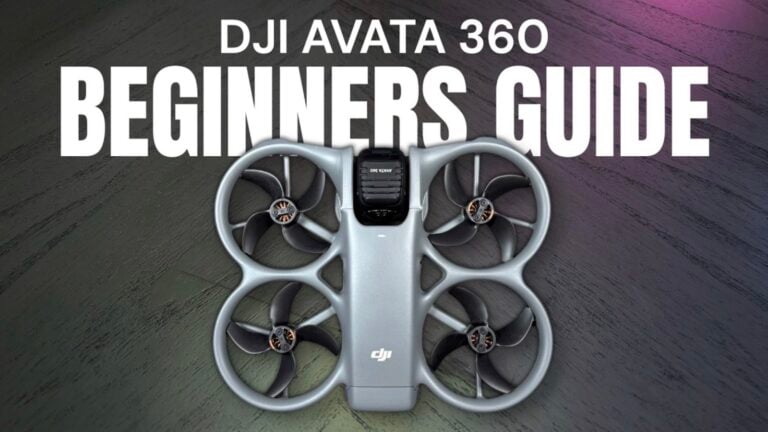
The DJI Avata 360 already undercut the A1 by more than $1,000 at launch. And Antigravity is still a Chinese company, the drone division of Insta360, with the same supply chain exposure that got DJI banned in the first place. One product in one category does not replace a company that held 70% of the global consumer drone market.

Zero Zero’s HoverAir Aqua Is Dead in the Water
The Verge also documents the collapse of Zero Zero Robotics’ HoverAir Aqua launch. The waterproof self-flying drone looked promising. Then the October government shutdown ate 43 days of FCC processing time, and the December ban closed the window. The Aqua never received FCC certification. Zero Zero is now quietly offering refunds to US Indiegogo backers while publicly maintaining that shipments are still possible.
The company’s public messaging has shifted from “regulatory uncertainty” in January to offering Canadian pickup locations in March. That tells you everything about where this is heading.
Every Other Company Either Declined or Didn’t Respond
Hollister contacted the obvious candidates. GoPro, which quit drones in 2018 after its Karma flopped, declined to comment. Parrot, which left the consumer market in 2019, declined to comment. Sony, which discontinued its $9,000 Airpeak drone in 2024, didn’t respond. Anzu, which licenses DJI tech for its commercial Raptor, declined to comment.
That silence is the story. If any of these companies saw an opportunity, they’d be talking about it.
DroneXL’s Take
I’ve been making this argument for over a year now. In January, I wrote “DJI and the American Drone Delusion,” laying out exactly why the US is unlikely to catch up. In November 2025, I wrote that the DJI ban means lives lost, not just profits. Today, The Verge reached the same conclusion and put it in front of millions of readers who don’t follow drone policy daily.
What I told Hollister comes down to five words that no other company replicates: availability, capability, affordability, reliability, easy-to-fly. I’ve been testing drones since the Phantom era. I’ve flown Skydio, I’ve flown Autel, I’ve flown the Antigravity A1, I’ve flown the alternatives. Nothing combines all five. Some hit two or three. None hit all five at a price point that a volunteer fire department or a wedding photographer can afford.
Vic Moss put it bluntly in the piece: “Everybody’s asking what else is out there, and the answer is, nothing.”
The uncomfortable truth is that the ban created a market vacuum, and the market responded rationally. Defense contracts pay 10x more per unit than consumer sales. Why would any startup chase $500 camera drones when the Department of War is buying 300,000 attack drones at $2,300 each? The economics don’t work. They won’t work for years.
Meanwhile, first responders are the ones paying the price. As I told The Verge: fire departments and search-and-rescue teams use consumer DJI drones because that’s what their budgets allow. Those volunteers aren’t buying $50,000 Skydio enterprise packages. When their DJI batteries die and parts dry up, those programs die too. We’ve already documented that reckoning in detail.
By the end of 2026, the first rescue that fails because a department couldn’t replace a crashed DJI drone will make national news. That story will matter more than any policy paper. Watch for it.
DroneXL uses automated tools to support research and source retrieval. All reporting and editorial perspectives are by Haye Kesteloo.
Discover more from DroneXL.co
Subscribe to get the latest posts sent to your email.
Check out our Classic Line of T-Shirts, Polos, Hoodies and more in our new store today!

MAKE YOUR VOICE HEARD
Proposed legislation threatens your ability to use drones for fun, work, and safety. The Drone Advocacy Alliance is fighting to ensure your voice is heard in these critical policy discussions.Join us and tell your elected officials to protect your right to fly.

Get your Part 107 Certificate
Pass the Part 107 test and take to the skies with the Pilot Institute. We have helped thousands of people become airplane and commercial drone pilots. Our courses are designed by industry experts to help you pass FAA tests and achieve your dreams.

Copyright © DroneXL.co 2026. All rights reserved. The content, images, and intellectual property on this website are protected by copyright law. Reproduction or distribution of any material without prior written permission from DroneXL.co is strictly prohibited. For permissions and inquiries, please contact us first. DroneXL.co is a proud partner of the Drone Advocacy Alliance. Be sure to check out DroneXL's sister site, EVXL.co, for all the latest news on electric vehicles.
FTC: DroneXL.co is an Amazon Associate and uses affiliate links that can generate income from qualifying purchases. We do not sell, share, rent out, or spam your email.