A small startup in Rolla, Missouri is building what may be the nation’s first rural health care drone corridor, and the clock it’s racing isn’t measured in minutes. It’s measured in whether an organ donor’s tissue reaches a matching recipient in time to save a life, as FOX News reported.
The Problem No One Talks About
More than 130 rural hospitals closed between 2010 and 2021, according to the Senate Joint Economic Committee. For the patients left behind, that means driving roughly 20 additional miles for care that urban residents get close to home. For transplant logistics, the math is grimmer.
Right now, Mid-America Transplant, the St. Louis-based nonprofit that coordinates organ and tissue donation across Missouri, Arkansas, and Illinois, relies on a King Air aircraft to move small vials of blood between collection points and matching labs.
That charter flight costs around $12,000 per run and takes about three hours to cover the Springfield-to-St. Louis corridor. Miss a Tuesday 5 p.m. sample pickup, and you’re waiting another week.
Valkyrie UAS Solutions, a startup based out of Missouri University of Science and Technology in Rolla, is building a drone route designed to cut that cost by more than $10,000 and cut that travel time in half.
The Drone and the Route
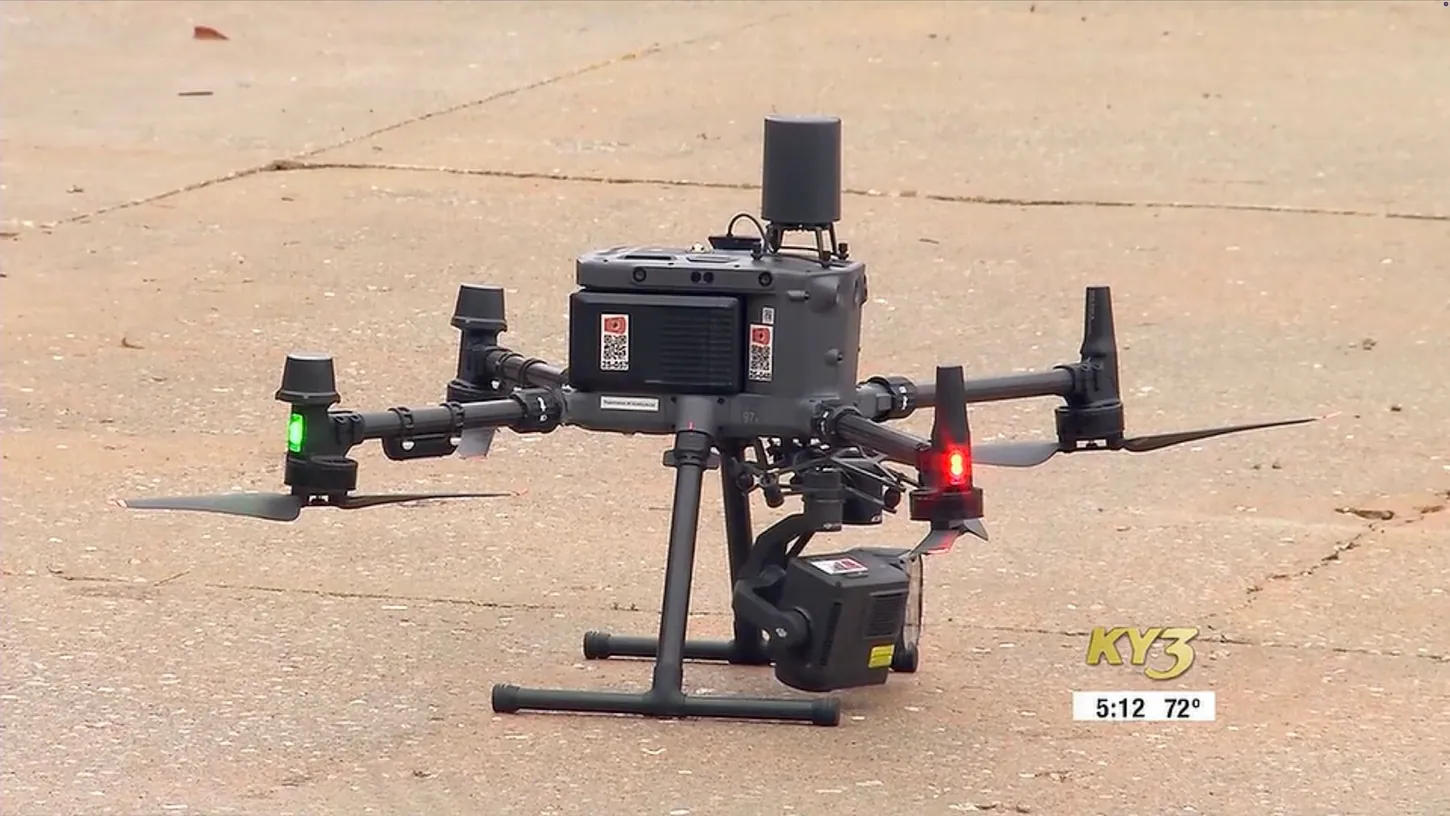
The Valkyrie aircraft isn’t a consumer quadcopter modified for cargo. It’s a fixed-wing VTOL with an 8-foot wingspan capable of flying over 100 mph at approximately 350 feet above ground level. It can carry up to 12 pounds of payload and cover more than 100 miles on a single charge.

The route connects Springfield in southwestern Missouri, through a hub at Missouri S&T’s General Services Building in Rolla, all the way east to the St. Louis metro. A planned landing site in St. Albans would serve as the easternmost drop point. Valkyrie’s hub at Missouri S&T, where the company rents space and operates with a small team of three full-time employees, sits roughly at the midpoint of that corridor.

The partnership was formalized at a public ribbon-cutting on April 1, with test flights beginning that same month. Flights follow preprogrammed paths and operate with human oversight via real-time monitoring that displays live maps, weather data, and air traffic feeds.
Why This Matters Beyond Transplants
The initial mission is narrow by design: move blood samples and tissue used for donor-recipient matching faster than a charter flight can. But the operational framework being built in Missouri is broader than that.

David Borrok, vice provost and dean of Missouri S&T’s College of Engineering and Computing, put the scalability case plainly.

Missouri S&T’s research partnership with Valkyrie is focused on refining the technology and making it more efficient, with an eye toward expanding the category of medical materials the drones can eventually carry. Transplant materials, which require controlled temperatures and documented chain of custody, are a harder problem than lab samples. Cracking that use case first builds toward carrying them.

The economic case for Rolla is also part of the story. Valkyrie is actively hiring pilots and interns, and city officials have noted publicly that the company’s presence creates jobs and anchors a new technology corridor in a region that doesn’t typically attract aerospace startups. The company has indicated it may eventually manufacture its drones in Missouri, possibly in Rolla.
What Comes Next
The team’s target is to begin official medical sample flights this summer. Before that can happen, Valkyrie needs hospital provider sign-off and must continue accumulating test flight hours to demonstrate reliability to the FAA. The company’s longer-term goal is 10,000 hours of flight time, which would open the door to additional FAA permissions for expanded operations.
The Springfield-to-St. Louis route spans just over 200 miles and crosses some of the most medically underserved terrain in the state. If the technology delivers at scale, similar corridors in other rural states become viable. Programs like this are beginning to appear elsewhere in the country, but the Missouri project stands out for its specific focus on transplant logistics, a use case with an unusually clear clinical and economic argument.
DroneXL’s Take
I’ll be direct: the transplant angle is what separates this from the usual medical drone delivery story, and most coverage is underselling it. Delivering a prescription to a suburban address is useful. Moving tissue samples that determine whether an organ matches a recipient fast enough to matter is a different category of problem entirely.
The cost compression is striking. Replacing a $12,000 King Air charter run with a drone that costs a fraction of that per flight isn’t just an efficiency gain. For a nonprofit transplant organization coordinating donations across three states, that difference adds up to meaningful operational capacity that can be reinvested in patient care rather than aviation fees.
Valkyrie is a tiny company: three full-time employees, renting space on a university campus, still accumulating FAA flight hours. The ambition is real, but this program is still early. The summer launch target is for lab samples, not transplant materials. The transplant piece is the destination, not the current stop.
The Missouri corridor is the proof-of-concept that the broader medical drone delivery argument needs. Not a retail delivery demo. Not a suburban convenience play. A rural health care gap with a measurable cost, a measurable time penalty, and a drone that can fix both.
Photo credit: FOX News