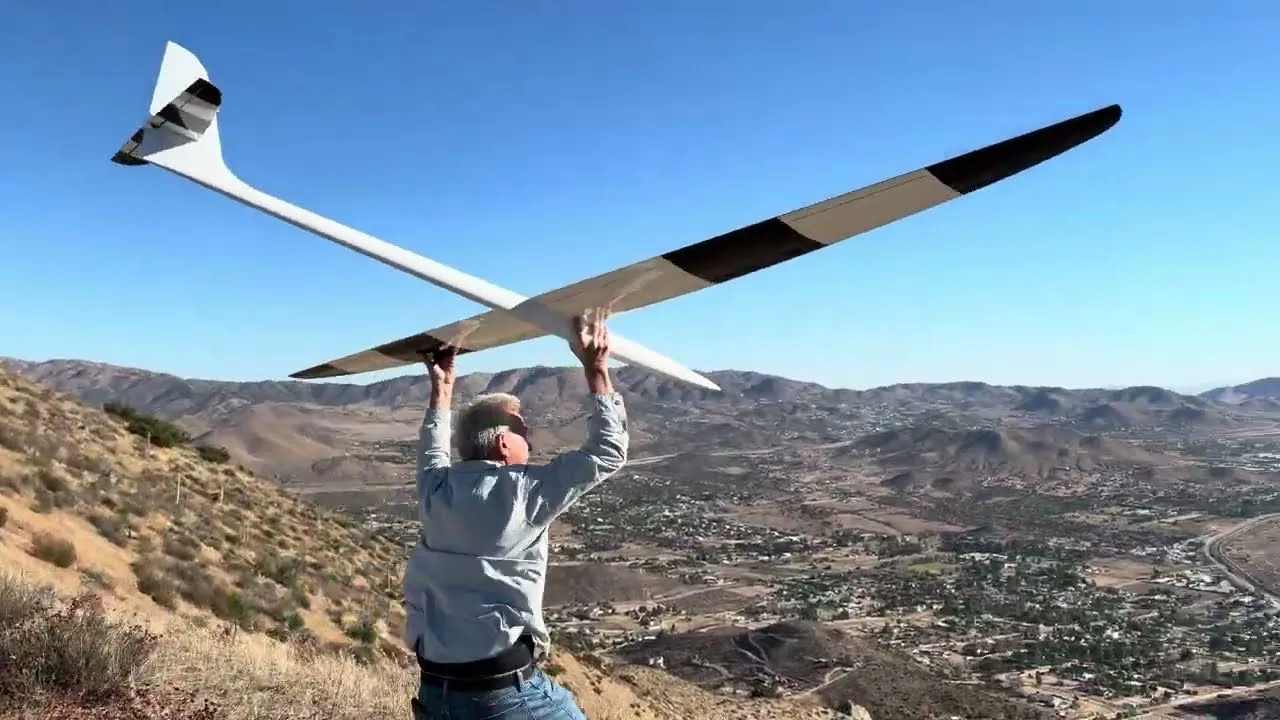
Northrop Grumman has successfully flown the XRQ-73 SHEPARD, a hybrid-electric flying-wing UAS developed for DARPA’s Series Hybrid Electric Propulsion AiRcraft Demonstration program. The milestone flight took place in April 2026 at Edwards Air Force Base, California, after previous delays, as reported by Aviation Week.
This experimental Group 3 UAS represents a significant step in testing hybrid-electric propulsion for future military autonomous systems. The aircraft combines a gas turbine generator with electric motors to deliver better fuel efficiency, lower emissions, and reduced acoustic signature compared to traditional propulsion.
The Technical Challenge in Hybrid-Electric Propulsion
Military UAS operators have long faced trade-offs between endurance, payload capacity, and noise signature. Conventional combustion engines offer good range but produce noticeable acoustic and infrared signatures that can compromise stealthy ISR missions.
Pure electric systems provide quiet operation but suffer from limited energy density in current batteries, restricting flight time and payload.
DARPA’s SHEPARD program aims to bridge this gap by demonstrating a series hybrid-electric architecture. In this setup, a fuel-burning engine generates electricity that powers electric motors driving the propulsors, while also charging onboard batteries. This approach promises the best of both worlds: the energy density of liquid fuel combined with the efficiency and quiet operation of electric propulsion.
Technical Aspects of the XRQ-73 SHEPARD System
The XRQ-73 is a tailless flying-wing design that has evolved since its initial reveal in 2024. Recent changes include the addition of wingtip vertical stabilizers for improved stability during initial flight testing, updated air intakes on the upper fuselage, and additional antennas and sensor fairings.
Key specifications include:
- Classification: Group 3 UAS
- Weight: Approximately 1,250 pounds (567 kg)
- Configuration: Flying wing with hybrid-electric propulsion
- Propulsion: Series hybrid system (gas turbine generator + electric motors)
- Design goals: High efficiency, reduced acoustic and IR signature, operational flexibility
- Development partners: Northrop Grumman, Scaled Composites, Air Force Research Laboratory (AFRL)
The hybrid-electric architecture allows the engine to run at optimal RPM for efficiency while electric motors provide instant power and precise control. The design emphasizes quiet operation, which is critical for intelligence, surveillance, and reconnaissance missions where acoustic stealth can be as important as radar stealth.
Additional features visible in test photos include a forward-facing camera fairing for flight testing, multiple dorsal air intakes for cooling and engine airflow, and a large ventral fairing likely housing sensors or test instrumentation.
Practical Applications and Industry Impact
Successful demonstration of the XRQ-73’s hybrid-electric propulsion could influence multiple military programs. Group 3 UAS in this weight class are widely used for tactical ISR, and a more efficient, quieter propulsion system would extend loiter times while reducing detectability.
Offshore and maritime operators could benefit from longer endurance missions with lower fuel consumption. Special operations forces would gain from reduced acoustic signatures during covert insertions or reconnaissance. The technology also supports broader goals of reducing logistical burden through better fuel efficiency and potentially lower emissions.
Beyond direct military use, the lessons from SHEPARD could accelerate hybrid-electric development in commercial unmanned systems, particularly for long-endurance monitoring, mapping, and cargo delivery applications where efficiency and environmental impact matter.
The program follows the earlier XRQ-72A Great Horned Owl effort and shows continued investment in maturing hybrid architectures for operational use. DARPA’s X-Prime approach focuses on rapidly developing minimum viable products to meet urgent needs.
DroneXL’s Take
Here’s what matters: Hybrid-electric propulsion is one of the more practical near-term advancements for military UAS. It offers real improvements in efficiency and signature reduction without requiring completely new airframes or exotic fuels.
The XRQ-73 reaching flight testing after delays is positive progress. The real value will come from what the flight test campaign reveals about actual performance gains in fuel efficiency, endurance, and noise levels.
Bottom line: This is solid engineering work on solving real operational constraints in Group 3 UAS. Infrastructure like better propulsion systems often enables wider capability than incremental airframe changes alone. Worth tracking as testing continues.
Photo credit: Northrop Grumman