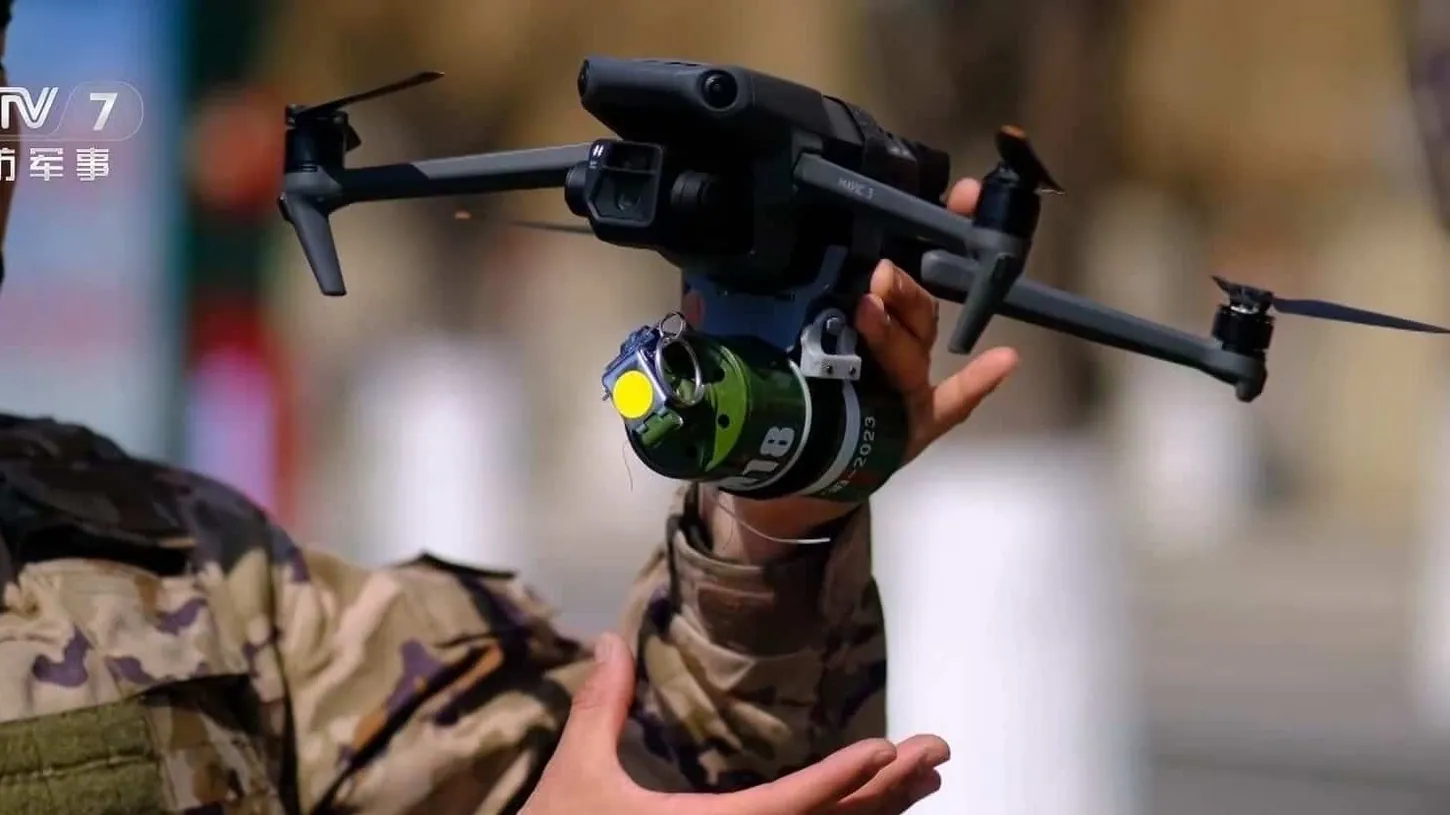
A Chinese research team of the Northwestern Polytechnical University says it has built a drone swarm that keeps hunting even after you jam its radios and blind its cameras. Their paper, published in China’s top aeronautics journal, claims a 100% kill rate in simulation.
That number deserves heavy skepticism. But the method behind it, an algorithm that lets drones reason about a battlefield on their own, is the part worth paying attention to.
What the Researchers Actually Claim
The work appeared in Acta Aeronautica et Astronautica Sinica, the country’s leading aeronautics journal, in May 2026. The team calls the system HG-STR, short for Heterogeneous Graph Spatio-Temporal Reasoning.
In their simulations, they report a 100% kill rate while the swarm operates at combat-relevant speeds, and they describe it as the first known method to hit that mark at that tempo.
That figure should set off alarms before it impresses anyone. A perfect score in a simulator is a claim about the simulator as much as the software. I’ll come back to why that matters.
How HG-STR Thinks About a Battlefield
The interesting part isn’t the score. It’s how the drones reason. Instead of treating the battlefield as a flat list of objects, HG-STR builds a living graph where every element is a different kind of node tied to the others by relationships.

A radar site, in this model, isn’t just a dot on a map. It’s a threat node linked to the terrain around it, the airspace above it, the jamming sources protecting it, and the defensive positions it supports. The drones read those connections, not just coordinates.
Terrain stops being scenery and becomes functional. A forest is concealment, a ridgeline blocks a line of sight, and a friendly drone is an information-sharing asset that fills gaps the others can’t see. The spatio-temporal half means the swarm also reasons across movement and time, tracking how the picture changes second to second.
Jamming Resistance Is the Real Story
Strip the 100% away and here’s what’s left: a swarm built to keep working when the link goes down. The drones can keep chasing a target after communications are cut and after they lose direct sight of it, inferring where the enemy is from terrain, movement patterns, and what they saw moments earlier.
That capability lands in a very specific context. Ukraine has spent three years showing the world how fast a drone goes blind, jammed, spoofed, or simply disconnected the moment it flies into contested airspace.
Electronic warfare is the main reason drone offensives stall today. You don’t have to shoot a swarm down if you can sever its brain from its body. A swarm that no longer needs that link is a different kind of problem, and that, not the kill rate, is the line that should worry counter-drone planners.
The Catch Nobody Should Skip
As Interesting Engineering reported, the researchers themselves frame this as simulation, and real combat is where clean numbers go to die. Weather, deception, civilians in the frame, damaged sensors, and a thousand variables nobody scripts into a model all degrade performance fast.
Keep the scope straight, too. This is a published algorithm, not a fielded weapon, and there’s a long road between a paper and a system bolted onto real airframes flying real sorties.
China isn’t alone here either. The United States, NATO, and Russia are all chasing autonomous swarm coordination, and China’s own programs have moved past paper before, including the CETC Atlas system shown earlier this year with one operator launching dozens of drones in minutes. The direction of travel is the same for everyone. The open question is who gets it working outside the lab first.
DroneXL’s Take
The part that doesn’t make the headline is the one that actually matters. The 100% figure is noise, a number engineered to travel, and any reporter who leads with it is doing the press release’s job for free.
The signal underneath is that autonomy is being aimed squarely at the one weakness still holding drone swarms back: the radio link. Jamming has been the cheap, reliable answer to drones for years. If software like this matures, that answer gets weaker, and a lot of counter-drone doctrine built on cutting the cord starts to look dated.
I’m not sold that any of this performs the way the paper says when the bullets are real and the sensors are broken. But I don’t need to believe the kill rate to take the intent seriously. The goal is a swarm that thinks for itself when you take its eyes and ears, and that goal is worth watching no matter whose lab gets there first.
Photo credit: MetaDefense, Northwestern Polytechnical University