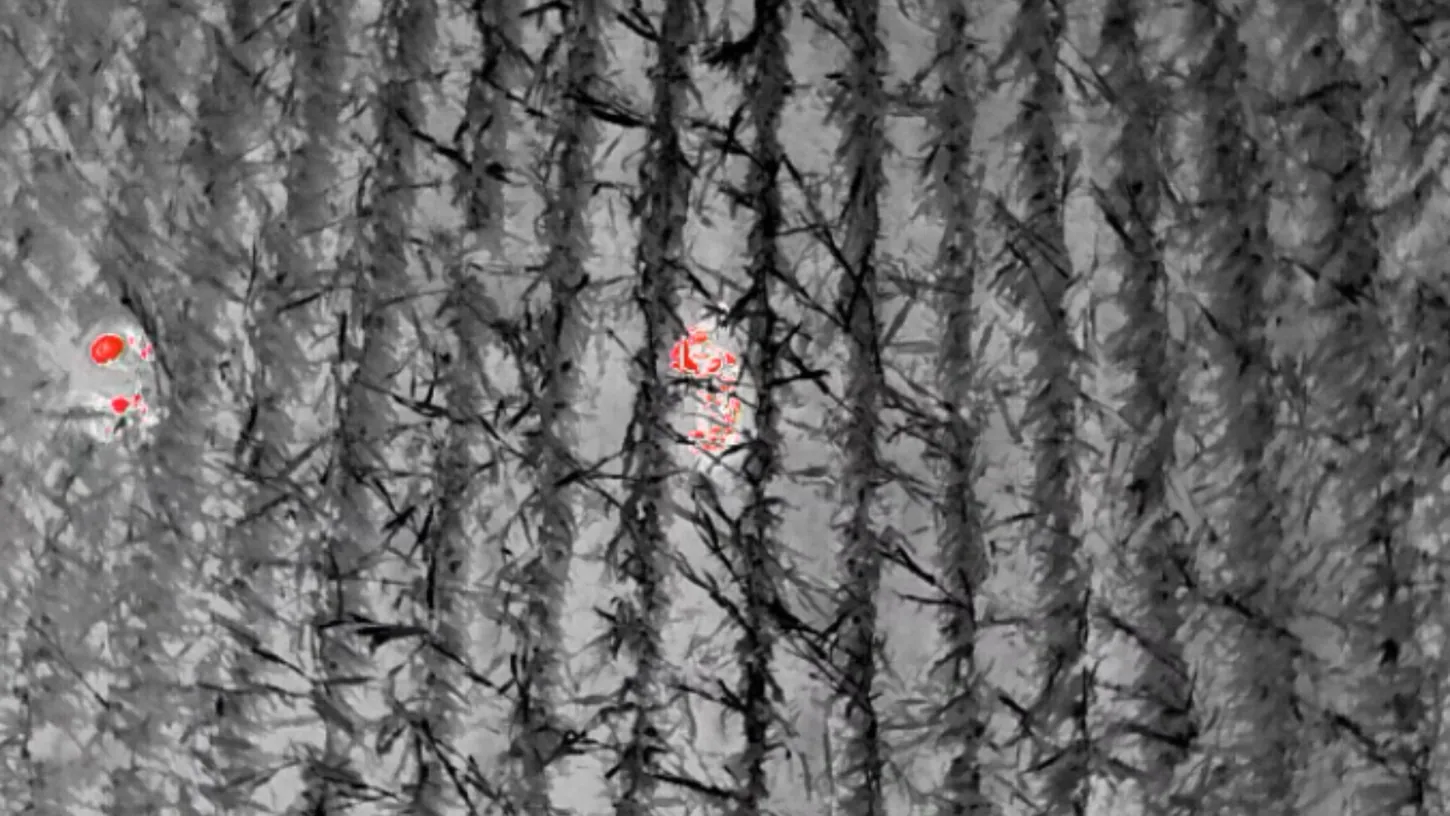
A St. Cloud Police Department drone operator found 73-year-old Ronald Statz alive in a Stearns County cornfield around 11:00 p.m. Saturday, July 11, ending a search that had pulled in a dozen agencies near Richmond, Minnesota. Fire crews, three K-9 teams, a State Patrol plane, a DNR helicopter, a dive team, and a mounted posse had combed the area for hours. The find came down to one heat signature on one drone screen.

The Search Pulled In A Dozen Agencies Before The Drone Won
The Stearns County Sheriff’s Office reported that Statz was last seen walking on a field road at a Farming Township property on County Road 9, and that several hours passed before he was reported missing. In rural Minnesota, that kind of report starts a clock. An elderly man alone outdoors at night is a race against exposure, terrain, and time.
What followed reads like an inventory of everything a county can put in the field. Fire departments from Chain of Lakes, Richmond, Albany, and Avon answered. K-9 teams came from Sauk Centre Police, the sheriff’s office, and Northstar Search and Rescue.
The Minnesota State Patrol and the Minnesota Department of Natural Resources both put aircraft overhead, a plane and a helicopter. The Stearns-Benton Dive Team checked the water. Stearns County’s ATV Search and Rescue unit and its Mounted Posse covered the ground while county Emergency Management coordinated the whole operation.
Drone teams from Sartell Police, St. Cloud Police, and the sheriff’s office rounded out the roster. That is horses, dogs, boats, ATVs, two crewed aircraft, and multiple drones, all searching for one man in the dark.
One Heat Signature Ended The Night
Around 11:00 p.m., a St. Cloud police drone operator spotted a heat signature in a cornfield, the sheriff’s office said. Officers reached Statz and gave him medical aid until a Mayo ambulance arrived and took him to St. Cloud Hospital. He was alive after hours alone in the field.

The sheriff’s office released no further detail on his condition, and publicly thanked the volunteers and agencies who answered the call. For a search that size, the outcome is the headline. Plenty of them end differently.
None of the agencies involved named the drone model or the camera, and DroneXL won’t guess. What the incident does confirm is the tactical picture. By mid-July, Minnesota corn stands taller than a grown man, and the rows swallow sightlines completely.
A helicopter crew looking down at night sees a uniform canopy. A ground searcher ten feet away can walk right past someone lying between the rows. A thermal camera at low altitude reads the one thing the corn cannot hide: body heat against cooling ground.
The drone’s edge over a helicopter search is strategic, and it comes down to altitude. A drone works right over the corn, so the camera picks up far more detail from that distance, and the contrast between a warm body and cold ground reads much stronger on the thermal. The closer you fly, the harder that heat signature pops.
St. Cloud Has Flown This Mission Before
This is not new territory for this department. DroneXL covered St. Cloud Police using a drone and a K-9 to corner a van theft suspect back in August 2020, when a police drone was still a novelty worth a headline on its own. Six years later, the same department’s drone team is the asset that closes a county-wide search.

The state backdrop makes the pattern hard to miss. Minnesota agencies logged 9,080 warrantless drone flights in 2025, up 38 percent in a single year, according to the state’s own transparency report that DroneXL analyzed earlier this month.
It also comes days after a Minneapolis drone team found missing veteran Bob Stewart in nine minutes, after three and a half hours of K-9 searching came up empty. Two thermal finds in one state, in one week, both of them men who might not have survived the night.
The timing of both cases lands in the middle of a live policy argument. Minneapolis released the Stewart video while its city council debated a drone as first responder program, and Minnesota already requires agencies to report their drone flights to the state each year, which is exactly how the 9,080 figure became public. Every rescue like Saturday’s becomes evidence in that file, whether the agencies frame it that way or not.
DroneXL’s Take
Nobody watching that search would say the drone replaced anything. The dogs still deployed, the divers still checked the water, the posse still saddled up, and two crewed aircraft still burned fuel over the same fields.
The drone was simply the layer that ended it. That is the honest case for thermal drones in search and rescue, and it needs no inflation. Every other asset on that inventory kept a man’s odds alive for hours. One operator reading a heat bloom converted those odds into a rescue.
The Minnesota numbers give this story its weight. Critics of the state’s 9,080 flights tend to picture surveillance when they read that figure. Nights like Saturday are what a chunk of those flights actually look like: a 73-year-old in a cornfield, found breathing.
For rural police departments, where losing a person in terrain like this takes nothing at all, the drone has become an indispensable tool. The savings against operating a helicopter are undeniable. Privacy complaints will keep coming, but for now, the drones are here to stay, and they will keep helping the community.