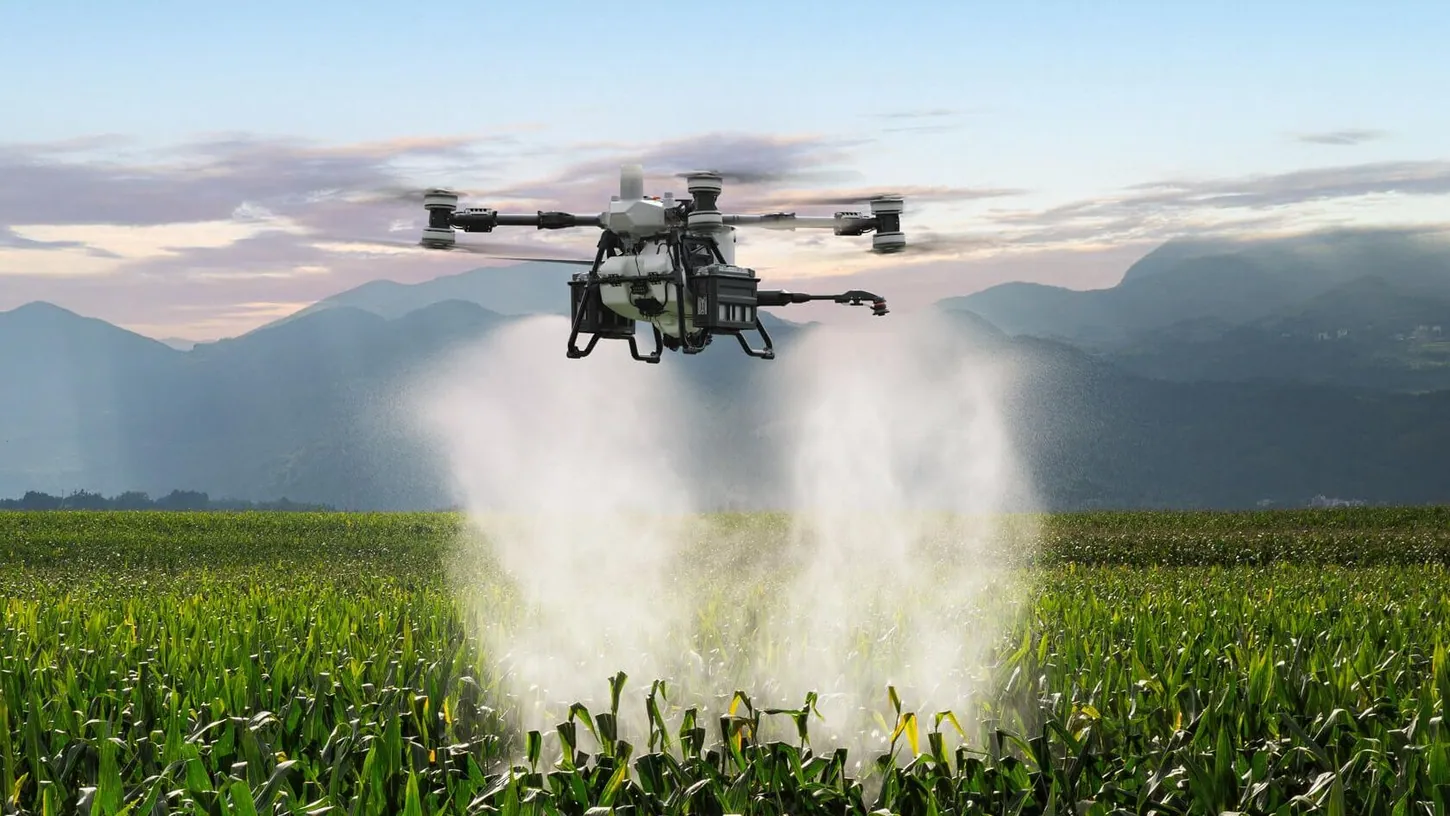
U.S. sales of new agricultural spray drones fell from about 8,950 in 2024 to about 3,711 in 2025, a 59% drop, according to the American Spray Drone Coalition. The group represents spray drone distributors and says its members handle nearly 80% of U.S. sales. It blames the hold U.S. Customs and Border Protection put on DJI shipments in October 2024 under the Uyghur Forced Labor Prevention Act.
The coalition now wants the Federal Communications Commission to keep the next restriction off the farm. In comments filed September 1 in PS Docket 26-189, it asked the FCC to exclude FAA Part 137 spray drones from its proposed ban on foreign “military-grade” drones and to give operators a multi-year off-ramp.
Drone-sprayed acreage in the U.S. still rose 58.7% in 2025, to more than 16.4 million acres, according to the same ASDC survey.
A 58% Jump in Part 137 Operators Carried the 2025 Acreage Gain
The FAA counted 1,710 approved Part 137 drone operators in 2025, up 58.3%, and that growth carried the acreage gain. Average acres treated per operator held at 9,584, statistically flat on 2024, even with newer sprayers like the DJI Agras T50 and XAG P150 on the market.
ASDC president Eric Ringer said in an AgFunderNews interview published October 9 that the sales drop “was not because of a lack of demand.” He said CBP’s blocks come in fits and starts, with some DJI shipments stuck in the ports and others cleared, and that operators are buying up whatever existing DJI models they can get because they don’t yet know what to expect from American aircraft on reliability and capability. DJI calls the forced-labor claims behind the hold categorically false.
The survey also found the average price per sprayed acre fell 38%, from $21 to $13. ASDC members blame undercutting by operators flying without a Part 137 certificate, the FAA approval nuWay Ag’s crews spray under, particularly in the corn belt. The survey polled Part 137 certificate holders, and its unit counts come from interviews with manufacturers and distributors plus public statements, so they are industry estimates rather than customs records.
DJI’s Block Moved Buyers to Other Chinese Brands
Chinese drones made up 75.75% of U.S. spray drone sales in 2025, down from 93.52% a year earlier, by ASDC’s count. American-made aircraft nearly quadrupled their share, to 24.25%. The brands that gained most from the DJI block were XAG and EAVision, both Chinese manufacturers.
The coalition says the American gain mostly reflects the hole DJI left, and its survey explains why. Of the operators who answered, 49% said they would refuse to pay any premium for an American-made drone, and another 41% would pay at most 25% more. Operators ranked productivity first and said country of origin had little influence on what they buy. Ringer told AgFunderNews that U.S.-sourced batteries and motors cost orders of magnitude more than Chinese ones.
American builders are trying to close that gap, and Ringer has a stake in it: AgFunderNews reports he recently cofounded American Autonomy, which writes software for U.S. drone makers. The same report names Texas-based Hylio and Exedy Drones, which is repurposing manufacturing in Michigan. Missouri’s Agri Spray Drones plans to build EAVision-designed aircraft under license. When Senator Todd Young visited an Indiana spray drone field day in June, the aircraft on the tarmac were still Chinese.
The FCC’s Military-Grade List Covers Every Foreign Spray Drone
The FCC’s July 21 proposal counts as military-grade any drone that can dispense “economic poison,” which the FAA’s Part 137 rule defines as any substance meant to prevent, destroy, repel or mitigate pests, or to act as a plant defoliant or drying agent.
That is the definition of a crop sprayer. The public notice, issued by the Public Safety and Homeland Security Bureau and the Office of Engineering and Technology, argues that aerosol platforms flying alone or in a swarm could carry out chemical or biological attacks on Americans and the food supply. DJI’s comments, as quoted by AgFunderNews, call the category “a roundabout way of describing every agricultural drone” that sprays pesticide or spreads seed. It was one of several objections in DJI’s filing against the proposal.
If the FCC adopts the plan, importing and marketing foreign military-grade drones on its Covered List, and their critical components, would stop 180 days after the order appears in the Federal Register. Drones already in farmers’ hands could keep flying. Domestic aircraft and imports for federal government use would be exempt. Comments on the proposal DroneXL reported in July were due September 2, and as of October 21 the bureaus have not adopted it.
ASDC Asked for Two Years of Spare Parts and a Tariff-Funded Rebate
Beyond the Part 137 exclusion, the coalition’s FCC filing asks for a guaranteed two-year window after any ban takes effect to keep importing flight controllers, motors, batteries and repair modules for drones bought legally before it. ASDC counts more than 15,000 spray drones in U.S. service.
A typical spray drone package costs more than $40,000, the filing says. The coalition paired the parts window with audits meant to stop manufacturers and distributors from assembling new aircraft under the guise of spare parts. The Texas Farm Bureau made the parts argument in January, after the FCC added all foreign-made drones to its Covered List.
The filing also asks the FCC to work with other agencies to send tariff revenue from foreign drone imports into a direct-buyer rebate for American drones, open only to makers holding an FCC Conditional Approval or an equivalent clearance. It prefers data rules, such as U.S.-based cloud storage and regular software audits, over hardware bans. The filing says ASDC supports a secure domestic drone manufacturing base, and Ringer told AgFunderNews the coalition agrees on that goal and disagrees with the FCC’s approach.
DroneXL’s Take
I think the FCC should grant the parts window even if it rejects everything else in this filing. The notice promises that drones already in use can keep flying, but a sprayer keeps flying only as long as someone can replace its motors, batteries and flight controller. Once those imports stop, every worn-out part turns an aircraft its owner bought as part of a $40,000-plus package into a donor for the next one.
The FCC’s stated worry is a chemical or biological attack on the food supply. A two-year supply of replacement motors and batteries for aircraft already in the country does not make that attack any easier, and the coalition volunteered the anti-circumvention audits itself. I’d also point the bureaus to ASDC’s sales table: blocking DJI in 2025 moved farmers to XAG and EAVision, and it bought American makers a 24% share.
If you fly a DJI or XAG sprayer, watch the Federal Register. The order’s publication date starts the clock on your parts supply.
Sources: American Spray Drone Coalition 2025 Industry Survey, ASDC comments in PS Docket 26-189, FCC Public Notice DA 26-758, AgFunderNews
DroneXL uses automated tools to support research and source retrieval. All reporting and editorial perspectives are by Haye Kesteloo. Read our editorial standards.