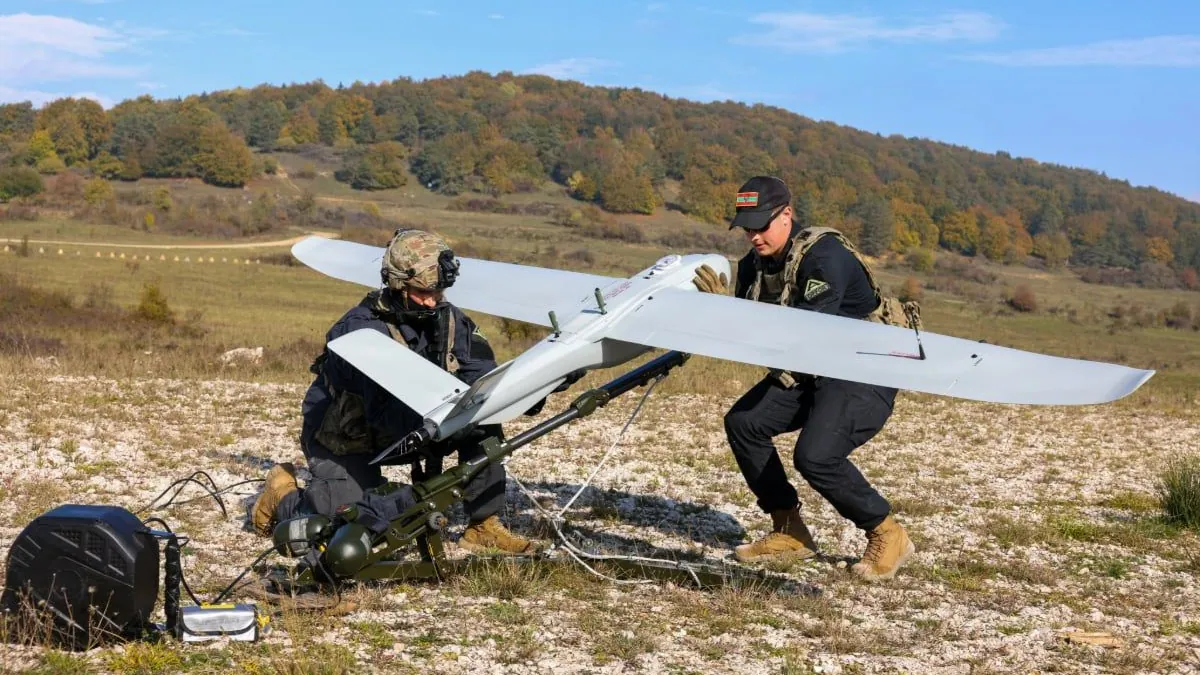
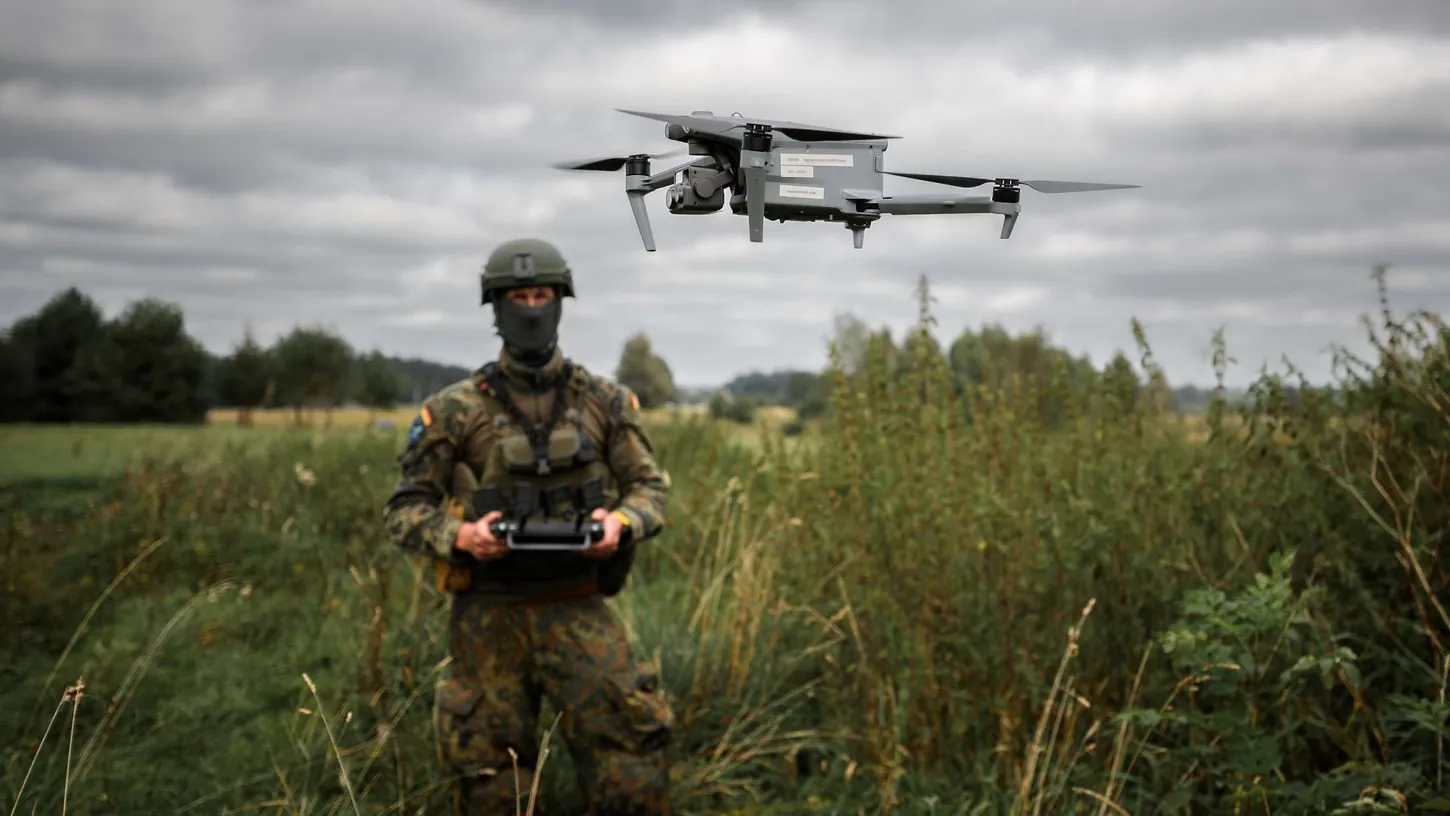
The US Army’s resident opposing force in Germany is turning 1,900 autonomous systems on the 173rd Airborne Brigade during Saber Junction 26, the most tech-heavy edition of the annual exercise to date. The 1st Battalion, 4th Infantry Regiment laid out its arsenal at the Hohenfels Training Area on Wednesday, hours before more than 3,300 Sky Soldiers were set to parachute in and defend against it.
The fight spans space, the cyber arena, and electronic warfare, with replicated long-range artillery strikes layered on top. About 5,500 troops from 11 nations are taking part, including Ukraine, and the exercise runs through September 13. For the Italy-based 173rd, it is the brigade’s first Saber Junction in two years, and the battlefield waiting for it has changed.
Opposing Force Turns Hohenfels Into a Drone-Saturated Battlefield
Saber Junction 26 runs through September 13 at the Hohenfels Training Area in Bavaria, with about 5,500 troops from 11 nations, including Ukraine. The 1st Battalion, 4th Infantry Regiment, the resident opposition force, is fielding 1,900 autonomous systems against the 173rd Airborne Brigade.
“We have 1,900 autonomous systems in this rotation. That’s a lot,” Brig. Gen. Terry Tillis, who leads the 7th Army Training Command, told Stars and Stripes as he surveyed the equipment on the eve of the exercise.
The opposition force commander, Lt. Col. Michael Cryer, expects the returning paratroopers to bring their own upgrades. “Everybody’s adapting right now. This will be a good test,” he said.
Per U.S. Army Europe and Africa, about 3,360 of the roughly 5,480 participating troops come from the 173rd, with the rest drawn from allies including Germany, Italy, Poland, and Ukraine, whose drone operators once wiped out two NATO battalions in a single exercise day. The exercise tests regional plans under NATO’s Eastern Flank Deterrence Initiative against a peer adversary modeled on the Russian military.
Skydio X10 and Neros Archer Headline the OPFOR Drone Arsenal
The opposition force’s reconnaissance and attack lineup includes the Skydio X10, Vesper, eBee Vision, Vector AI and Stork surveillance drones, Neros Archer first-person-view attack drones, and the C100, a multi-purpose quadcopter that can observe targets or drop munitions, according to Stars and Stripes.
These are not exotic test articles. The Army placed a $52 million order for Skydio X10D drones in March. Neros made its first deliveries under the Army’s Purpose Built Attritable Systems program in March, the same month it launched the Archer Block 2. And Performance Drone Works’ C100 lased targets for F-35 precision strikes in a test last year. The mock enemy at Hohenfels is flying the same hardware the real Army is buying.
“This is the future right now,” said Sgt. 1st Class Eric Navarro, a drone expert with the battalion, adding that anyone who can’t hide from these systems is in for a bad day.
The drones feed a new reconnaissance company, fielded in January and led by Capt. Luther Salmon, that specializes in reconnaissance at all ranges and pipes real-time battlefield intelligence to exercise planners.
EchoShield Radar and Jammers Back the Drone Fleet
Sgt. Robert Nemec’s team laid out the electronic warfare side of the kit. The TLS Manpack and Beast+ detect and disrupt enemy communications, the EchoShield radar tracks drones at range, and a vehicle-mounted Titan detector-jammer and handheld Mk4 drone gun round out the counter-drone tools.
EchoShield is Echodyne’s high-fidelity radar, the same sensor family behind the company’s $490 million Air Force counter-drone deal in June. (Handheld drone guns have a prominent skeptic: Army Secretary Dan Driscoll has trashed the Dronebuster in public.)
The opposition force also set out inflatable decoy vehicles, a page from the Ukraine war’s playbook, meant to soak up the attention of the 173rd’s own reconnaissance drones.
3rd Battalion, 504th Presents Its Ukraine Lessons on the Way Out
A battalion from the 173rd will present what it learned about drone tactics from the Ukrainian military during the exercise. It will be the unit’s last act in that role. The Army ordered 3rd Battalion, 504th Parachute Infantry Regiment back to core infantry tasks in August.
The Army stood the unit up in January 2026 with about 600 soldiers, built to absorb the lessons of Ukraine’s drone war. Seven months later, acting Army chief of staff Gen. Christopher LaNeve ordered it phased out, directing the battalion to return to its “core warfighting tasks” as airborne infantry once Saber Junction ends. Its lessons-learned presentation at Hohenfels doubles as a farewell.
The opposition force’s drone reconnaissance company, meanwhile, was fielded that same January.
DroneXL’s Take
The Army just built the strongest argument against its own decision and parked it in Bavaria. You do not put 1,900 autonomous systems into your premier European exercise to stress-test a fad, and then dissolve the one battalion you created to master that exact fight.
When the order came down last week, I called the 3-504th collateral damage in a changing of the guard, in “US Army Kills the Drone Battalion It Created Just Seven Months Ago.” Hohenfels is now staging my argument for me: the most drone-saturated Saber Junction on record, run while the unit built for this fight packs up.
There is a real case for the back-to-basics move. Drone skills belong in every rifle squad, not quarantined in one boutique battalion, and a lessons brief at Saber Junction is exactly how you spread them. But dispersal without ownership is how lessons evaporate. Ukraine ran this experiment under fire and went the other way: it stood up an entire Unmanned Systems Forces branch in 2024 rather than folding its drone crews back into the infantry.
Watch what happens to the 3-504th’s brief before the exercise wraps on September 13. If it turns into published doctrine and a training pipeline, the dispersal story holds. If it gets filed away while the opposition force keeps its drone company, the Army will have taught its best drone lessons to the unit that plays the enemy.
Source: Stars and Stripes, U.S. Army Europe and Africa
DroneXL uses automated tools to support research and source retrieval. All reporting and editorial perspectives are by Haye Kesteloo.