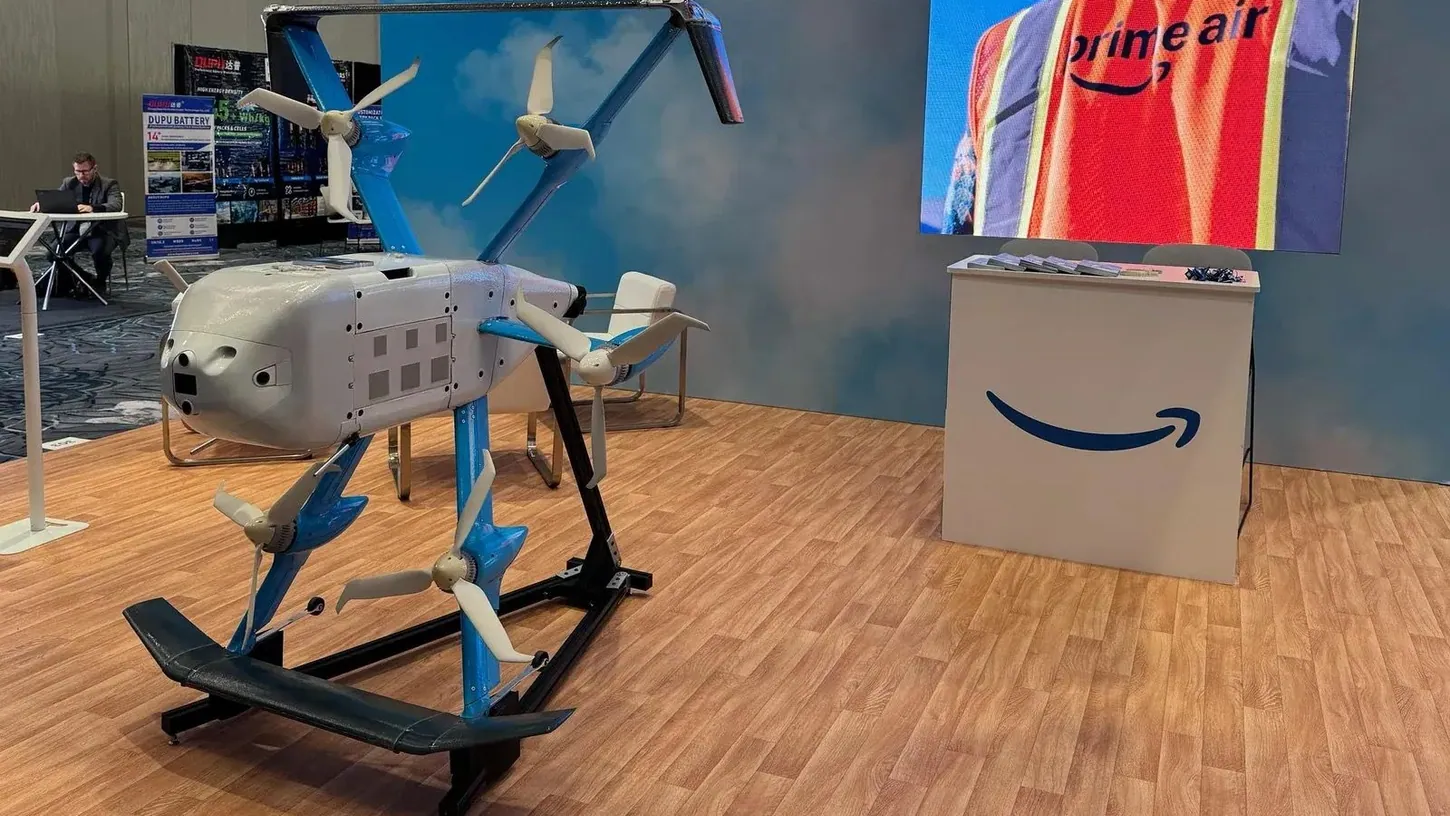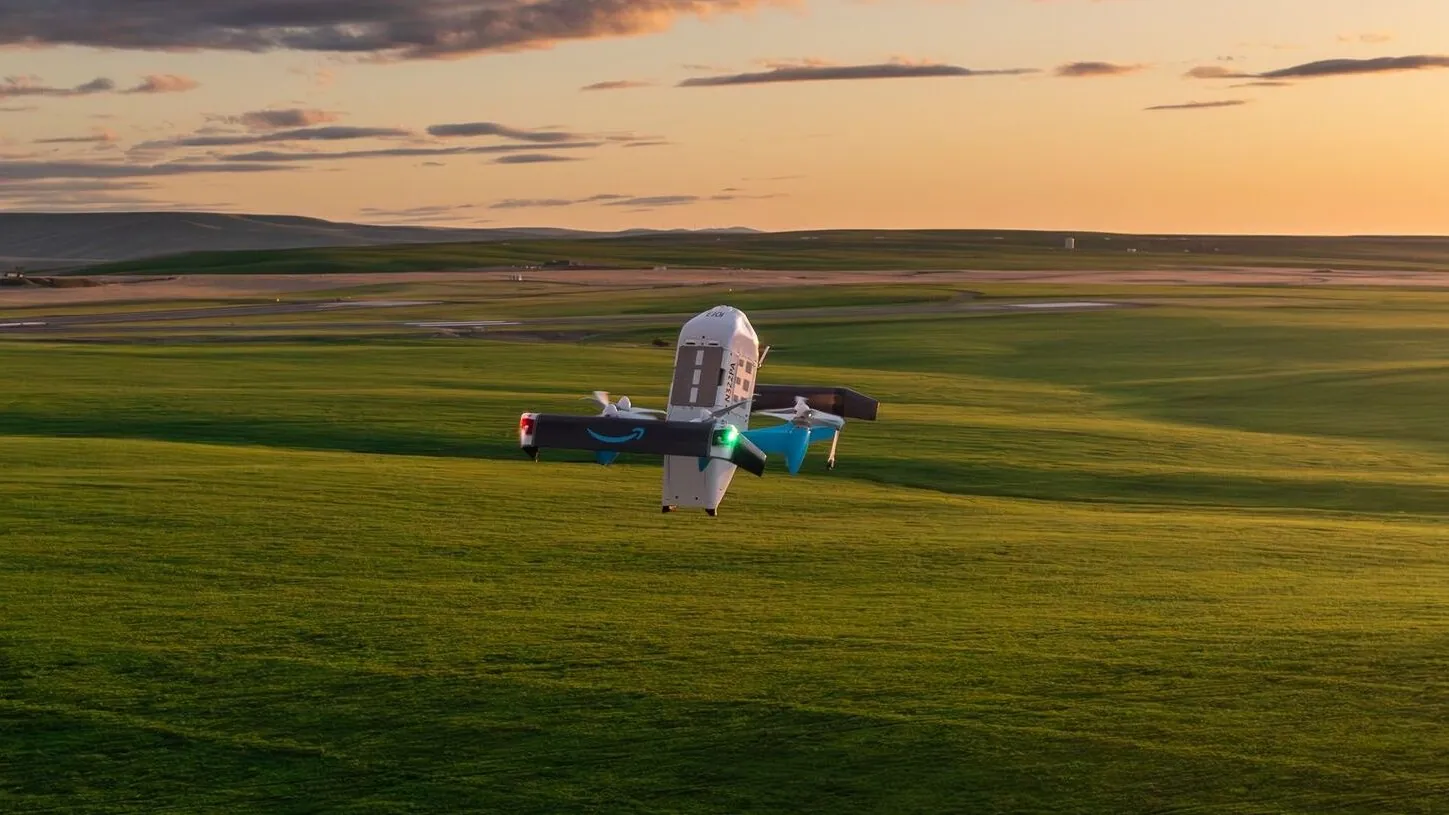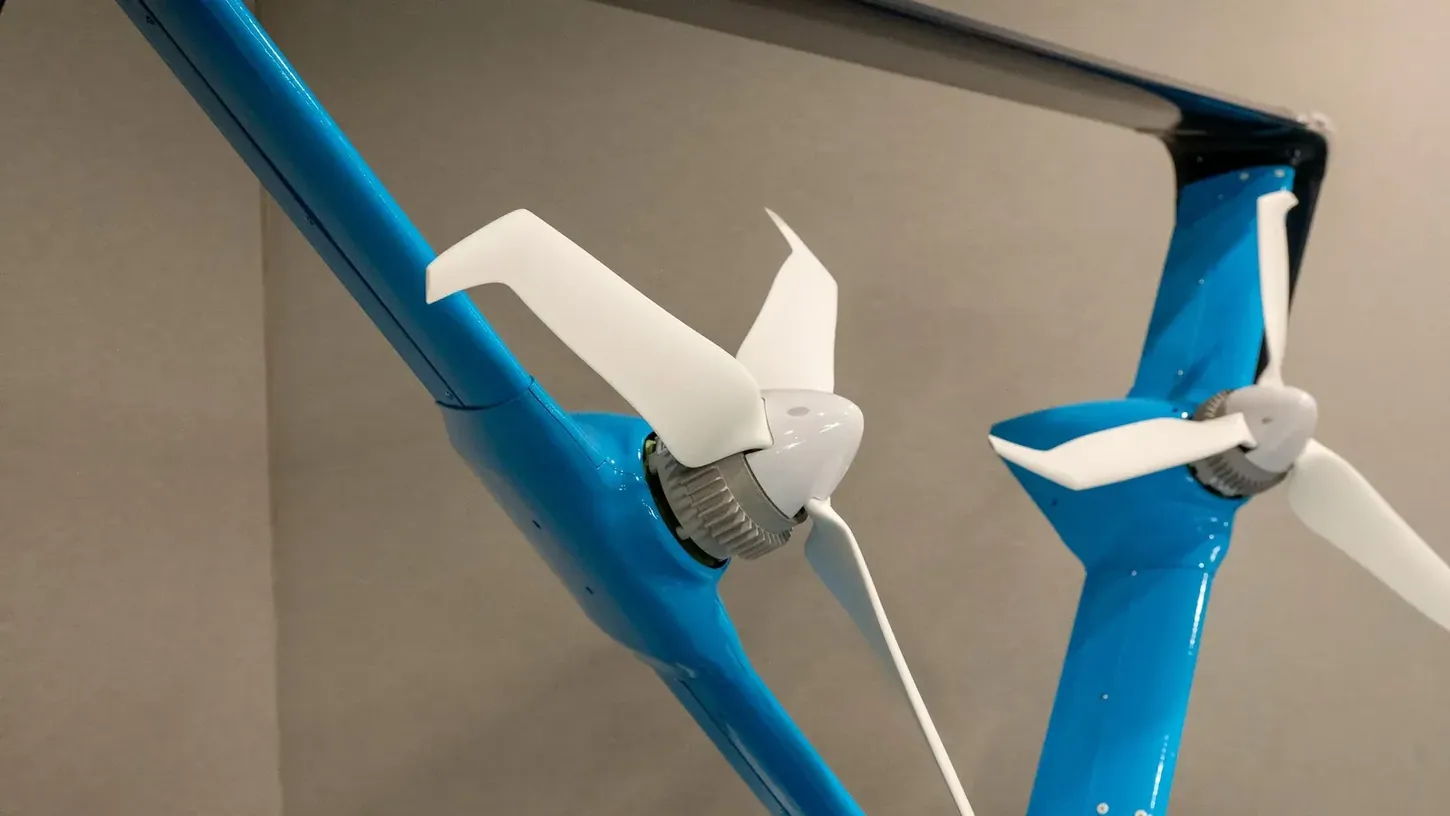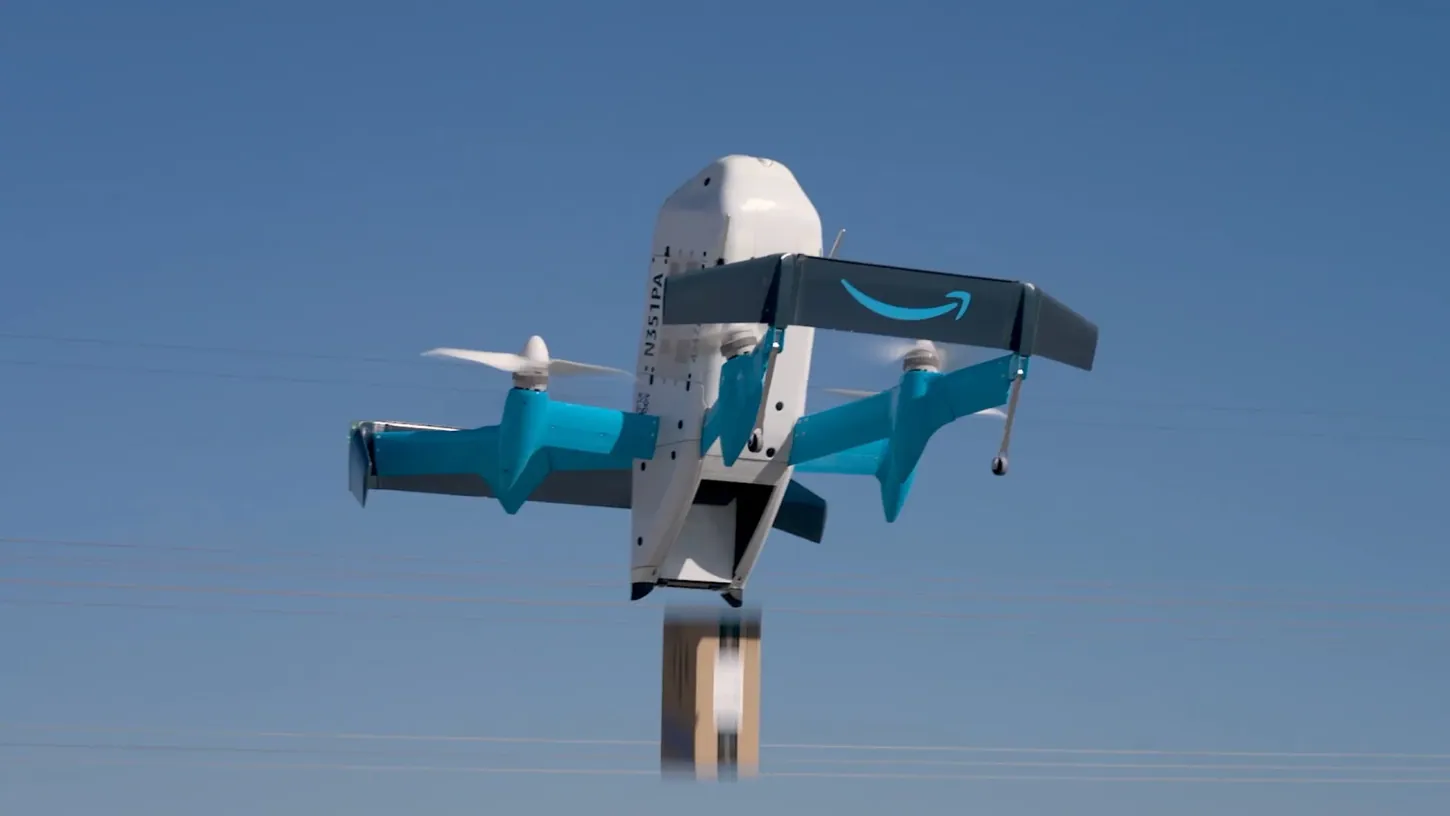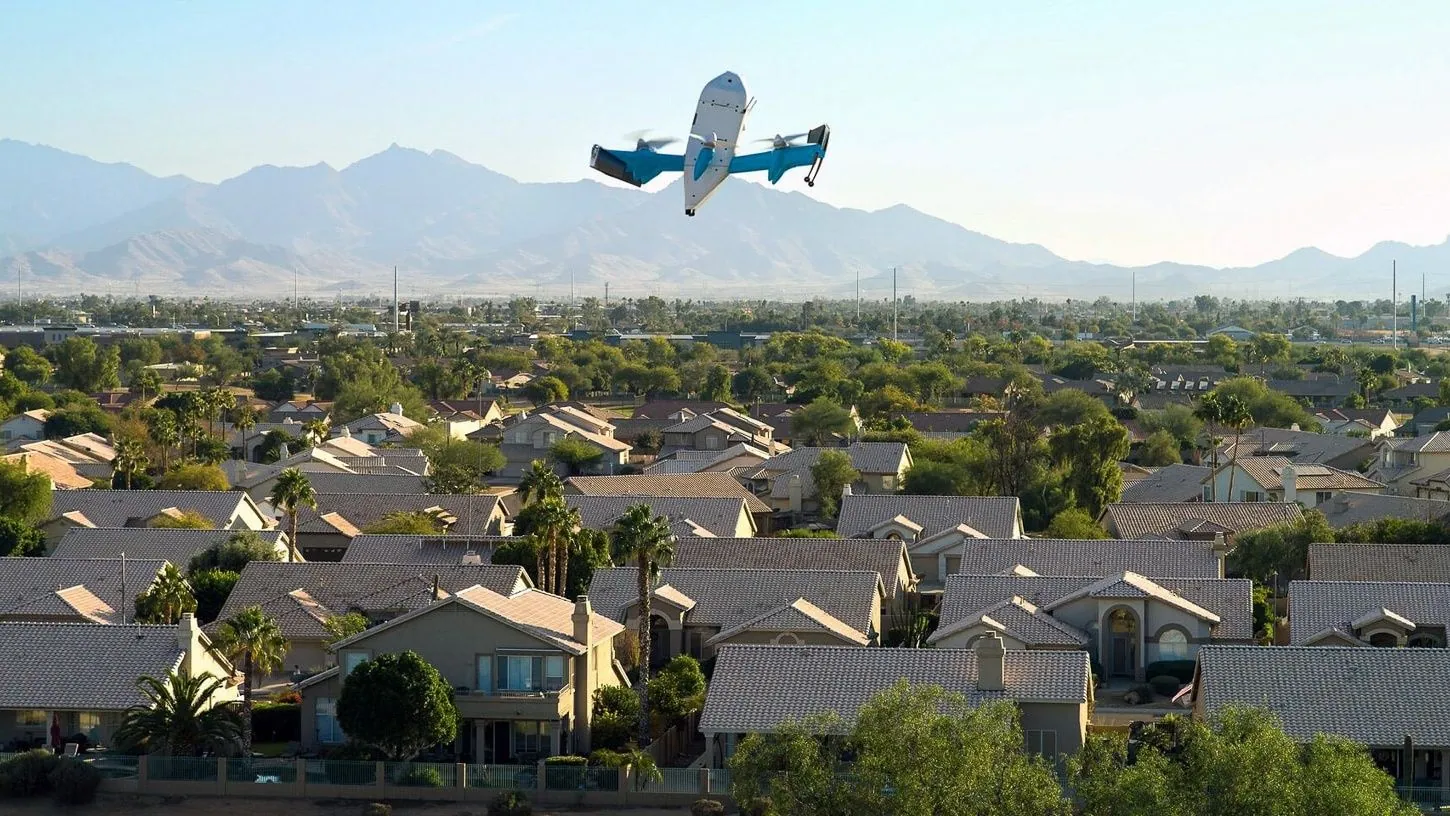
The conditional use permit that Nampa, Idaho, issued for Amazon’s Prime Air drone hub carries five conditions, and none of them names a limit on drone noise, altitude, flight hours or the number of flights. One requires compliance with city codes in general. DroneXL has read the city’s May 28 decision letter and the eight-page statement of findings attached to it. A resident who lives about half a mile (0.8 kilometers) from the hub sent the document after DroneXL reported on November 2 that the permit’s conditions were not in the reporting it had seen.
Since the complaints began, the permit has been described as setting a 200-foot (61-meter) floor for the drones. One neighbor told KTVB last week she believes some fly lower, and the station’s report said that would be a violation of the permit. The 200 feet is in the document. It appears in the commission’s findings of fact, which describe how the drones will fly, and the five conditions do not repeat it.
Nampa’s Five Conditions Cover a Fence, City Codes, the Pad, the FAA and a Contact
The Planning and Zoning Commission’s May 28 letter to Sam Bailey, the Amazon manager who applied, makes approval contingent on five conditions. They cover the launch pad’s fence and gates, compliance with city codes, the pad’s place on the lot, FAA approvals before any flight, and a local complaint contact.
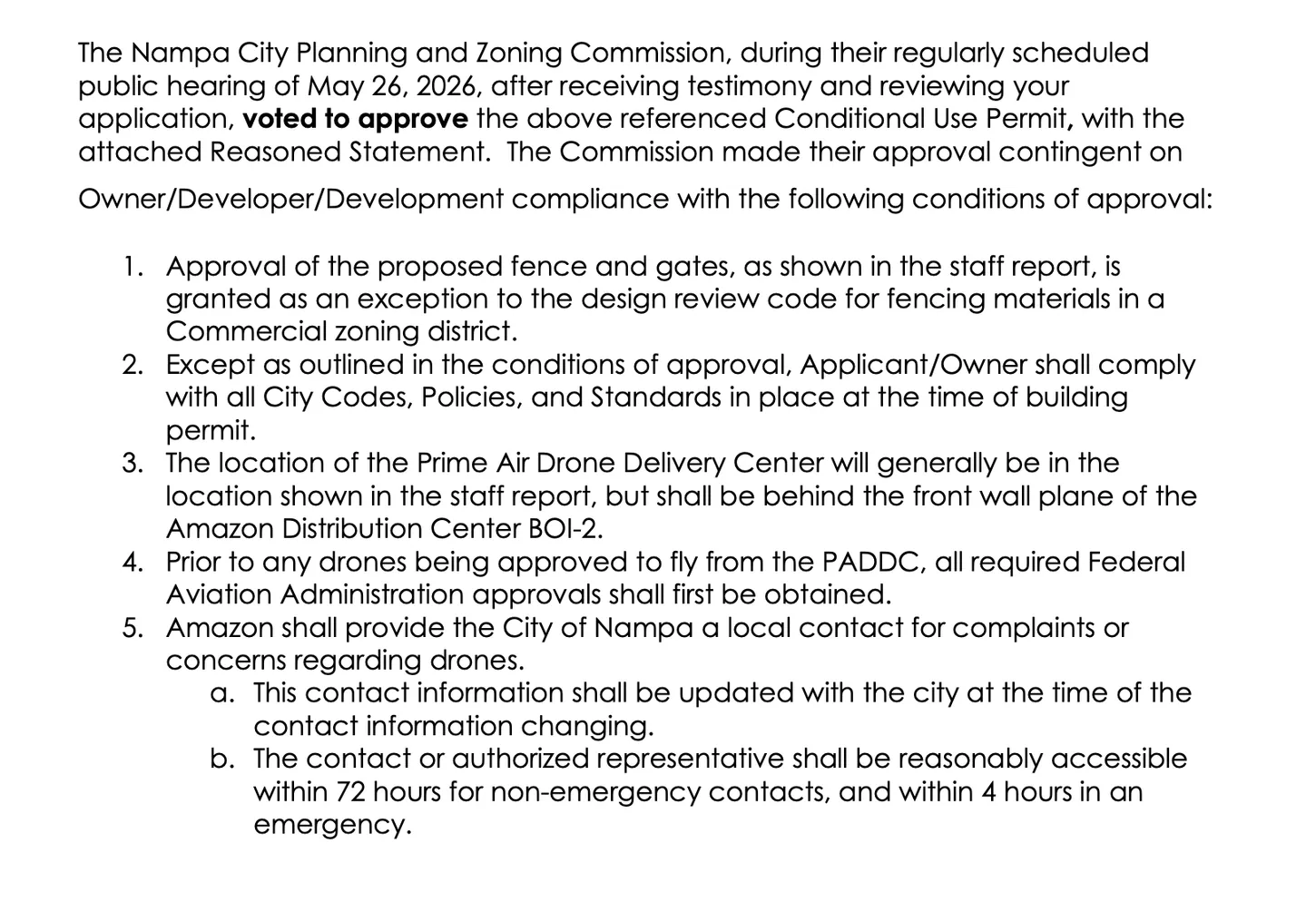
The second condition binds Amazon to all city codes, policies and standards in place when it pulled its building permit. DroneXL has not checked whether Nampa’s code holds a noise limit that would reach a drone in flight. The fifth condition is the only one written for the people under the flights. Amazon must give the city a local contact for complaints or concerns about the drones, keep that contact current, and make the person reachable within 72 hours, or within four hours in an emergency. The letter does not name the contact, and the condition requires Amazon to give it to the city, not to the public. DroneXL has not confirmed whether Amazon has done so. Meridian’s web page and Nampa’s flyer send residents to Amazon’s national customer service line, 1-888-280-4331, or to its online chat under “Something Else” and then “Amazon Drone Delivery.” DroneXL’s guide for residents covers both routes.
The fourth condition required every FAA approval to be in hand before the first flight. The findings say Prime Air flies as a Part 135 air carrier under FAA exemption 18601, and that it applied on March 30 for authorization to fly in the controlled airspace that extends west from Boise Airport. The FAA’s public index of drone environmental reviews listed no Idaho document when DroneXL checked it on November 12. A review can exist without a document on that index since the FAA’s July 28 national finding, and DroneXL does not know whether the March 30 application was granted.
The 200-Foot Floor and the Noise Figures Appear Only in the Findings
The findings of fact say a Prime Air drone climbs vertically from the pad to a minimum of 200 feet, holds at least that height to the customer, descends to 12 or 13 feet (about 4 meters) to drop the package, and climbs back to 200 feet for the return.
A separate finding puts the trip to and from the customer between 200 and 400 feet (61 and 122 meters) above the ground. On noise, the commission found the drones will operate at 53 to 55 dBA, which it calls moderate, at 500 feet (152 meters) from the launch pad. It found 68 dBA for a person standing in a backyard while a drone delivers to that yard, and compared that with a running vacuum. The findings name no study or test behind either figure. Bailey told the commission in May that the 68 came from a test in the backyard of an Arizona rental, as DroneXL reported last week.
The commission concluded that flights over the rest of the community would have “a brief and moderate noise impact” when a drone drops a package and climbs away. The findings give no decibel figure for a drone passing over a house on its way to someone else’s, and no figure for flights per hour or per day. They don’t mention hours of operation. The commission’s conclusion says the flight of drones after they leave the site “will be regulated by the Federal Aviation Administration.”
The findings say Prime Air drones do not fly defined corridors, and may fly anywhere inside the operating radius that Amazon has not marked as a no-fly zone. Amazon told KTVB on November 11 that it is evaluating flight path adjustments in Nampa to reduce the concentration of flights over certain areas.
Other findings describe the aircraft, and one of them speaks of “our Prime Air sites,” in Amazon’s voice. The drone’s cameras are sensors for avoiding obstacles, people and pets, and they do not stream live video to operators or conduct surveillance. The drone receives ADS-B signals from other aircraft and does not broadcast its own, though it does transmit Remote ID. Its detect-and-avoid system is meant to see helicopters and hot air balloons. A Meridian balloon pilot told Idaho News 6 this month that he has moved his launch site for now and plans to meet with Amazon and the FAA.
A Cherry Creek Resident Says She Counted 16 Drones in 15 Minutes
Judit Crace, who lives in the Cherry Creek subdivision and sent DroneXL the permit, says she filmed 16 drones passing in 15 minutes on the morning of Thursday, November 5. On Sunday, November 8, she says she counted 14 in the 14 minutes between 4:39 and 4:53 p.m.
Those rates match the other counts from the neighborhood. An Idaho News 6 reporter counted about one drone a minute, and a neighbor clicked off 39 passes in 48 minutes for KTVB.
Crace says her drone scanner has shown Amazon’s aircraft as low as 55 meters, about 180 feet. She also says she watched one pass roughly 50 feet over an 80-foot tree in a neighbor’s yard, which would put it near 130 feet (40 meters). DroneXL has not seen her scanner logs, has not reviewed her videos frame by frame and has not measured the flights. A scanner reading and a drone’s height over the ground beneath it are not always the same number, and her email does not say which one her app shows. Amazon told KTVB its drones stay higher than 200 feet over the neighborhood and are only slightly louder than everyday noise there. The company also said the FAA has certified the service and continues to oversee it.
Crace says she lives near a busy road, Interstate 84 and a rail crossing where trains sound their horns once or twice a day. She says none of that bothers her, because the traffic is a steady hum and the trains are occasional. “The buzzing sound starts, fades, and starts again and it is not quiet,” she wrote of the drones.
She also raised Idaho Code 21-213. The statute bars using a drone to intentionally photograph or record specifically targeted people or private property, including a person’s home, without written consent, and it gives the person recorded a civil claim worth at least $1,000. The findings say the cameras do no surveillance, and nothing in the record DroneXL has seen shows Amazon recording anyone. Crace asks how a resident would check.
She says neighbors have started a Facebook group called Idaho Blue Skies, have filed a noise complaint with Amazon, and are asking Nampa to revoke the permit.
The Appeal Window Closed on June 12, 140 Days Before the First Delivery
The decision letter gave Amazon or any aggrieved party 15 calendar days to appeal to the City Council, a window that ended at noon on Friday, June 12. Deliveries began on October 30, which is 140 days later. An appeal would have suspended the permit until the council ruled.
Randy Nye, who lives in Cherry Creek Estates, told KTVB that he and his neighbors sit just outside the city limits and received no written notice of the May hearing. DroneXL has not checked what notice Nampa’s code required for it.
That leaves revocation. Section 10-25-12 of Nampa’s zoning code lets the planning director revoke a conditional use permit for a violation of the zoning regulations or the permit criteria, or for a failure to comply with a condition of approval. One of those criteria is the test the commission applied in May, that the use not harm people or property through excessive noise. The same section says staff must investigate any citizen complaint about noncompliance with a permit’s conditions, and the permit is revoked if the complaint is found credible, material and not remedied.
Planning and zoning director Rodney Ashby gave an example in May, BoiseDev reported: drone noise proving much higher than Amazon represented, at least two residents complaining, and staff finding the complaints valid. Nampa communications director Amy Bowman told KTVB last week that the planning and zoning director is reviewing the complaints against the permit’s conditions. None of the reporting DroneXL had seen by November 16 describes a city finding that Amazon has broken one.
Amazon has changed its flying elsewhere without a permit forcing it. In Richardson, Texas, it raised its average outbound altitude to 225 feet after complaints, and one resident still logged 52 overflights in a day. In Baton Rouge it adjusted heights and spread out its routes after about 100 residents came to a meeting. Nampa’s file is on DroneXL’s Amazon Prime Air tracker.
DroneXL’s Take
As I read the letter, Nampa wrote down what Amazon described and did not make it a condition. The 200-foot floor, the 68 decibels and the line about cameras are all in the findings, and the conditions ask for a fence, a location, FAA paperwork and a phone contact. I’m not a lawyer. Nampa’s code says a permit is subject to the plans and conditions on which it was granted, so the city attorney may say a finding binds Amazon as firmly as a condition does. If so, the city should say that in public, because neighbors are filing complaints on the strength of it.
The same code lets the commission attach conditions on noise and on the time of activities, and it attached neither. The FAA controls the airspace, so I doubt an altitude condition would have held up anyway. A monthly report of flight counts and complaints, as a condition of using that parking lot, would have. Nampa asked Amazon for flight data only this month, after the complaints. Last week I wrote that Nampa needed to set a number before arguing about one. The numbers were in its own file, and they describe the pad and a customer’s yard. The findings contain no measurement for a yard under the route that gets a drone a minute and no package. I’d still rather see an 83-pound MK30 with no parachute carry insulin than a phone case. The next town that holds a hearing like this should put its numbers in the conditions.
Sources: City of Nampa decision letter and Reasoned Statement, CUP-00407-2026 (May 28, 2026), Nampa City Code 10-25, KTVB, Idaho News 6, Idaho Code 21-213
DroneXL uses automated tools to support research and source retrieval. All reporting and editorial perspectives are by Haye Kesteloo. Read our editorial standards.