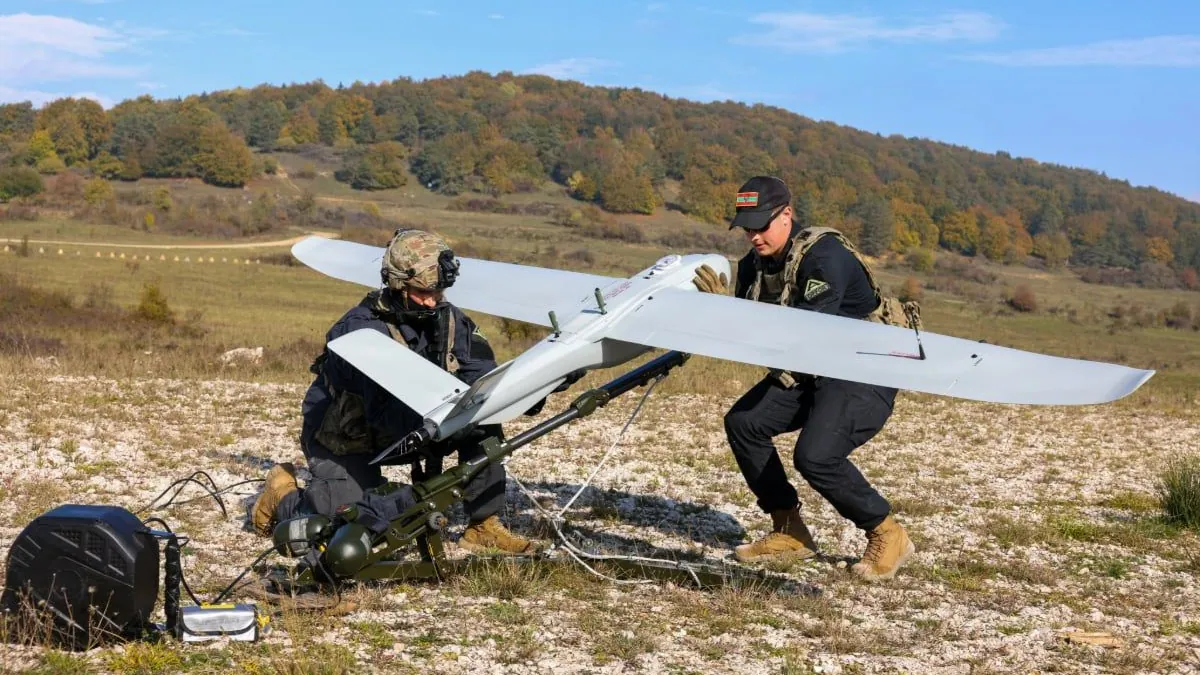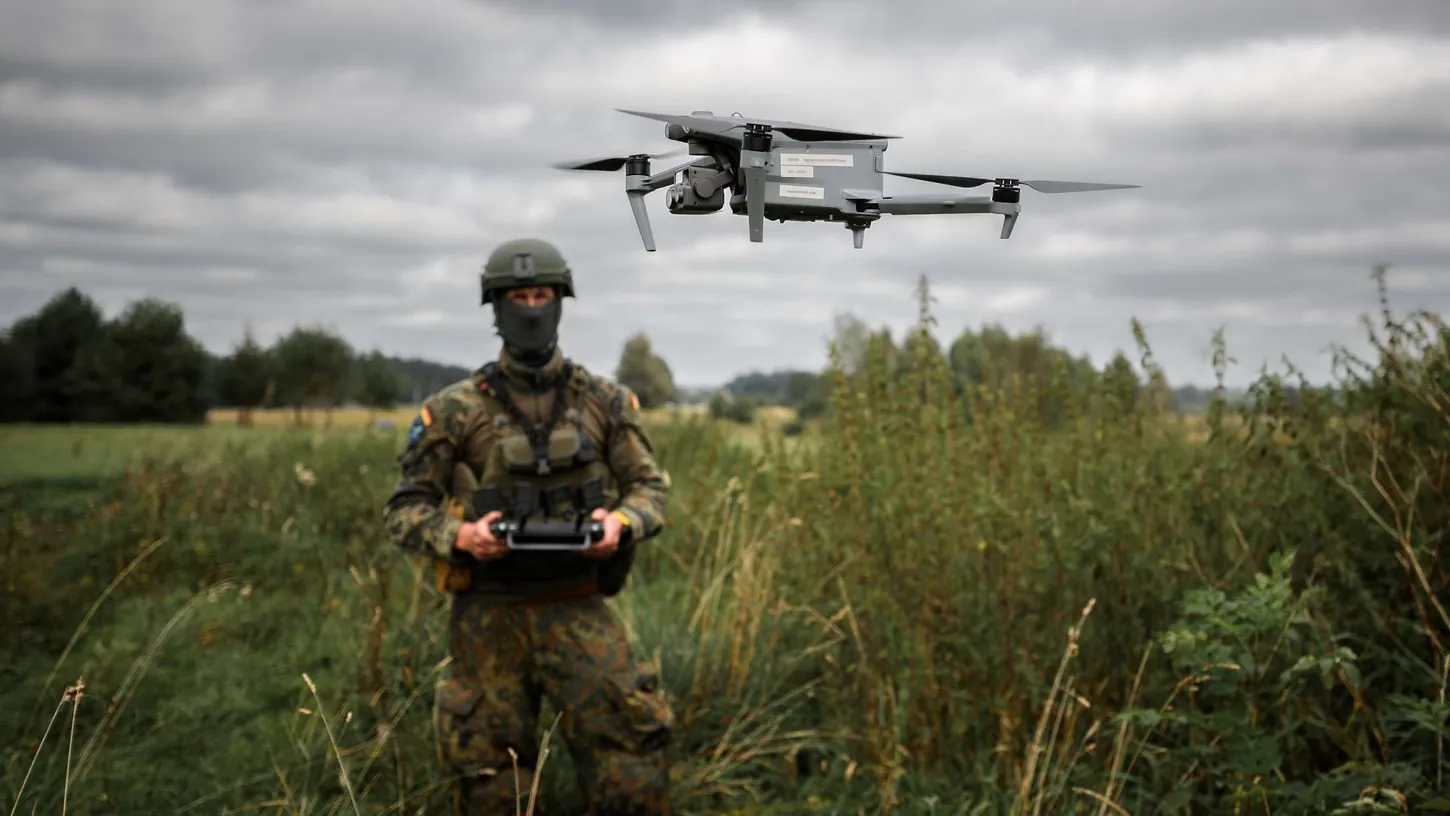

The U.S. Army is killing off its only drone assault battalion seven months after creating it. The 3rd Battalion, 504th Parachute Infantry Regiment, a roughly 600-soldier unit carved out of the 173rd Airborne Brigade in January to master fighting with drones and ground robots, will shed that mission after a final exercise in Germany this fall and return to regular airborne infantry duty.
The order comes from Gen. Christopher LaNeve, the acting Army chief of staff and a close ally of Defense Secretary Pete Hegseth, as part of what he calls a back-to-basics approach. The battalion was the flagship project of Gen. Randy George, the Army chief Hegseth ousted in April. The Wall Street Journal first reported the phase-out on Wednesday.
The same Pentagon is spending more than a billion dollars to put hundreds of thousands of attack drones in soldiers’ hands.
LaNeve Unwinds His Predecessor’s Signature Drone Unit
Gen. Christopher LaNeve, the acting Army chief of staff, ordered the phase-out as part of a back-to-basics push. The battalion, roughly 600 soldiers of the 173rd Airborne Brigade in Germany, keeps its drone assault role only through the Saber Junction exercise, which wraps up in September.
After Saber Junction at Hohenfels, an Army official told The Wall Street Journal, the battalion will report its findings to guide future experimentation and then “refocus on its core warfighting tasks as an airborne infantry battalion.”
The unit was activated in a January ceremony at Grafenwoehr, replacing a deactivated cavalry squadron and taking a designation that reaches back to World War II. When the Army stood it up, no end date for the drone assault role was specified.
LaNeve served as Hegseth’s senior military aide in 2025, was confirmed as Army vice chief in February, and has run the service in an acting capacity since George’s ouster. His prospects for the permanent job face resistance from senators in both parties, the Journal has reported, but the temporary status has not slowed him down. In a memo to the force on Wednesday, backed by a planning document dubbed the Army Azimuth, he wrote that soldiers must master “an operational environment that looks fundamentally different from the battlefields of yesterday.”
The drone battalion is one entry on a longer list. LaNeve is moving a Multi-Domain Task Force from Europe to South Korea, has reassigned III Armored Corps to the new Western Hemisphere Command, and clashed with Army Secretary Dan Driscoll over new fitness standards, according to the Journal’s reporting. Driscoll, for his part, has spent the year demanding better counter-drone gear for his soldiers.
The Battalion Existed to Bottle Ukraine’s Lessons
The battalion had one job: turn Ukraine’s drone war into American doctrine. Army leaders traveled to Kyiv to study it, a small number of its personnel rotated through the city, and Ukrainian troops playing the enemy in NATO training beat a full U.S. brigade combat team last spring.
George, Driscoll, and Gen. Chris Donahue, then the top Army commander in Europe, flew to Kyiv in November 2025 to meet Ukrainian drone commanders. The battalion grew out of that trip and out of George’s broader push, which he called “transformation in contact”: let the troops closest to the fight evaluate new technology and write the tactics, instead of handing those decisions to staff officers far from the battlefield.
The most telling detail in the Journal’s reporting is what happened when the two armies met in the field. Ukrainian troops played the mock adversary in a NATO training area last spring and bested a U.S. brigade combat team rotating through Europe. An army that has fought under drone-saturated skies for more than four years beat the one still writing its drone doctrine. The unit now being phased out was the Army’s answer to that loss.
Michael O’Hanlon, a defense expert at the Brookings Institution, told the Journal that George was starting to grasp how thoroughly Ukraine has changed close combat, and that “any setback in what he was doing would be deeply regretful and dangerous.”
The Army also recently canceled plans to have senior Ukrainian officers speak at its center for maneuver warfare at Fort Benning, Georgia, according to U.S. officials cited by the Journal.
The Phase-Out Cuts Against the Pentagon’s Drone Dominance Push
Washington’s official policy is drone dominance. The Pentagon is spending $1.1 billion to buy more than 300,000 small attack drones by early 2028, stood up a dedicated drone office in late June, and keeps promising unmanned systems at scale. The Army just eliminated the unit built to master them.
Hegseth has vowed to break China’s lead in drone development, with a program that reaches beyond the Army to equip the Marine Corps and Special Operations Command. His July 2025 drone dominance directive spawned the $1.1 billion Drone Dominance Program, which ran its first vendor Gauntlet at Fort Benning in February (the same post where the Ukrainian speakers were just disinvited), and this summer he created a Pentagon-wide drone czar to run it all.
An Army spokesman told the Journal the service is “committed to accelerating U.S. military drone dominance” and that these aerial systems exist to support soldiers.
What nobody has said is what happens to the mission. The spokesman declined to comment on future plans, and the Journal reports the Army did not explain how it intends to build drone warfare skills once the battalion reverts to infantry. There is a promised findings report and nothing announced beyond it: no successor unit and no timeline. An experiment can end. Ending it with nothing named to carry the mission forward is a choice.
DroneXL’s Take
Experiments are supposed to end, and that is the strongest version of LaNeve’s case. The battalion was chartered to generate findings, and one 600-soldier unit was never going to win a drone war alone. If those findings become drone platoons across the force, this story ends well.
I don’t think that is what is happening. The Journal quotes critics inside and outside the administration who see an acting chief keen to sweep away his ousted predecessor’s initiatives, and the pattern fits: George is gone, the Ukrainian officers are disinvited from Fort Benning, and the one unit whose day job was learning from Ukraine gets folded back into the infantry months after Ukrainian operators embarrassed a U.S. brigade in a mock fight. My read is that the drone mission is collateral damage in a changing of the guard, and back to basics is the branding.
When the Army was pushing 340,000 drones toward its combat units at Fort Irwin in March, the hardware sprint and the tactics experiment looked like two halves of one plan. Now the Pentagon is buying the drones and disbanding the tacticians. Hardware without doctrine is how you end up with 300,000 aircraft and nobody who has thought hard about employing them against an enemy that has.
Watch what surfaces after Saber Junction wraps in September. If the battalion’s findings show up as funded drone formations in the Army’s force design, I will happily be wrong. If they show up as a report on a shelf, remember that the soldiers best qualified to write the next one just went back to being riflemen.
Source: The Wall Street Journal
DroneXL uses automated tools to support research and source retrieval. All reporting and editorial perspectives are by Haye Kesteloo.