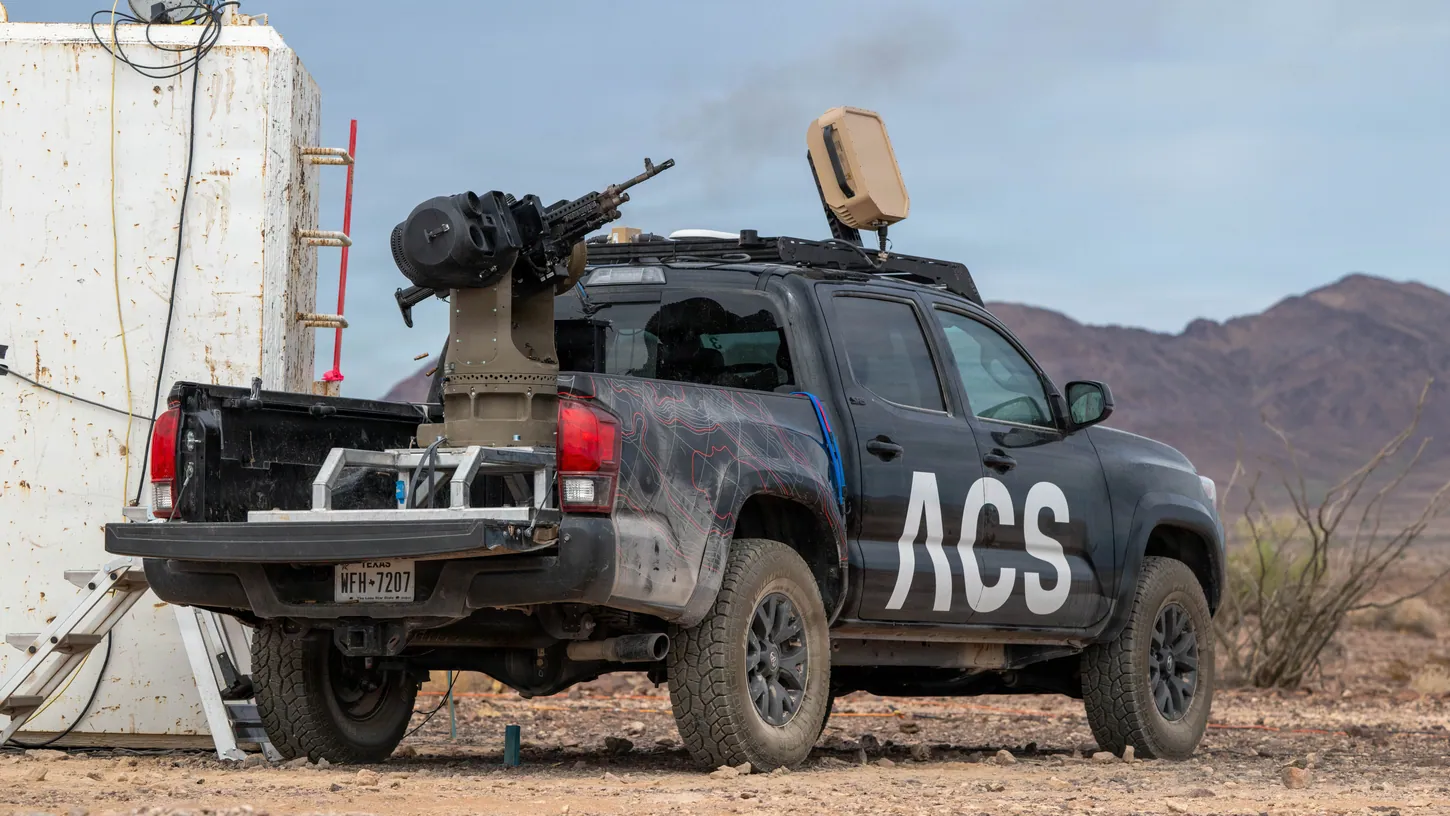
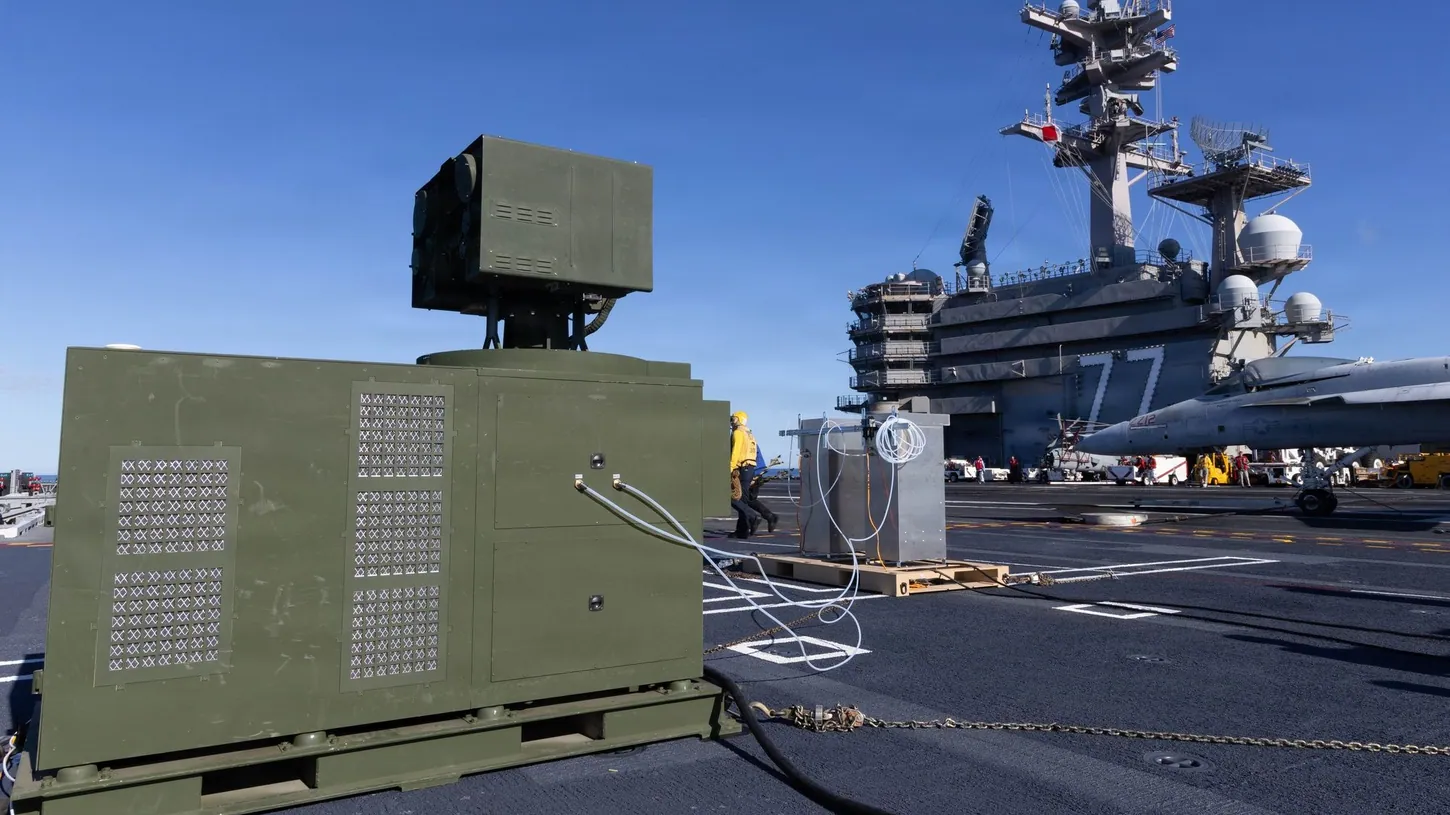
The US military used a high-energy laser to destroy three drones it says were flying in direct support of Mexican drug cartels near the southern border. The engagements happened over two nights, late Tuesday, August 25, and into the early hours of Wednesday, August 26, in the airspace over or near the Rio Grande Valley in southern Texas. It is a striking turnaround for a laser program that spent February making headlines for shooting down the wrong drone and freezing a commercial airport’s airspace.
Soldiers of Joint Task Force-Southern Border, the roughly 8,000-strong unit operating under US Northern Command (USNORTHCOM), fired the shots using the Army Multipurpose High Energy Laser (AMP-HEL). What nobody in uniform will say is where, exactly, the drones came down: over US territory, or Mexico’s.
JTF-SB Credits The AMP-HEL With Three Kills Over Two Nights
Joint Task Force-Southern Border destroyed three drones with the Army Multipurpose High Energy Laser during the nights of August 25 and 26, 2026. The task force declared the aircraft hostile because they directly supported activities that physically threatened US troops and Customs and Border Protection agents.
The task force announced the engagements Thursday evening in a release from Fort Bliss, which did not identify the location of the shootdowns, the cartels involved, or the drone types destroyed.
Maj. Gen. Curtis Taylor, the JTF-SB commander, said cartel networks increasingly use drones to support human smuggling and to spy on US personnel and law enforcement, adding that “we have made it clear that we will not tolerate hostile surveillance.” Taylor also thanked the Mexican Army for its cooperation against drone threats in the border region.
The task force has operated since March 2025 across 1,954 miles (3,145 kilometers) of border terrain, where it has laid wire obstacles, flown thousands of observation flights, and run tens of thousands of detection and monitoring patrols. Cartel drone activity is the documented backdrop: the Pentagon reported more than 1,000 drone sightings a month along the border earlier this year, according to Reuters reporting by David Jeans and Mike Stone, and DroneXL has covered how cartels now field FPV drones and counter-drone gear of their own.
USNORTHCOM Will Not Say Whose Airspace The Shots Crossed
USNORTHCOM declined to specify whether the three drones were destroyed over US or Mexican airspace. Asked directly, a spokesperson cited operational security and ongoing counter-cartel operations. The question matters because Mexico’s president has called any unilateral US action on Mexican soil a grave breach of sovereignty.
The command’s full answer, given to CBS News, was that “the shots were taken in coordination with all partners operating along the border.” That phrasing, combined with Taylor’s explicit nod to the Mexican Army, reads like a carefully lawyered sentence, and it leaves the central question open. A laser beam does not stop at a boundary fence, and a drone hit at the Rio Grande can fall on either bank.
President Claudia Sheinbaum has made that position explicit as the Trump administration widens its campaign against trafficking organizations, per Reuters. Neither government has publicly identified where the three drones came down. That is the one genuine unknown in this story, and it is the one both capitals have an incentive to keep vague.
The Laser Program Climbed Out Of A Rough February
This week’s announcement caps a recovery. In February, a US military laser accidentally shot down a CBP drone near Fort Hancock, Texas. The same month, a safety dispute between the FAA and the Pentagon shut down commercial airspace around El Paso for seven hours.
Those failures forced the two agencies to the table. They ran a joint AMP-HEL safety test at White Sands Missile Range in early March, and by April the FAA formally cleared the military to operate anti-drone lasers domestically under a signed safety agreement. Four months later, the same program is announcing operational kills instead of friendly-fire mishaps.
The military did not name the manufacturer of the laser used this week. AeroVironment delivered its first two 20-kilowatt LOCUST systems to the Army in September 2024 as part of the Multi-Purpose High Energy Laser prototyping effort, per Reuters’ February reporting, and a LOCUST was the system housed at Fort Bliss during the El Paso episode.
DroneXL’s Take
The flashy part of this story is the laser. The real story is the paperwork behind it. The February record shows what happens when directed-energy weapons operate near civilian aviation without coordination: a friendly drone destroyed and a commercial airport frozen for seven hours. The April FAA-Pentagon safety agreement is the unglamorous fix that made Thursday’s confident press release possible, and I’d argue the agencies earned the right to brag a little.
Yes, the threat is real. Cartel drones surveil agents and guide smuggling runs. In Mexico’s interior they have dropped explosives in deadly attacks, and the Pentagon’s own figure of more than a thousand border sightings a month is a documented pattern. Countering them with a laser shot that costs a fraction of an interceptor missile makes plain sense.
But the airspace silence deserves more scrutiny than it is getting. If these shots stayed on the US side, saying so costs nothing and USNORTHCOM says far less convenient things all the time. The lawyered non-answer suggests the geometry is complicated, and Sheinbaum’s sovereignty red line is exactly where a “coordination with all partners” formula gets stress-tested. Watch whether Mexico’s government reacts publicly in the coming days, and whether JTF-SB’s next engagement announcement, because there will be a next one, gets any more specific about location.
One practical note for pilots: directed-energy weapons are now operational, not experimental, in border airspace. If you fly commercially anywhere near the southern border, the FAA’s laser safety framework is the only thing between your Part 107 operation and a 20-kilowatt beam, and February proved the deconfliction is not foolproof. Know where the restricted areas are and stay well clear.
Sources: Joint Task Force-Southern Border / USNORTHCOM, CBS News, Reuters
DroneXL uses automated tools to support research and source retrieval. All reporting and editorial perspectives are by Haye Kesteloo.