Joint Task Force-Southern Border detected at least 378 drones along the US-Mexico border between August 22 and September 22, and the trend is climbing, Air Force Brig. Gen. Brian Filler told reporters at Yuma Proving Ground in Arizona. Filler, the task force’s deputy commander, said most carry surveillance cameras. Army officials said the drones are typically commercial models that criminals use to watch over smuggling and human trafficking operations.
He was speaking at Falcon Peak 26.2, the Pentagon’s counter-drone experiment that put 21 companies’ detection and defeat systems in front of soldiers at Yuma from August 31 to September 25. It was the fourth Falcon Peak, the first at Yuma and the first built around the southern border.
In early September, military officials told CBS News that cartel drone flights over the Rio Grande Valley had fallen about 75% once an Army laser started shooting them down on August 25. Filler now describes the border-wide trend as rising.
Falcon Peak Lined Up 21 Counter-Drone Companies Against DJI Mavics
The Department of War’s participant list named 21 companies, including Anduril, Teledyne FLIR, Powerus and Perennial Autonomy, which holds a Pentagon interceptor contract worth up to $500 million. Yuma tested them in three lanes: sensors, electronic defeat and kinetic. Anduril’s Lattice software was the command-and-control baseline, a series first.
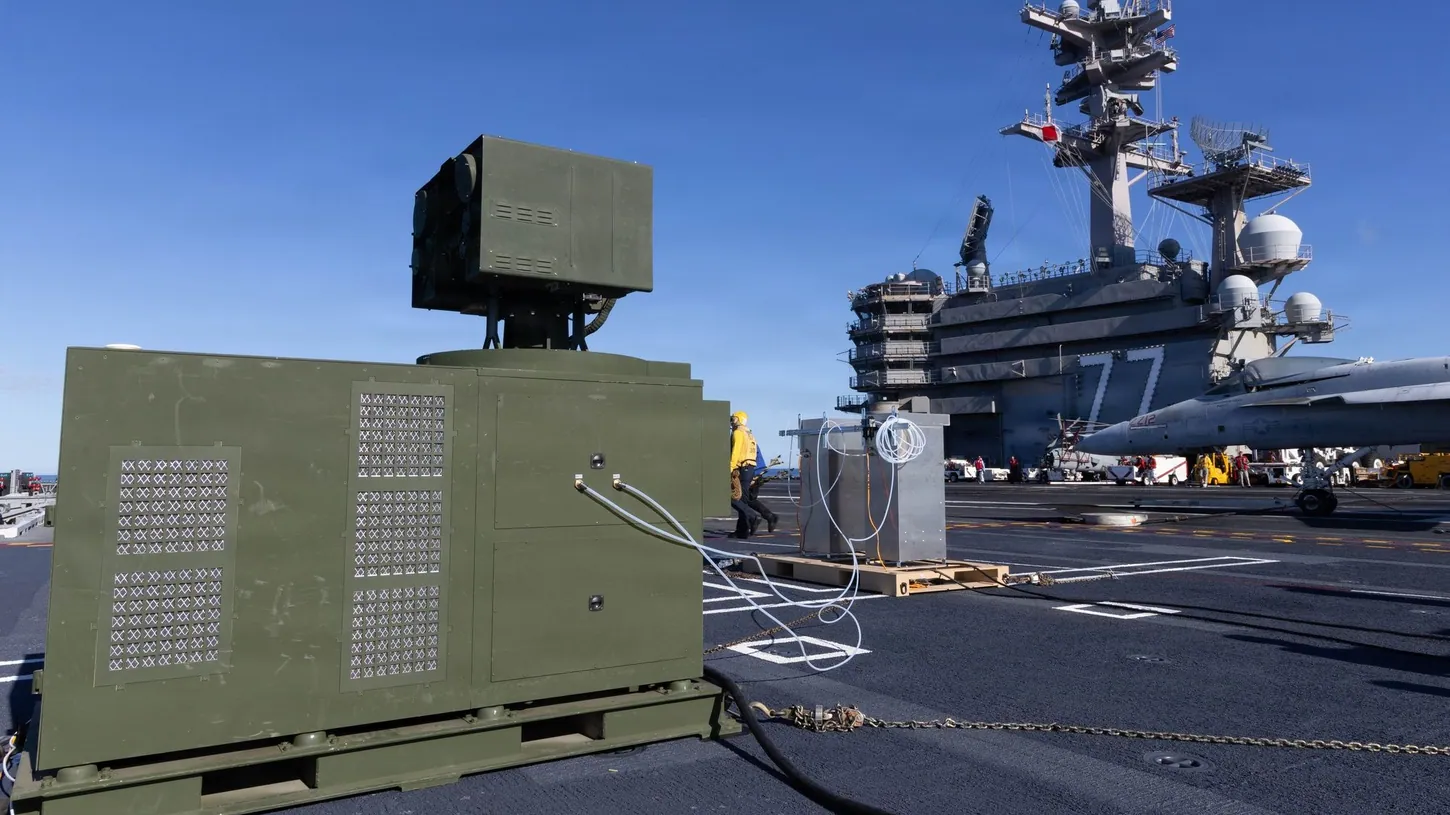
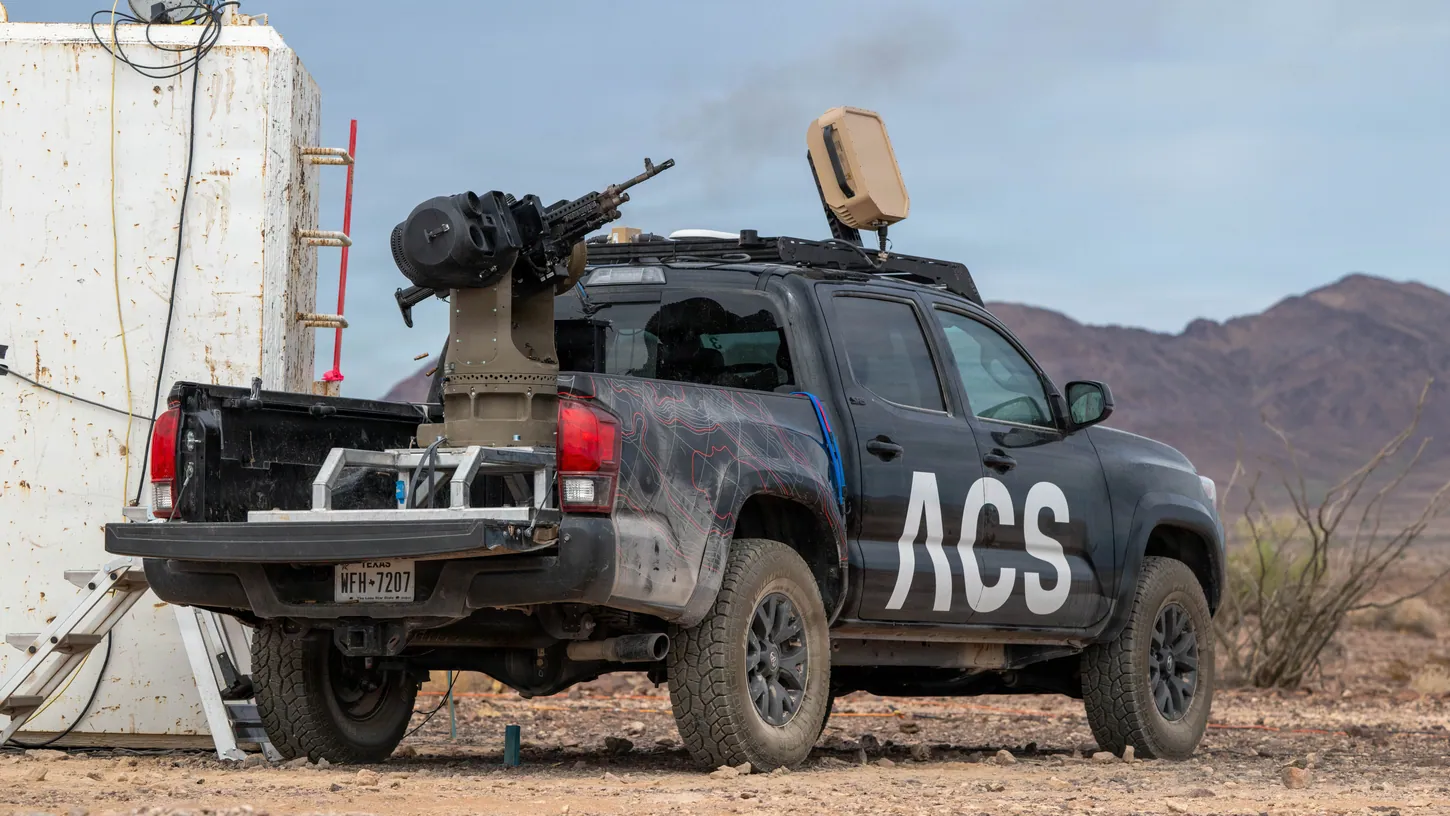
Reuters reported that the demonstrations featured Anduril’s Ghost drone, a Teledyne FLIR radar-and-camera detection system, and Allen Control Systems’ Bullfrog, an automated machine gun. Military photographers caught the Bullfrog firing at drone targets from the bed of a pickup on September 9. On September 22, a Genesis Arms Gen-12 shotgun system knocked a drone out of the sky on the same range.
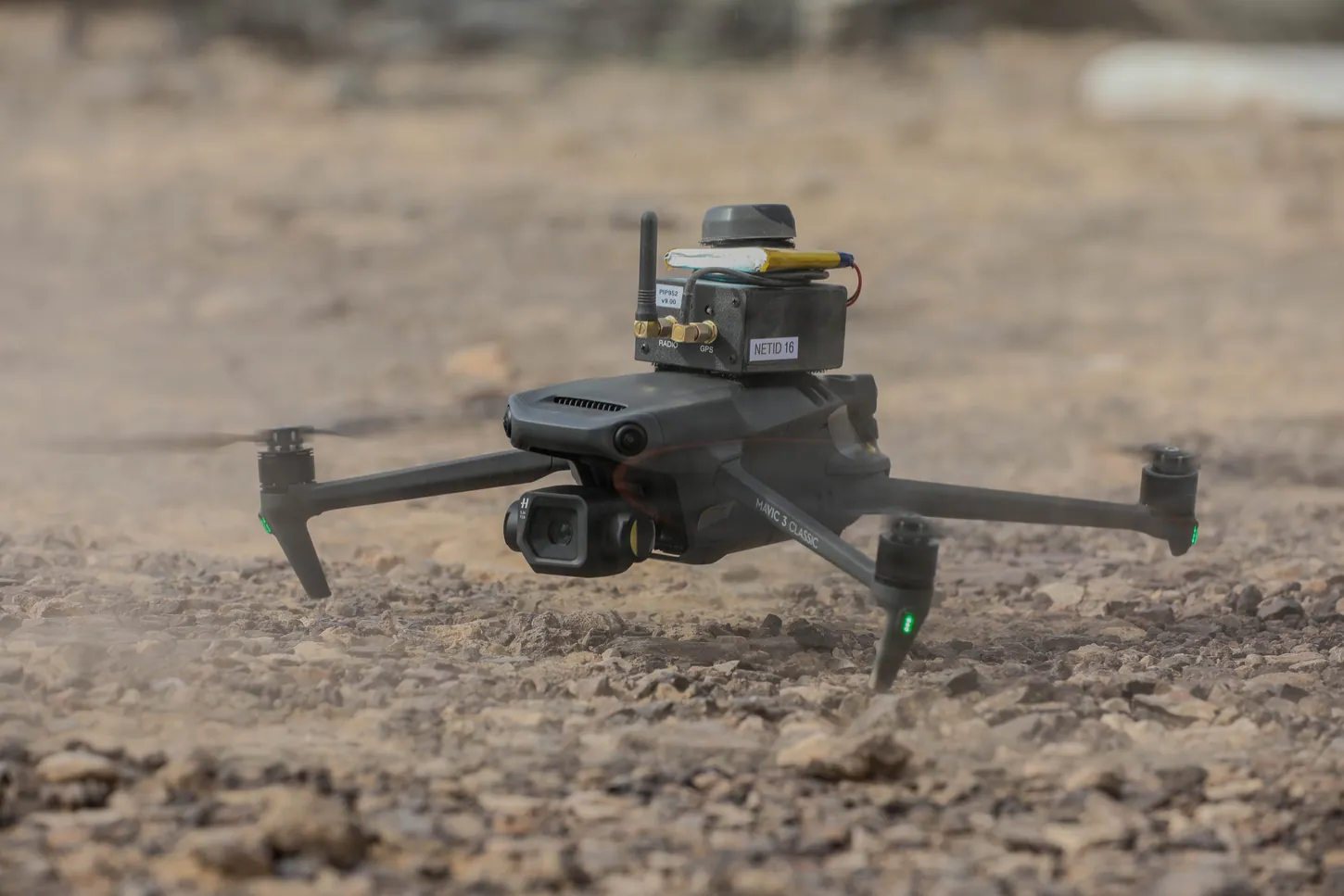
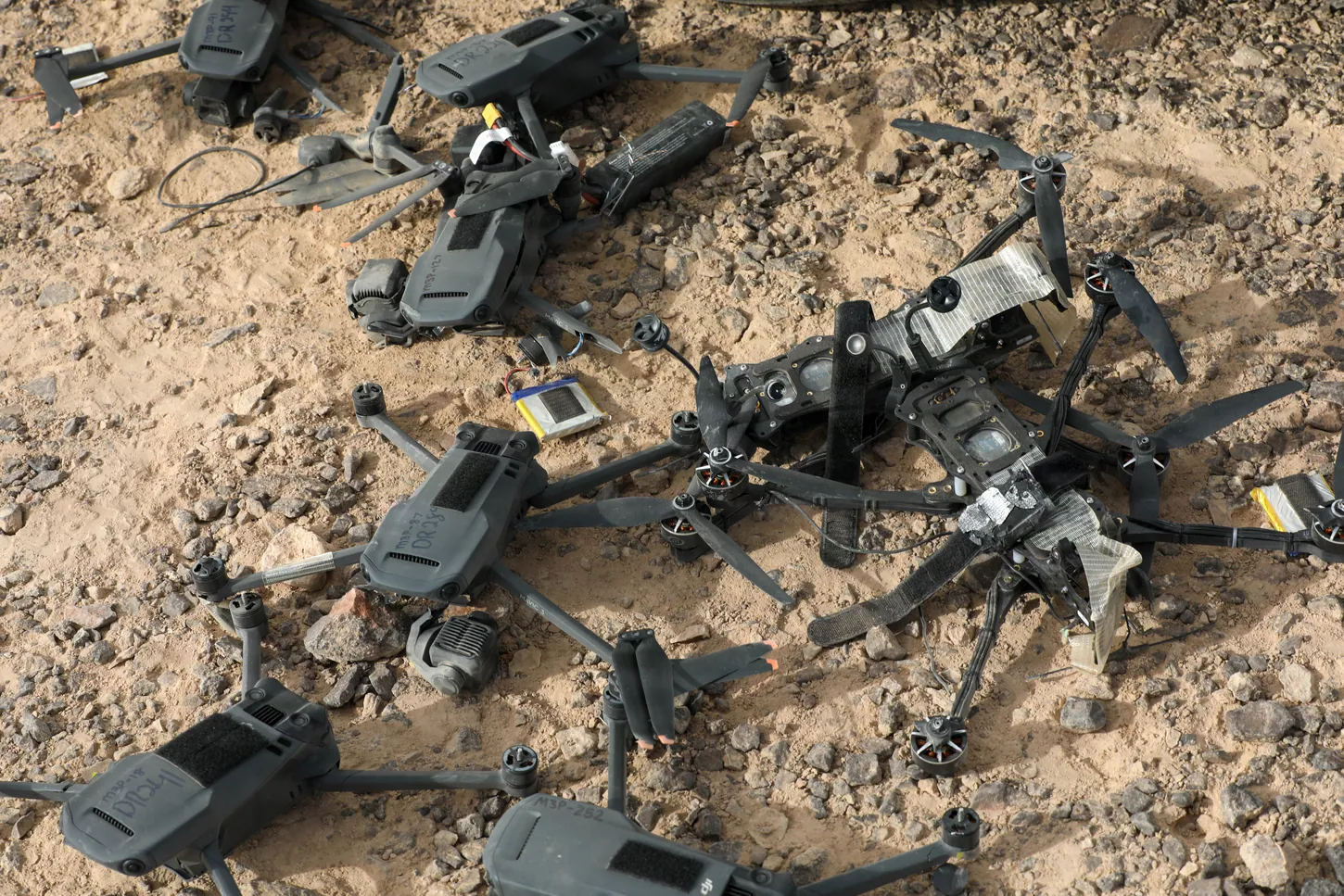
The targets looked like what Filler described crossing the border. Army photos from the range show a DJI Mavic 3 Classic carrying an add-on radio module as it flies toward the intercept area. “We are seeing largely commercial off-the-shelf available drones,” Filler said.
Powerus brought an interceptor drone. The company went public on Thursday, October 1, by merging with Aureus Greenway Holdings, the Florida golf course company whose deal Donald Trump Jr. and Eric Trump backed in March. Powerus also had a seat at the White House drone dominance meeting in August, according to the attendee list.
Yuma Keeps Permanent Counter-Drone Lanes After The Exercise
Joint Interagency Task Force 401 is leaving the sensor, electronic-defeat and kinetic lanes in place at Yuma, so vendors can test there without waiting for the next Falcon Peak. Data from every system went into the task force’s central repository to inform buying decisions, its closing release says.
Army Brig. Gen. Matt Ross, who directs Joint Interagency Task Force 401, told reporters the model is Ukraine, where units adapt on a daily or weekly basis. “What we should really do is replicate that process,” he said. Military officials also told Reuters that cartel drones are not comparable to the sophisticated ones flying over Ukraine or the Middle East, but the border gives soldiers a real operating environment to test and train in.
Brig. Gen. Jason Rueschhoff, Northern Command’s director of operations, told DefenseScoop that the fifth Falcon Peak will move to an urban area, with no city or date named yet.
Only 15 Of The 378 Border Drones Drew An Engagement
The task force’s commander, Army Maj. Gen. Curtis Taylor, broke the 378 down for DefenseScoop: 75 drones turned back, 15 drew an engagement and one was captured. That covers the task force’s mission along all 1,954 miles of the border, from August 22 to September 22.
At about 378 a month, the count is roughly a third of the last public estimate. In March 2024, Air Force Gen. Gregory Guillot, Northern Command’s commander, told the Senate Armed Services Committee that incursions probably topped 1,000 a month, while conceding nobody knew the real number.
The 75% drop covered a narrower area. It applied to the Rio Grande Valley sector, where the Army’s laser had destroyed 11 drones by early September, and Army Col. Robert Felicio declined to give CBS the daily counts behind the percentage. When I reported that claim on September 7, the open question was what it was 75% of. Taylor’s figure doesn’t answer it, because his count spans the whole border and the 75% applies to one sector.
DroneXL’s Take
I want Joint Task Force-Southern Border to publish this count every month, by sector, because one month of data can’t show a trend. A detection count depends on the sensors doing the detecting, and sensors were one of the three things Falcon Peak was at Yuma to test. In August, Northcom’s deputy commander acknowledged the command lacks the sensors to see a domestic swarm forming. If radar coverage on the border grows, the count grows with it, whether or not cartels fly more. Filler told DefenseScoop the task force runs an “incredibly involved intelligence process” to characterize each drone, so the data already exists. Until the task force releases it with a note on when new sensors came online, nobody outside the command can check the 75% drop in the Rio Grande Valley against the rising count across the border.
Sources: Reuters, Department of War / DVIDS, DefenseScoop, CBS News, Tucson Sentinel
DroneXL uses automated tools to support research and source retrieval. All reporting and editorial perspectives are by Haye Kesteloo. Read our editorial standards.