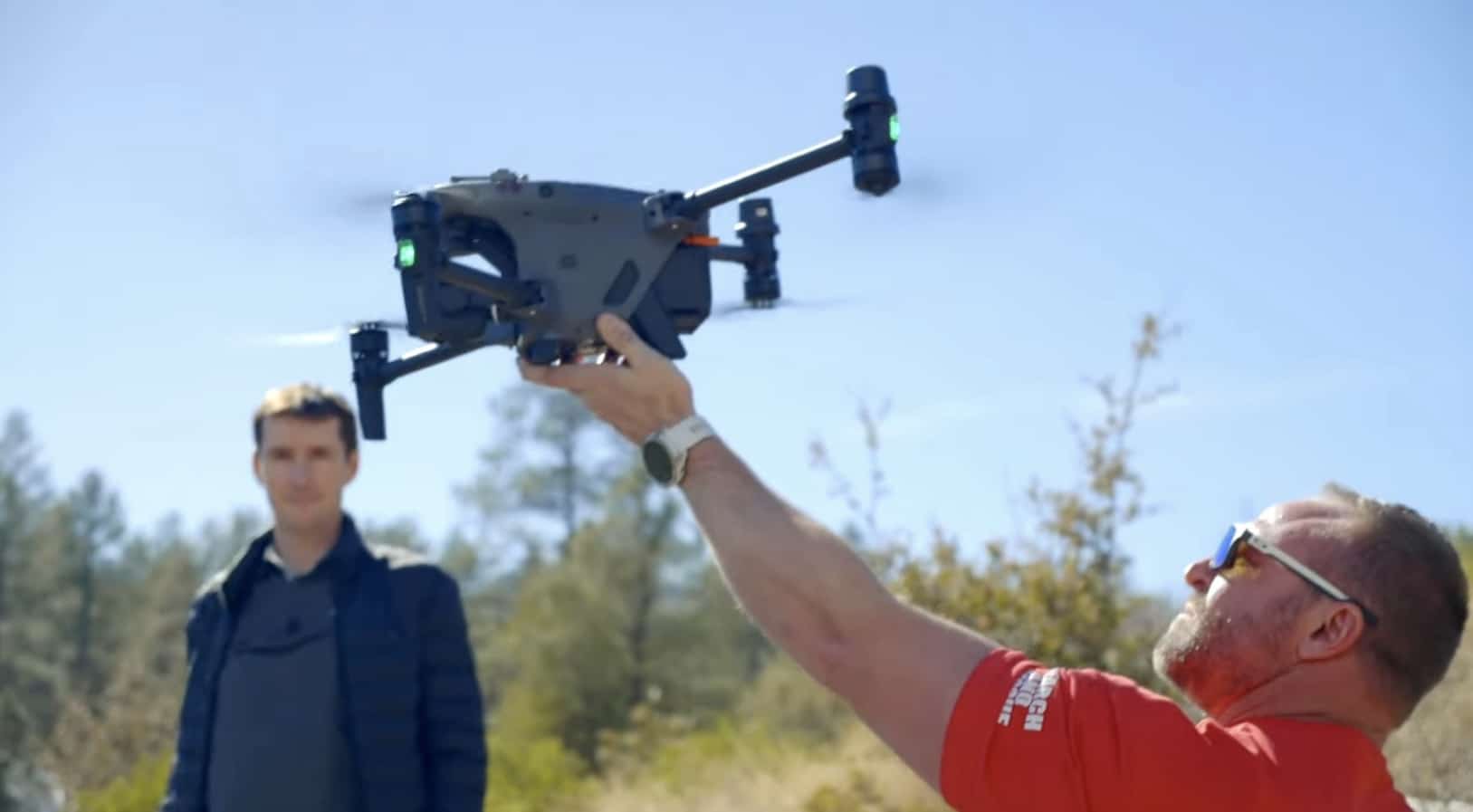
CBS Evening News aired a two-minute segment on August 29 about a thermal drone that finds lost pets for the city of Mission Viejo, California, and the same drone class sits in the Federal Communications Commission’s proposed ban on foreign-made “military-grade” aircraft. The Mission Viejo drone cost almost $17,000, paid for with private donations. On camera it tracked a terrier in the carpool lane of an Orange County freeway and guided ground units to it in minutes.
The FCC’s proposal, open for public comment until September 2, lists any drone carrying a thermal imaging sensor among seven categories it wants pulled from import and sale. Owners keep flying what they already have. Cities that want their own copy of the Mission Viejo program, and Kyle Werner told CBS other agencies are already calling him, would be shopping in a market the FCC intends to close.
I have covered Mission Viejo’s pet rescues since the first one in November, and I have watched pilots in New York run the same searches for years. This is the first time a network newscast has put the technique in front of a national audience, three days before the docket shuts.
CBS Put A Freeway Dog Rescue On The Evening News
Correspondent Carter Evans’ report for CBS News opens with a small terrier loose on an Orange County freeway. Mission Viejo Animal Services put its drone overhead, spotted the dog in the carpool lane, and talked officers to it over the radio. The whole rescue took minutes, according to Werner.
Werner is Mission Viejo’s Animal Services Manager and Chief of Field Services. He told CBS that lost-pet searches used to run days or weeks, and that the drone changed the department’s posture. “We went from a very passive search, just waiting for something to happen, to actively searching,” he said.
The drone uses lasers and thermal imaging to pick out animal heat signatures across large areas, per CBS. Senior animal control officer JR Stewart described a search for a dog named Lana in brush that rose above his head. He said there was no way he would have seen her with the naked eye. The drone found her and guided him in. That was the January canyon rescue DroneXL covered at the time, the department’s third find in about two months.
CBS also revisited Josie, the German Shepherd mix the drone tracked for close to a mile last November before Werner coached her owner into position. Werner told CBS the owner sat down, stayed calm, and let the dog come to her.
Private Donors Paid For The Drone And Other Agencies Want One
The Dedicated Animal Welfare Group, a nonprofit that funds veterinary care for sick and injured animals, donated the drone to Mission Viejo last fall. CBS put the price at almost $17,000. No city money bought it, and Werner told the network other agencies are already asking him about the technology.
Asked whether the drone is worth the money, Werner put it at 100 percent. He framed the return in family terms rather than budget terms, calling a reunited pet someone’s family member coming home.
The city has never named the drone’s manufacturer. Its November release called it a newly donated thermal imaging unmanned aerial system and left it there. That omission mattered little in November. It matters now, because the FCC’s proposal turns on where the aircraft was built.
New York Pet Searchers Have Run This Playbook For Years
Mission Viejo is the newest municipal example of a technique New York State pilots have refined since at least 2024. The search runs the same way in both places: launch, find the heat signature, then talk the owner into a spot where a scared dog walks to a familiar voice.
Chad Tavernia, a retired New York State Police investigator, runs North Country Drone Search & Recovery across a territory that stretches from Syracuse to the Vermont line and south to Albany. When DroneXL covered his operation in February 2025 he had located 42 dogs and 11 other animals in just over a year. He puts his overall success rate at 40 percent, rising to 90 percent when he can launch in the area where the pet went missing. One golden retriever turned up on Christmas Eve, 1,000 feet (305 meters) from home, trapped in eight inches of snow with 20 feet of leash still attached.

The Catskills search for Annie in April 2024: the circled dot in Justin Vickers' thermal feed was the dog. Photo courtesy of Justin Vickers / News 10
In the Catskills, Justin Vickers of Upstate Thermal Drone Services drove more than an hour in April 2024 to search for Annie, a dog stranded on a cliff after her owner slipped on ice during a 14-mile (22.5-kilometer) hike near Round Top. After a couple of hours in the air he spotted a small dark shape beside a stream. He warned the family it could be the dog or a black bear. It was Annie. Across the river in New Jersey, a volunteer known as the Drone Ranger passed 122 recovered pets in January.
The New York searches and the Mission Viejo searches share one more thing. Every one of them ran on a thermal camera.
The FCC Proposal Puts Thermal Drones In The Military-Grade Column
On July 21 the FCC released Public Notice DA 26-758, opening PS Docket 26-189. It proposes to prohibit continued importation and marketing of previously authorized foreign-made drones on the Covered List that the agency defines as military-grade. Any drone carrying a thermal imaging sensor is one of seven categories.
The other six are aircraft with LiDAR, docking stations, spray drones covered by the FAA’s economic-poison rules, aircraft at or above 25 kilograms (55 pounds), designs built to carry a defense article, and swarming systems. DroneXL broke down the full proposal the day after it dropped. Marketing in FCC usage covers advertising, sale, lease, and distribution, so the proposal reaches the shelf, not the hangar: drones already purchased keep flying, and the agency proposes a 180-day wind-down after any final order.
Blue UAS and Buy American aircraft are exempt, as are imports for federal government use. A city animal shelter buying with donated money is none of those. Federal Register publication on August 3 started the 30-day clock, and comments in Docket 26-189 close on September 2. A day later, the Section 232 tariff proclamation takes effect, with a 100 percent duty on any imported drone that carries a thermal imager.
DroneXL’s Take
Werner’s “100%” is the number the FCC should be reading this weekend. The agency’s notice tentatively concludes that pulling this hardware from the market would not have substantial economic or supply-chain impacts, then asks operators to send in fleet counts and replacement costs. A city that found three dogs with one donated aircraft, on national television, is exactly the kind of record that either lands in that docket by Tuesday or does not exist as far as the Commission is concerned.
The city has never said who built the drone. My read, and the city can correct me, is that a laser-plus-thermal package at that price is a DJI enterprise aircraft. If so, Mission Viejo can keep flying it under the proposal, and the department in the next county that called Werner after the broadcast cannot buy one. That is the shape of this rule: the people who already have the tool are fine, and the people CBS just inspired are the ones who lose.
The security questions behind the Covered List are real, and DJI’s data practices have earned the scrutiny they get. None of that reaches a thermal sensor pointed at a canyon for a lost Australian Shepherd. Calling that camera military-grade does not make it one. The label does the work an actual finding would otherwise have to do.
From where I sit in Westchester, I have watched New York pilots like Tavernia and Vickers turn this into a service people call on the worst day of their year. Mission Viejo made it a municipal function. Whether the record in Docket 26-189 reflects any of that by September 2 depends on whether animal services departments, most of which have never filed an FCC comment, understand that the deadline applies to them. Werner’s phone is already ringing. The FCC’s inbox should be too.
Sources: CBS News, FCC Public Notice DA 26-758, City of Mission Viejo
DroneXL uses automated tools to support research and source retrieval. All reporting and editorial perspectives are by Haye Kesteloo.