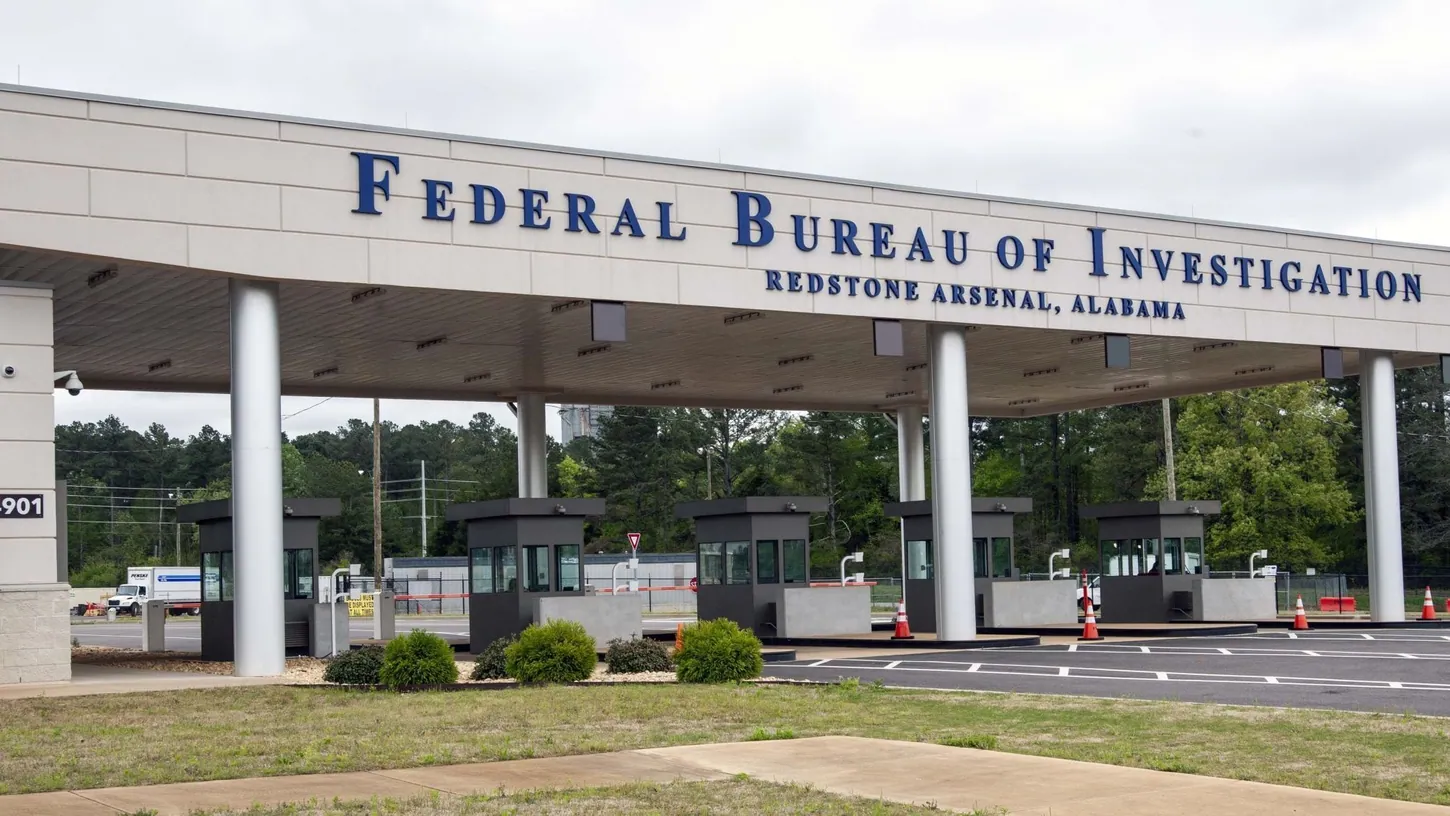
The Pentagon’s counter-drone task force brought more than 200 people from 75 departments and agencies to Alexandria, Virginia, on August 21, and the capability its director named as his top near-term priority was low-cost detection covering the entire breadth of the United States.
Joint Interagency Task Force 401 held its second interagency summit almost exactly one year after it was stood up. Army Brig. Gen. Matt Ross, who runs the task force, delivered the opening keynote on the first year’s progress, then spent the sidelines telling reporters he does not believe the problem has been solved.
The Department of War posted its own account of the day on September 9, nineteen days after the fact. It runs through breakout groups, a common operating picture and interagency partnerships. It does not mention the rule that now lets local police take a drone down without a federal escort, or the roughly 1,500 agencies the government expects to certify under it within two years.
JIATF 401 Now Coordinates 75 Agencies Around One Airspace Picture
Joint Interagency Task Force 401 is the War Department’s lead counter-drone organization, created in August 2025 to replace the Joint Counter-small Unmanned Aircraft Systems Office. Its second summit centered on building one shared picture of low-altitude air traffic across agencies that had tracked drones separately.
Pete Hegseth signed the establishment memo on August 28, 2025, when the department was still called Defense, and gave the new director authority to approve up to $50 million per development effort. The summit put Defense Department, FBI, Department of Homeland Security and Federal Aviation Administration officials in one room.
The slide behind Ross put a number on it: 250 attendees from more than 75 agencies and offices. That list runs well past the obvious ones. The Federal Communications Commission and the Federal Energy Regulatory Commission were represented, along with the National Security Council, the Office of Management and Budget, Sandia National Laboratories, the Johns Hopkins University Applied Physics Laboratory, and National Guard units from Oklahoma, Virginia, Washington, California and the District of Columbia.
The keynote went to Bryan Stevens, deputy assistant director of the FBI’s Critical Incident Response Group, who opened by noting how unusual it is for an FBI executive to headline a Pentagon event.
“The drone threat does not live neatly inside anyone’s land.”
Ross was blunter than his own department’s press shop. He told the room the gathering was not a victory lap, and told reporters afterward that he does not feel the problem has been solved yet.
“I think we’ve got a ton of work to do.”
That is a very different document from the account the War Department published, which has the task force cutting through bureaucracy to deliver state-of-the-art capabilities worldwide. DroneXL has followed this office since its counter-UAS marketplace went live in February.
Local Police Can Now Detect And Disable Drones Without A Federal Escort
The SAFER SKIES Act was signed on December 18, 2025. A Justice and Homeland Security interim final rule implementing it took effect July 1. Certified state, local, tribal and territorial agencies can now run counter-drone operations under their own authority instead of borrowing a federal deputization.
There are two tiers. Detection and Warning Certification comes from an online course that runs about an hour and issues automatically on completion. Mitigation Certification, which covers everything from jamming a control link to bringing an aircraft down with reasonable force, requires resident instruction at the FBI’s National Counter-UAS Training Center.
When the rule published on July 6, 61 officers across roughly 46 agencies held mitigation certification. The departments wrote that they expect about 1,500 agencies to certify at the detection tier within two years. Micheal Torphy, who runs the FBI’s drone program, put the number of officers trained since the rule took effect at roughly 500.
Steven Willoughby, acting executive director of the Homeland Security program executive office for drones and counter-UAS, described the shift as “opening the floodgates” for state and local agencies, on the reasoning that federal teams cannot staff 300 NFL games and four times as many college games. We covered his shop when it became permanent: DHS created a standing counter-drone office in January with $115 million behind it. By June, the FBI’s counter-drone schoolhouse was already full, mid-World Cup.
The rule does set real limits. Mitigation actions have to be reported within 48 hours, air traffic control has to be notified within five minutes of activation, records of intercepted communications are capped at 180 days, and uncoordinated action can draw civil fines of up to $100,000 per violation. The authority sunsets on December 31, 2031.
What the rule does not do is publish the equipment list. The specific systems a certified sheriff’s office may point at your aircraft sit on two lists hosted on a federal portal and maintained jointly by the Justice and Homeland Security departments with the Pentagon, the Transportation Department, the FCC and NTIA. The rule states outright that those mechanics are not codified in the regulation. The departments expect the opening categories to cover radio-frequency detection that intercepts a drone’s control link and command injection that takes the aircraft over. Which hardware clears that bar is not something a pilot can look up.
The World Cup Numbers Are The Argument For Pushing Authority Down
Federal agencies detected more than 1,600 unauthorized drones across the FIFA World Cup’s 11 American host cities, seized more than 700 aircraft, opened around 120 federal cases and arrested a dozen people. Summit participants spent much of the day on what those six weeks taught them.
DroneXL was on this in July, when the FBI passed 600 seizures at World Cup venues after months of no-drone-zone warnings.
Now run the arithmetic. Seven hundred aircraft taken, twelve people arrested. Willoughby told reporters the task force talked to nearly every operator whose drone was seized, because intent is never really known until someone asks. That ratio is the honest picture of American counter-drone enforcement in 2026.
Stevens said every detection and every seizure was logged to one standard so the White House could be shown exactly what happened. Los Angeles in 2028 is next, and he expects it to be larger on every axis.
Directed Energy Heads To A December Shoot-Off At Dugway
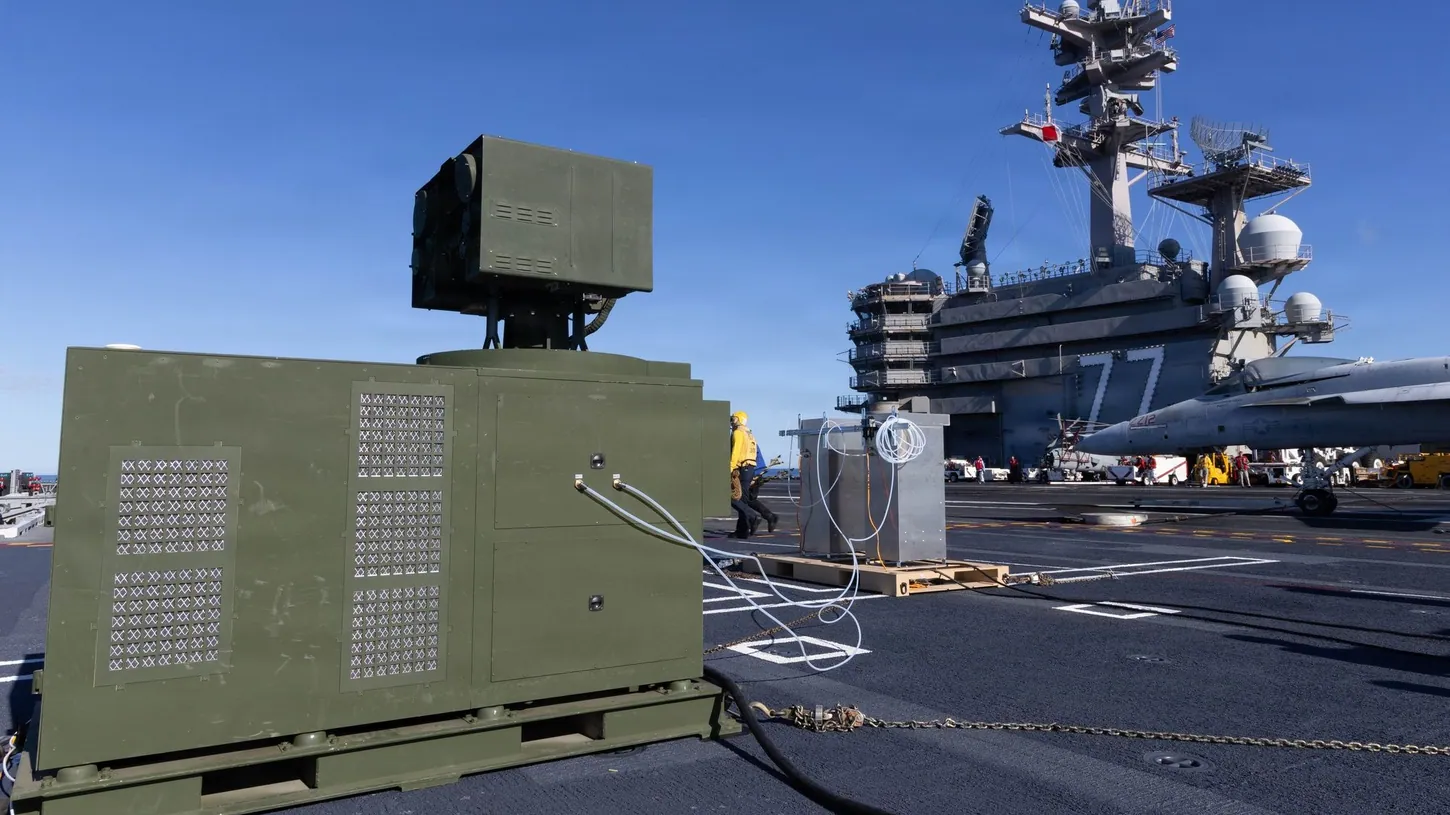
Five installations will host high-energy lasers and high-power microwaves for a 365-day run. Fort Huachuca, Fort Bliss, Naval Base Kitsap, Grand Forks Air Force Base and Whiteman Air Force Base are the sites, with service members operating the systems. A live-fire shoot-off follows in December.
What Ross says he wants out of that year is the fully burdened cost of running these weapons and a set of tactics that does not shut down a base’s own airspace every time a laser fires. The shoot-off runs jointly with the Office of the Under Secretary of Defense for Research and Engineering, and it moved from Yuma Proving Ground in Arizona to Dugway Proving Ground in Utah. Systems that perform can convert into a purchase order on the spot, which is how the task force plans to start production lines rather than another study.
None of this is theoretical now. The Army says a $3-a-shot laser has cut cartel drone flights by 75%, and the FAA cleared military anti-drone lasers for use in U.S. airspace in April after a two-month standoff over what those beams do to passenger aircraft.
DroneXL’s Take
The incursions are real and I am not going to pretend otherwise. The rule’s own preamble cites the National Football League telling Congress that unauthorized flights over its games climbed from roughly a dozen in 2017 to 2,845 in 2023.
The same preamble points to a Chinese national charged with flying over Vandenberg Space Force Base for nearly an hour. I have written about a drone loitering over a U.S. nuclear weapons base and I meant every word of it. Nobody flying legally is helped by the guy who puts a Mini over a playoff game.
What bothers me is the shape of what local agencies are being handed. The detection tier is an hour online and a policy the agency attests to itself. Around 1,500 agencies are expected to hold it inside two years. Ross’s stated priority is coverage across the entire breadth of the country. Put those together and the destination is a persistent track on nearly every aircraft under 400 feet (122 meters) in American airspace, assembled by hundreds of separate agencies, running equipment from a list the public cannot read.
I read the World Cup numbers as the tell. Seven hundred drones seized and twelve people arrested is not a counterterrorism result. It is a compliance result, and it says most of the people caught by the largest counter-drone operation this country has ever run were pilots who did not check a temporary flight restriction. That is an argument for better warnings and better geofencing. It is being used as the argument for interception hardware in a sheriff’s truck.
Comments on the interim final rule closed September 4 with more than 46,000 filings on the docket, and we filed in the FCC’s military-grade drone ban proceeding the same week. Whether the privacy limits in section 124.14 survive contact with a technology list designed to keep growing is the thing worth watching between now and December, because once prototypes convert into production lines, the hardware starts deciding what the policy can be.
Sources: Department of War, DefenseScoop, Federal Register
DroneXL uses automated tools to support research and source retrieval. All reporting and editorial perspectives are by Haye Kesteloo.