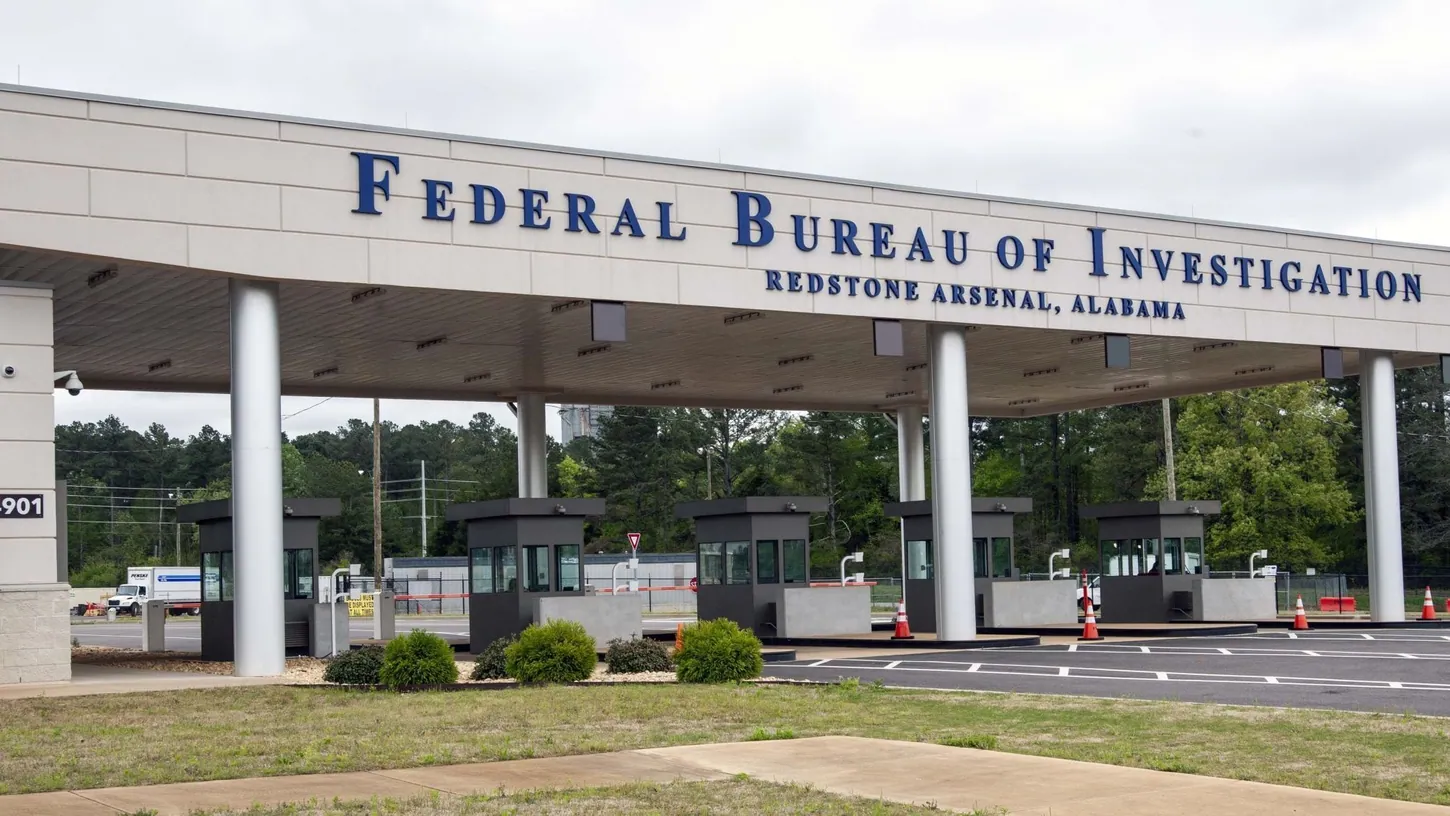
The Department of Homeland Security wants to route its own money into the FBI’s counter-drone training center because demand for seats has outrun capacity in the middle of the FIFA World Cup, DHS Secretary Markwayne Mullin told the House Appropriations Committee on June 26. The admission is the candid part of a hearing that was mostly a security victory lap. More than 300 drones have been pulled out of the sky over World Cup stadiums, dozens of operators have been ticketed, and arrests have been made. But the man running the department also said the school certifying the officers who do that work has more applicants than it can handle, that he is still deciding which budget the funding should even come from, and that he and his deputy have only “started talking” about a joint task force to coordinate it all.
I have spent the past year tracking this counter-drone buildout for DroneXL, from the $500 million domestic initiative that landed in October 2025 through the FBI center graduating its first class on December 31. The enforcement numbers Mullin cited are real and I have reported each milestone as it arrived. What the hearing exposed is the seam underneath them: the legal authority, the grant money, and the certification pipeline were all assembled fast, separately, and they are now straining against each other at the exact moment the system is supposed to be at full strength.
The FBI School Is the Single Point Everything Routes Through
The facility Mullin wants to fund is the FBI’s National Counter-UAS Training Center (NCUTC) at Redstone Arsenal in Huntsville, Alabama, the federal government’s primary training and certification hub for counter-drone operations. It was created under Executive Order 14305, “Restoring American Airspace Sovereignty,” signed in June 2025, and modeled on the FBI’s Hazardous Devices School. Every state and local officer who is legally cleared to electronically disable a drone at a World Cup stadium had to pass through it first. That is not a bureaucratic detail. It is the chokepoint.
FEMA’s counter-drone grant program built the dependency directly into the rules. As I reported when the first $250 million tranche went out, only law enforcement agencies whose personnel have completed or enrolled in the FBI training can buy mitigation equipment with the money. So the grant funds the hardware, the Safer Skies Act provides the authority, and the NCUTC supplies the certification that unlocks both. Pull the school out and the other two pieces stop functioning. When Mullin says “we have more people asking to get into the school than he has space to do it,” he is describing a bottleneck on the one component that the rest of the apparatus cannot route around.
His proposed fix is to push DHS money straight at the FBI to expand capacity. The problem is that DHS has not figured out where the money comes from. Mullin said the department is still weighing whether the funds should flow from FEMA, Immigration and Customs Enforcement, or another component. That is an open question being worked out live, three weeks into a 39-day tournament, for a capability that is already running at the stadium fence.
Coverage Is Split Across Five Agencies With No Common Playbook
Mullin laid out the division of labor for the 11 U.S. host stadiums, and the structure shows how improvised the coordination still is. Customs and Border Protection covers five stadiums, the FBI covers three, the Coast Guard covers two, and Federal Protective Services covers one. Of the 22 DHS components, eight have their own counter-UAS measures. “All of them have different measures,” Mullin said. That is the quiet problem in one sentence: a patchwork of agencies running a patchwork of systems, with the secretary openly acknowledging the lack of a single approach.
The fix for that is also still on the drawing board. Mullin said he and Deputy Secretary Troy Edgar have “started talking” about standing up a joint task force inside DHS to pull the cross-component efforts together. Started talking. Not built, not funded, not staffed. The federal interagency version of this already exists in Joint Interagency Task Force 401, which held its first partner summit in late 2025 to coordinate counter-drone work across DoD, DHS, the FBI, and the FAA. DHS is now contemplating an internal equivalent to coordinate its own eight self-directed components, mid-tournament.
The Enforcement Numbers Are Real, and So Is the Gap They Hide
The seizure totals Mullin brought to the hearing are not inflated. More than 300 drones have been brought down across World Cup venues, with arrests made. In Dallas, the FBI and the Federal Air Marshal Service have seized more than 50 unauthorized drones during games and fan festivities. The FBI’s Miami field office and its partners have ticketed 52 operators and seized close to 60 systems. I confirmed the nationwide 300-plus figure last week through individual field-office counts: 34 around SoFi Stadium in Los Angeles, 39 across Dallas, 42 at Lincoln Financial Field in Philadelphia, and six in New Jersey since kickoff at MetLife Stadium.
Here is the part the headline number does not settle. Almost every system funded for these stadiums is built to read the sky, not the network. Radar and radio-frequency sensors detect an aircraft entering restricted airspace and then jam or override its link. That architecture assumes a local RF connection and an operator standing close enough to triangulate. FBI Deputy Director Chris Raia told Fox News Digital this same week that the threat keeping him up at night is a cheap, cellular-controlled drone flown by a lone actor, because a 5G or LTE-piloted aircraft severs the tether the current hardware stack is built to exploit. The 300 seizures are largely hobbyists who wandered into a TFR and pinged a sensor. The threat the buildout is sold against is the one the sensor is worst at catching.
That gap is not hypothetical anymore. The FBI disrupted an alleged plot to fly explosive-laden drones at the UFC Freedom 250 event on the White House South Lawn this month, and that case was cracked by agents reading encrypted chats, not by a counter-drone sensor at a fence line. The serious threat got stopped by signals intelligence and field work. The stadium hardware caught the tourists.
DroneXL’s Take
Read Mullin’s testimony as a budget pitch and it sounds like momentum. Read it as a status report and it is an admission that the most expensive domestic counter-drone push in U.S. history is being held together with duct tape during its biggest test. The school is oversubscribed. The funding source is undecided. The coordinating task force is a conversation between two executives. Five agencies are running different gear with no common playbook. None of that is a scandal. It is what happens when you assemble a permanent national capability in 12 months around a tournament deadline, and it is exactly the moment to ask harder questions before the architecture calcifies.
Because the World Cup is the justification, not the endpoint. I have written that line since the FEMA grants landed, and nothing in this hearing changes it. The NCUTC capacity Mullin wants to expand does not contract after July 11. The certified officers do not turn in their authority. The NYPD already said the quiet part out loud: its $6.5 million counter-drone unit becomes routine for “planned events, hobbyist incursions, and terror investigations” once the tournament ends. The tournament is the on-ramp. The system is permanent, and the public conversation about whether that is the right tradeoff is happening after the money is already spent, which is precisely backwards.
And the strategic incoherence keeps showing through. Washington is funding RF and radar sensors built to read a local control link while its own FBI deputy director warns that the threat is going cellular, where those sensors go deaf. Meanwhile the policy energy Congress keeps spending is aimed at banning DJI and other commercial manufacturers whose drones come in a box with a serial number, not at the soldered-together FPV builds that actually worry the bureau. You cannot ban your way out of a homemade-drone problem, and you cannot sensor your way out of a cellular one with hardware designed for the last generation of threat. The honest read on this hearing is that the people running the program know the seams are there. The question worth watching over the next five weeks is whether the U.S. Attorney charging rate out of the host districts keeps pace with the 300-plus seizure count, or whether most of those end as a confiscated drone and a warning, which would tell you the headline number was a deterrence statistic all along.
Source: FedScoop. Additional sources: Bloomberg, Fox News Digital, House Appropriations Committee oversight hearing (June 26, 2026).
DroneXL uses automated tools to support research and source retrieval. All reporting and editorial perspectives are by Haye Kesteloo.