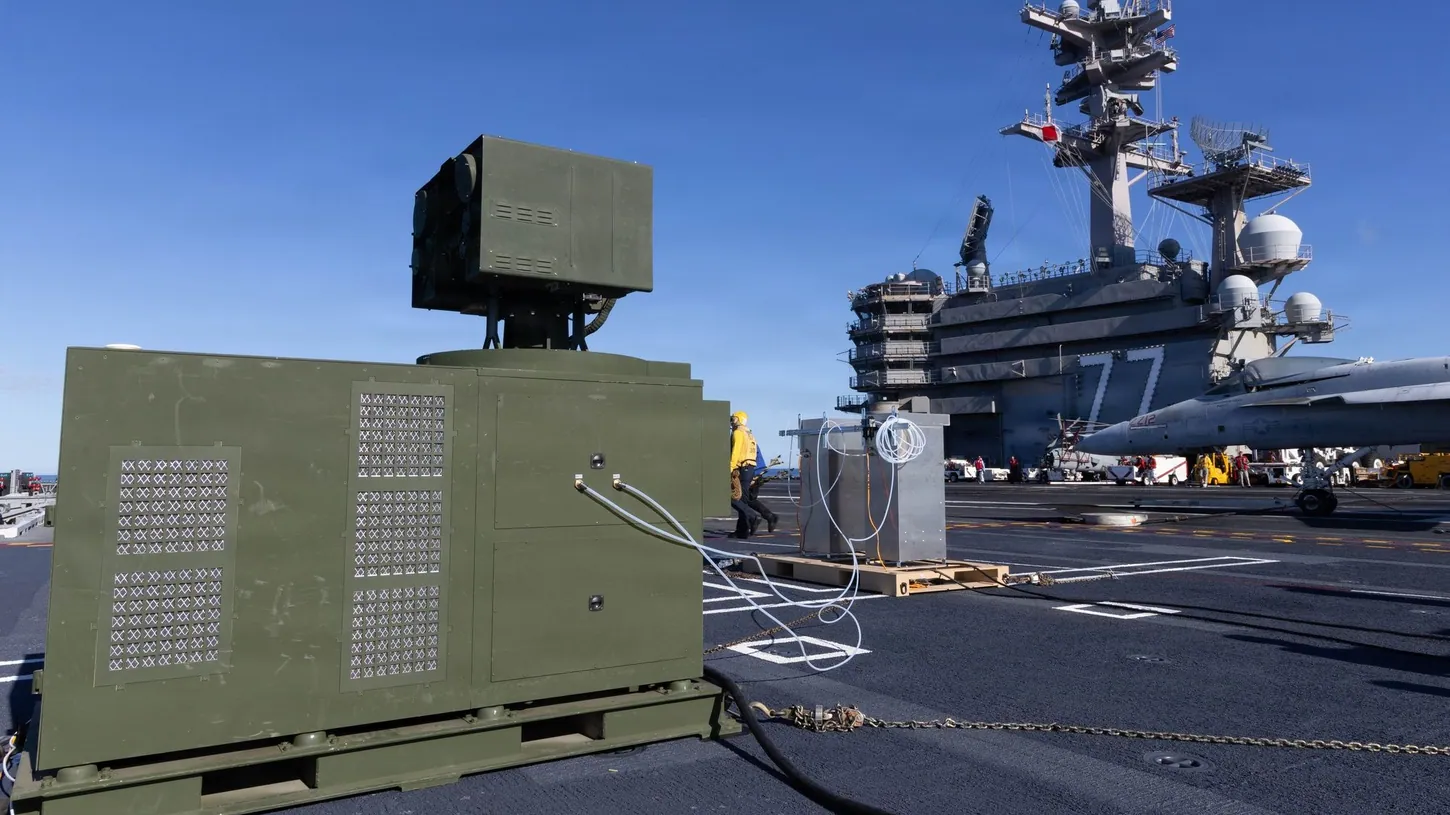
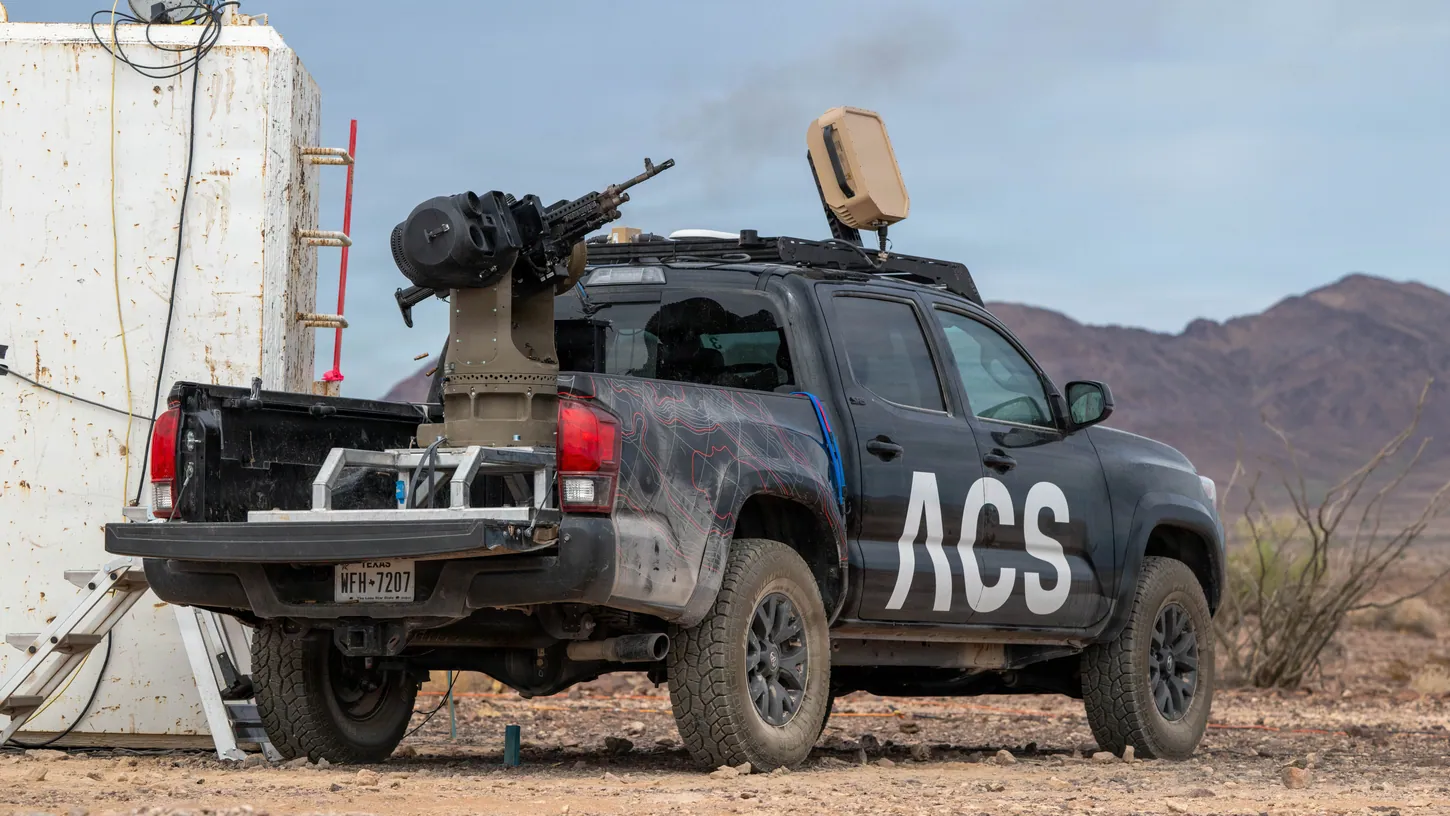
The U.S. Space Force is adding a directed-energy weapon to the counter-drone defenses at Cape Canaveral Space Force Station, Col. Brian Chatman, commander of Space Launch Delta 45, told Florida Today this month. The laser joins sensor-fusion software called Lattice and a radio-frequency jamming system the Eastern Range began installing last winter.
Next door, Port Canaveral says it recorded more than 500 drone incursions in 2025, over cruise terminals that serve up to 60,000 passengers a day and over military and aerospace cargo.
Flying a drone over the port without written permission is already a third-degree felony under Florida law.
Cape Canaveral Adds a Laser to the Jamming It Began Installing in 2025
Space Launch Delta 45 announced a multimillion-dollar radio-frequency counter-drone system in December 2025, built to jam drones without disrupting civilian air traffic. Chatman now says a directed-energy weapon that physically destroys drones will follow, alongside new equipment from the Pentagon’s Joint Interagency Task Force 401.
The December system was the first step. Chatman told Breaking Defense it would give him coverage over the whole Cape instead of the pockets he had. On September 18 he told Defense One that JIATF 401 would deliver new capability within weeks, because his radars track everything from a Cessna up but he needs to see “a 747 down to a quadcopter.” Neither Chatman nor the task force would say what hardware is coming.
Lattice is the software half. Chatman told Florida Today “we’re bringing on the Lattice system for tomorrow,” describing a platform that merges military radar and sensor feeds into one 3D picture to detect, track and respond to drones automatically.
The pressure behind all of this is launch tempo. The Cape flew 109 orbital launches in 2025, and Chatman has said the Eastern Range could handle upwards of 300 a year. Directed energy near that much civilian traffic has a short and rocky domestic record (a Pentagon laser shot down a CBP drone near El Paso in February, and the FAA only cleared military anti-drone lasers in U.S. airspace in April).
Port Canaveral’s 500-Flight Count Launched a Federal Seaport Drone Bill
Port Canaveral’s 500 figure appeared in the July 1 announcement of H.R. 9229, the Seaport Security Act of 2026, which Rep. Jimmy Patronis introduced June 9 with Rep. Mike Haridopolos. The announcement counts “incursions” without defining one or saying how many operators were identified.
Port Canaveral CEO Capt. John Murray has kept pressing the number. At a recent Port Canaveral Commission meeting he listed nuclear submarines, space components and national security missions moving through the port, then described drones filming rockets from overhead: “You shouldn’t be able to do that,” Murray said, according to Florida Today.
The bill is less about penalties than the Florida Today column that revived the number suggests. It would create controlled or restricted airspace below 400 feet (122 meters) over critical seaport areas and have the FAA and the Department of Homeland Security coordinate drone detection and mitigation at ports, with carve-outs for commercial, government and emergency flights, according to a statement from two Federal Maritime Commission commissioners backing it. It also sets civil and criminal penalties. Congress.gov shows it referred to the House Judiciary and Transportation and Infrastructure committees on June 9, with no action since.
Florida Already Makes Port Flights a Felony, and Local Police Can Now Mitigate
Florida’s felony statute for port drone flights, Section 330.41, punishes a pilot after the flight. Stopping a drone in the air takes federal authority, and since July 1 certified state and local police can hold it, jamming or downing drones under the SAFER SKIES Act rule.
The port’s drone page spells out the state side: Port Canaveral is designated critical infrastructure, and flying over its lands or waterways without written permission from the Canaveral Port Authority is a third-degree felony. On the federal side, about 1,500 US agencies are expected to certify at the detection tier of the new rule within two years. A port authority is not a police department, though. The American Association of Port Authorities told WorkBoat that the FAA’s proposed restricted-airspace framework, on its own, would give ports no new power to detect or disrupt drones.
The Space Coast Drone Cases in Court Were Tourists Flying DJI Mavics
Both Space Coast drone prosecutions the Florida Today column cites involved tourists with DJI drones. Xiao Guang Pan, a Chinese-born Canadian, got 12 months of probation and deportation in August 2025. Xiaodong He, a Chinese national, pleaded guilty September 18 to a misdemeanor national defense airspace charge and awaits sentencing.
Pan flew a DJI Mavic 3 Pro from a Port Canaveral parking lot on three days in January 2025, and 243 photos and 13 videos from those flights showed military infrastructure at the Space Force station, according to Florida Politics, citing his plea agreement. DroneXL covered his charges that February and his sentencing that August. He flew a DJI Mavic 4 Pro from the Playalinda Beach lot inside restricted zone R-2932 for 12 minutes and 24 seconds on July 25, passing within 1.56 miles (2.51 km) of Launch Complex 39B, as DroneXL reported after his plea. His wife told police they were on vacation and filming scenery.
The column sets those cases beside a May Vanity Fair profile in which an unnamed FBI counterintelligence agent says China will send amateurs to collect what they can in Florida. That is one anonymous source in a magazine. The court record so far holds a probation sentence and a misdemeanor plea.
DroneXL’s Take
A laser over the launch pads at a range that flew 109 launches last year is a defensible call. What I don’t buy is the spy story being sold around it. My read of the 500 incursions: until Port Canaveral publishes what it counted, the Space Coast drone cases that have reached a courtroom were tourists with Mavics, and they ended in probation and a misdemeanor plea. The number is now doing work in Congress, where H.R. 9229 would draw new restricted airspace over every critical seaport in the country, and a count nobody has defined is a thin basis for that. The cruise-ship photographer is a different problem from a foreign intelligence service, and Florida already wrote a felony for him. So if you’re thinking about launching a Mavic from a Port Canaveral parking lot for the ship-and-rocket shot, don’t be that guy: Xiao Guang Pan did exactly that, and it ended with his deportation.
Sources: Florida Today, The Palm Beach Post / Florida Today column by John A. Torres, Defense One, Breaking Defense, Federal Maritime Commission, Congress.gov, Port Canaveral
DroneXL uses automated tools to support research and source retrieval. All reporting and editorial perspectives are by Haye Kesteloo. Read our editorial standards.