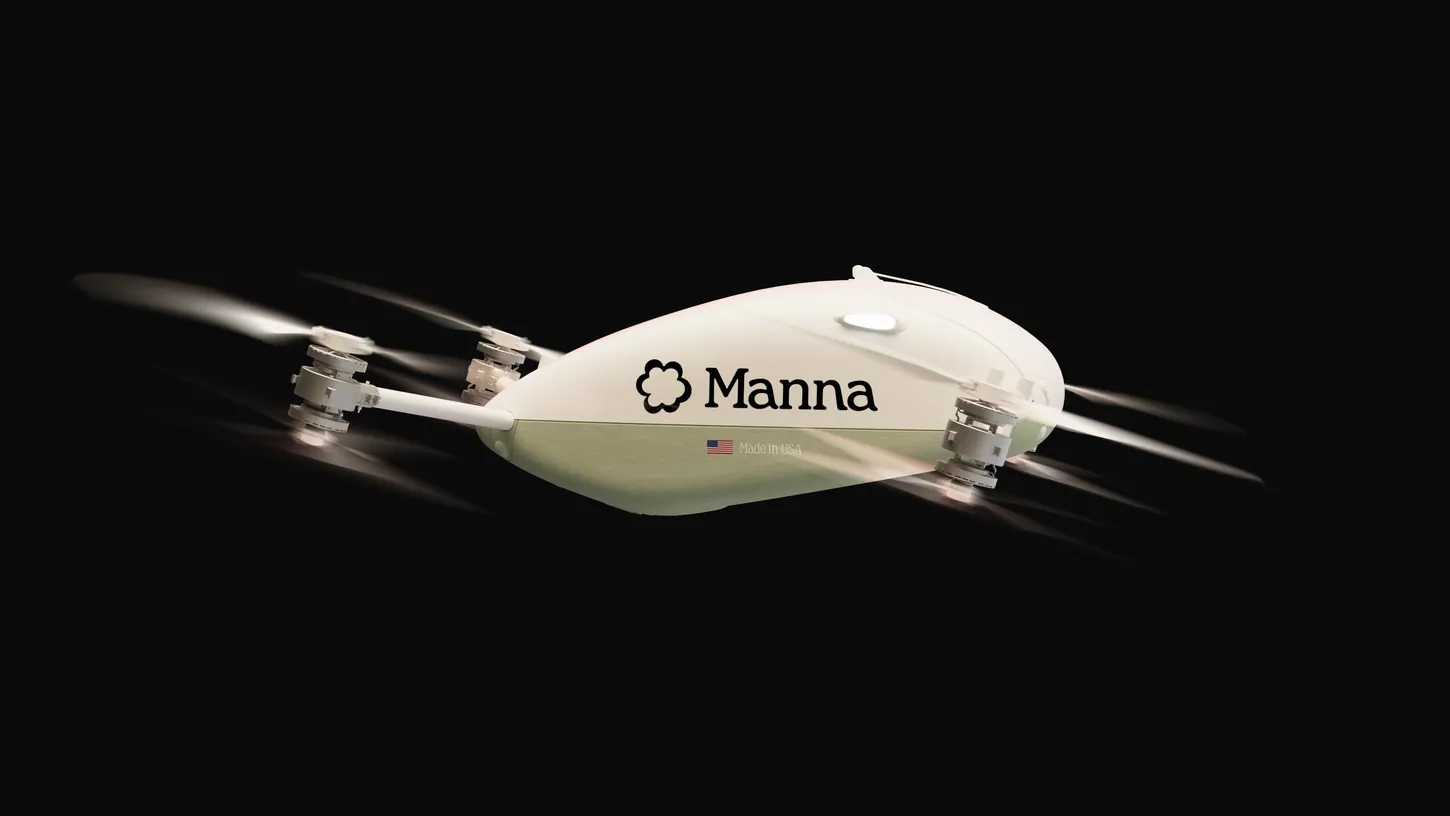
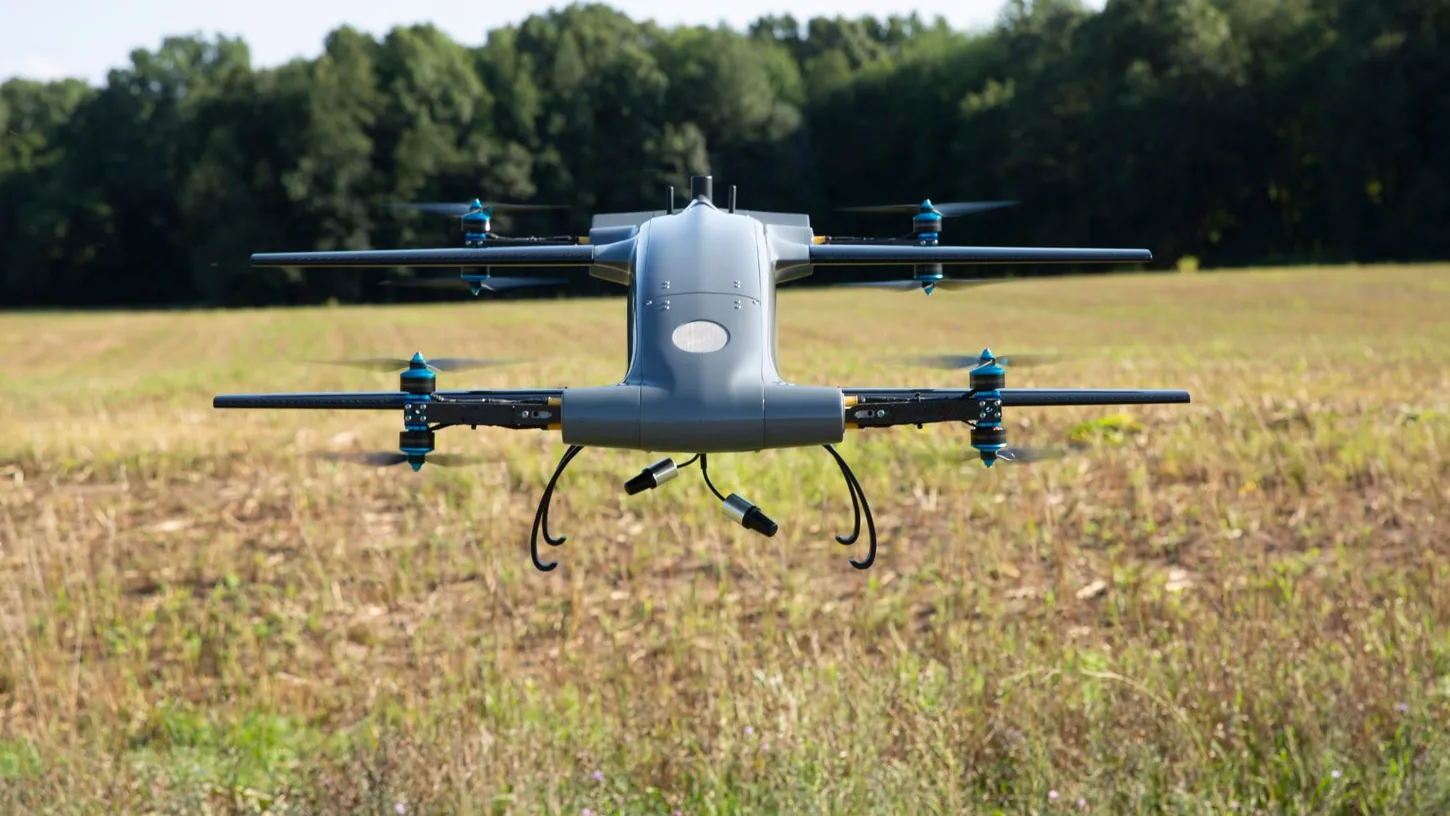
The Tulsa Fire Department will get drone-delivered defibrillators and trauma kits from Manna Air Delivery under a pilot program the two presented on September 23 at Tulsa Tech’s Lemley Memorial Campus, and the city pays nothing for it. TFD Captain Conrad Collison and Manna head of operations Stuart O’Callaghan presented it at the Tulsa Tech Week event. The target, per KJRH’s report, is a start by early 2027, if not by the end of this year.
Manna has flown consumer deliveries in Tulsa since August 12 from a single hub on Cherry Street, what Manna calls its first full-scale US operation after smaller Texas flights, years in Dublin and roughly 380,000 deliveries worldwide. Manna community and stakeholder relations manager Vincent Murray told Fox23 the emergency work has always been part of the plan and pointed to trials Manna ran with Ireland’s National Ambulance Service. That ambulance service closed its talks with Manna last year, and the Dublin defibrillator service Manna proposed never launched.
Tulsa Fire Pays Nothing for a Pilot That Runs Through Its Own Dispatch
The pilot costs the City of Tulsa nothing, a TFD official told KJRH on September 23. A 911 call goes through dispatch as usual, Murray said, and the fire department then calls Manna when a truck cannot get there fast enough or a crew has run out of trauma kits.
Murray gave Fox23 the clock: 90 seconds of pre-flight checks, two to three minutes in the air, about four and a half minutes from the call to the drone landing. Collison, whose department already flies Skydio aircraft as first responders and put seven drones over a West Tulsa tank-farm fire in November 2024, told KJRH the appeal is speed: “They can be dropped into a situation where somebody needs it quick.” TFD announced the partnership on September 15, eight days before the presentation.
The aircraft stops flying in heavy rain and sits out winds above 20 knots (23 mph, 37 km/h), with a 33-knot (38 mph, 61 km/h) gust ceiling, per KJRH. Manna’s Tulsa page caps any item at 8.8 lb (4 kg).
Manna’s Tulsa Network Is One Hub Flying and Three on Paper
Manna’s one operating Tulsa base is the Cherry Street hub opened August 12. On August 25 it filed City of Tulsa permits for three more, at 21st and Sheridan, South Garnett Road and East 31st Street, each with a one-to-two-mile (1.6 to 3.2 km) radius, the Tulsa Flyer reported.
Murray said the drones travel two miles (3.2 km) from base today and that Manna hopes to open 10 to 20 bases across the metro so a fire department call can be served as a network. In August the Tulsa Flyer reported the ambition as 20 to 30 bases across Tulsa and Broken Arrow. The jobs figure has moved the same way: Manna’s July 8 announcement commits to more than 1,000 Tulsa jobs over three years, and two months earlier, on the XPONENTIAL stage in Detroit, CEO Bobby Healy told the room 2,000 to 3,000. On Tulsa, Manna’s numbers arrive large and settle later.
The Irish “Trials” Were One Simulated AED Drop From a Hub Manna Is Closing
Manna and the National Ambulance Service have one exercise on record. On December 6, 2024, a Manna drone flew a defibrillator from its Blanchardstown hub to a garden 10 minutes away by car in about two minutes, a simulation Dr. Glenn Curtin ran with the service, the Irish Times reported.
Manna’s newsroom and Irish press coverage through September 27 turn up no second one. Manna then proposed a Dublin 15 defibrillator service in November 2025. The National Ambulance Service told the Dublin Inquirer in December that it had held informal discussions with Manna and closed them out because the service did not progress. Manna said it would turn to Dublin Fire Brigade instead, which told the paper it had received no formal project details. Cardiologist Joseph Galvin of the HSE, who backed the proposal, put the potential at up to 900 lives a year if rolled out nationally. The March 2026 Rotunda-to-Connolly hospital flight DroneXL covered carried no blood; it was a second demonstration.
The hub the defibrillator flew from is closing with the rest of Manna’s Dublin 15 operation. Fingal County Council refused Manna’s Coolmine hub on May 19, 2026, over noise evidence, a refusal Manna answered with a Trinity College acoustic study in June, and by July 1 the company had announced it was ceasing operations across Dublin 15, Blanchardstown included, blaming Ireland’s planning process and the absence of a national drone delivery framework, Dublin People reported. Murray’s word for it in Tulsa was “trials.” “We’re not here to take anyone by surprise,” he told Fox23.
DroneXL’s Take
A defibrillator in a back garden in under five minutes is the drone delivery I’ll defend all day. Nobody needs a burrito by air. A cardiac arrest patient needs a shock before the engine arrives, and a fire department that already runs Skydio as a first responder is the right partner to put one on the other end of the dispatch line. What killed the idea in Dublin was planning and noise, never the medicine: Fingal’s planners did not find the drones too loud, only that Manna hadn’t proved they weren’t. Tulsa is about to run the same test: the three east Tulsa hubs need City of Tulsa permits like Coolmine needed Fingal’s, and until those clear, a free pilot covers whatever sits within two miles of Cherry Street.
My read is that the AED is doing double duty here. O’Callaghan said at the presentation that the emergency work could improve public acceptance of the drones, and that is the plainer version of Murray’s “always part of the plan.” Fine. Then earn it in Tulsa: the Irish trial produced one simulated drop and a hub Manna is walking away from, so the number that matters to Tulsans is the first response time on a real call, not Blanchardstown’s. Watch the three permits before you watch anything else.
Sources: Fox23, KJRH, KTUL, Manna Air Delivery, Tulsa Flyer, Irish Times, Dublin Inquirer, Dublin People
DroneXL uses automated tools to support research and source retrieval. All reporting and editorial perspectives are by Haye Kesteloo. Read our editorial standards.