Correction, October 6, 2026: An earlier version of this article placed the Crystal Lake Health Center in Frankfort, Michigan, about 30 miles from Munson Medical Center, and the headline and DroneXL’s Take were built on that distance. Traverse Connect says the clinic in the project is at 5191 Rosewood Drive in Traverse City, about 2.2 miles from the hospital. The headline, the lead and the Take have been rewritten. The full note is at the end of the article.
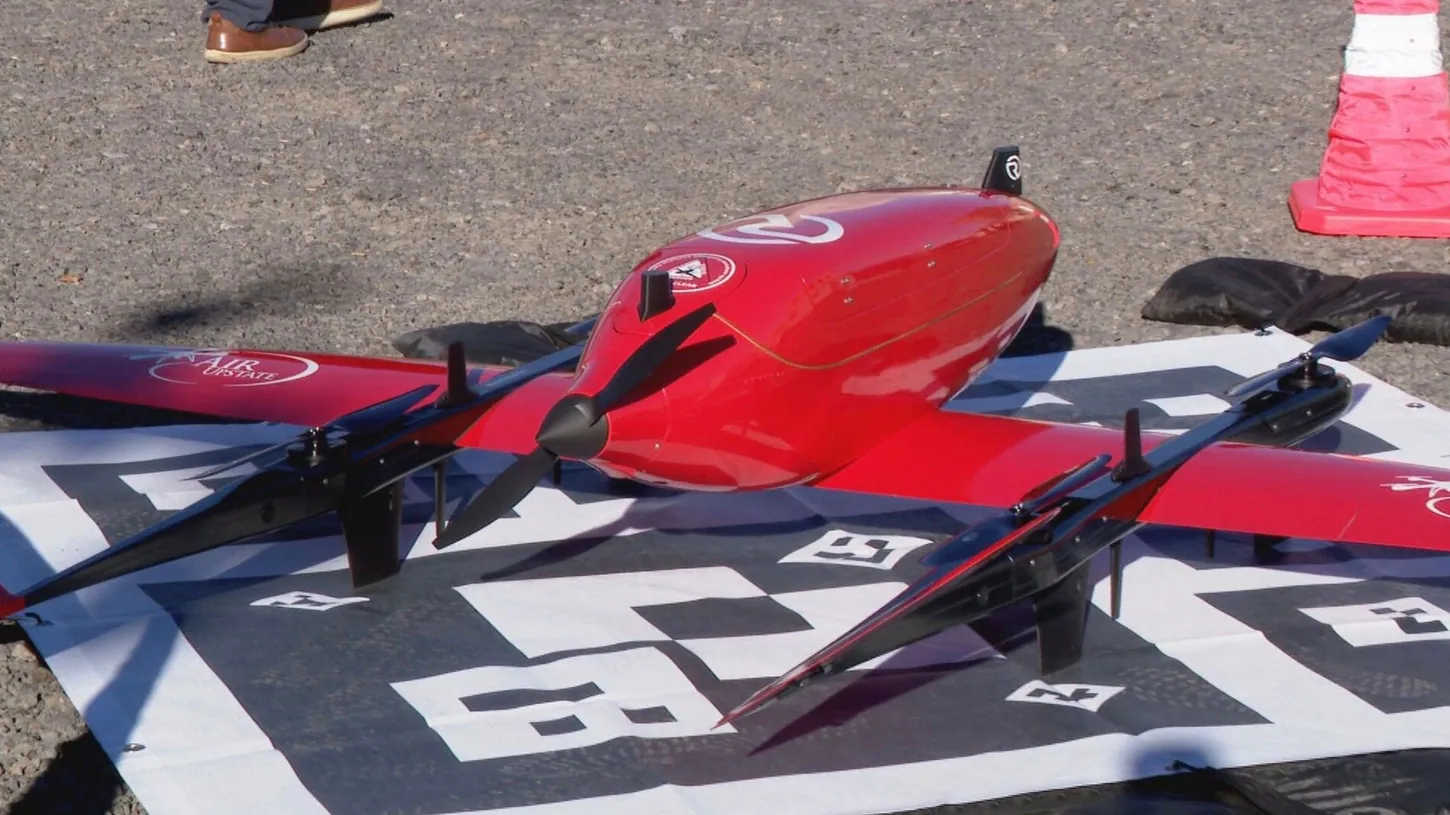
Munson Healthcare starts the second phase of its medical drone delivery trial on Tuesday, October 6, flying between Munson Medical Center and the Crystal Lake Health Center on Rosewood Drive, both in Traverse City, through October 30. Traverse Connect, which runs the state-funded project, announced the dates in a release emailed Monday morning. The flights will simulate deliveries of supplies, laboratory samples and medications between the two Munson facilities.
The two buildings sit about 2.2 miles (3.5 kilometers) apart by air, a little further than the longest leg of the first phase in May 2025. Warren Call, Traverse Connect’s president and CEO, says in the release that this phase runs “multiple drones and sensor technology, with approval from the Federal Aviation Administration.” The release does not say which approval, or name the aircraft.
Phase two was supposed to fly in May. As DroneXL reported on May 22, the plan then was a 2026 move into beyond-visual-line-of-sight operations with DroneUp as the licensed operator. By June 3, DroneUp had left the project.
DroneUp Walked Away in Spring, and Blueflite Took Over the FAA Paperwork
DroneUp, the Virginia operator that ran phase one’s flights, winch deliveries and ground infrastructure, exited the Munson project before the May 2026 flights, Michigan public radio station WCMU reported on June 3. Blueflite, the aircraft maker, assumed the operator role and the FAA approvals DroneUp was to secure.
Greg James, DroneUp’s vice president of business development, told WCMU the company was refocusing on “scalable platform, autonomy, and airspace-management capabilities” and that the exit reflected “current market timing and delivery economics at scale.” Tracy Cleveland, Munson’s vice president of supply chain, said DroneUp was leaving the space as a business and that Munson would work with blueflite for the immediate future.
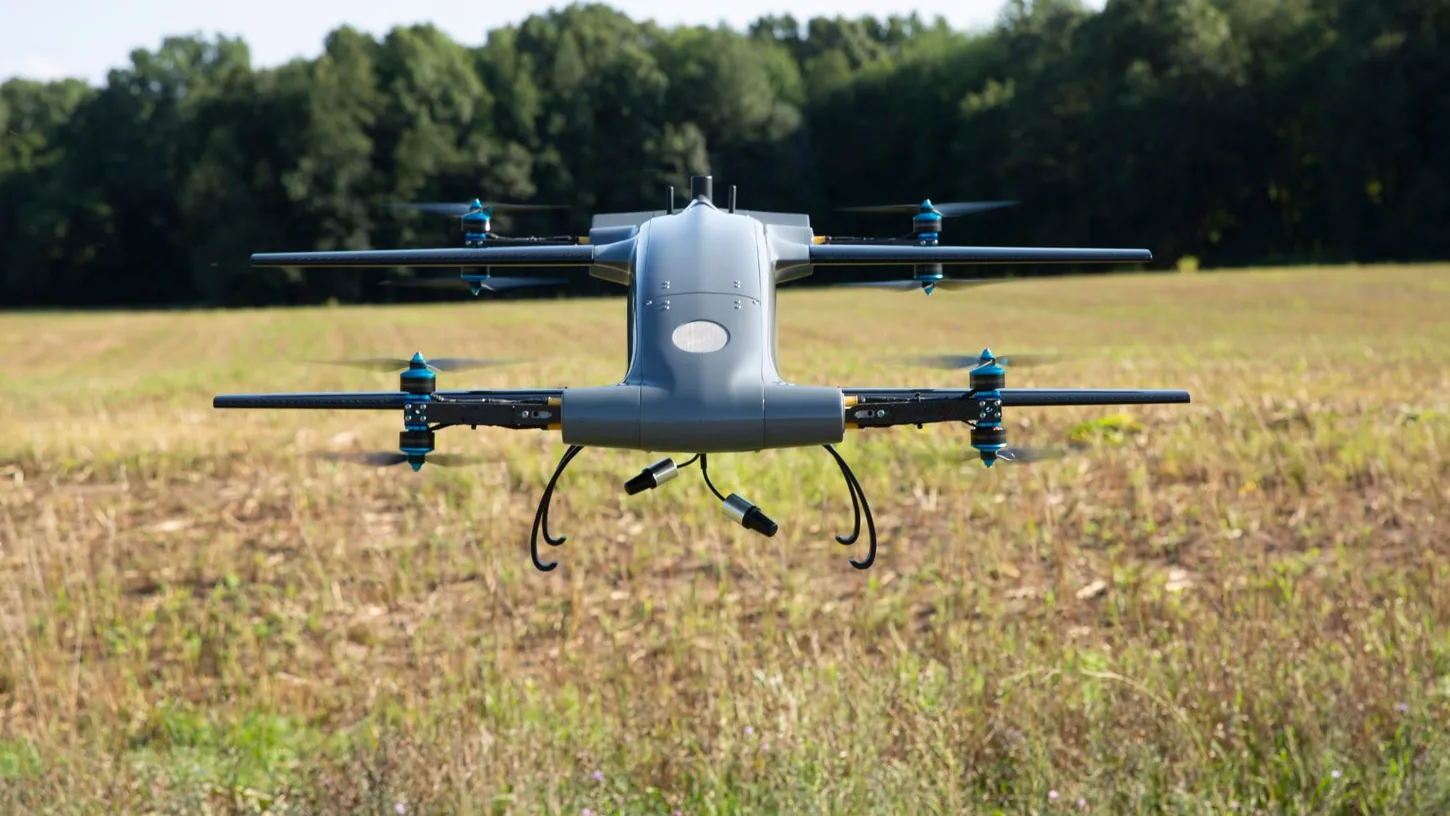
Blueflite’s chief technology officer James McClearen told the station the company now handles the regulatory requirements that DroneUp was going to do. That is a different job from building the aircraft. Blueflite’s Cobalt 461 went onto the FAA’s Section 44807 approved list on June 1, and it holds a Department of War conditional approval exempting it from the FCC Covered List, as DroneXL reported in August when the same aircraft began flying auto parts for a Ford dealer group in metro Detroit. In June, WCMU reported testing would restart near the end of summer. It is starting on October 6.
Phase One Flew 67 Times Inside One Mile and Lost Six Flights to Hardware
The first phase ran from May 9 to 20, 2025, within one mile (1.6 kilometers) of Munson Medical Center and completed 61 of 67 flights, a 91% success rate. Three failures were winch problems. One was a GPS fault, two were lost cellular links that triggered automatic return to launch.
Those figures come from the project report Traverse Connect published in December 2025. Fifty-five of the 67 flights ran the shortest route, roughly 1,000 meters (0.6 miles) to the Munson Dialysis Center on West Royal Drive. The longest, to Copper Ridge Surgery Center in Garfield Township, was about 2,200 meters (1.4 miles). Every flight was under Part 107 with the pilot watching the aircraft and three to four visual observers covering ground and air risk, and the report’s stated purpose for that constraint was to gather data for later BVLOS operations under Part 135.
The flights started with water bottles and temperature loggers standing in for specimens, then carried real patient laboratory samples once the handling checked out. Munson staff drive more than 90,000 miles (145,000 kilometers) a year moving samples and supplies between the system’s facilities, which span 29 counties, and that mileage is the number the project exists to cut.
The state has put about $1.64 million into the project through the Advanced Aerial Mobility Activation Fund, an initial $689,500 and a further $950,000 announced in May 2025. The fund is run by the Michigan Department of Transportation, the Office of Future Mobility and Electrification and the Michigan Economic Development Corporation. Newlab provided additional support, per the release. Central Michigan University’s Rural Health Excellence Institute is the evaluation partner.
Cleveland said in Monday’s release that expanding to “multiple drones to multiple Munson Healthcare sites” is another step toward operationalizing the service for the region. Call said the data would “inform best practices for statewide and national adoption.”
Call gave a slower timeline on camera. He told Traverse City station WPBN on October 6 that this phase will produce statistical reports on the technology, and that federal flight rules keep a regular service a few years away. The rule that would let flights like these run beyond the pilot’s sight without case-by-case approval is Part 108, and the FAA’s final version has sat at the White House Office of Information and Regulatory Affairs since July 10 without being published.
DroneXL’s Take
The operator swap is the story here, and it is why a May test is flying in October. DroneUp was the party with the FAA relationship, the winch system and the ground stations in phase one. Its exit left a Michigan aircraft maker to become an air carrier on top of being a manufacturer, and the release’s silence on which FAA approval covers these flights is the loose end I want closed before anyone calls this phase a success. A Section 44807 listing says the FAA has looked at the Cobalt 461, and nothing more. It says nothing about who is allowed to fly it, or how far from the pilot’s eyes.
The distance has not changed much. A 2.2-mile hop to Rosewood Drive is the same order as the 1.4-mile Copper Ridge leg phase one already flew, so the real test this month is the “multiple drones” part and whether the winch, GPS and cellular links hold up over four weeks instead of twelve days. Phase one lost six of 67 flights to exactly those three things. If the project publishes a phase two report as candid as the December one, with the FAA authorization named and the abort causes listed, Munson will have done more for rural medical drone delivery in the US than any press release could.
Sources: Traverse Connect and Munson Healthcare media release, October 5, 2026 (emailed to DroneXL), 9&10 News, WPBN/UpNorthLive, October 6, 2026, WCMU, June 3, 2026, Traverse City Medical Drone Delivery Pilot Project Report, December 2025.
Correction, October 6, 2026: An earlier version of this article said the October flights run between Munson Medical Center and a Crystal Lake Health Center in Frankfort, Michigan, about 30 miles (49 kilometers) west of the hospital, and the headline (“Munson Medical Drones Jump From 1 Mile to 30 After DroneUp Quit”) and DroneXL’s Take were built on that distance. Traverse Connect contacted DroneXL on October 6 to say the Crystal Lake Health Center in the project is at 5191 Rosewood Drive in Traverse City, about 2.2 miles (3.5 kilometers) from the hospital. The Frankfort location was DroneXL’s error, not the release’s. The headline, the SEO description, the lead and the Take have been rewritten; the phase one figures and the DroneUp reporting are unchanged.
DroneXL uses automated tools to support research and source retrieval. All reporting and editorial perspectives are by Haye Kesteloo. Read our editorial standards.