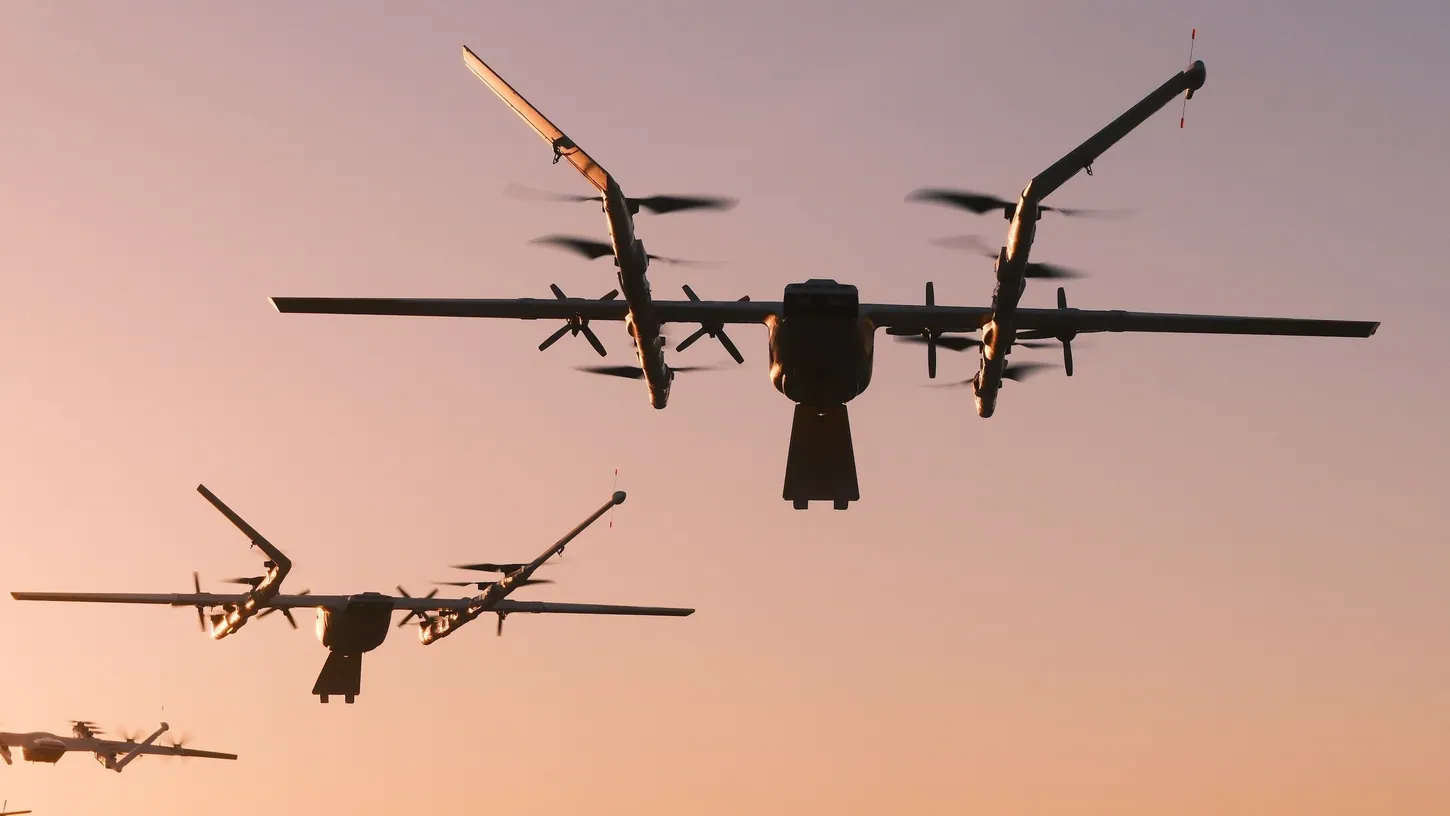
Wing’s first move into Washington state surfaced at a Tacoma building counter rather than in a press release. A permit filed on behalf of Walmart and Alphabet-owned Wing would turn parking spaces at the Walmart Supercenter at 1965 S. Union Ave. into a drone delivery hub, and it is sitting in the city’s screening and intake process.
Neither company has named Washington as a market. Wing and Walmart published expansion lists in January and again in June, and the Pacific Northwest was on neither one. This filing is the first public evidence that Puget Sound is in the plan.
The timing is the part worth noticing. Seven weeks before the application went in, the FAA signed the national environmental finding that lets a delivery operator skip the metro-by-metro study Wing filed for Atlanta, Houston and Central Florida. Washington’s attorney general was among the officials who asked the agency not to sign it.
The Permit Covers Fencing and Storage at a South Tacoma Walmart
The applicant describes the work as “the installation of fencing and storage for drone delivery operations” at the existing Supercenter, city officials confirmed. Wing calls these sites nests. Its FAA filings in other metros authorize up to 24 aircraft per nest, each serving a radius of about six miles (9.7 kilometers).
The filing was first reported by KOMO News, which went to the store and got the reaction any nest gets on arrival. One shopper liked the idea of skipping a drive for a small item. Another said he was not a fan, worrying about a drone coming down and about packages going missing. Walmart and Wing declined to say more about the project.
That split is the normal opening position. It reads almost word for word like the pushback from residents near a Walmart drone site in Glendale, Arizona three years ago.
Washington Never Appeared on Wing’s Announced Market List
Wing and Walmart named their expansion markets twice this year, in January and again in June, and Washington state was on neither list. The Tacoma permit is the first public evidence of a Puget Sound operation, and it surfaced through a municipal filing rather than either company.
January’s announcement committed the partners to 150 more Walmart stores and over 270 drone delivery locations in 2027, naming Los Angeles, St. Louis, Cincinnati and Miami, with “others to be announced later.” June filled in seven more metros: Memphis, New Orleans, Philadelphia, Phoenix, San Diego, the San Francisco Bay Area and Salt Lake City. Nothing north of San Francisco on the West Coast.
Wing said on September 3 that it is building the largest residential drone delivery network in the country. Reaching 270 locations by 2027 takes a lot of parking lots, and the paperwork will keep arriving in cities ahead of the press releases. Tacoma is the first place that order was visible.
The FAA Removed the Step Zipline Is Still Waiting On in Seattle
The FAA signed a national programmatic environmental finding on July 28, 2026, letting drone delivery operators tier to one nationwide review instead of commissioning a study for every metro. Zipline filed a Seattle-specific assessment under the older approach in September 2025. It still has no decision.
That contrast sits on one FAA page. Zipline’s Seattle draft, covering up to 75 sites and 500 docks, closed for comment on November 2, 2025 and remains in the public-review column ten months later. Wing’s Houston and Atlanta decisions, filed the old way, came through in August. There is no Washington filing under Wing’s name anywhere on that page.
Which pathway Wing intends for Puget Sound is the open question here, and it is not a small one. The national finding says the agency may still require project-specific review where more detail is needed, so a Tacoma nest could tier to the national document, or it could trigger a Washington assessment that does not yet exist. Wing has not said. DroneXL put that exact question to the company on September 8, as part of 15 questions sent to all three delivery operators, with a September 15 deadline.
Seventeen attorneys general and Harris County, Texas told the FAA in January that the national review analyzed no actual place and therefore could not support a Finding of No Significant Impact. Washington and New York were the two offices that asked for the comment period to be extended so they could write it. The agency signed anyway.
Tacoma Has No Retail Drone Rules on the Books
Tacoma officials told KOMO they were not aware of any retail drone restrictions in city code. The building permit is therefore the visible local checkpoint, and it is being handled as a parking lot alteration, in screening and intake, not as a hearing on drone delivery itself.
The FAA is blunt about where that responsibility sits. Its guidance states that “land use and zoning are typically governed by state and local laws” and that operators must site hubs to comply with them. The agency does not pick the locations and does not review them for a city.
Cities that have no standard tend to write one under pressure. A Walmart drone pad in North Carolina became a zoning fight in June after the application arrived, which is the harder way to do it.
DroneXL’s Take
Streamlining the federal review was the right call. A full environmental assessment for the 271st identical parking lot was never going to tell anyone anything new. What nobody planned for is where the argument went instead: to a building counter in a city with no drone rules.
The attorneys general had a point, and Tacoma is it. Their complaint was that a nationwide review analyzed no actual neighborhood and no actual noise exposure. Seven weeks after the signature, here is an actual neighborhood in South Tacoma, and the only public body looking at it is a permit desk checking fencing. That is a real gap, and pretending otherwise would be dishonest.
Re-running NEPA three hundred times is not the fix. Cities should write the standard before the application lands, and operators should show up before the fencing does. Wing has done that elsewhere: its representatives briefed the Woodstock, Georgia city council on aircraft weight and altitude before the permits were approved there. Tacoma got a permit application. Do it in that order and you get a zoning fight, which helps nobody, least of all the residents who might actually want the service.
Two things to watch, both with dates on them. Wing’s answers to DroneXL’s questions were due September 15, including the direct one about whether new metros proceed under the national finding or get their own assessments. And Zipline’s Seattle review is now past ten months without a decision, in the same metro Wing just filed in. If the FAA clears Wing into Puget Sound on a national document while Zipline still waits on the Seattle-specific one it filed a year earlier, every operator will notice which door opened faster. Our Wing tracker page will carry the Tacoma site and whichever answer comes back.
Sources: KOMO News, Federal Aviation Administration, Wing, Office of the Attorney General of California
DroneXL uses automated tools to support research and source retrieval. All reporting and editorial perspectives are by Haye Kesteloo. Read our editorial standards.