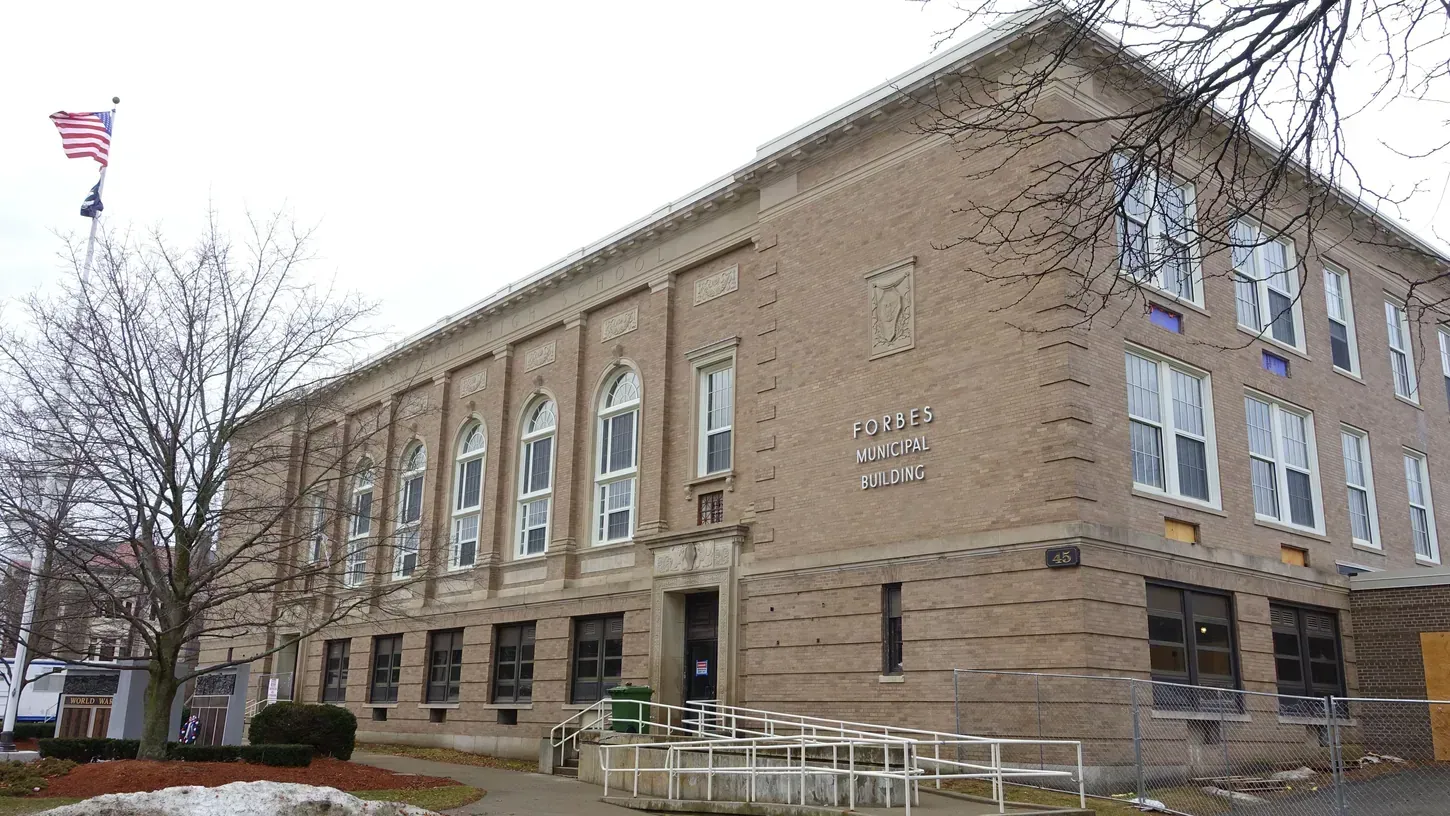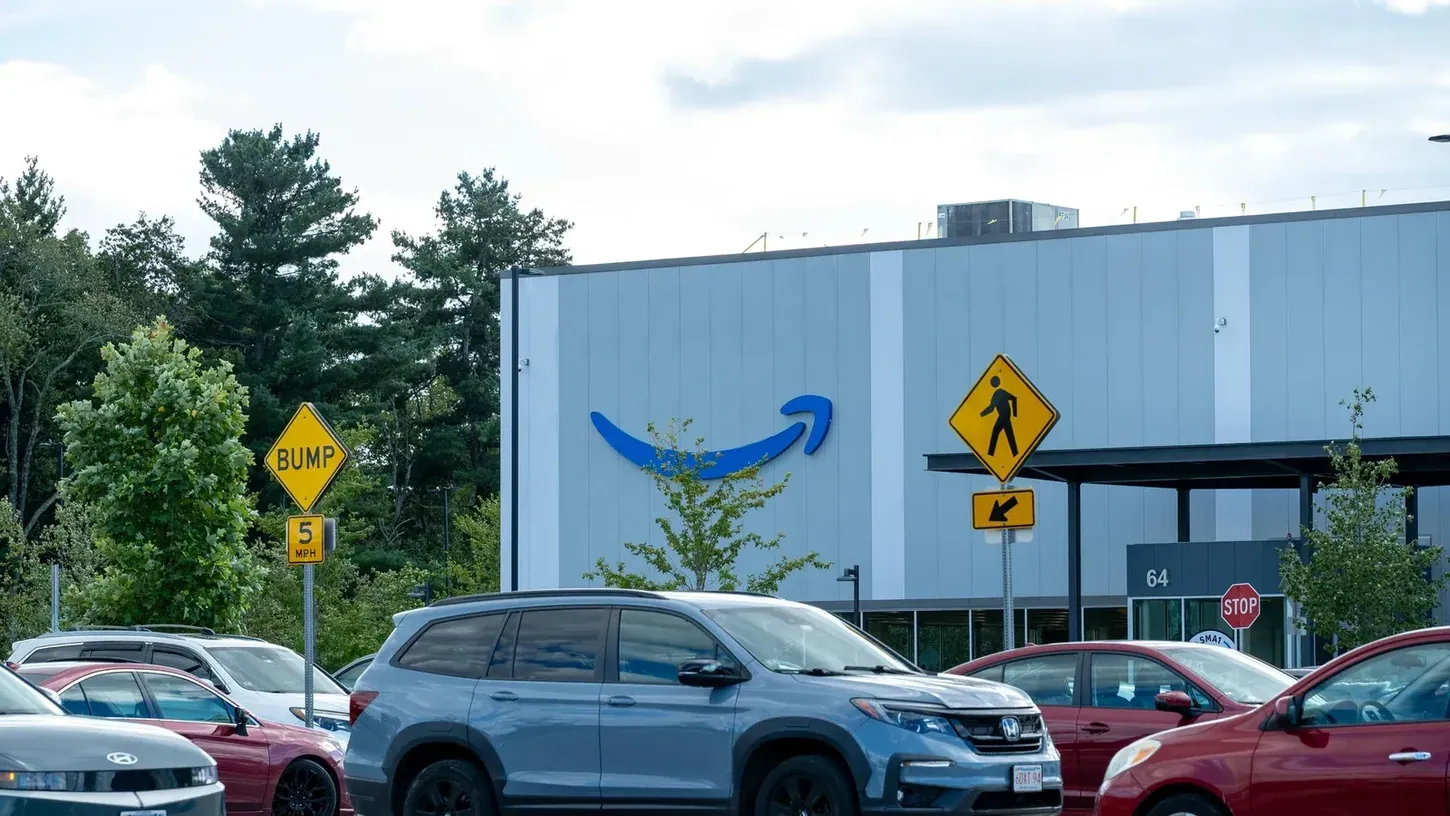
Westborough voters passed a general bylaw on Monday night, October 19, that bans any commercial drone launch pad, landing pad or delivery drop zone anywhere in town, by a vote of 510 to 13 at a Special Town Meeting in the Westborough High School auditorium. Article 8 was the last item on an eight-article warrant, and it was written in response to Amazon’s plan to fly Prime Air MK30 drones from the parking lot of its warehouse at 64 Otis Street, the plan DroneXL has followed since September, when Amazon told a packed room its drones were coming anyway.
The bylaw sets a fine of $300 per offense and takes effect only after the Massachusetts attorney general approves it or lets 90 days pass without acting, and the warrant says the MassDOT Aeronautics Division must approve it too. Amazon told residents in September it hoped to be in the air by late October, and it now faces a zoning appeal on November 2, a Planning Board hearing on November 10, a letter from four members of Congress with an October 29 deadline, and, as of Monday, a town bylaw. Select Board Chair Sean Keogh told the meeting the board had been “unsure of what component of this bylaw will actually get past the attorney general,” the Telegram & Gazette reported, so it wrote the text redundantly on purpose.
The text says in five of its sections that it does not regulate flight, and its fourth section bans every commercial ground end of one.
The Motion Adopted a Handout and Struck One Definition
The motion adopted the bylaw by reference to a handout, because the warrant signed on October 1 carried no text. It passed by simple majority with one amendment, which the Select Board brought itself: the definition of “Public UAS” was struck from Section 2 before the vote.
The motion, as the Telegram & Gazette photographed it on the auditorium screen, read in full:
I move that the Town vote to amend the General Bylaws to add a new Article 34 that regulates unmanned aircraft and unmanned aircraft systems, as set forth in the handout entitled, “Proposed Article 8 General Bylaw Article 34, Unmanned Aircraft Systems – Select Board October 19, 2026 Version,” provided, however, that the term “Public UAS” and definition thereof in Section 2 of such handout shall be stricken.
The version the town posted on its Prime Air page is labeled the October 16 version, and the town says the Select Board finalized the language on Thursday, October 15, after a discussion on October 13. Whether the October 19 handout differed from the posted October 16 text in anything beyond the stricken definition is not on the public record. The Select Board and the Advisory Finance Committee both recommended approval. The meeting was livestreamed to a gymnasium of spectators from neighboring towns, the Telegram & Gazette reported, and residents of those towns could watch but not vote. If anyone from Amazon was in the room, the Telegram & Gazette reported, they did not speak.
The Bylaw Bans Commercial Launch Pads and Drop Zones on Every Lot in Town
Section 4 of Article 34 is the ban. No person shall establish, use or operate any ground-level or rooftop staging point, launch or landing pad, nesting grid or property endpoint for commercial drone takeoff, landing, loading, unloading or delivery. Section 4E bans commercial drop zones on any parcel in town.
Nothing in the section depends on a permit, and a customer’s own say-so does not help. Section 4F says no customer agreement or private waiver can bypass the bylaw’s public-safety protections, and it calls any commercial drone takeoff, landing or delivery destination a public nuisance affecting the entire neighborhood. Section 4G then says nothing in the section regulates the route, altitude or operation of an aircraft in navigable airspace, and Sections 1 and 3 repeat that the town is not touching aviation safety, pilot qualifications, flight paths or altitude. Altitude and flight paths are two of the subjects a federal judge in Boston took away from Newton in 2017, and DroneXL set out why that ruling matters here when the Select Board first looked at North Reading’s hobbyist bylaw.
Section 6 adds a 150-foot (46-meter) buffer between any commercial launch or landing area and any employee parking area, workplace entrance, outdoor break area or pedestrian walkway, and it bars a launch or landing while anyone not taking part is inside that buffer unless they are indoors or in a parked vehicle. Amazon’s pad would take about 27 spaces on the east side of its own parking lot, as the company presented it to the Select Board on August 18. Sections 7 through 10 bar unlawful recording and interference with emergency crews by any operator, hobbyists included, keep town employees from ordering drone deliveries to town property, and leave room for roof inspections, surveys and real estate photography with the owner’s permission. The posted text skips from Section 10 to Section 12, where the police chief enforces the bylaw at $300 per offense under the state’s noncriminal disposition statute, M.G.L. c. 40, § 21D. Section 14 makes every clause severable, which is where I read Keogh’s remark about redundancy.
“We are the stewards of the town’s character,” a representative of the resident group Mass Blue Skies told the meeting, according to the Telegram & Gazette. The group worked with the Select Board on the text. An independent resident survey had already found 92% opposition among 853 respondents by September 28.
The Attorney General Has 90 Days, and Singer v. Newton Is the Test
Under M.G.L. c. 40, § 32, the town clerk has 30 days from the final adjournment of Town Meeting to send the bylaw to the attorney general, who then has 90 days to approve it, disapprove it, or let it take effect by silence.
If the clerk filed on October 20, the attorney general’s window closes on January 18, 2027. If the clerk uses the full 30 days, to November 18, it closes on February 16, 2027, and the attorney general and town counsel can extend it by written agreement for up to 90 more days.
The review asks whether a bylaw conflicts with state or federal law, and the federal half of that question has a Massachusetts answer. In Singer v. City of Newton in 2017, the court struck Newton’s altitude limit, its overflight rule, its line-of-sight requirement and its registration scheme as preempted by federal aviation law, and left the rest of the bylaw standing. Section 3 reads as written around that opinion: it says the bylaw creates no registration system, no pilot licensing, no altitude or flight-path restriction and no aircraft equipment rule, and Section 13 says the Select Board may never adopt one by regulation either.
The Telegram & Gazette described the measure as restricting drones from being flown in navigable airspace. The posted text says the opposite in five sections. Amazon’s likely answer, as I read Singer, is that a flat ban on landing sites regulates the ground end of a federally authorized Part 135 operation, and that is the argument the attorney general will weigh.
Amazon’s Late-October Date Has Slipped and the Town Has Opened a Fourth Front
The Zoning Board of Appeals hears the residents’ appeal of the ruling that the pad is an accessory use of the warehouse on November 2, as DroneXL reported when the appeal was set. The Planning Board voted on October 6 to continue Amazon’s site-plan hearing to November 10.
On October 15, the same meeting that finalized the bylaw, the Select Board authorized the town manager to finish a letter to FAA Administrator Bryan Bedford and Amazon CEO Andy Jassy and circulate it for signature to the select boards and mayors of the 15 other communities the town lists as impacted, which reach all or part of the 7.5-mile (12-kilometer) circle. The draft, dated October 23, backs the request Senators Ed Markey and Elizabeth Warren and Representatives Jim McGovern and Lori Trahan made on October 14 for a site-specific environmental assessment for Westborough, and asks the FAA to require it before authorizing any flight. Thirteen state legislators had already written to the four on October 5 asking what limits federal law places on commercial drone delivery and what federal money exists for noise mitigation.
The FAA’s drone environmental review index listed no Massachusetts document when DroneXL checked it on October 20. Amazon said on September 23 that it did not yet hold the MassDOT landing-area approval it told the town it needs, and neither Amazon nor the town’s page has reported a filing since. The Drone Delivery Tracker lists the Westborough hub as in review, and its Westborough page carries the November dates. Residents can call Amazon at 1-888-280-4331 and say it is about drone delivery, or open the customer-service chat and pick “Something Else,” then “Amazon Drone Delivery.” DroneXL’s guide for residents covers what a town can still do once a hub is proposed, and Castle Rock, Colorado, showed another route when it froze drone hub applications for six months.
DroneXL’s Take
Westborough is holding the better hand, and I think Amazon knows it. Five hundred and ten voters against 13 is the town speaking, and it comes on top of an appeal that can send the pad to a special permit the town may deny, a letter 15 neighboring communities are being asked to sign alongside Westborough, four members of Congress, 13 state legislators and a state that is suing the FAA. The late-October launch Amazon hoped for in September cannot happen with a site-plan hearing on November 10, and nothing on the FAA’s index or in the town’s record puts a drone over Otis Street this year.
The bylaw itself is the weakest card in that hand, because Sections 4D and 4E ban a drop zone on a customer’s own lawn, and Keogh said out loud that the board does not know which parts will survive the attorney general. Singer protected land use and the Supreme Judicial Court’s Roma III decision protected zoning of a private landing area, but Article 34 is a general bylaw that prohibits rather than conditions, so I expect the pad and drop-zone ban to get a harder look than the privacy and nuisance sections, and I read the severability clause as the drafters expecting the same. Even a bylaw cut in half would still tell Amazon what one Massachusetts town thinks of a 77.9-pound aircraft with no parachute carrying five-pound consumer orders over their roofs. Medication lowered on a tether from a Zipline P2 would get a different vote from me, and the Zoning Board of Appeals meets on November 2.
Sources: Telegram & Gazette, Proposed Article 8, General Bylaw Article 34, Select Board October 16, 2026 version (PDF), Town of Westborough, Prime Air Drone Delivery Service Application page, 2026 Special Town Meeting warrant (PDF), Select Board agenda, October 15, 2026 (PDF), Draft joint letter to the FAA and Amazon (PDF), State legislators’ letter to the congressional delegation, October 5, 2026 (PDF), M.G.L. c. 40, § 32, Singer v. City of Newton, D. Mass. 2017, FAA drone environmental review index.
DroneXL uses automated tools to support research and source retrieval. All reporting and editorial perspectives are by Haye Kesteloo. Read our editorial standards.