
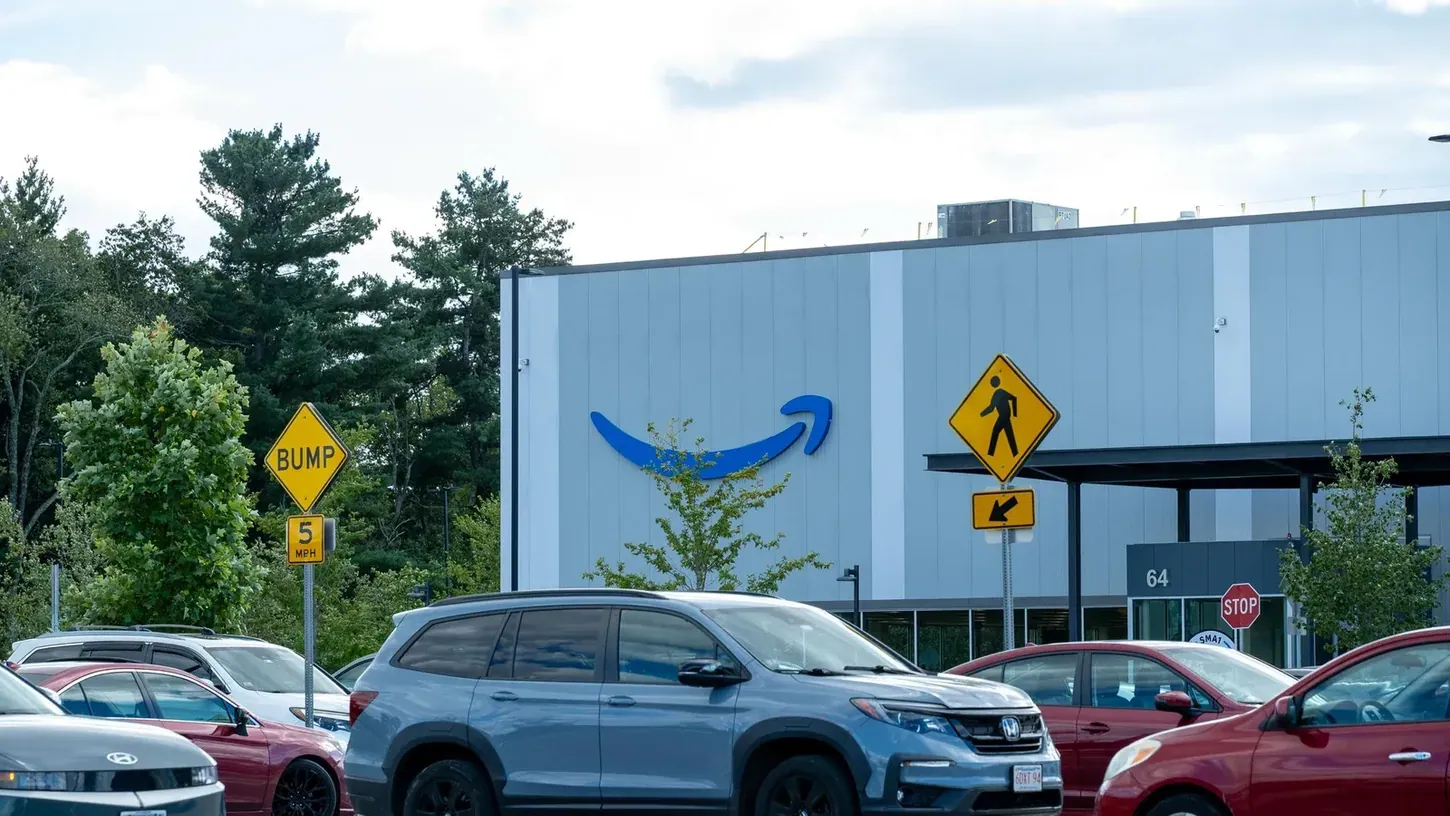
Senators Ed Markey and Elizabeth Warren and Representatives Jim McGovern and Lori Trahan asked Amazon and the Federal Aviation Administration on Wednesday, October 14, to put Prime Air’s proposed drone hub in Westborough, Massachusetts, through its own environmental assessment, with a public comment period, before any drone flies from it. One letter went to Amazon CEO Andy Jassy and one to FAA Administrator Bryan Bedford, and both ask for a written answer by October 29.
The letters come 16 days after state lawmakers who represent the area wrote to Amazon. State Sen. Michael Moore and Reps. Hannah Kane and Kate Donaghue asked the company to pause on September 28, as DroneXL reported in Amazon Drone Hub Faces Pause Call From Lawmakers as State Sues FAA. By then, Westborough residents were circulating a phone script that named both senators and McGovern, as DroneXL reported the same day in its story on the resident survey.
The letters say Amazon is moving ahead without a site-specific environmental assessment. Amazon’s own airspace team told a Westborough room on September 23 that the FAA was already reviewing a site-level environmental filing for the hub.
Lawmakers Say No Earlier Drone Review Looked at New England
The lawmakers argue that the FAA’s July 28 nationwide finding rests on 23 earlier site reviews in 11 states, none of them in New England. Westborough’s historic town center, its forests and wetlands, and Massachusetts weather and daylight differ from the places those reviews covered, they write.
Both letters take the 23 from Section 3.9 of the FAA’s December 2025 draft, and the final assessment counts more than 20. The letter to Bedford asks the FAA to require the review, and the letter to Jassy asks Amazon to work with the FAA on one.
The second argument is local opposition. The letters cite the Moore letter, a resident survey with more than 1,200 responses and 92% opposed as of early October (a self-selected count, which DroneXL put at 853 responses on September 28), and Massachusetts’ place among the 15 states that sued the FAA in the Second Circuit on September 28.
For the community meeting on September 23, the letters cite DroneXL’s September 29 article and describe the event as one held “to authorize the zoning changes needed” for Amazon’s drones. The town’s Prime Air page says Amazon hosted it “to present the project, answer questions, and hear from residents,” and I was in that room for Amazon’s community meeting at the DoubleTree. No town board presided and nothing was put to a vote, though the letters are right that residents packed it. No zoning amendment for the pad is before the town. Westborough’s building commissioner ruled on August 26 that the drone operation is an accessory use of the fulfillment center, which sent the pad to the Planning Board for site-plan approval, and that ruling is what residents appealed, as DroneXL reported in Amazon Drone Pad Appeal Set for Nov. 2 as Westborough Drafts Bylaw.
The third argument is fire. The FAA’s final assessment lists hazardous materials among the categories it did not analyze in detail, because the operations are “not expected to include any activities that would use hazardous materials.” The letters answer that drone package delivery depends on lithium-ion batteries and cite the October 2025 collision in Tolleson, Arizona, where two MK30s hit a crane and one caught fire on the ground.
Markey, in a statement to MassLive and Boston.com, said Amazon cannot be allowed to “treat our skies like a testing ground.”
The FAA Is Already Reviewing Westborough Against Its National Study
Amazon files a separate environmental review for every new site, a member of its airspace team told the September 23 meeting. The FAA was reviewing Westborough’s. That review checks a hub’s noise data, delivery count and setbacks against the July 28 study, with no site-specific comment period.
The national analysis covers up to 1,150 average daily deliveries from one hub, with a 600-foot (183-meter) setback from noise-sensitive land at that volume and shorter setbacks for smaller hubs, as DroneXL reported when the FAA signed the nationwide finding. A hub past either limit, or one sharing airspace with hubs whose combined deliveries would pass 1,150, needs a more detailed noise analysis. The setback table counts each delivery between 10 p.m. and 7 a.m. as ten. Amazon’s FAA approval allows up to 1,000 flights a day per site, and Tareq Wafaie, who presented the plan, called that ceiling aspirational for Westborough, where Amazon would start with about six drones and several hundred deliveries a day. The letter to Bedford asks for a full review even where a hub stays under those thresholds.
Two site-level consultations survive in the national assessment, and neither letter mentions them. Historic properties still get an individual Section 106 consultation in any state without a signed Programmatic Agreement, and Massachusetts is not among the eight states where the FAA has started negotiating one. Wildlife consultations with the U.S. Fish and Wildlife Service stay site by site until a national agreement is signed.
The FAA’s drone environmental review page listed no Massachusetts or Westborough document when DroneXL checked it on October 14. The town’s Prime Air page says Amazon is seeking the site-specific FAA approvals it needs to fly from 64 Otis Street. Amazon did not immediately respond to Boston.com or MassLive, and none of Wednesday’s reports from Boston.com, MassLive, WBUR or the Telegram & Gazette carried an FAA response.
The local dates come first: Town Meeting votes on a drone bylaw on October 19, the Zoning Board of Appeals hears the appeal on November 2, and the Planning Board resumes on November 10. The Drone Delivery Tracker lists the hub as in review. Residents can call Amazon at 1-888-280-4331 or open the customer-service chat and pick “Something Else,” then “Amazon Drone Delivery,” and DroneXL’s guide for residents covers what a town can still do once a hub is proposed.
DroneXL’s Take
The most useful answer Bedford could send by October 29, in my view, is the Westborough review the FAA already has open. Amazon’s team described it to a packed room in September, and nobody in Westborough can read it. The lawmakers asked for a new assessment with public comment, and I’d settle for the FAA publishing the noise data, delivery count and setback figures it is checking now, so the town can see whether the hub fits the national study.
The fire argument is narrower than the letters make it. As I read the assessment, its hazardous-materials category is about handling, disposal and contaminated ground, and battery safety on a flying aircraft is a Part 135 question. It is still a fair one. DroneXL’s position is that the MK30 is too heavy to fly consumer orders over homes without a parachute, and Tolleson is the record of what a collision does to one. Drones that carry medicine and lower it on a tether, the way Zipline’s P2 does, make the case for this technology. Five-pound consumer orders across a 7.5-mile (12-kilometer) circle that takes in Westborough’s historic town center make the case against it.
Sources: Letter to Andy Jassy, October 14, 2026, Letter to FAA Administrator Bryan Bedford, October 14, 2026, FAA Final PEA and FONSI/ROD, July 28, 2026, Town of Westborough, Prime Air page, Boston.com, MassLive, Telegram & Gazette, WBUR.
DroneXL uses automated tools to support research and source retrieval. All reporting and editorial perspectives are by Haye Kesteloo. Read our editorial standards.


