
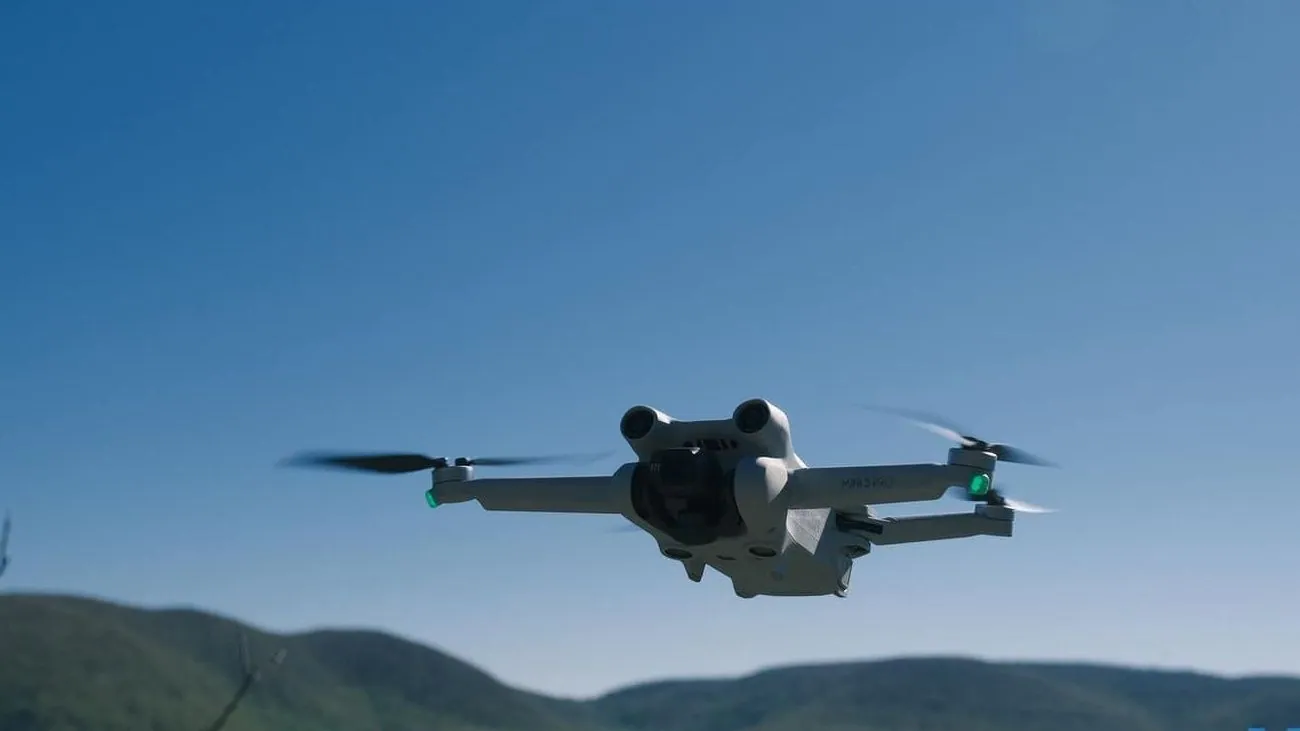
Houston City Council votes Wednesday on whether the Mayor’s Office of Public Safety and Homeland Security can apply for FEMA’s Counter-Unmanned Aircraft Systems Grant Program, the second $250 million round of federal counter-drone money. KPRC 2 previewed the vote on Monday as a grant to give officers “more eyes in the sky” at Houston’s biggest events.
The agenda item behind the vote says the money would “enhance law enforcement detection and mitigation capabilities” at every special event in the Houston region that carries a federal SEAR rating. It lists Houston’s share as unknown, and Texas has about a third as much to hand out as it had for the World Cup.
The Grant Pays for Sensors That Find Drones and Gear That Disrupts Them
FEMA’s fact sheet for this round lists radar, radio-frequency direction finders, electro-optical and infrared cameras, acoustic sensors and Remote ID receivers to find drones, plus mobile jammers, radio protocol manipulation and cyber takeover systems as mitigation, along with the vehicles and trailers that carry the gear.
The sensors are the eyes in this program. They watch the sky for drones and, through a drone’s Remote ID broadcast, locate the person flying it. Larry Satterwhite, who directs the mayor’s public safety office, told KPRC 2 the funding is about helping the city see more and cover more ground. KPRC reported that city officials are working on guardrails for how the technology is used, and that much of the capability would land with the Houston Police Department.
The Safer Skies Act rules decide who may use mitigation gear: only an accredited law enforcement or correctional agency, through officers certified at the FBI’s National Counter-UAS Training Center. Agencies that buy detection gear with this money must also give DHS access to relevant detection data, including flight tracks and Remote ID information, a condition DroneXL detailed when FEMA opened this round in October.
Houston Steered Its First-Round Money to the Harris County Sheriff
Wednesday’s vote is not Houston’s first. Council approved an application for the 2026 round on February 18. In May it agreed to reimburse the Harris County Sheriff’s Office up to $1,254,000 for drone detection and mitigation systems and storage for them inside a designated response vehicle.
Council approved the same $1,254,000 again on October 7, this time as a contract with an emergency clause, and its title adds unmanned aircraft systems support to the counter-drone work. City staff filed both items under the name “World Cup (CUAS) Harris County SO.” The World Cup round sent $30,276,431 to Texas. During the tournament, Texas DPS seized eight drones inside the flight restrictions around Houston venues in the first week alone, and a church videographer who flew a DJI Mavic 3 near the downtown fan festival now faces federal charges.
Texas Gets $10.5 Million to Split Among Every Agency That Applies
Texas will receive $10,508,140 for the whole state in this round, according to FEMA’s allocation table. The pot shrank because FEMA now splits $250 million among all 50 states, D.C. and five territories instead of 11 World Cup states and the National Capital Region.
The Texas governor’s Public Safety Office collects local applications and files one package with FEMA, which closes its window on November 16. FEMA’s notice tells states to pass at least 97% of the money to local and tribal agencies, and the same section lets them keep up to 20% for state-level equipment. States also decide who gets mitigation money: North Carolina will fund jammers for only three agencies, DroneXL found when it checked state deadlines on Monday.
Houston’s focus on SEAR-rated events, the Special Event Assessment Rating that DHS assigns to large gatherings, lines up with what FEMA wants. The notice sets a target that 80% of grant-bought mitigation systems protect the 2028 Olympics, the torch relay, National Special Security Events or SEAR-rated events. FEMA expects to pick projects on December 2 and issue awards on December 10, the same December start Houston’s agenda item projects.
DroneXL’s Take
I have no problem with Houston buying detection gear for big events, and radar and Remote ID receivers are the right tools. The World Cup cases DroneXL covered in Houston included a church videographer and a real estate pilot, so finding the pilot fast matters more than downing the drone.
Council should ask to see the guardrails KPRC reported before the awards land on December 10. Houston’s filing names mitigation, so the policy should say which agency can operate it, at which events, and how long the city keeps detection data on pilots who broke no rule.
Sources: KPRC 2, City of Houston agenda item 36, November 4, 2026, City of Houston council agendas for February 18, May 19 and October 7, 2026, FEMA FY 2027 C-UAS Grant Program NOFO, FEMA FY 2027 C-UAS Fact Sheet, FEMA C-UAS Grant Program.
DroneXL uses automated tools to support research and source retrieval. All reporting and editorial perspectives are by Haye Kesteloo. Read our editorial standards.


