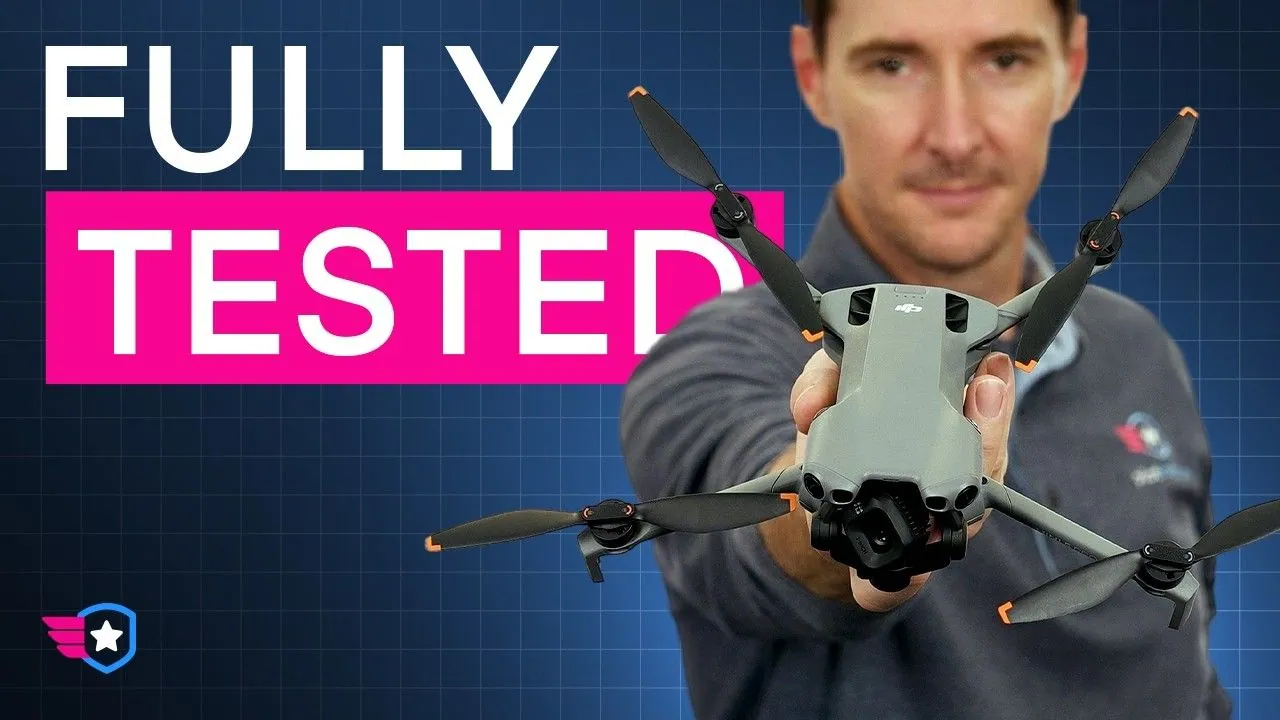
Half Chrome published its first look at the Skyrover V1 on Thursday night. Jack Towne says he has flown the sub-250-gram drone for a couple of weeks, and his video covers an advertised 40 minutes of flight time, an advertised 20 km (12.4 miles) of range, front and rear obstacle sensing, 40 GB of onboard storage and a controller with a built-in touchscreen. He calls it a first impression rather than a review, because he does not know what the V1 costs.
Skyrover’s own store carries no V1 at all. It listed only the S1 and the X1 when I checked on Friday morning, a search for “V1” there returns those two drones, and the product page a V1 would sit at returns a 404. Half Chrome’s video description links to an Amazon listing for the V1, and Towne says the drone has been talked about for a while.
The V1 Sits Between the S1 and X1 and Flew More Than 30 Minutes Per Battery
Towne places the V1 between Skyrover’s two existing drones: better than the $279 Skyrover S1 on camera, flight time and obstacle avoidance, and trading advantages with the $459 Skyrover X1. His flights ran past 30 minutes per battery with charge to spare, against Skyrover’s advertised 40.
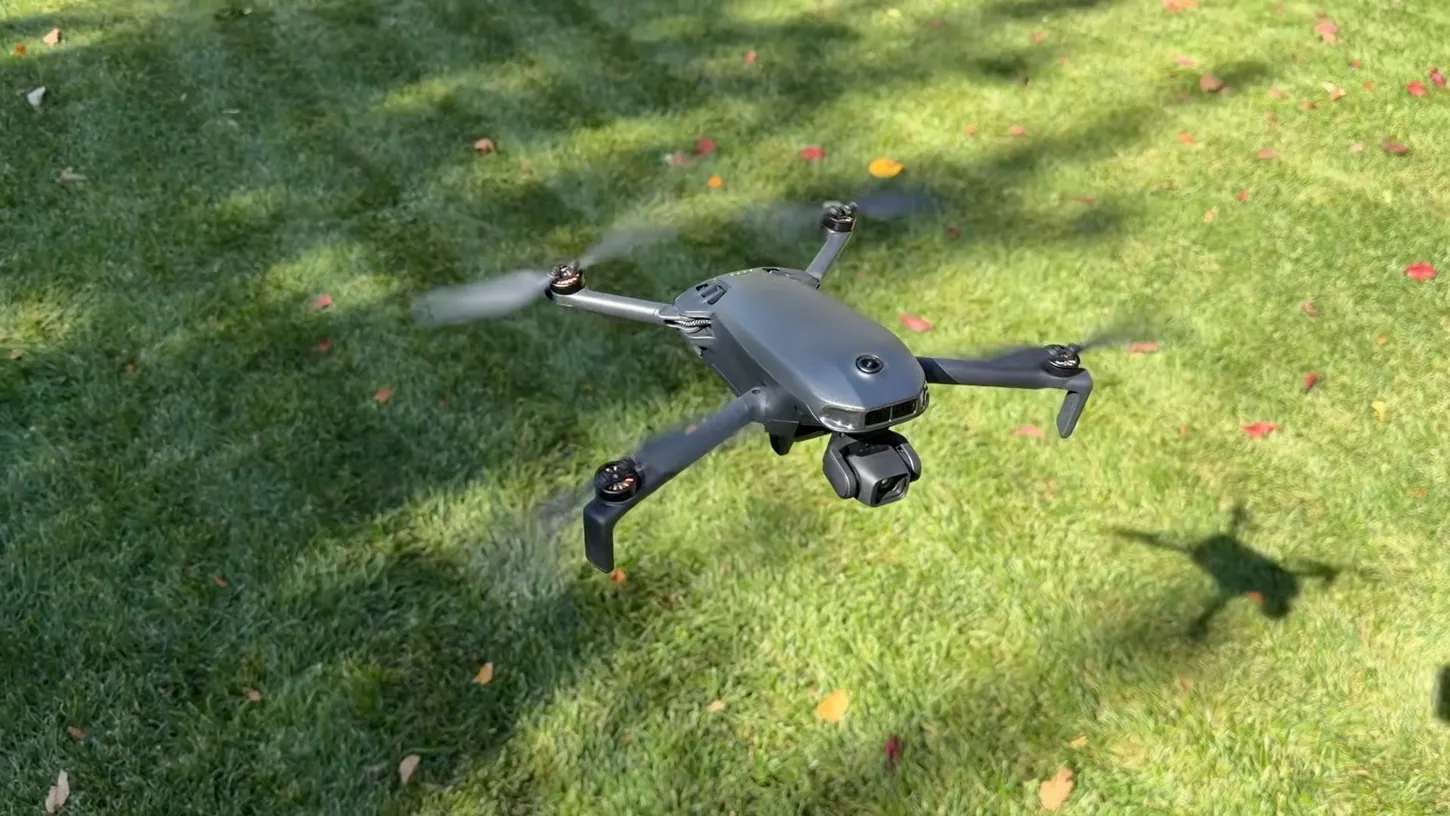
The obstacle sensing comes from a camera on top and one underneath, both angled to see ahead and behind, plus two sensors on the front for low light and one on the belly. The sides are blind spots. Towne flew it at a bush, and the drone avoided it. His unit came with three batteries and a charger, and the S1’s battery fits the V1 and charges on the same hub. Video records to a microSD card or to the 40 GB inside, and the flight modes include follow me, orbit, rocket and dronie.
The gimbal does not rotate for vertical video. The V1 crops the frame instead, where the DJI Mini 5 Pro turns its camera to shoot 9:16 at full resolution. The controller has a color touchscreen, sticks that store in the back, wheels for the gimbal and zoom, and a record button on the shoulder. Towne’s verdict is that the V1 is stable, easy to fly and a good drone for a beginner. “It’s super well put together, almost like a DJI drone,” he says, and he promises a comparison against the Mini 5 Pro.
Towne says the sub-250-gram weight means no FAA registration and no Remote ID, and Half Chrome’s own description adds that the requirements depend on how and where you fly. A recreational flyer skips both. A Part 107 operation registers every aircraft and needs Remote ID whatever the weight. In October 2025, Towne weighed the Mini 5 Pro, the Mini 4 Pro and the X1, and none came in under 250 grams. The V1 does not go on a scale in this video.
The V1 Needs a Pre-December FCC Grant, and Towne Never Mentions Its FCC ID
Since December 22, 2025, foreign-made drones cannot receive new FCC authorizations, so a V1 sold in the US has to ship under a grant issued before that date. WaveGo Tech, the S1’s grantee, holds two FCC IDs, both from July 2025. Towne does not mention the V1’s FCC ID.
The S1’s own FCC ID sits in the July 17 proposal to halt imports and marketing of previously authorized drones from nine companies, as DroneXL reported in August, and comments closed on August 31. Skyrover told its US customers in April that it is here to stay, with FCC compliance and US support as two of that letter’s four pillars.
Under the video, security researcher Konrad Iturbe, whose FCC scanner put Skyrover on a list of a dozen suspected DJI-linked brands, commented that the V1 “is the Voomax Breeze in black livery.” In April, Iturbe matched the Voomax Breeze on Amazon to FCC paperwork filed by Fikaxo Technology, another company on that list. The Breeze’s Amazon listing claimed 40 minutes of flight time, 35 GB of storage and omnidirectional obstacle sensing. The V1 carries 40 GB, and Towne found side blind spots.
DroneXL’s Take
Towne’s line that the V1 flies almost like a DJI drone is no surprise. Iturbe’s research and DroneXL’s own reporting have documented for over a year that Skyrover’s hardware carries DJI’s OcuSync fingerprints, so of course it flies well. My hesitation is the paperwork, not the aircraft. Review units routinely go out before store pages, and Skyrover may well list the V1 with a price next week. Until it does, a buyer is paying for a drone whose FCC grant DroneXL has not been able to identify, while the FCC weighs cutting off sales of the S1 that shares its battery. Towne is right that it’s a good beginner drone. I’d wait for the store page, the price and the FCC ID on the label. The FCC says drones already bought stay legal to fly, so the exposure is support and replacement, the two things Skyrover promised in April.
Sources: Half Chrome, Skyrover, FCC equipment authorization records.
DroneXL uses automated tools to support research and source retrieval. All reporting and editorial perspectives are by Haye Kesteloo. Read our editorial standards.