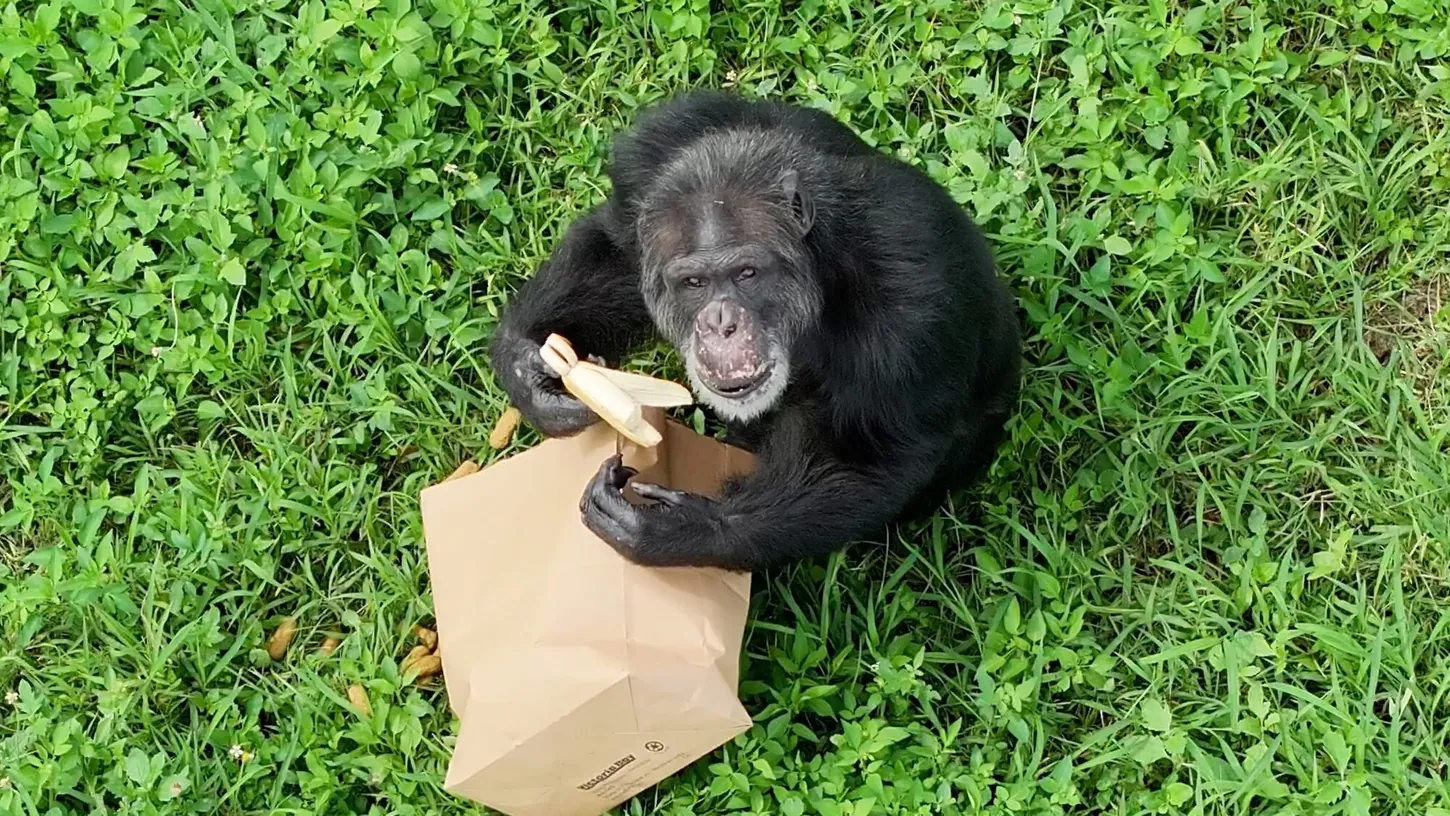
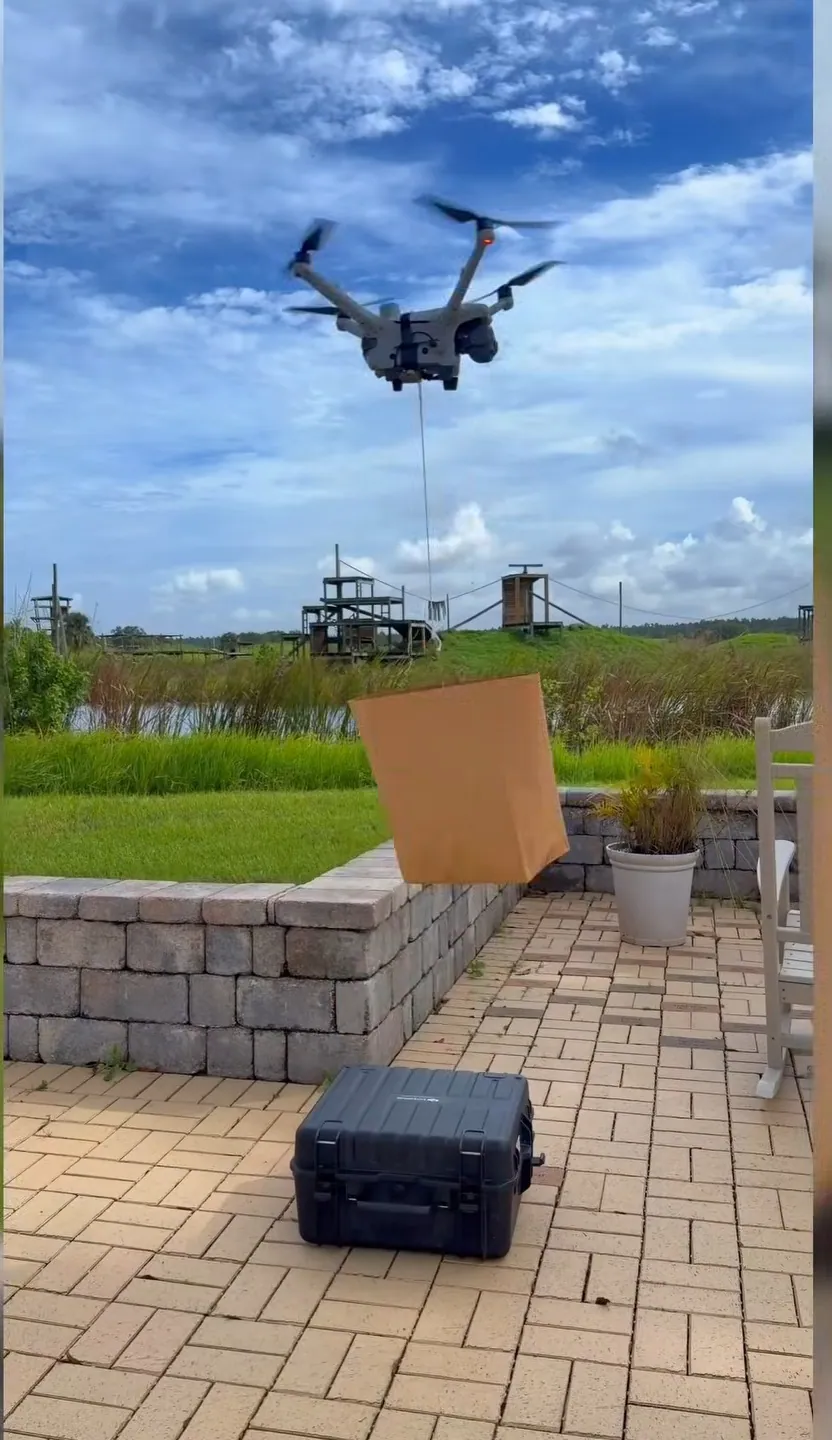
Save the Chimps, a 150-acre (61-hectare) chimpanzee sanctuary near Fort Pierce, Florida, used a DJI camera drone on November 4 to lower a paper bag of bananas and a bundle of blankets to Kaleb, a 38-year-old chimp whose outdoor area had been cut off by floodwater. Three days of rain over the first weekend of November had put the sanctuary’s internal roads under water, knocked out the golf carts that carry 3,000 pounds (1,361 kilograms) of food a day to more than 200 chimps, and stalled the swamp buggy brought in to replace them.
The sanctuary says every chimp stayed safe and no meal was missed. Kaleb later walked out on his own, across a rope strung over the standing water. The aircraft that reached him first, in the sanctuary’s own video, is a folding consumer drone with a line hanging from its belly, the kind Florida’s sheriffs and fire departments have been barred by state law from flying since 2023.
Three Days of Rain Put the Sanctuary’s Roads Under Water
Rain fell on the Treasure Coast from Sunday, November 1 to Tuesday, November 3. Fort Pierce recorded 8.36 inches (212 millimeters) in three days, with a one-day record of 5.39 inches (137 millimeters) on Monday, per FOX Weather, and WPTV put the sanctuary’s total at about 19 inches (483 millimeters).
The 200-plus residents live in groups on 12 islands of about 3 acres (1.2 hectares) each, with their indoor care houses on the high ground, and CEO Ana Paula Tavares said the care houses stayed secure on the high ground. It did cover the paths between the islands. The Header Canal that drains the property overflowed and kept the water from running off, CBS12 reported, and the South Florida Water Management District issued an emergency order during the week.
Nearly 15 golf carts failed, facilities director Mark Yohannan told WPTV, after sitting in 1 to 2 feet (30 to 60 centimeters) of water. A donated high-clearance swamp buggy took over the food runs and broke down on Wednesday, and a staff member’s truck got stuck in a sinkhole on Thursday. Meals, medicine and enrichment went out by pickup, tractor and a maintenance worker’s personal vehicle, Yohannan told the Associated Press, and veterinarians stayed overnight on the property while flooding on the roads outside made it hard for the next shift to get in. “They haven’t missed a beat,” Yohannan said of the chimps. A small alligator turned up beside the kitchen on Friday.
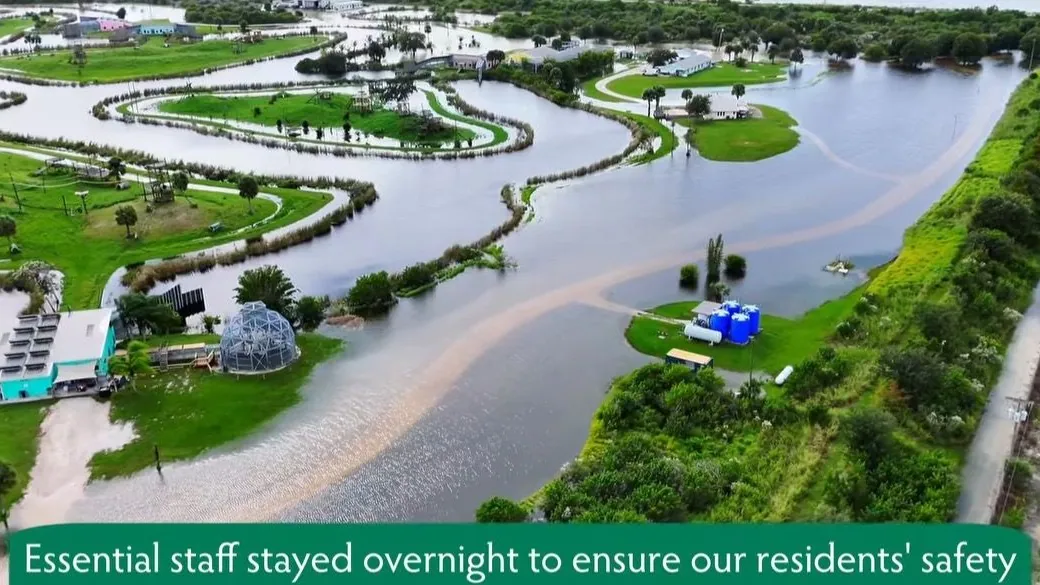
The water dropped noticeably overnight Friday, and by Saturday, November 7, about 20 percent of the roads were passable. Yohannan is scheduled to address the North St. Lucie River Water District at 10 a.m. on Monday, November 9, and the sanctuary plans to bring the drainage problem to the St. Lucie County Commission the same week. Its appeal for repair money, posted November 6, says every gift is matched by Susanne Damgaard of Denmark, the donor already matching up to $500,000 in the sanctuary’s year-end campaign. The sanctuary’s Facebook post puts the damage at resurfaced roads, roof repairs, mold remediation, golf carts, a four-wheel-drive vehicle and a walk-in cooler compressor.
The Drone in the Video Is a DJI Air 3-Series Camera Drone on a Drop Line
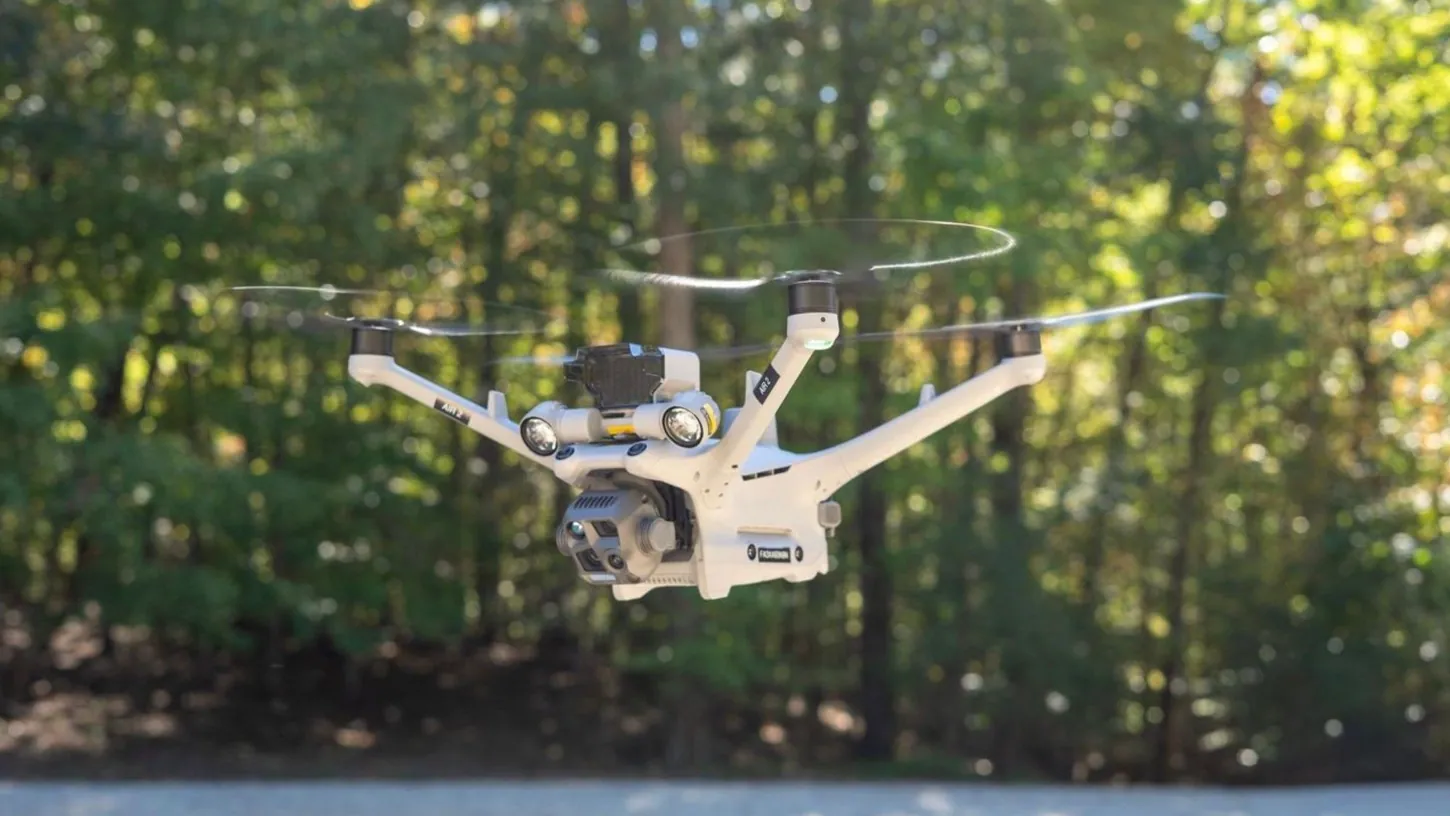
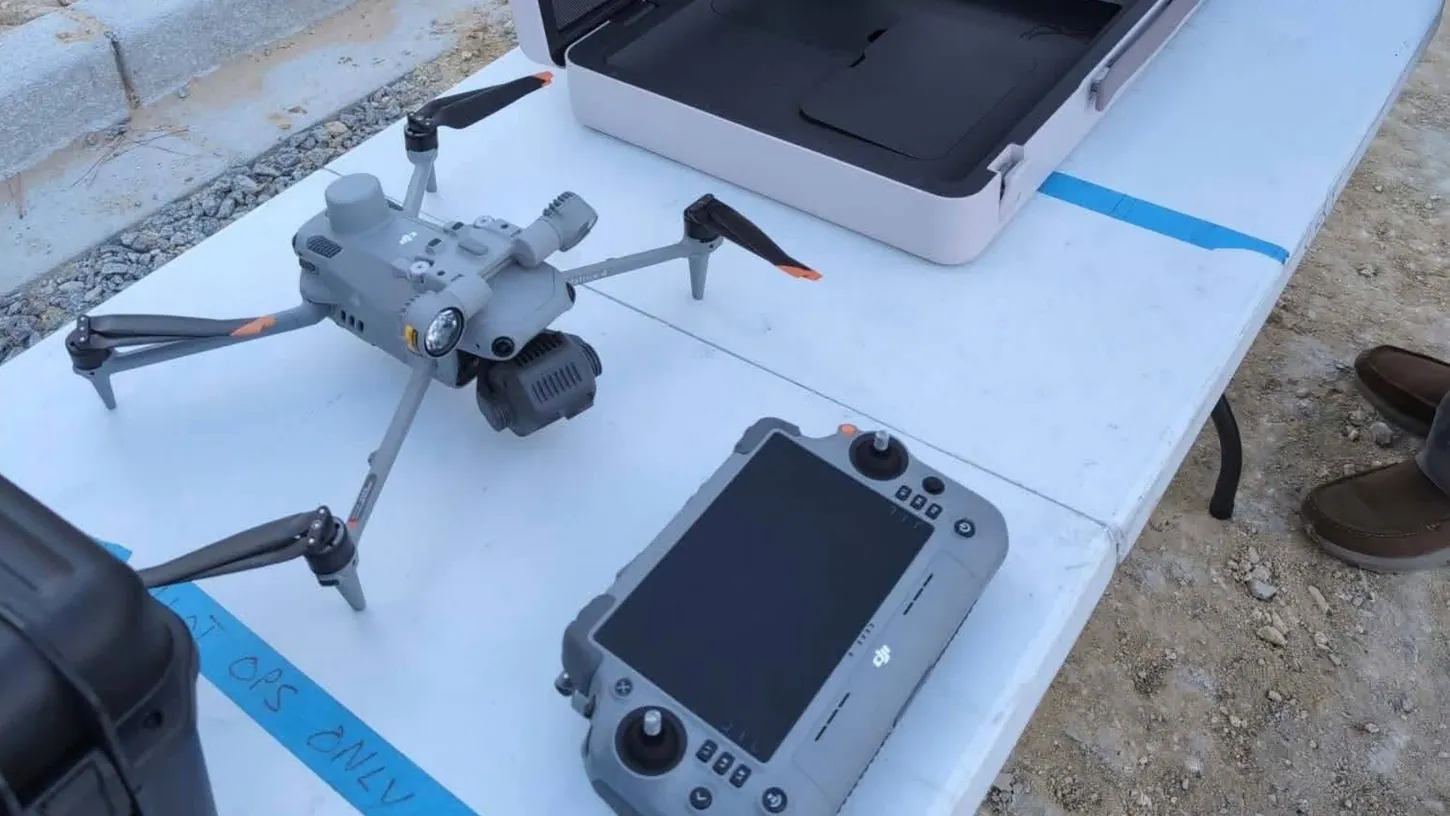
The sanctuary’s own video shows a gray DJI quadcopter with the stacked dual-camera gimbal of the Air 3 series lifting off a brick patio beside its open hard case, a paper bag swinging below on a line. No source names the model; the identification is DroneXL’s, from the footage.
The AP called it a delivery drone, and Yohannan told the wire service the sanctuary had bought it some time ago for exactly this kind of emergency. The Air 3 and Air 3S share the same body and gimbal, so the video does not settle which of the two it is. It cuts from the takeoff to the drone’s own downward view of the bag and a folded blanket on the grass of Kaleb’s island, and a photo the sanctuary gave CBS12 shows the same aircraft with the blankets slung underneath. The clip then follows Kaleb opening the bag, and later picking his way along the rope the staff had strung across the water, which the caption calls the land bridge.
In September, crews in Nepal flew four donated DJI FlyCart 100 cargo drones, each rated for 132 pounds (60 kilograms), to villages that had lost their roads and bridges. Save the Chimps flew a camera drone that carries a few pounds across a flooded path to one chimp. It worked because someone bought it before the rain and knew where the case was.
Florida’s Own First Responders Could Not Have Flown It
Florida has barred state and local agencies from flying Chinese-made drones since 2023, when the Department of Management Services limited public fleets to an approved list without DJI or Autel Robotics. The legislature put up $25 million for replacements, and the confiscated drones became target practice for Special Operations Command.
DroneXL put the cost of that policy at $200 million in working public safety drones in November 2025, with no published security analysis behind it. The agencies that replaced them went to American hardware: Palm Beach County Fire Rescue stood up a Skydio X10 fleet for this hurricane season because the law left it few other choices. A private nonprofit faces no such rule, and Save the Chimps flew what it owned.
Since December 22, 2025, the Federal Communications Commission (FCC) has blocked new equipment authorizations for every foreign-made drone through its Covered List, as DroneXL reported the day it happened. Drones already authorized, including the Air 3 and Air 3S, remain legal to buy, sell and fly. The November 3 midterms do not change that: as DroneXL reported on Friday, the exit from the Covered List runs through the Pentagon and the Department of Homeland Security, not through the new Democratic majorities.
DroneXL’s Take
A chimp sanctuary with a $1,000-class camera drone and a drop line did on Wednesday what a donated swamp buggy and 15 golf carts could not, and I keep coming back to who else in St. Lucie County was allowed to do the same. The sheriff’s office and fire rescue were not, because Florida took that aircraft out of their hands in 2023, and the FCC’s December order means no newer DJI model can be sold to anyone in the state. A paper bag of bananas for one chimp is not a public safety mission, and the sanctuary’s flight does not prove a sheriff needs a DJI. But the same storm flooded the same county, and the agencies paid to respond to it were working from a shorter equipment list than a chimp sanctuary, by law. Save the Chimps did what DroneXL has argued for since the ban: it bought a capable drone while the sky was clear and kept it in a case by the door, and I think Florida’s public fleets should have been allowed to do the same.
Sources: Associated Press, WPTV, CBS12, FOX Weather, Save the Chimps
DroneXL uses automated tools to support research and source retrieval. All reporting and editorial perspectives are by Haye Kesteloo. Read our editorial standards.