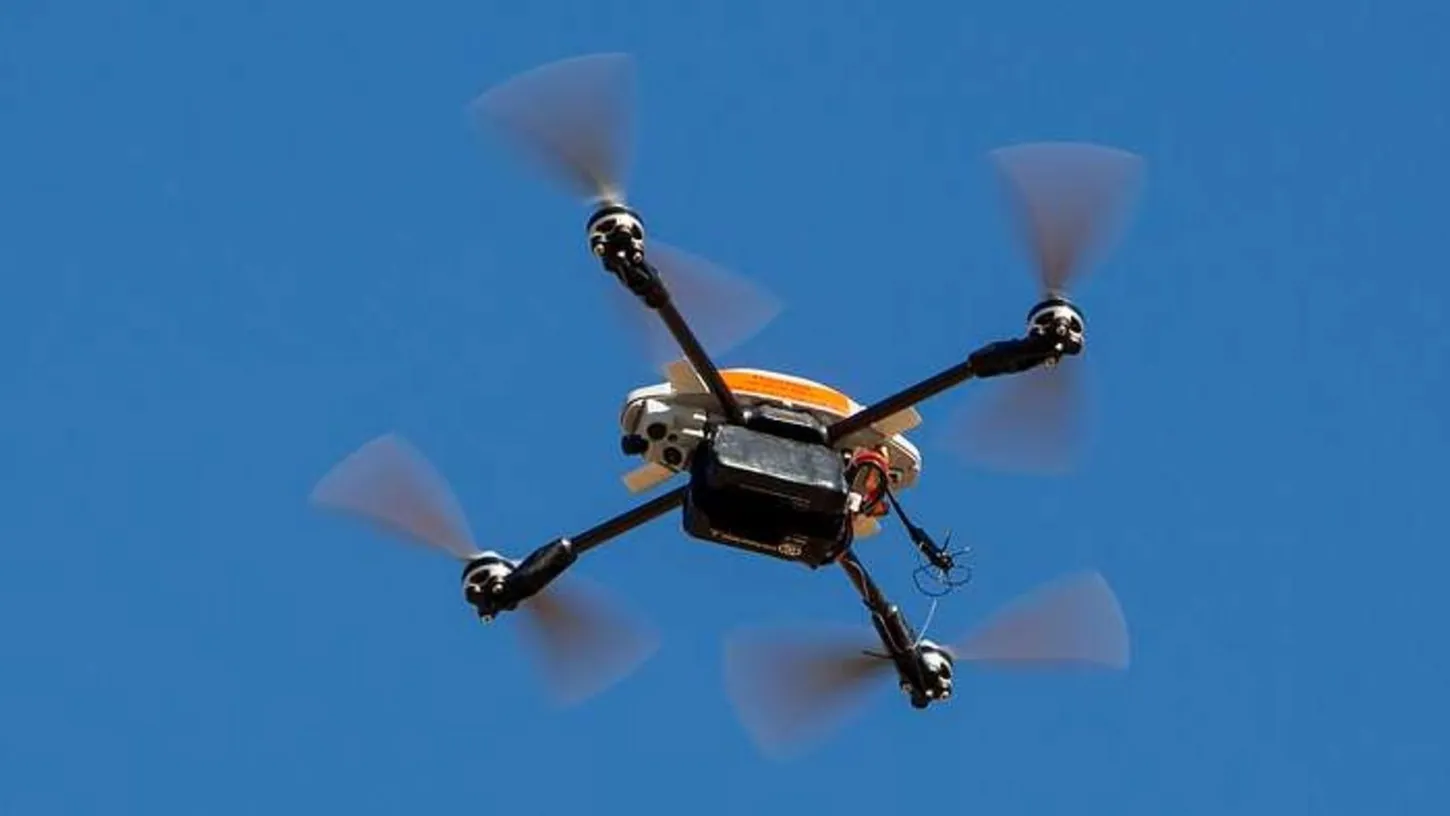
A US Marine Corps logistics battalion at Camp Pendleton, California, bought 20 OperatorXR virtual reality sets in 2025 for $200,000 to teach its Marines and sailors to hunt down hostile drones. Since July, the same headsets have also run suicide prevention training, and about 350 Marines had been through it by mid-October.
The buyer was 1st Marine Logistics Group’s Headquarters and Service Battalion. Its executive officer, Maj. Paul Kim, wants at least 1,000 Marines through the suicide prevention module this year.
The trainees in the drone scenarios include supply administrators, and the course is run by a logistics group, not an infantry unit.
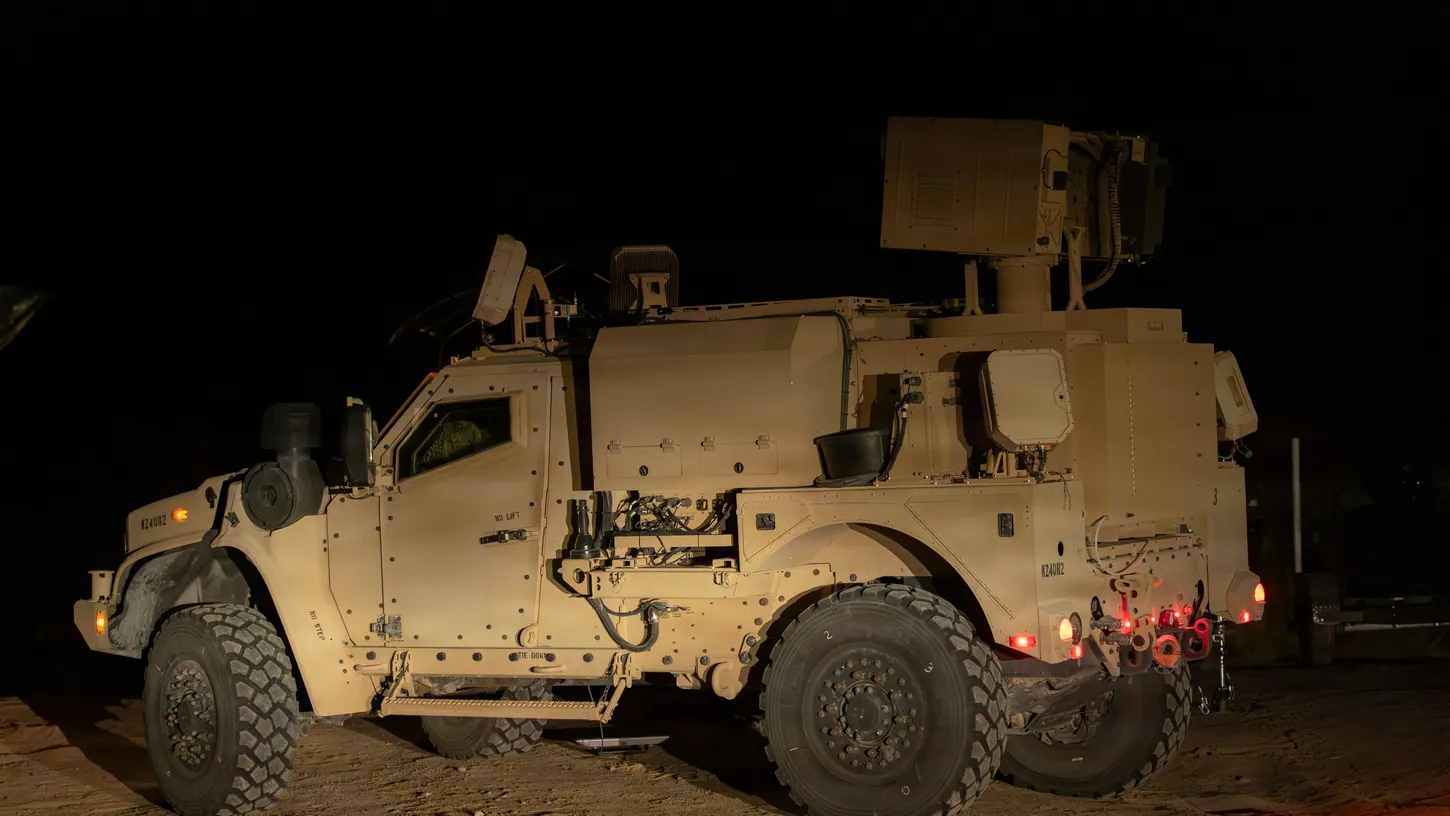
Marine Logistics Units Train Against Drones Because They Are the Priority Target
Logistics units are the enemy’s first target when Marines move forward, Lt. Col. Gloria Luedtke, the H&S Battalion commander, told USNI News. Her battalion’s Combat Skills Training School started a Counter-sUAS Course this year. Any 1st MLG or I Marine Expeditionary Force (I MEF) unit can send Marines to it.
“Logistics is always the number one target,” Luedtke said. The course has its own outdoor range at Camp Pendleton and teaches Marines to detect and defeat small drones, and to hide from them. The VR purchase came during a modernization push that Brig. Gen. Omar Randall started across 1st MLG in 2025.
OperatorXR’s Interceptor Kit Rebuilds Ukraine-Style Drone Fights Indoors
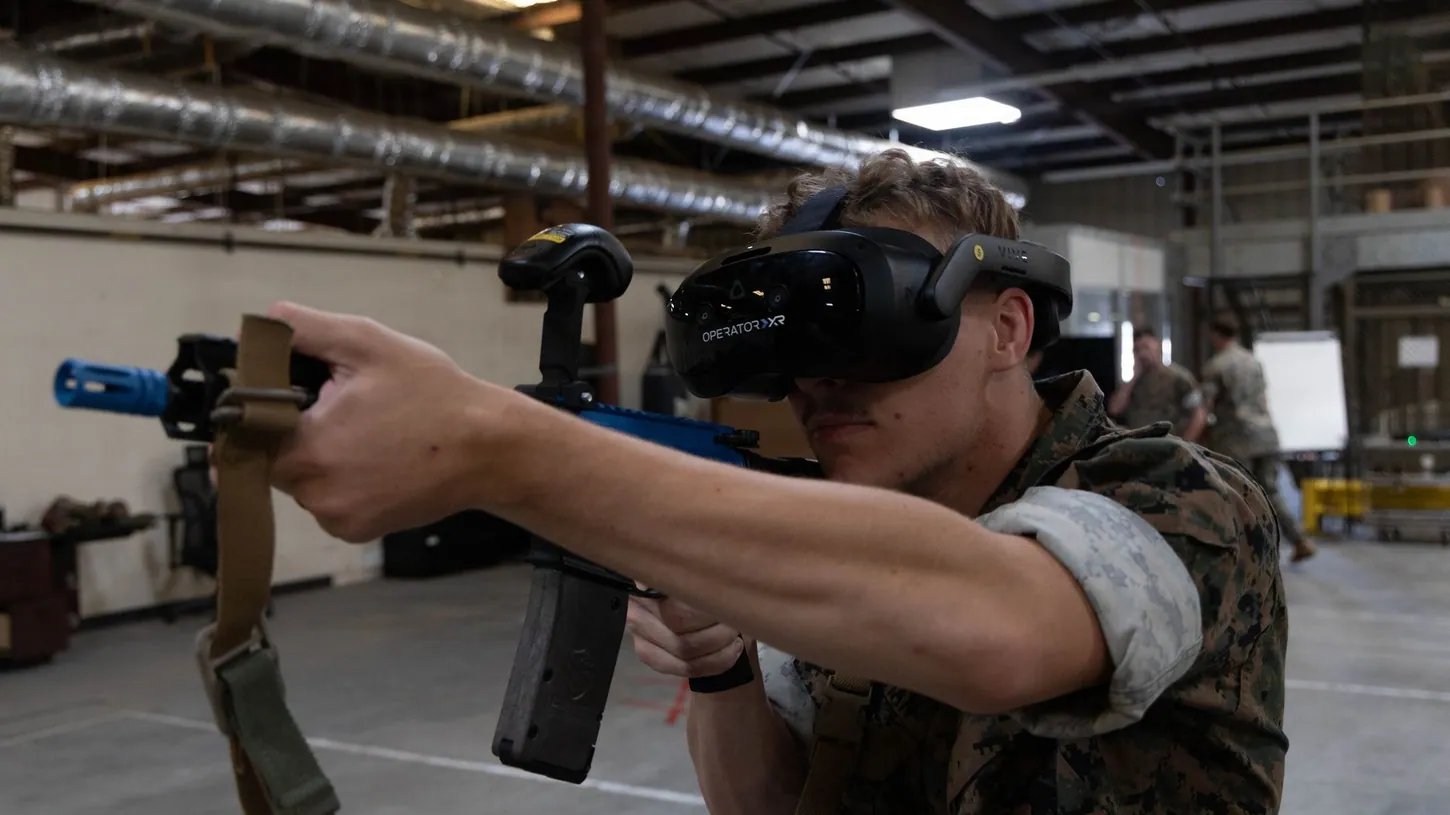
OperatorXR’s OP-2 Interceptor counter-drone kit fits in a portable hardened case and turns an office, warehouse, gym or ship’s hangar bay into a virtual battlefield. Marines and OperatorXR contractors build its scenarios from news headlines and after-action reports out of Ukraine and the Middle East, running training modules from Moth+Flame.
Trainees carry tracked stand-ins for their issued rifle or pistol, and the software lays trenches, bunkers, camouflage netting and trees over the real room. Two or more Marines can work a scenario as a fire team or squad, finding and shooting down drones while fending off enemy fighters. The headsets in the Marine Corps’ own photos are HTC Vive units with OperatorXR branding on the faceplate. The Marine Corps says the setup lets Marines rehearse drone threats that are not practical to recreate in live-fire training.
Kim said Marines are placed in a war-torn Ukrainian setting where they hide around corners and shoot down drones. “My heart rate is going up. I’m scared to go around the corner,” he said of training in it. Cpl. Nicholas Muldrow, a supply administrator, compared it to skeet shooting and said an instructor taught him that a drone can fly up and then come straight down at you. The next scenarios add chemical, biological, radiological and nuclear threats.
OperatorXR says more than 120 law enforcement and military agencies train on its OP-2 system.
The Same Headsets Have Trained 350 Marines in Suicide Prevention
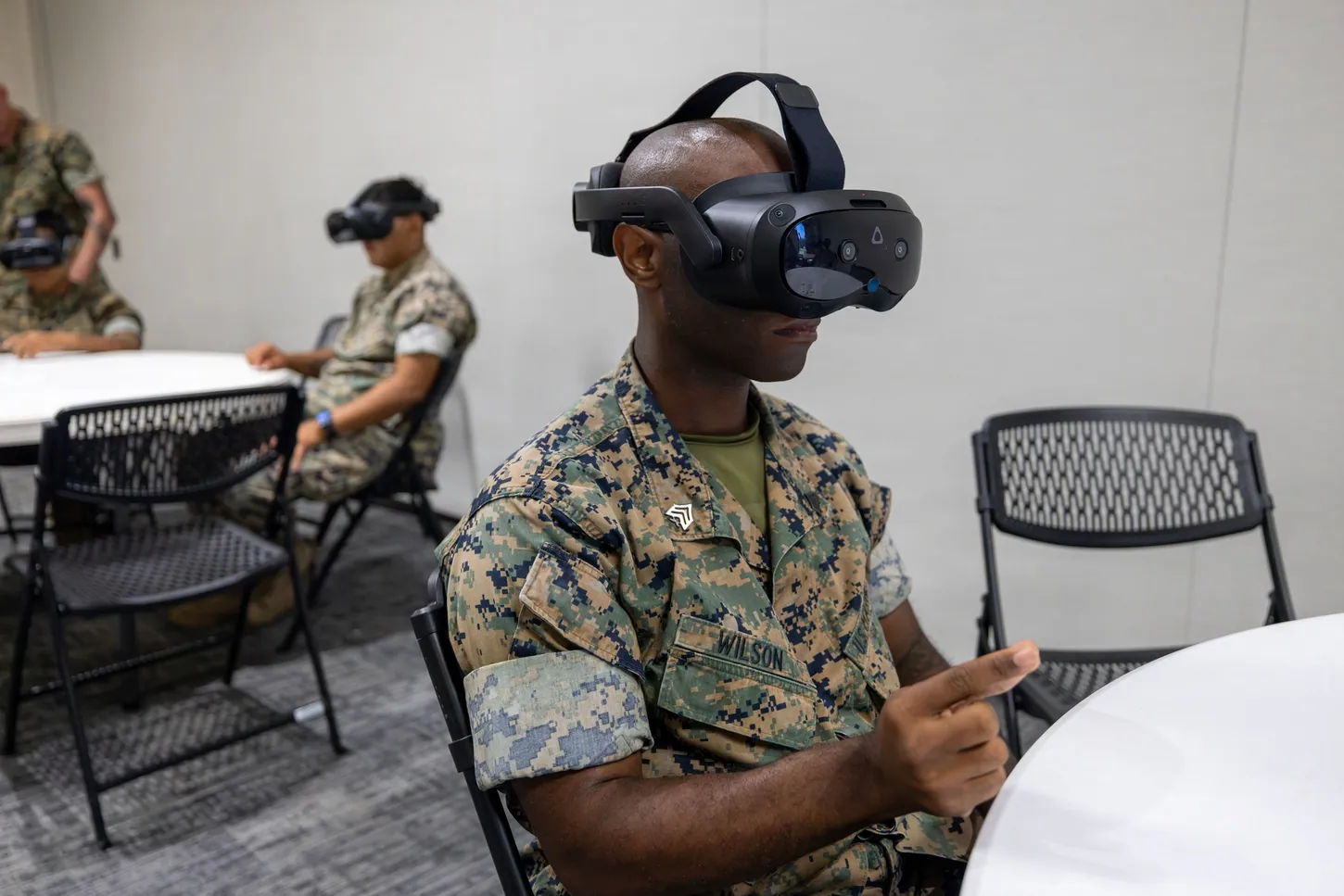
H&S Battalion added a second Moth+Flame module, for suicide prevention, in July during two training days of its Small Unit Leaders Course. The trainee talks out loud to an AI-driven Marine in crisis. The headset microphone picks up every word, and the avatar reacts to what it hears.
At each turn the software offers several responses, and one of them is the preferred answer for getting the Marine to accept help. Depending on the choices, the conversation can escalate into serious concern over self-harm, and the avatar can turn agitated and curse at the trainee. One scenario makes the trainee the roommate of a lance corporal who is despondent over a failed relationship and punishment by his unit. Each session ends with a feedback review that students can later discuss with instructors. The headset comes last: Marines first get classroom work on emotional intelligence, hard conversations, coaching and counseling.
The idea came from Kim. He saw an OperatorXR headset demonstrated while teaching leadership and ethics at the US Naval Academy’s Stockdale Center, and he knew Marine Corps Special Operations Command already used the system. Interest has run ahead of his plan, so he is raising the goal and extending the module to Corporal’s Courses and Lance Corporal Seminars around I MEF.
A demonstration at a Camp Pendleton commanders’ conference drew a lukewarm response from senior leaders, Luedtke said, but units asked for the system once the conference ended. Students describe the conversations as harder than they expected. “I definitely questioned myself a lot more than I thought,” said 2nd Lt. Rylee Rives, a logistics officer with Combat Logistics Battalion 5.
DroneXL’s Take
Most of the Marine drone training DroneXL has covered this year was for specialists. The Corps’ service-wide small drone training framework in January is about building drone operators, and the 24th MEU spent three weeks on FPV attack drones in May. In March, Marines in South Korea shot down target drones with Stinger missiles. This program puts supply administrators in a warehouse with a drone diving at them. My read is that Luedtke has the order right. If logistics is the enemy’s first target, the Marines in logistics need the repetitions first, and a VR kit gives them a diving drone that a live-fire range can’t practically recreate. At $10,000 a set, I’d want one in every support battalion in the Corps.
If you or someone you know is struggling, call 988 and press 1, or text 838255, to reach the Veterans Crisis Line, which also serves active-duty service members.
Sources: USNI News, DVIDS (U.S. Marine Corps), OperatorXR
DroneXL uses automated tools to support research and source retrieval. All reporting and editorial perspectives are by Haye Kesteloo. Read our editorial standards.