Stanford University held its first drone hackathon over the weekend of November 6 to 8. About 100 students from 28 universities had 48 hours to write software that flies a quadcopter through an indoor obstacle course on its own, with no GPS.
A five-person team called Fat Kestrel won the $7,000 top prize at Horizons DroneHacks 2026, the Stanford Daily reported on November 19. Four of its members are sophomores at the University of Texas at Austin and the fifth is a Stanford master’s student.
Every team received the same drone and the same simulator on Friday evening. Fat Kestrel’s drone did not make it halfway across the real course until about 5 a.m. on Sunday.
Every Team Flew the Same Pixhawk and Orin Nano Kit, So Only Software Counted
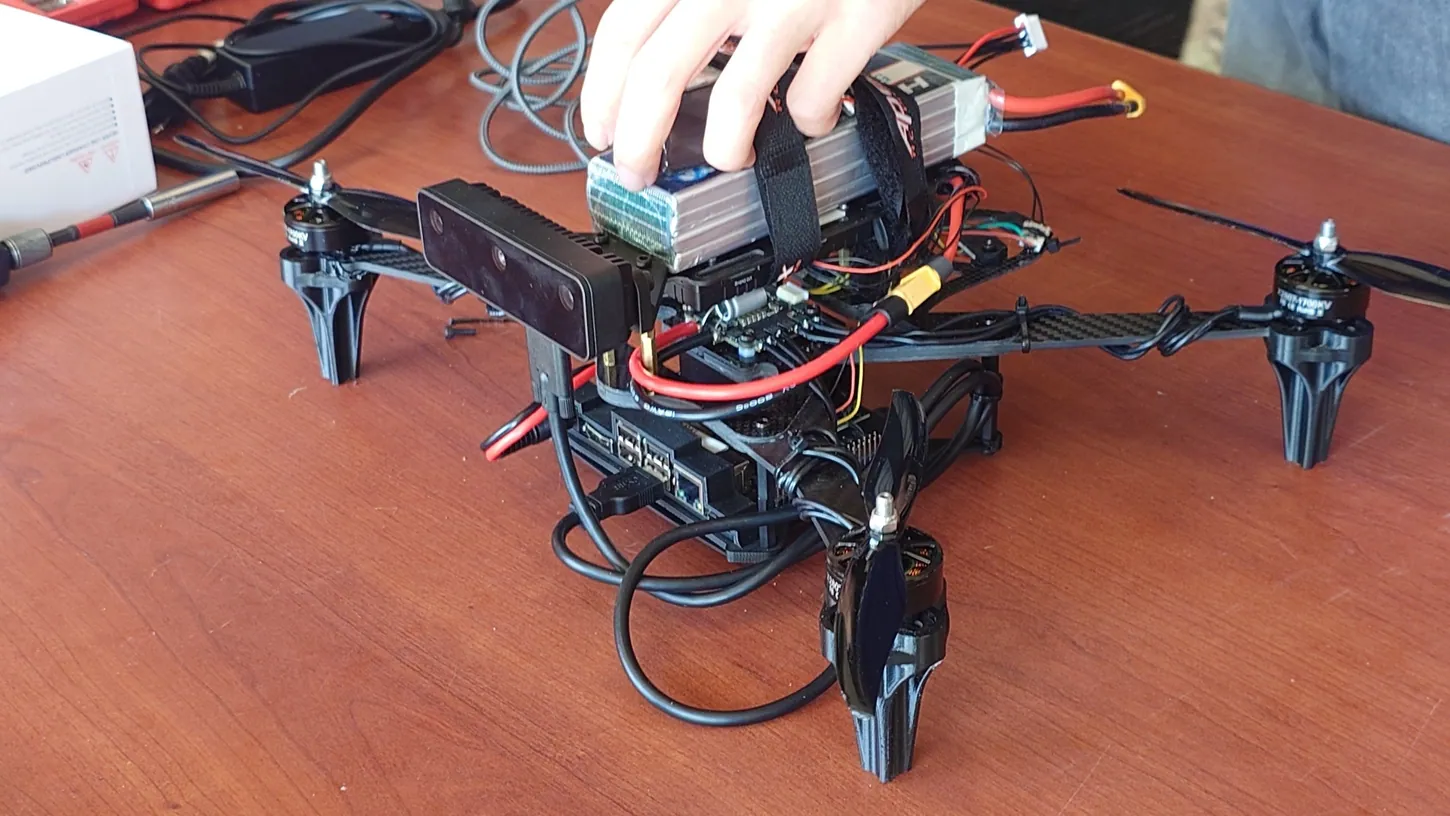
The student organizers built 25 identical 7-inch quadcopters, each carrying a Pixhawk 6C flight controller, a Luxonis OAK-D depth camera and an NVIDIA Orin Nano companion computer. Teams could not win on hardware. They competed on the perception and navigation code they wrote for it.
Flight testing ran inside a netted cage with plywood obstacles on a red mat, according to the Dronecode Foundation’s recap of the event. Dronecode is the Linux Foundation project behind the open-source PX4 autopilot, and it sent two mentors. They steered teams to PX4 and ROS tools that already exist so the weekend went to the autonomy problem. The organizers counted more than 200 test flights.
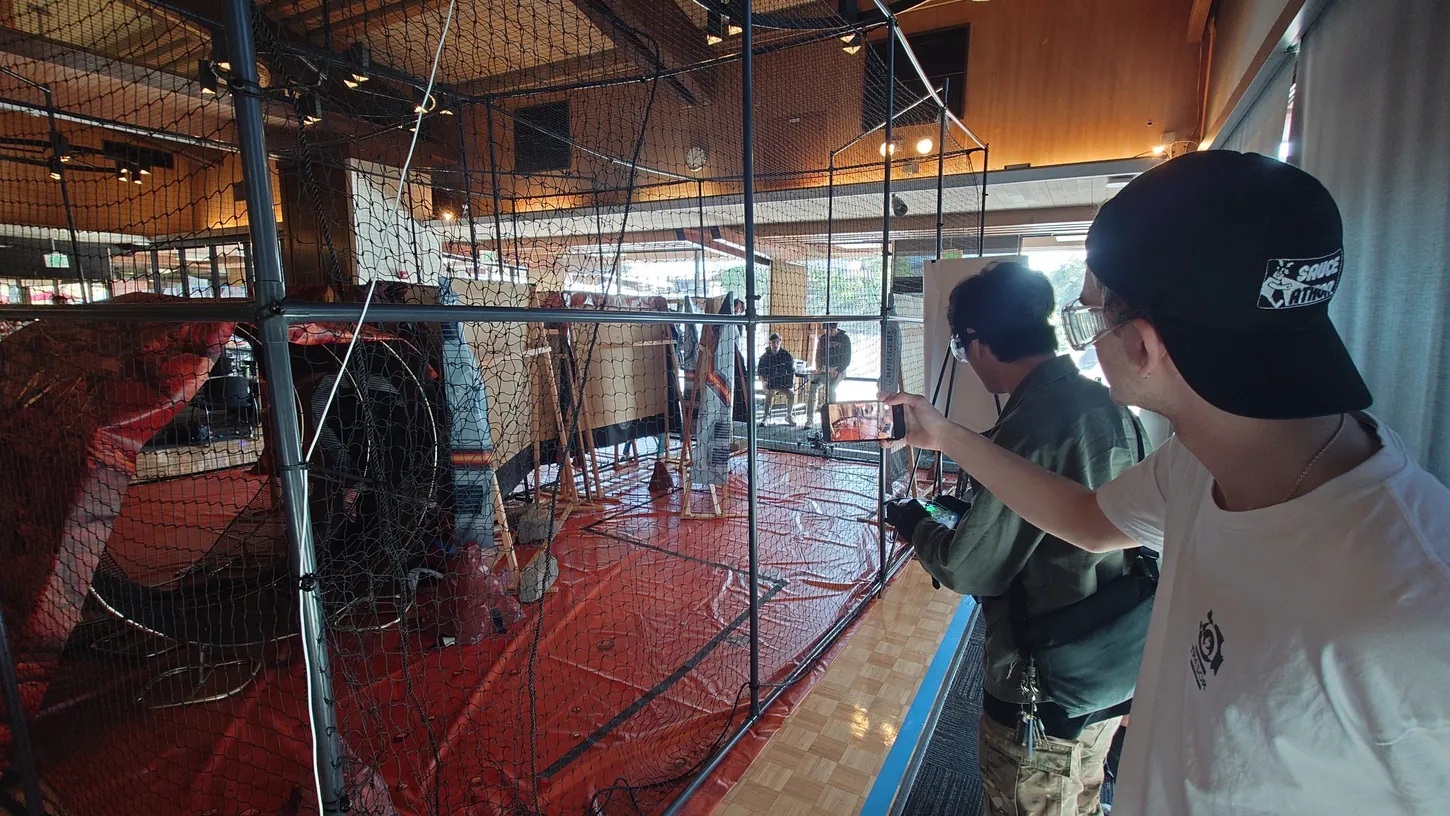
The DroneHacks prize rules put 60% of a team’s score on its run through the course and 40% with the judges, who graded a technical presentation and how general the autonomy was. The Stanford Daily reports the course had five checkpoints, with a 25% bonus for a drone that flew back to the start.
The event was first planned for the spring. Artash Nath, the event’s founder and director, told the paper the team moved it to the fall for safety reasons.
Simulator Code Kept Failing in the Cage Until Sunday Morning
Fat Kestrel took the $7,000 Rothberg Catalyzer Award after its last flight crossed the whole course and returned to the start, the Stanford Daily reported. The team is UT Austin sophomores Asteya Laxmanan, Matthew Zhang, Robert Schnurr and Anshul Mistry and Stanford master’s student Nathaniel Asaik.
Zhang spent Friday night into Saturday morning running the team’s software in the simulator, the paper reports.
Fat Kestrel was not the first to finish the course. That was a team named Multi-Agentic B2B N2N DAS, whose Stanford member Jeremy Hsieh described a gap between simulation and real flight that “pretty much all teams, including us, very much struggled with.”
The organizers had planned to close the cage at 2 a.m. They kept it open until 6:30 a.m. so every team could practice on the real course. Second place paid $3,000 and third $2,000, out of $15,000 in total awards.
Skydio, Anduril, Neros and Boeing Backed an Event Its Director Calls Non-Recruiting
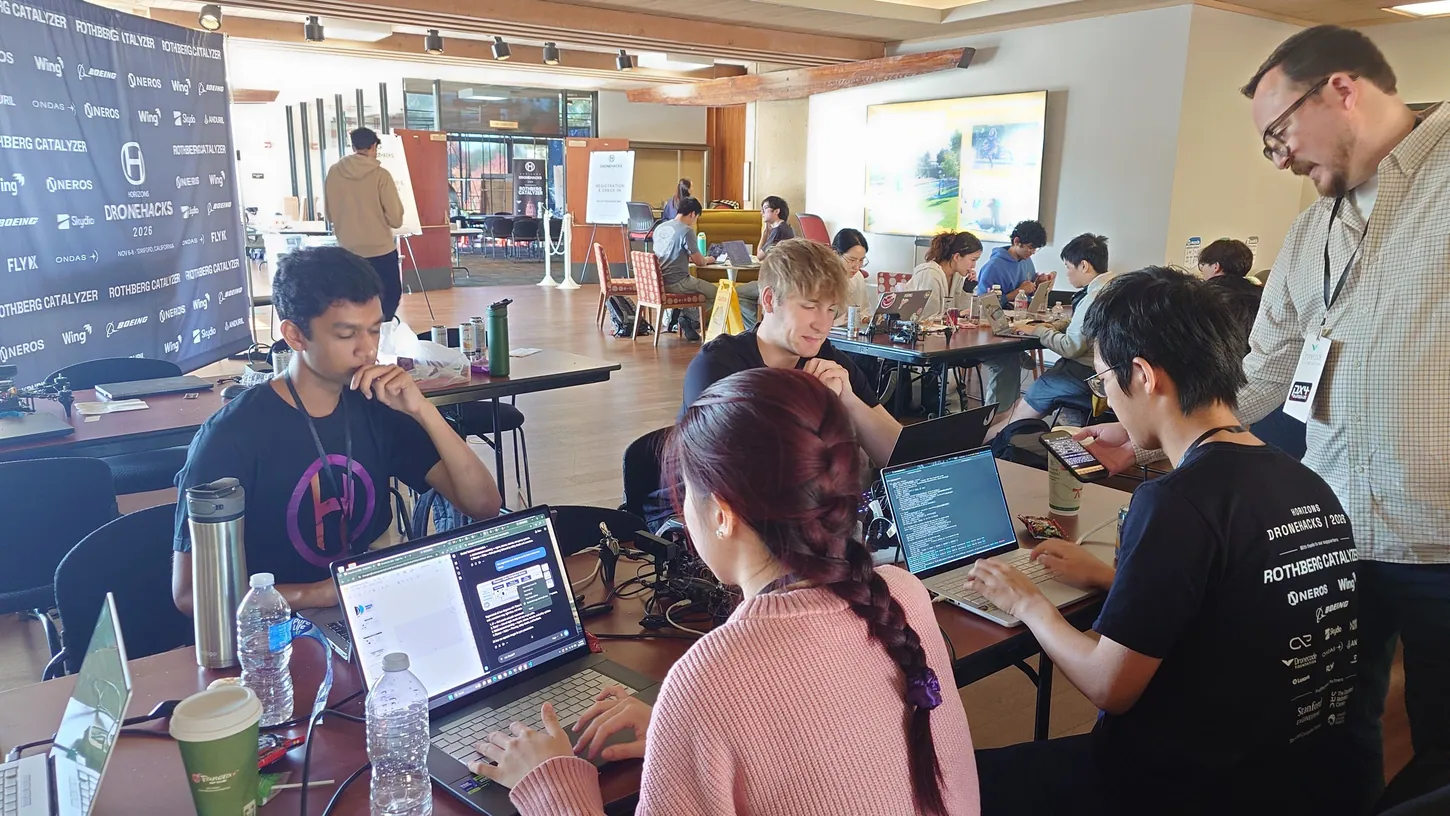
The Rothberg Catalyzer was the founding donor. The DroneHacks donors page also shows Wing, Neros, Boeing, Skydio, Anduril, CX2, Ondas, Perennial Autonomy and Dronecode. Nath told the Stanford Daily the event was non-recruiting, and that the companies were there because their engineers could best mentor the students.
Farzad Rahbar, co-founder of sponsor FlyX Technologies, told the paper he came to connect with the community and give back, in money or in experience. He added: “I’m always looking for talent.”
The sponsors have reasons to care about GPS-denied flight. Neros raised $250 million in August and has promised a million drones a year by 2028. A U.S. Special Operations Command acquisition office told industry in May to expect no GPS in future fights. Anduril brought one of its drones to show the students, with a fake battery fitted.
Keynote speaker Noah Rothberg, whom the Stanford Daily identifies as a trustee of the Rothberg Foundation, told the students about a friend wounded on a battlefield last year in an incident that killed four of the friend’s teammates. He said “better technology could be the difference between life and death.”
Travel was paid for every accepted participant. Nath told the paper what he wants next: “We want Stanford to be a drone center.”
DroneXL’s Take
I don’t much care whether DroneHacks calls itself a recruiting event. Somebody has to write the software that flies all those Neros drones when GPS is jammed. The students who spent a weekend finding out that simulator code breaks in a real cage are the people these companies need, so a sponsor who says he is looking for talent is good news for them. I also like that the mentors pushed teams onto open-source PX4 and ROS, because it meant 48 hours went to autonomy and not to rebuilding a flight stack. The organizers paid the travel and got 28 schools into one room. American drone companies should fund more weekends like this one, at more schools than Stanford.
Sources: The Stanford Daily, Dronecode Foundation, Horizons DroneHacks
DroneXL uses automated tools to support research and source retrieval. All reporting and editorial perspectives are by Haye Kesteloo. Read our editorial standards.
Advertise with DroneXLYour company hereReach 200,000+ drone readers a month with a sponsored article, a banner on your beat, or a partnership.See the options →