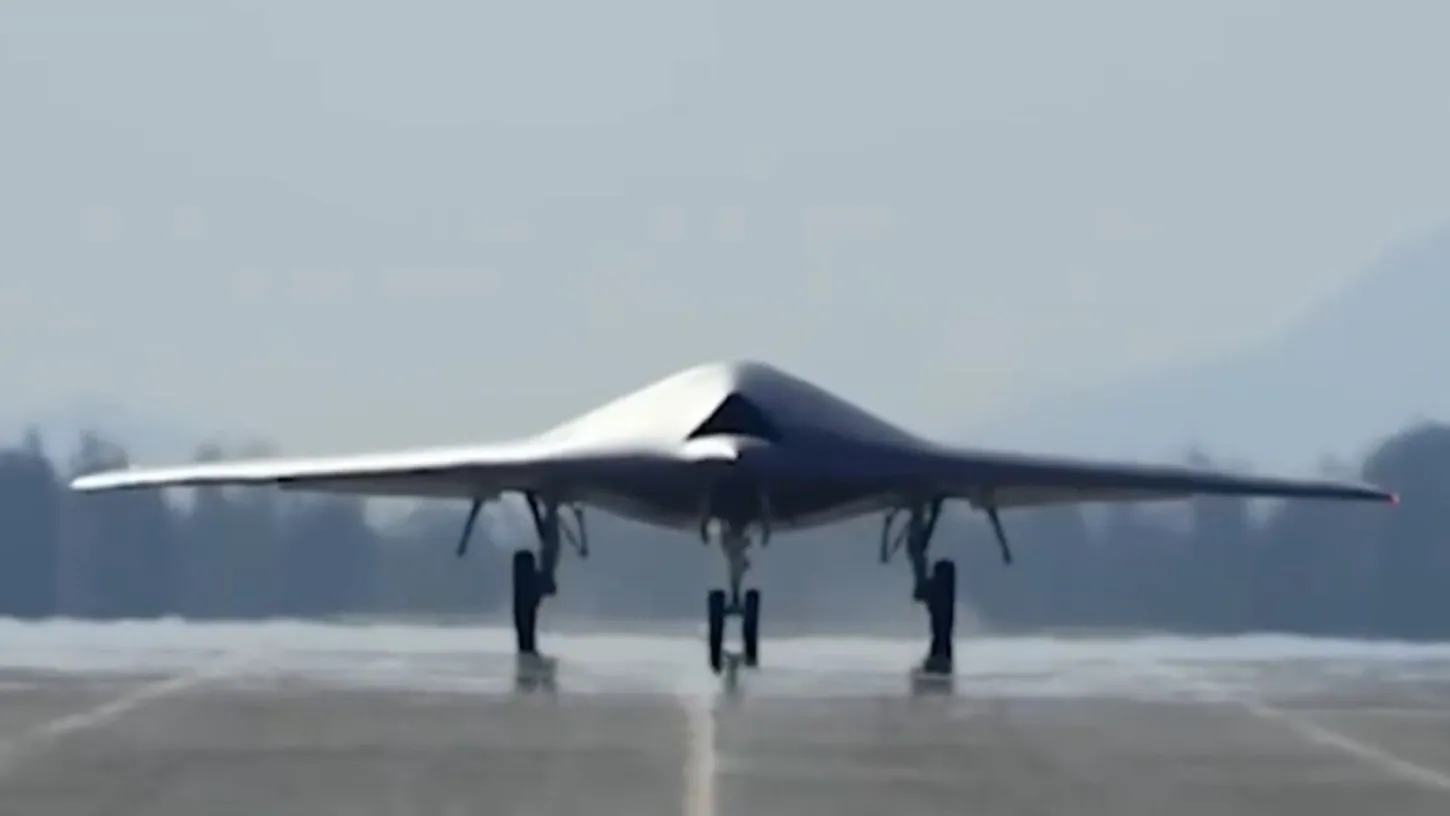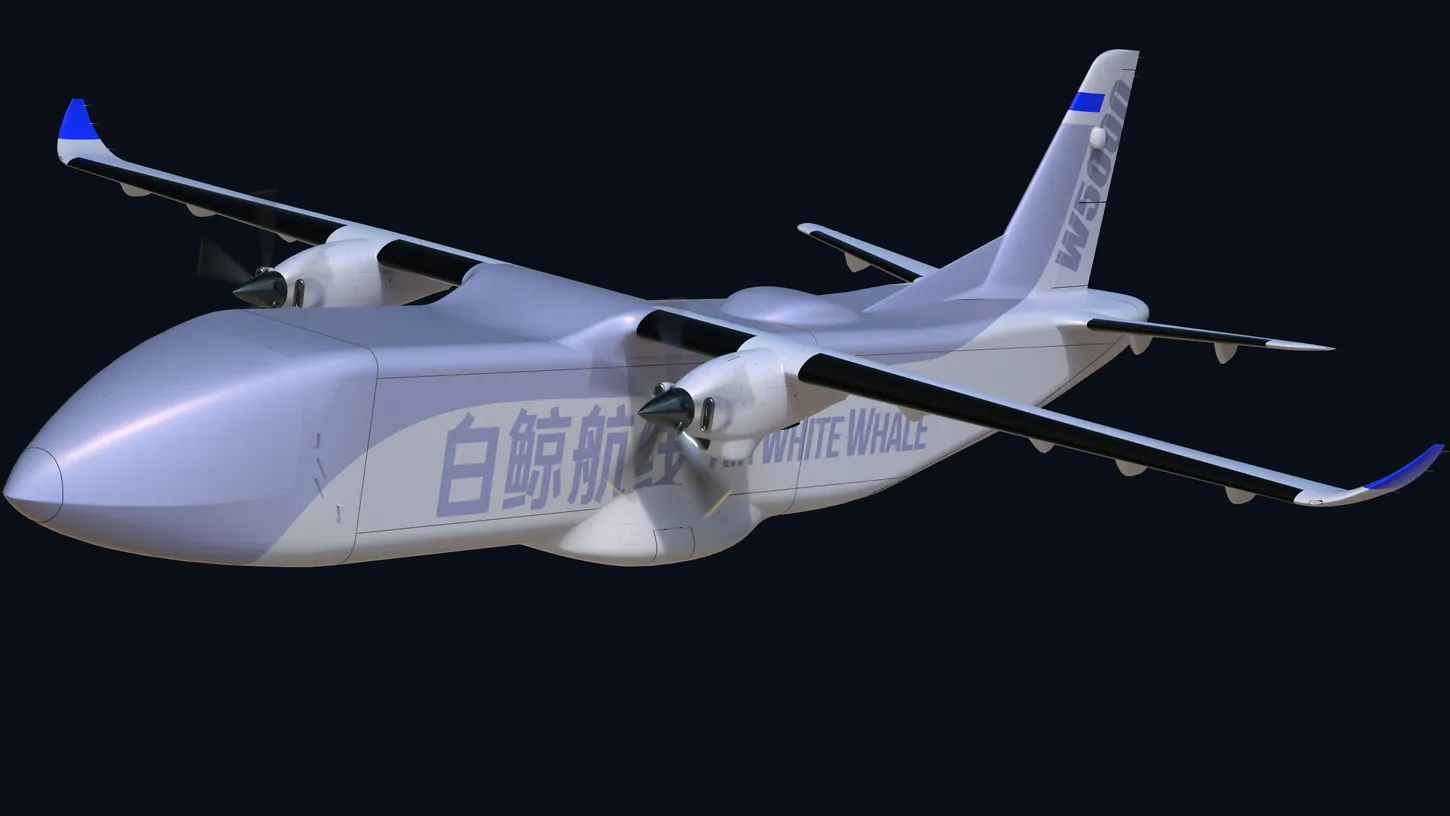
China’s Air White Whale flew its W5000 uncrewed cargo aircraft for the first time on November 14, a 30-minute test flight from the general aviation airport at Otog Front Banner in Inner Mongolia. The twin-turboprop freighter is built to carry 5 metric tons (11,023 pounds) and is billed as the world’s largest uncrewed cargo aircraft.
The official news account of Changzhou, the city where the aircraft is built, announced the flight. The announcement puts the order book at 835 intent orders and commercial service at the end of 2027.
When the first W5000 rolled out in October 2024, the company expected first deliveries in the second half of 2026. The aircraft made its first flight with about seven weeks of 2026 left.
The W5000 Flew For 30 Minutes And Lost A Year
Air White Whale now targets commercial service by the end of 2027, at least a year after the first deliveries it expected when the aircraft rolled out on October 18, 2024. The first flight came almost 25 months after that rollout and was a basic handling test at low altitude.
The Changzhou account of the flight gives the profile. The W5000 took off at full thrust with 8 degrees of flap and its landing gear down, and it left the runway after about 1,970 feet (600 meters). It climbed at 984 feet per minute (5 meters per second) and an indicated 137 mph (220 km/h) to 3,281 feet (1,000 meters) above the field. It flew four turns at about 20 degrees of bank, descended to 1,640 feet (500 meters) and landed off a 3-degree approach.
The company calls it a technical verification flight. It checked handling stability and whether the engines, flight controls, avionics and ground control station worked together. Changzhou says airworthiness certification work is moving ahead and gives no date for it.
Five Tons And 1,616 Miles Are Two Separate Maximums
The W5000 has a maximum takeoff weight of 10.8 metric tons (23,810 pounds) and a 5-ton maximum payload. Its cargo hold is larger than 2,295 cubic feet (65 cubic meters) and its maximum range is 1,616 miles (2,600 km). The flight announcement lists payload and range as separate maximums.
Nothing in the announcement says how far the aircraft flies with 5 tons on board. Every freighter trades fuel against cargo, so the full-load range will be shorter than 1,616 miles, and Air White Whale has not published that number with the flight.
The aircraft is 75 feet (22.89 meters) long with a 74.5-foot (22.7-meter) wingspan. The War Zone noted in 2024 that its payload sits just under the 5,500 kg (12,125 pounds) of the Xi’an Y-7, the twin turboprop that is still China’s main mid-size military transport. The W5000 is a civil program aimed at logistics companies, but a pilotless aircraft in the Y-7’s class has an obvious second customer.
The cost claim keeps growing. Reports from the 2024 rollout put the saving at 40% per ton-kilometer against a crewed freighter of the same class, and Air White Whale’s own website says 43%. Founder and chief executive Hu Zhendong said after the flight that it is at least 60%, because there is no crew to pay and no cockpit to carry. No W5000 has carried paying cargo yet, so none of the three figures has been tested.
Hu said all 220,000 parts are made in China, including the turboprop engines and the carbon-fiber composite airframe. Intent orders are not purchase contracts, and the announcement names no customers.
The US Air Force Has No Cargo Drone Program Of Record
The autonomous cargo aircraft that have flown in US Air Force exercises are converted Cessna Caravans, single-engine utility planes that carry roughly a third of the W5000’s load. Chief of Staff Gen. Kenneth Wilsbach said in September that the service is looking at demonstrators and has not started a program.
“No program of record just yet,” Wilsbach told reporters at the Air & Space Forces Association conference, according to Air & Space Forces Magazine. He said cargo drones could be valuable at Pacific ranges and that the service is evaluating several options.
The Caravan is small on purpose. The companies converting it told the magazine it is a proven airframe that exists in large numbers, and that it suits the short hops and small loads a 40,000-pound-payload C-130 handles inefficiently. Reliable Robotics has a $17.4 million Air Force deal for a yearlong test of a Caravan that carries about 3,600 pounds, and it was targeting the start of fiscal 2027, which began October 1. Joby’s Air Force autonomy work, now worth nearly $37 million, also flies a Caravan, and it flew its exercise hours with a safety pilot on board.
The one purpose-built design with Air Force money behind it is Grid Aero’s Lifter-Lite, pitched at 1,000 to 8,000 pounds. It had not flown as of early October. China’s civil programs are flying: AVIC’s HH-200 made its first flight in April with a 1.5-ton payload, and the W5000 more than triples that.
DroneXL’s Take
Air White Whale’s numbers deserve more doubt than its aircraft does. A 60% cost saving with no revenue flight behind it is a sales figure, and a first flight that took off with the gear down proves the airplane flies and little else.
But it is a real 10.8-ton airplane, designed without a cockpit, and it flew. The United States has nothing like it in the air. American autonomy software works, because Reliable Robotics flew a Caravan with nobody on board in 2023. The Air Force has put seed money into one purpose-built freighter, and nothing in the W5000’s class has an American buyer, so the software keeps going into a utility airplane Cessna first flew in 1982.
The House Armed Services Committee has asked the Air Force for a briefing on cargo drones, with a proposed timeline for an acquisition strategy, in its version of the 2027 defense bill. I would look to that briefing for the first sign of a program of record. Air White Whale is late and its claims are untested, and it is still ahead of everyone in the US.
Sources: Changzhou municipal government, Xinhua Daily, Air White Whale, Air & Space Forces Magazine, The War Zone, Gulf News, SOFX
DroneXL uses automated tools to support research and source retrieval. All reporting and editorial perspectives are by Haye Kesteloo. Read our editorial standards.