
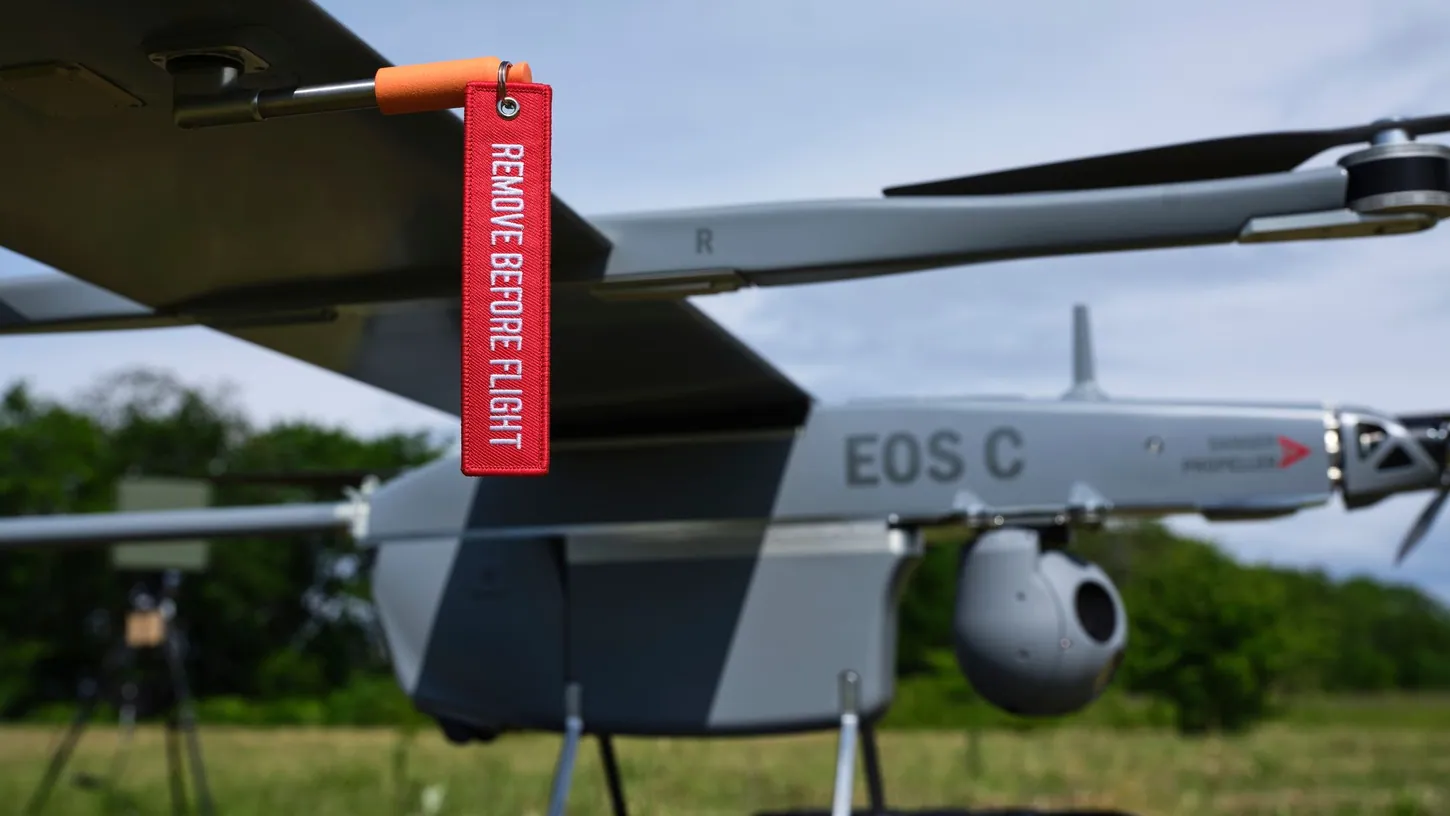
Estonia says Russia’s military intelligence service, the GRU, ordered an attack on drone maker Threod Systems. At 3:06 a.m. on Saturday, November 14, someone tried to set fire to the company’s building in Viimsi, just north of Tallinn, and cause an explosion, Estonia’s Internal Security Service says. The attempt failed. Prosecutors say nobody was hurt and the company suffered no serious damage, and eight people have been detained.
Estonia answered the next day. Foreign Minister Margus Tsahkna said on Sunday that every border crossing between Estonia and Russia will close as of December 1.
Moscow’s only reported answer so far is about the border. Foreign Ministry spokeswoman Maria Zakharova told the state news agency TASS that Russia would check whether Estonia really plans to close it. Estonia’s ministers cite evidence of the GRU’s role in their posts, and they have not shown it.
Eight Latvian Residents Were Detained After A Guard Stopped The Attack
Estonia’s Internal Security Service, known as KAPO, and the Police and Border Guard Board detained eight people over the attack, all of them residents of Latvia, chief state prosecutor Astrid Asi said on Sunday. A security guard and the company’s own security measures stopped the attempt.
The aim, Asi said in remarks carried by Estonian media, was to break the building’s windows, pour in flammable liquid, set it alight and cause an explosion. The eight are suspects in an open criminal investigation.
KAPO put the outline on the record itself, in a post on X that carries a warning to anyone tempted by the same work: “We advise against even considering such job offers from Russia.” I read that line as KAPO treating this as paid work offered to outsiders, which is the pattern European investigators have described in other sabotage cases this year. KAPO has not said how the eight suspects came to be involved.
Prime Minister Kristen Michal called it a GRU-ordered sabotage attempt and credited tighter security and a fast police response for the limited damage. “We will not be intimidated,” he wrote.
Threod Says Its Launchers Send Ukraine’s Strike Drones Toward Russia
Threod Systems, founded in 2012, builds Eos reconnaissance drones, eOpic camera gimbals and Cata pneumatic launchers. The company says its systems are in use in 32 countries, 18 of them NATO members, and that its drones have flown in Ukraine since 2017.
The launchers are the product I’d expect Moscow to notice most. Threod’s chief commercial officer told Defense News in September 2025 that Ukrainian forces use Cata launchers to send long-range strike drones on their way, and that they had been fielded in large numbers since 2022. The Eos C does the quieter work. It is an electric vertical-takeoff aircraft with a 31-mile (50 km) radio link range and three hours of endurance. Threod told Breaking Defense in March that several dozen of its drones fly reconnaissance and guide artillery fire in Ukraine.
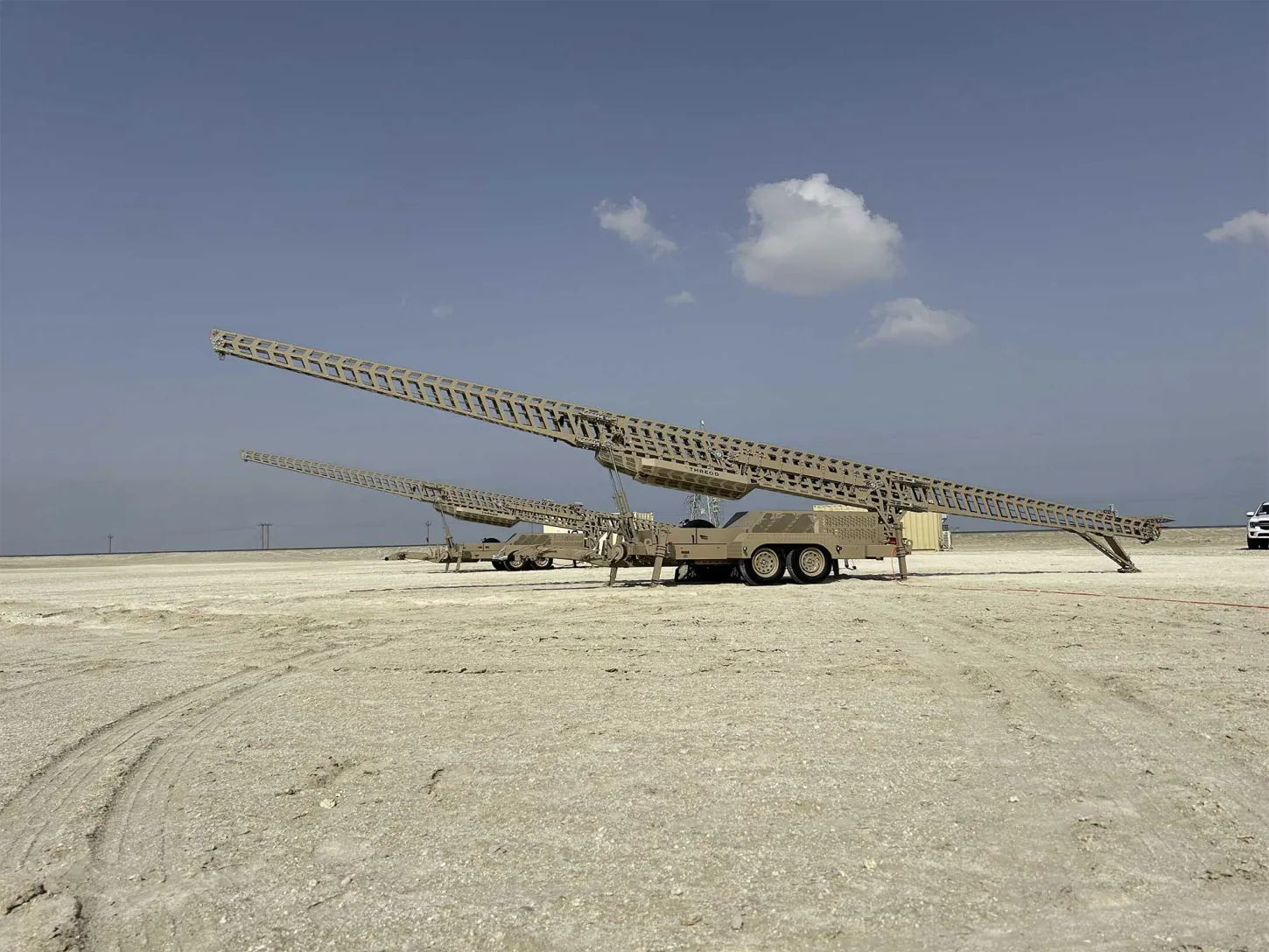
The company has been busy outside Ukraine too. The British Army picked the Cata launcher for its ASGARD one-way attack drone program in March. In mid-October a Cata B on the flight deck of HMS Queen Elizabeth launched the Royal Navy’s first strike drones from an aircraft carrier, and Threod announced its part in that trial on November 11, three days before the attack. In September it signed a memorandum of understanding with Portugal’s Tekever, the drone maker valued at $6.4 billion that month.
DroneXL first wrote about the company in July 2025, when Threod was exploring a sale on the back of 2024 revenue of €38 million (about $44 million).
Estonia Says It Will Close Its Last Three Russian Crossings
Tsahkna announced the closure in a post on X on Sunday, citing what he called clear evidence that the GRU ordered the attack. Three crossing points remain, at Narva in the north and at Luhamaa and Koidula in the south, and Tsahkna says all three will shut on December 1.
“Hostile actions against Estonia come with consequences,” Tsahkna wrote. He said the closure will cut Russia’s room to operate inside Estonia and make sanctions harder to dodge, and that he had already told his Finnish, Latvian and Lithuanian counterparts.
His post went further than his prime minister’s. About two hours earlier Michal had written only that Estonia was preparing for the possibility of closing the border. Tsahkna’s post treats the decision as made.
Zakharova’s answer to TASS, as reported by Euronews, was that Moscow would verify the plan, and that a closure would be another bout of Russophobia. In the remarks Euronews and Breaking Defense quote, she did not address the attack on Threod.
Threod Is The Second Estonian Defense Company Targeted In Three Months
A building used by Milrem Robotics in Tallinn caught fire on the night of August 14 to 15. Milrem makes the THeMIS ground robots Ukraine uses, and on September 29 Estonia’s government said Russian special services had commissioned that fire. Three Latvian citizens were detained in Latvia over that fire.
The Kremlin called the Milrem accusation unfounded. By The Defence Blog’s tally, at least six European defense plants had burned or exploded this year by the time Poland’s ABW opened a sabotage probe into the WB Electronics fire in August. Several of them build for Ukraine. Six days before that fire, Slovak police said they had stopped a planned arson attack on a plant owned by Skyeton, the Ukrainian drone maker that is building a factory in Fayetteville, North Carolina. Two of the three men charged there were Latvian. And in the Leipzig airport case, where an explosive drone landed next to a Ukrainian cargo plane, a US intelligence source told ABC News the device was typical of the GRU.
DroneXL’s Take
When the WB Electronics plant burned in August I wrote that not every fire is Moscow, and I’d write it again. A fire at midnight is a fire until an investigator says otherwise. This one is different, because Estonia has detained eight people and its prime minister and foreign minister have put the GRU’s name on the attack in public. The evidence itself is still not public, though, and eight arrests are not eight convictions. I believe Tallinn, but that is trust in a government with a good record and not proof I have seen.
If I ran a drone company I’d look hard at how the attack failed. Officials credit a guard and the company’s own security measures for stopping it at three in the morning. Threod has a little over 200 people and sits in a village outside Tallinn, and to me that says it had prepared for a night like this one. Skyeton, which Slovak police say was the target of a planned arson, is now setting up in North Carolina, and American firms supply Ukraine too. I think they should assume the list of targets doesn’t end at the Atlantic and spend the money on security now.
Sources: Breaking Defense, Kristen Michal, Kaitsepolitseiamet and Margus Tsahkna on X, Threod Systems, Euronews, The Telegraph, Defense News
DroneXL uses automated tools to support research and source retrieval. All reporting and editorial perspectives are by Haye Kesteloo. Read our editorial standards.


