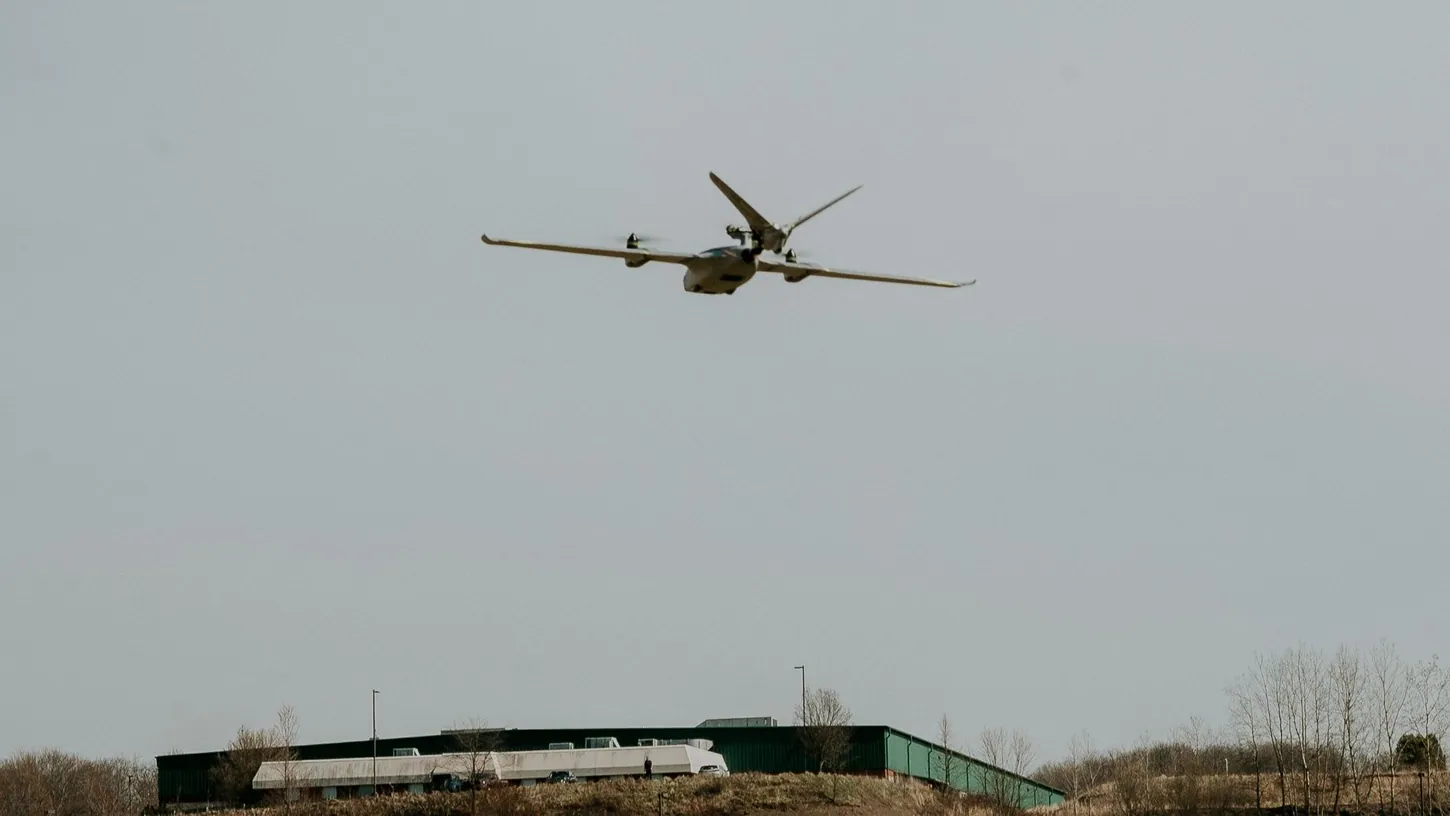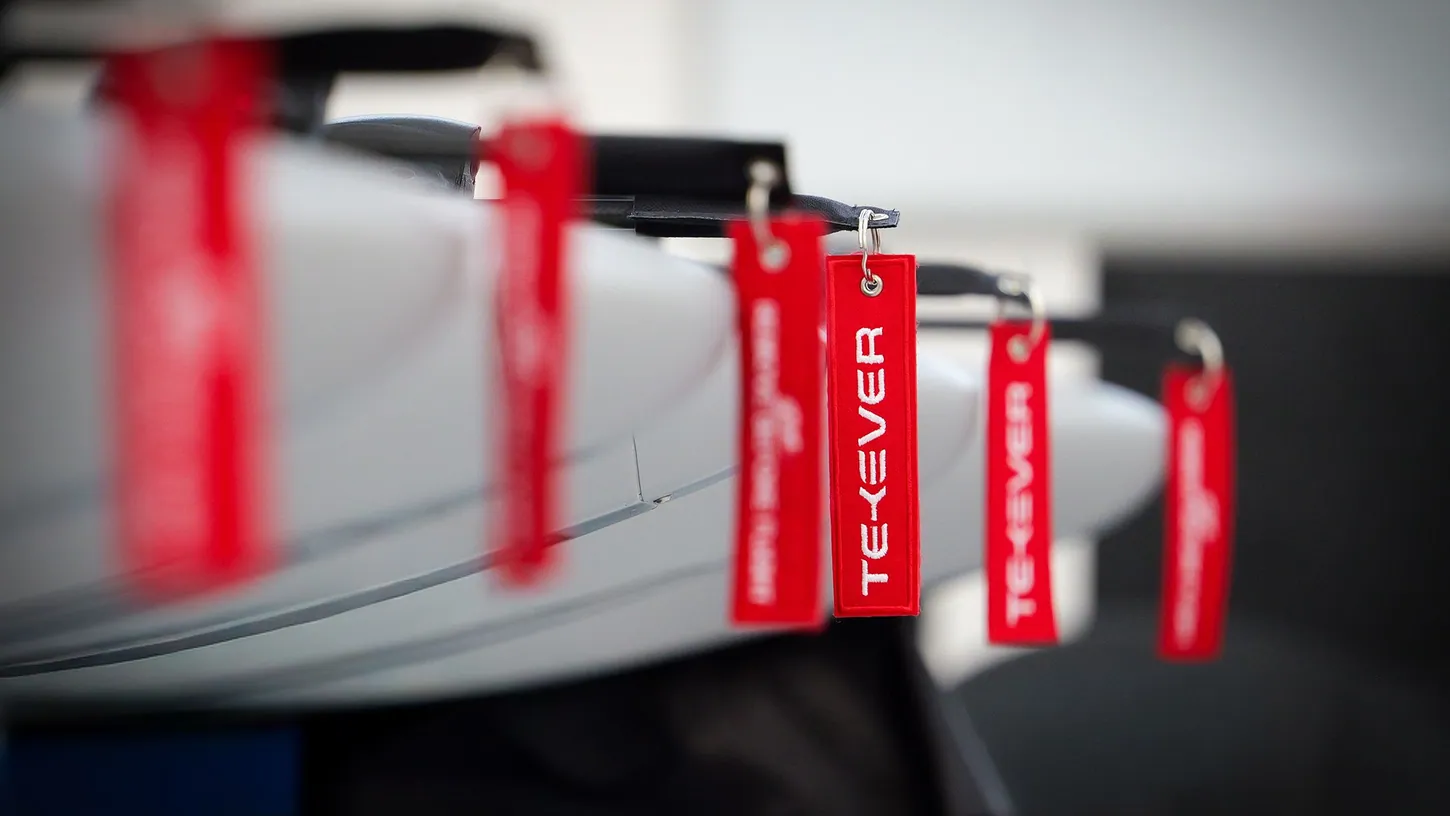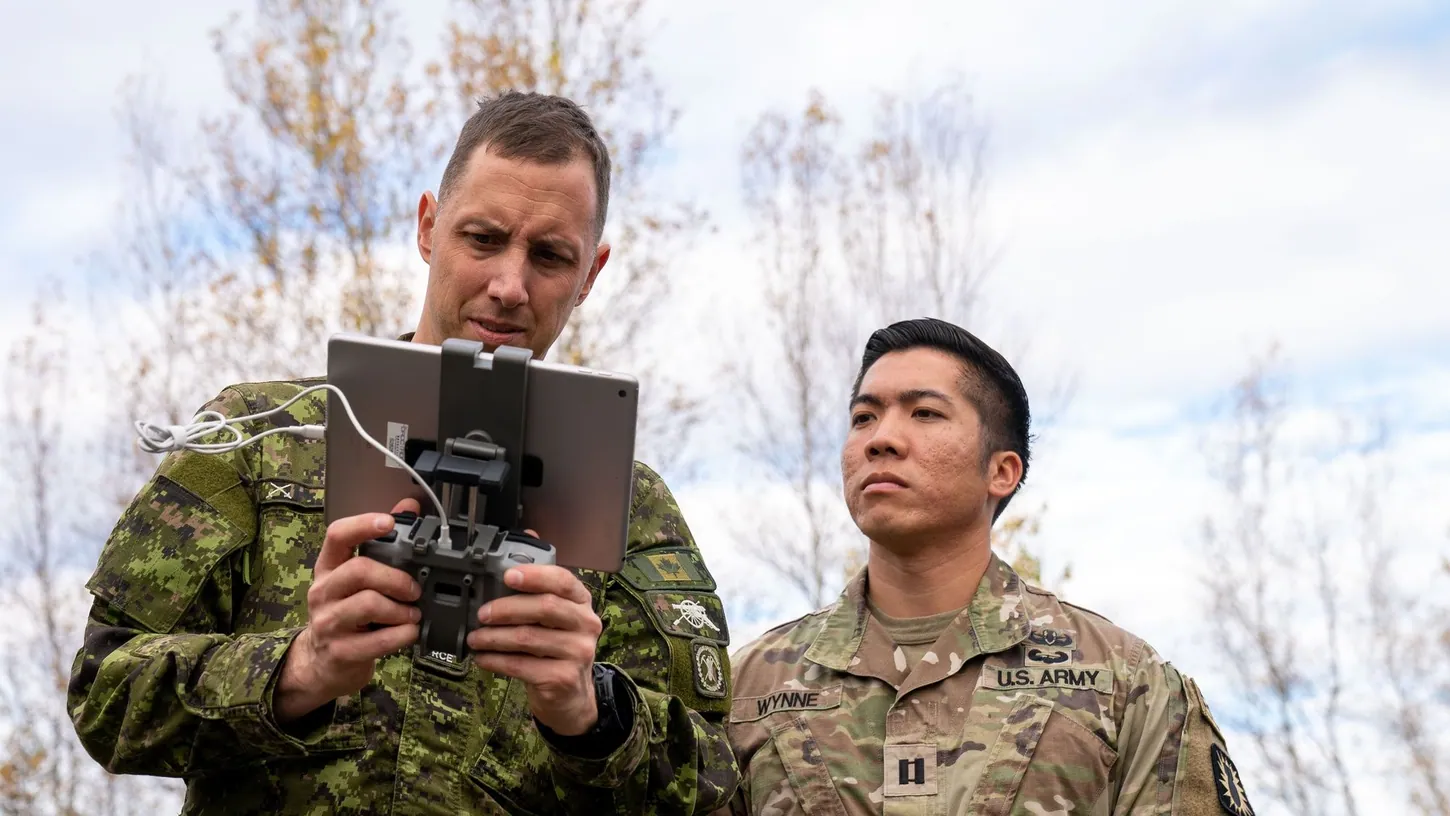
Volatus Aerospace, one of three companies that have announced Government of Canada contracts to supply low-cost reconnaissance drones to the Canadian Armed Forces, will not build its first 100 itself. Chief executive Glen Lynch told the Financial Post, in a story published November 16, that a company based in the United Kingdom is making them.
Volatus has a 53,000-square-foot factory of its own at Montréal-Mirabel International Airport, a project DroneXL has followed since the company announced it in October 2025. It has been operating since June and had its official opening on September 29.
Ottawa’s Defence Industrial Strategy makes Buy Canadian a guiding principle, and the new federal budget proposes C$2.3 billion for military drones. Volatus’s first order under that policy is 100 systems, and a British company is making them.
Volatus Says A UK Builder Keeps It Out Of Fixed Hardware
Volatus will invest in manufacturing the drone at Mirabel if the outsourced first batch succeeds, the Financial Post reported, and Lynch said the model keeps the company nimble. The paper’s story does not name the UK company, and Volatus’s own contract announcement does not say who builds the aircraft.
Lynch presented the arrangement to the Financial Post as a choice. “Hardware, software are temporary. The technology evolves every 30 days,” he said, and he calls Volatus a platform before he calls it a manufacturer. The company had about C$34 million in revenue in 2025 and built its business flying inspection and surveillance work on pipelines and power lines. Lynch also said Volatus has supplied about C$10 million worth of drones to Ukraine in the past 18 months.
Mirabel is already producing. Volatus said at the official opening that drone docking stations are in production there and that the site supports integration and production of its V-Series aircraft. Lynch told the Financial Post he expects more than 100 people in the building by 2028. Analysts at Stifel Canada estimate, according to the paper, that injection-mould equipment costing about C$750,000 or less would let the plant turn out hundreds of drones a month.
Ottawa Capped The Price At C$5,000 Per System
Canada’s procurement framework set a maximum price of C$5,000 per system and a maximum envelope of C$25 million, according to Volatus’s September 10 announcement. Each system includes the aircraft, its payload, a ground control station, data link, training and spare parts.
Three companies have announced the same five-year terms: a firm order for 100 systems and options, at Canada’s sole discretion, for up to 4,900 more. Volatus went first. Draganfly of Saskatoon followed on September 11 and valued its options at about C$24.25 million if exercised in full. Toronto’s FPDynamics Advanced Robotics announced its award on October 2, says its FP-X drone is designed to be built in volume in Canada, and describes the C$25 million as a combined ceiling across the selected suppliers. The firm commitment across the three announcements is 300 systems. Volatus told investors the optional systems are not committed purchases, backlog or revenue, and it expects deliveries to begin in the fourth quarter of 2026.
Canada Has 2,000 Drones And C$2.3 Billion To Buy More
Budget 2026 proposes C$2.3 billion over five years, starting in 2027-28, for the Defence Drone Initiative, the marketplace Ottawa launched in July to pre-qualify suppliers. The budget says the initiative gives the military access to nearly 400 Canadian suppliers, and that part of the money was already provisioned.
Prime Minister Mark Carney gave the starting point on September 10 in Calgary, standing beside Ukrainian President Volodymyr Zelenskyy. He said the Armed Forces have 2,000 drones in inventory. “In the years to come, we will need millions,” Carney said, according to The Canadian Press, and he promised that one-third of the drones Canada manufactures will go to Ukraine. Private money is following: Toronto’s Arcanus Aerial Systems said on November 13 that it raised more than US$27 million to expand drone production in Canada.
Draganfly Sold US$5 Million In Shares To Unusual Machines
Draganfly announced a US$10 million share sale on September 28, split evenly between Unusual Machines, the Florida drone-parts maker, and an unnamed U.S. investment fund. It sold 1,869,159 shares at US$5.35 each. The money is for development and working capital, Draganfly said.
Donald Trump Jr. is an adviser to Unusual Machines, a relationship DroneXL has covered since the company’s U.S. Army motor contract. Some outlets reported that Trump had invested in Draganfly personally. Chief executive Cameron Chell told the Financial Post that was “a foreign influence fabrication,” and Draganfly’s announcement names Unusual Machines and describes the other investor only as a leading U.S. investment fund. Chell said Draganfly manufactures in Canada and set up a U.S. subsidiary for its American military work, which includes the U.S. Army FPV contract from September 2025.
DroneXL’s Take
Lynch is right, and Ottawa should say so out loud. A country that owns 2,000 drones cannot order a supply chain into existence, and by my read a C$5,000 ceiling on a complete system, ground station and training included, leaves little room to pay extra for Canadian-made parts. I have argued for years against protectionism dressed up as security in the United States, and the same test applies north of the border. Buying 100 drones from an ally, proving they work, and then moving production to Mirabel looks to me like a sensible way to start. It is not what “sovereign capacity” sounds like in a budget speech, and the gap between the two will get harder to explain if the options are exercised. Volatus expects its first deliveries before the end of the year, and where those 100 aircraft were built is the detail I will be looking for.
Sources: Financial Post, Volatus Aerospace, Draganfly, FPDynamics, Government of Canada Budget 2026, The Canadian Press
DroneXL uses automated tools to support research and source retrieval. All reporting and editorial perspectives are by Haye Kesteloo. Read our editorial standards.