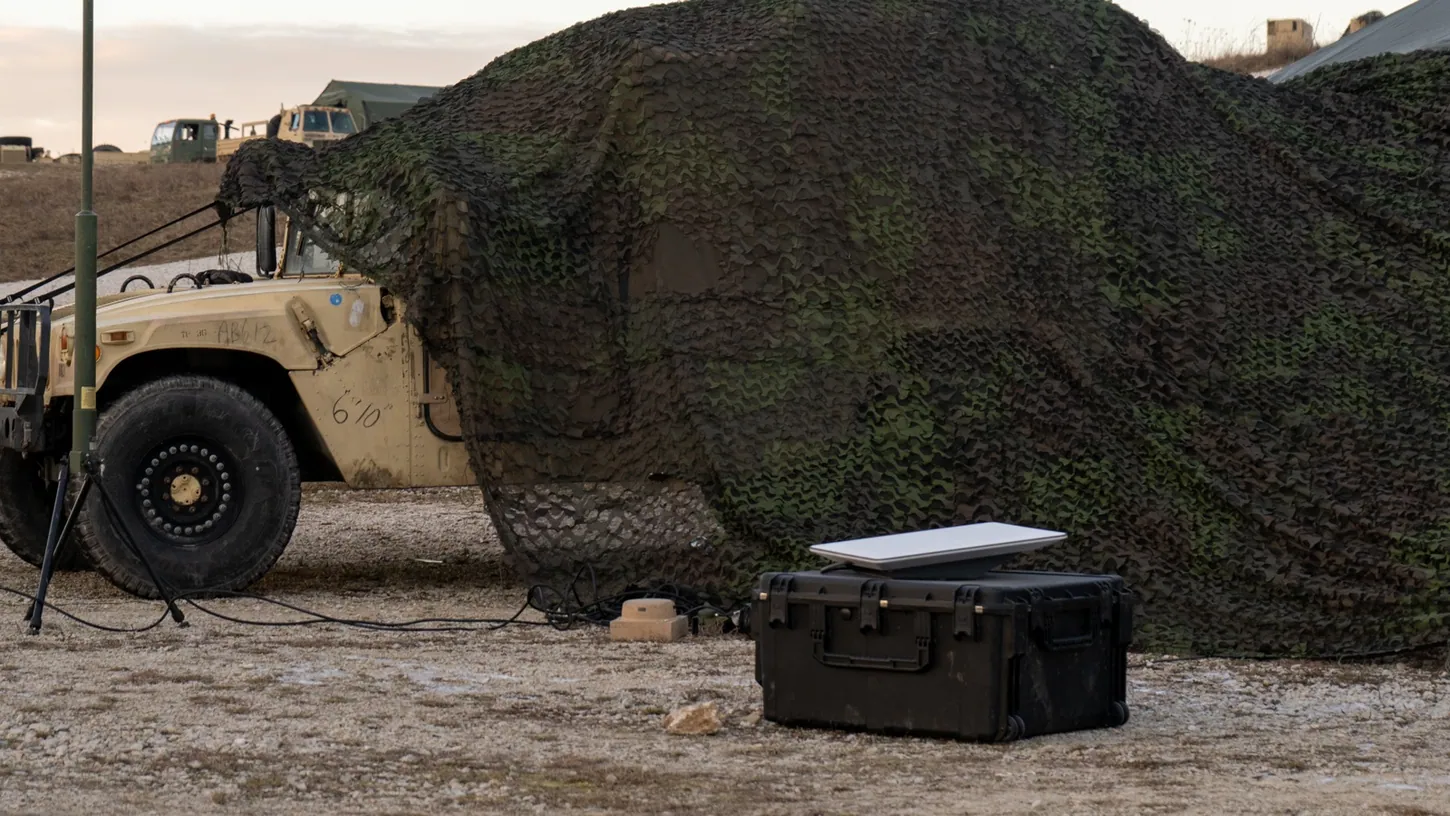
Ukrainian President Volodymyr Zelensky said Sunday, November 15, that Russian Shaheds are hitting Ukraine’s electricity substations and that many get through because Starshield, the military version of SpaceX’s Starlink, still cuts out above 100 mph (161 km/h) along the front line and over Russian-occupied territory. Ukraine’s interceptor drones lose their operators at that speed and can’t catch Russia’s jet-powered Shaheds, he wrote. He asked the U.S. government and SpaceX to lift the limit before winter.
Ukraine says its units have recorded the cap since Monday, November 9. DroneXL reported on Thursday that Zelensky said it was back and SpaceX called his account false. Zelensky said Friday that SpaceX told Ukraine’s Defense Ministry it is not imposing any restrictions and that the trouble is technical. Sources in that ministry say their specialists record the limit across all Russian-occupied territory and nowhere in the territory Kyiv controls.
Ukraine’s Tests Put the Cap on One Side of the Front Line
Ukraine’s finding rests on daily tests in different directions, which Zelensky told reporters on Friday, November 13, had confirmed the 100 mph limit five days running. Defense Ministry sources described the occupied-territory boundary to UNITED24 Media that day, and Zelensky’s Sunday post also places the limit along the front line.
The ministry sources told UNITED24 Media they were still asking SpaceX and the Pentagon for an explanation. Zelensky drew his own conclusion. In remarks carried by NV and Ukrinform, he said that if the limit was lifted over Ukrainian-held ground and kept over occupied ground, that decision is very dangerous because it already looks political. Restricting the service there, he said, partially recognizes the occupied territories as not Ukraine’s.
SpaceX’s answer to the ministry was “We are not imposing any restrictions,” Ukrainian officials told RFE/RL. The officials said the company referred to technical issues and did not answer a follow-up question about the occupied territories. Zelensky said Kyiv doesn’t think the problem is technical.
None of the reports cited here carries a new on-record statement from SpaceX. Its last was to Axios on November 12, when the company called Zelensky’s account false and said there had been no change.
SpaceX has gated Starlink by speed before. In January, at the request of Ukraine’s Defense Ministry, it cut Starlink on terminals moving faster than about 47 to 56 mph (75 to 90 km/h) to stop Russian strike drones, and terminals registered to Ukrainian brigades could have the limit lifted. A registration whitelist followed on February 5.
Starshield is provided to Ukraine by the U.S. government, the BBC reported, and Zelensky said who controls it is no longer clear to him. Secretary of State Marco Rubio had told him in an earlier conversation that Starshield is controlled more by the U.S. government than by SpaceX, Zelensky said, and his own team now tells him SpaceX imposed the restrictions. He said the two accounts don’t match and need to be clarified.
Zelensky Says Bars Interceptors Now Meet Jet Shaheds Deeper in Ukraine
Ukraine’s Bars interceptor units fly on Starshield, Zelensky said Friday. They used to shoot down jet-powered Shaheds near the front line. With the cap in place, he said, they can engage only after the drones reach territory where the link is unrestricted, and that gives Russia more opportunities to attack.
Denys Sienik, Ukraine’s chargé d’affaires in Washington, told RFE/RL on Saturday that the tests keep returning the same result: “These are not isolated cases; they are widespread.”
Zelensky said on October 28 that a European country had paid for 2,000 Bars drones and that one destroyed a Shahed in testing before Starshield stopped working during October’s cap, according to Militarnyi. After that cap was lifted on October 24, Ukrainian forces saw the link hold above 249 mph (400 km/h). Russia’s jet-powered Geran-4 flies at up to 310 mph (500 km/h), according to the Ukrainian intelligence teardown DroneXL covered in May.
In his Sunday post on Telegram, Zelensky said Russia struck energy sites overnight and in the morning in Zaporizhzhia and in the Sumy, Odesa, Zhytomyr and Kirovohrad regions, hit railway infrastructure in the Dnipropetrovsk, Kharkiv and Zaporizhzhia regions, and injured 16 people. He put the week’s total at more than 2,300 attack drones, 1,590 guided bombs and 15 missiles. He gave no count of the strikes he attributes to the cap. His appeal to Washington and SpaceX included the line “It is important to be on the right side of history.”
A Russian strike on a DTEK facility in Chornomorsk, in the Odesa region, temporarily cut power to about 41,000 customers, regional head Oleh Kiper said Sunday, according to the Associated Press.
Two Senators Ask Musk to Preserve the Logs and Answer by November 30
Senators Jeanne Shaheen and Chris Coons wrote to Elon Musk on Friday, November 13, asking SpaceX to preserve at once every record on Starlink and Starshield in Ukraine created since September 1. They want written confirmation, and answers to three questions, by November 30.
The letter covers network logs, configuration changes, software instructions and the identities of the people who authorized or implemented each restriction. One question asks which restrictions since October 1 remain in effect and tells SpaceX to explain the ones reported on November 12. The senators wrote that “SpaceX has not provided any explanation or clarification of who authorized these restrictions.”
Shaheen is the top Democrat on the Senate Foreign Relations Committee, and the letter is a request, not a subpoena. It sets out how the official accounts conflict. Musk said limits on Starshield are decided by the U.S. military and ultimately the president. Defense Secretary Pete Hegseth suggested SpaceX could impose restrictions under its terms of service, and Rubio said decisions on Starlink access rested with SpaceX, the senators wrote. The Wall Street Journal’s sources said in October that Musk ordered that month’s slowdown himself.
In the House, Gregory Meeks and Adam Smith, the ranking Democrats on the Foreign Affairs and Armed Services committees, said restrictions over occupied territory and along the line of contact would be unacceptable if confirmed, RFE/RL reported. The BBC said Sunday that it had asked the White House and Starlink for comment.
DroneXL’s Take
If Ukraine’s ministry sources are right, a fault that stops at the front line needs more explaining than SpaceX has given, and my read is that somebody drew that line. January showed that Starlink’s speed limits are settings SpaceX can switch on for some terminals and lift for others.
I can’t rule out a configuration error. Starlink has run a registration whitelist in Ukraine since February, so the network can apply different rules to different terminals, and a mistake in those rules could look like this. If that is what happened, the network logs will show it, and those are the records Shaheen and Coons want preserved. SpaceX shouldn’t wait for November 30 to explain. Ukraine’s substations are being hit now, and Zelensky has told his country why he thinks the interceptors are missing. The company that runs the network and the government that provides it to Ukraine owe Kyiv more than a reported reference to a technical issue.
Sources: Volodymyr Zelensky on Telegram, BBC, Associated Press, UNITED24 Media, NV, Ukrinform, RFE/RL, Militarnyi, Sens. Jeanne Shaheen and Chris Coons’ letter to Elon Musk.
DroneXL uses automated tools to support research and source retrieval. All reporting and editorial perspectives are by Haye Kesteloo. Read our editorial standards.