
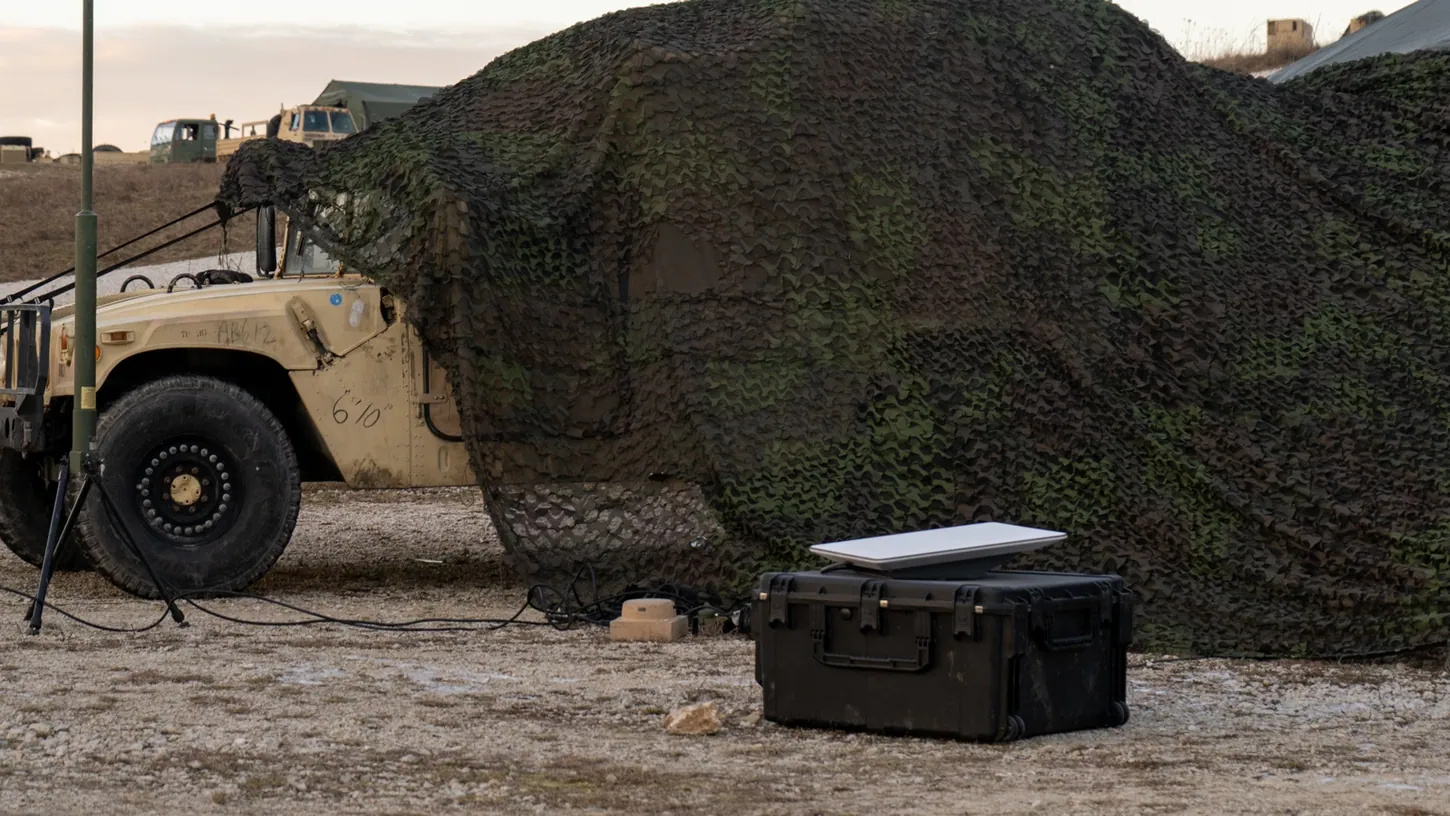
Ukrainian drone units lost dependable Starshield service on Wednesday, October 14, when SpaceX’s military-grade Starlink terminals stopped working on fast-moving drones and vehicles. Defense ministry sources told Business Insider speeds were restricted above 100 mph (160 km/h), and some units lost the link at speeds as low as 45 mph (72 km/h). The same sources say the cut complicated interceptor and mid-range strike missions. Service began returning Wednesday evening and was at least partly restored by Thursday.
Reuters reported Thursday, citing anonymous officials, that the order to slow the service came from inside the White House. A senior US official says the president never asked for it.
Starshield’s Cap Landed on the Drones Ukraine Flies Over Its Own Ground
Ukraine relies heavily on Starshield, alongside commercial Starlink, for the drones it flies over its own territory and Russian-occupied land. The satellite link lets an operator control a drone and pull live video beyond radio range. It also cuts exposure to the jamming that breaks ordinary control links.
Yuriy, an officer with Ukraine’s National Guard, told Business Insider that his units use Starshield for drone operations and that several missions were spoiled during the disruption. He asked to be identified by his first name only. Ukrainian officials said the cap slowed the interceptor drones Ukraine sends up against incoming Russian Shaheds, Reuters reported.
The 100 mph ceiling stayed. A person in Ukraine’s Defense Ministry told Reuters on Thursday that the terminals worked in motion again, but only up to that speed. A drone-industry source told the Kyiv Independent that “in some cases, it works perfectly, in some places it does not.”
Speed gating is not new to this war. In late January, DroneXL reported that SpaceX had cut Starlink service on terminals moving faster than about 47 to 56 mph (75 to 90 km/h) to stop Russian strike drones, while terminals registered to Ukrainian brigades could have the limit lifted. A February 5 whitelist then cut off unregistered Russian terminals.
Ukraine’s Refinery Strikes Can’t Use Starlink
Ukraine can’t use Starlink for the long-range drone strikes on Russian energy sites that Washington wants stopped, because the system does not work inside Russia. Reuters reports the cap came as President Donald Trump pressed Kyiv to end those refinery attacks before the November midterms.
Trump blames the strikes for soaring energy prices. Experts cited by Reuters say the surge comes mainly from the US-Israeli war with Iran. According to Reuters, two US officials and a Western official said Pentagon leaders received a message that Starshield service for the Ukrainian military needed to be slowed. None of them said who in the White House made the decision. The Pentagon is Starshield’s biggest customer.
Elon Musk had already pointed at Washington. Replying on X to Mykhailo Fedorov, the former defense minister who thanked him Wednesday evening as service up to 160 km/h was being restored, Musk wrote that Starshield is owned and controlled by the US government and that “limits on speed or usage are decided by the US military and ultimately POTUS.” He added that commercial Starlink is limited to civilian or defensive use and cannot be used for offensive military action, according to Meduza and the Kyiv Independent.
The senior US official’s answer to Reuters was “No such request was ever made by the president.” The White House did not respond when Reuters asked whether other administration officials made the request. SpaceX did not respond to Reuters or Business Insider, and the Defense Department did not respond to Reuters.
Wild Hornets and SkyFall Built Their Own Links Before the Cap
Wild Hornets, which builds the Sting interceptor, told Business Insider its setup is built around its own communications technology, and SkyFall, maker of the P1-SUN interceptor, said it developed its own links or uses alternatives so no system outside Ukrainian control becomes a single point of failure.
A Wild Hornets spokesperson, who said the company stays open to other internet options, put it bluntly: “Depending on a single solution is very risky.” Radio Free Europe filmed Ukrainian crews trading $2,000 Sting drones for Russian Shaheds in May. SkyFall’s new StarGate medevac drone, which DroneXL covered this morning, flies over both Starlink and SkyFall’s own L-Link system.
BlueBird Tech, which builds drones and robots, uses Starlink but is trying not to tie its products entirely to it. Its head of hardware research and development, speaking anonymously for security reasons, said the company is exploring ways to add redundancy and named LTE or 5G, mesh networks with relay points, and laser communications as potential workarounds. None is a universal replacement for Starlink, they said.
Ukrainians told Business Insider nothing else quite matches it. “There is no working alternative to Starlink,” said Dimko Zhluktenko of Ukraine’s 413th Unmanned Systems Regiment, who added that Europe has nothing comparable at this level of battlefield readiness. French operator Eutelsat’s shares surged after the disruption. Yehor Cherniev, deputy chairman of the Ukrainian parliament’s national security, defense and intelligence committee, said Kyiv is working to diversify its sources, but he would not say how.
DroneXL’s Take
If Reuters’ sources are right, one message from the White House to the Pentagon slowed the interceptors Ukraine flies against Shaheds, and the 100 mph ceiling still held on Thursday. Reuters, Business Insider and the Kyiv Independent don’t name who sent that message, and every US official quoted spoke anonymously.
Zhluktenko is right that nothing matches Starlink today. I still think Wild Hornets has the better answer. A drone force whose air defense rides on a link another government can slow without warning has a single point of failure, and Wild Hornets and SkyFall, which built their own links, are better placed for the next time it happens. Kyiv should fund that work as seriously as it funds the drones themselves.
Sources: Business Insider, Reuters, Kyiv Independent, Meduza, Elon Musk on X.
DroneXL uses automated tools to support research and source retrieval. All reporting and editorial perspectives are by Haye Kesteloo. Read our editorial standards.


