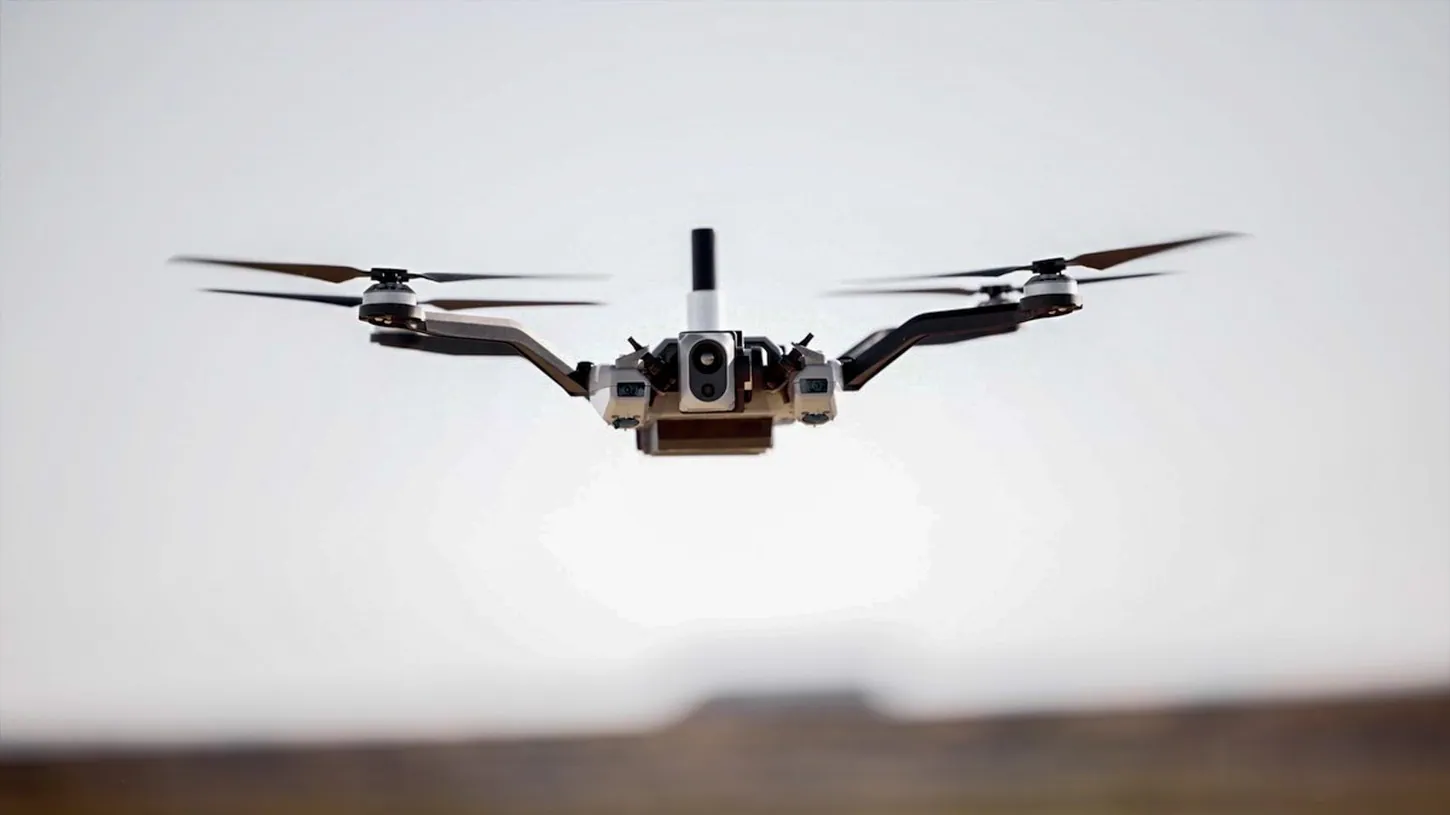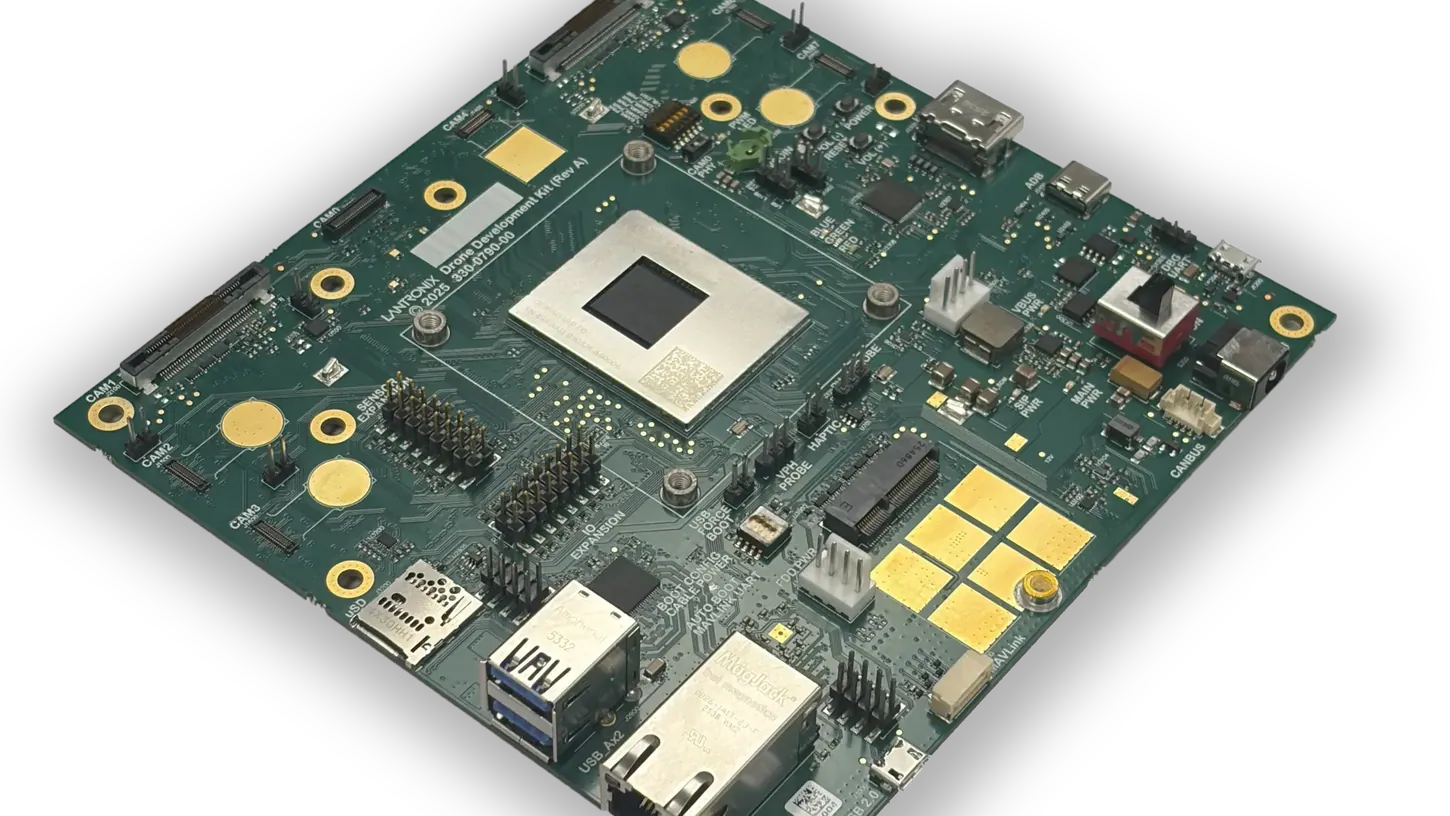
Lantronix, the Irvine, California company whose compute module flies in Red Cat’s Black Widow reconnaissance drone, has moved 98% of its supply chain out of China. CEO Saleel Awsare gave that figure to Military.com in an interview published November 18, and named printed circuit boards as the part that is particularly difficult to relocate.
The interview ran on the day China’s export licenses for heavy drone motors, speed controllers and large carbon propellers took effect. In December 2025 the Pentagon’s Drone Dominance Program planned to buy 340,000 small attack drones at falling unit prices, and the company that just spent more than six months clearing one module for that market is still moving its own production.
Lantronix Builds in Taiwan, Thailand and Vietnam and Wants a US Line
Awsare told Military.com that Lantronix now relies on suppliers in Taiwan, Thailand and Vietnam. He said Lantronix will keep moving production back to the United States, calling it “a process that just got started.” Lantronix modules run other developers’ software for image processing, navigation without GPS and multi-drone coordination.
The module at the center of that pitch is the Open-Q 8550CS, a system-on-module built on Qualcomm’s Dragonwing QCS8550 chip and rated at up to 48 INT8 TOPS of AI performance. Lantronix announced on October 1 that it had joined the Blue UAS Framework, the Defense Contract Management Agency’s list of vetted components. The company says it handed over a complete hardware bill of materials and passed a DCMA cybersecurity assessment, work that took more than six months beyond its existing certifications.
A listed component spares each drone maker from validating that part again. It does not approve the aircraft around it. Lantronix’s earlier Open-Q 5165N module is the one Teal Drones picked for Black Widow production under the Army’s Short-Range Reconnaissance program, and Lantronix says its controlled supply chain and production meet NDAA and TAA requirements.
US Law Already Bars Chinese Flight Controllers, Radios and Cameras
Section 848 of the Fiscal Year 2020 National Defense Authorization Act, now a note to 10 U.S.C. § 4871, bars the Pentagon from buying or operating drones made in China or by Chinese-domiciled companies. It also covers Chinese flight controllers, radios, data links, cameras, gimbals, ground stations and software.
The same restrictions apply to Russia, Iran and North Korea. The defense secretary can waive them in writing to the congressional defense committees when a purchase is in the national interest, and counter-drone testing and intelligence work are exempt.
The Drone Dominance Program went further on the parts that lift the aircraft: its second round barred motors and batteries from covered countries in August. A “U.S.-made” label does not settle the rest. Under federal procurement rules, origin goes to the country where the materials last became a new and different product, so a drone can qualify as American while much of its earlier manufacturing happened abroad. Final assembly alone does not count.
China’s August Rule Puts US-Bound Drone Parts Under Stricter Review
China’s Ministry of Commerce Announcement No. 34 took effect August 5. Listed drones, components and technology bound for the United States now get “rigorous case-by-case review” and none of the licensing shortcuts other buyers get, Xinhua reported. It covers items on China’s dual-use list, not every drone part.
Today the list grew. Announcement No. 49 adds brushless motors that pass four tests, starting at 48 volts and 3 kilowatts, plus their speed controllers and specified carbon-fiber propellers. DroneXL found in October that the propeller entry bites harder than the motor test.
The Pentagon’s original buying plan set the price pressure. The request for information the department issued in December 2025, reported by Washington Technology, spread $1 billion over four phases: 30,000 drones at $5,000, 60,000 at $5,000, 100,000 at $3,000 and 150,000 at $2,300, with the last phase running to January 2028. The September Phase 3 call kept the 100,000 figure only as a ceiling.
DroneXL’s Take
My read is that the December 2025 plan priced its drones for a supply chain that does not exist yet. Lantronix is about as prepared as a Pentagon drone supplier gets, with a Blue UAS listing and 98% of its sourcing out of China, and its CEO still says the move home has only started. The plan’s last phase asked for drones at $2,300. Washington’s own Section 232 tariffs run up to 100% on drones and critical components, while Beijing holds anything on its list headed to American buyers for case-by-case review. Each rule makes sense on its own, but together they squeeze the same parts bin from both ends. I think the unit price gives first. Anyone building for Drone Dominance should hold today’s motor and propeller thresholds against their bill of materials this week.
Source: Military.com (Haley Fuller), Lantronix, Xinhua, Washington Technology
DroneXL uses automated tools to support research and source retrieval. All reporting and editorial perspectives are by Haye Kesteloo. Read our editorial standards.