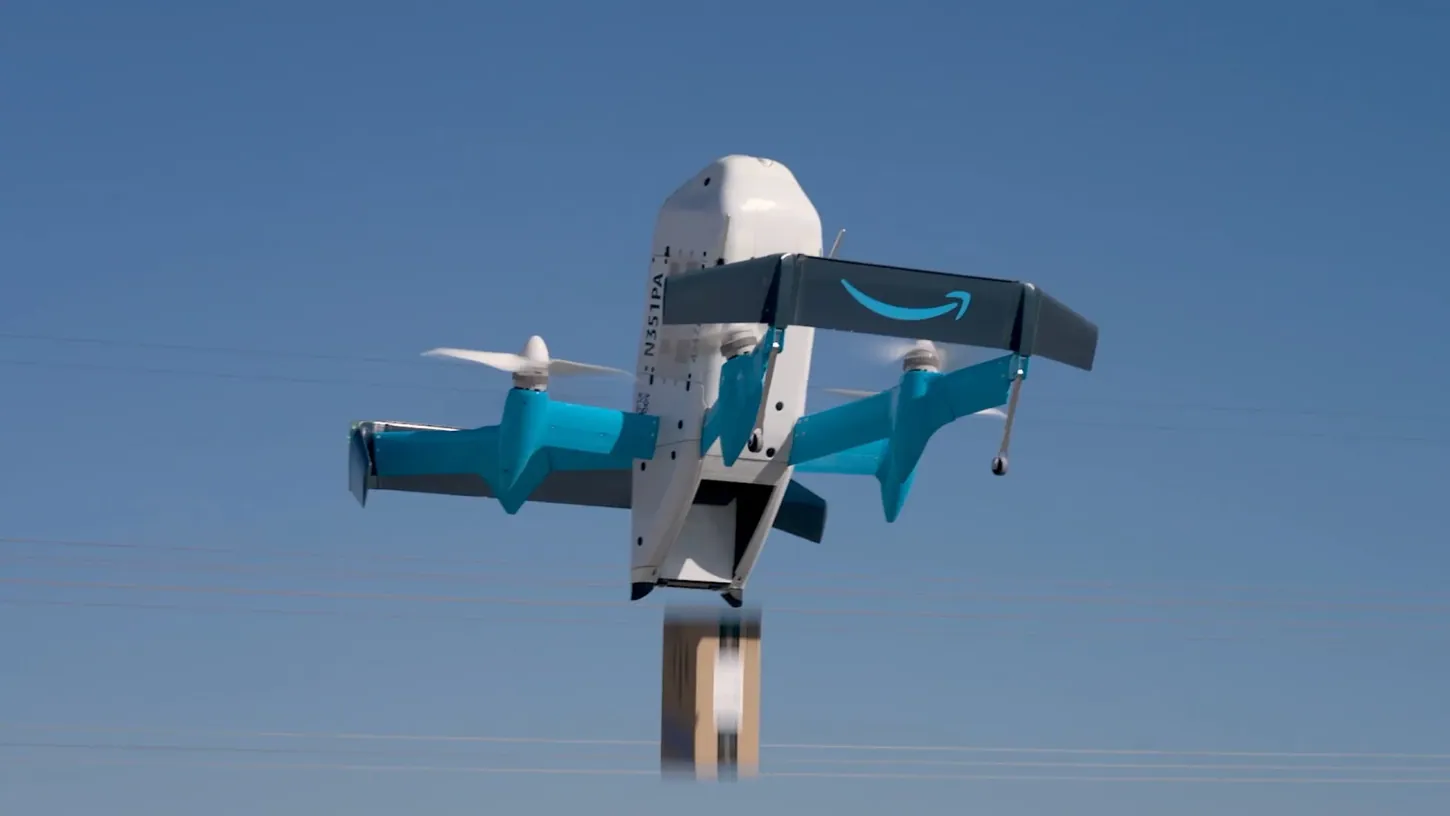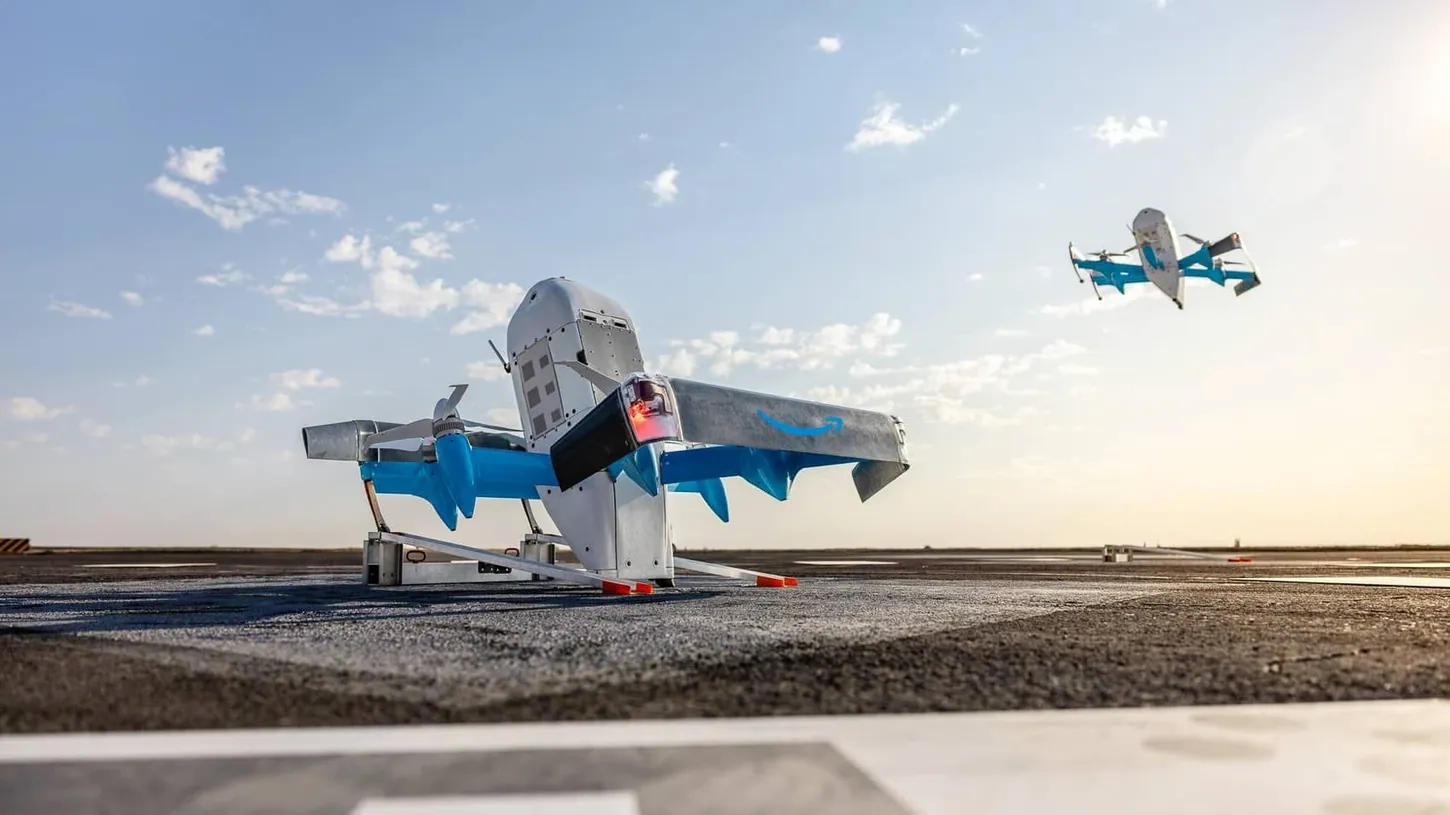
Amazon’s own flight data shows that several addresses near Cherry Creek Estates, north of its Nampa, Idaho, drone hub, had an average of 63 to 79 Prime Air drones a day pass within 820 feet (250 meters) in the week of November 2 to 8. The hub flew about 350 flights a day that week, so each of those addresses saw roughly a fifth of everything Amazon launched. Amazon gave the figures to the city, which asked for them after 20 to 25 resident complaints in the two weeks after deliveries began on October 30.
Amazon says it is looking at spreading its flight paths so that not every departure crosses the subdivision, which starts about half a mile (0.8 kilometers) north of the launch site. Its data puts the drones at an average of 262 to 285 feet (80 to 87 meters) above ground within 820 feet of those addresses. The lowest pass it reported was 194 feet (59 meters), and Amazon says a handful of deliveries near the subdivision flew lower to complete the drop. The city’s findings for the hub’s permit describe a 200-foot (61-meter) minimum en route and a descent to 12 or 13 feet (about 4 meters) at the customer.
About One in Five Nampa Flights Passes Near Each Measured Address
At 63 to 79 passes a day, a drone came within 820 feet of each measured address every 7 to 9 minutes on average, by DroneXL’s arithmetic. That uses the roughly nine-hour flying day reported at launch, and the busiest address’s average comes to about 553 passes a week.
Idaho News 6 reported at launch that the drones fly from 30 minutes after sunrise to 30 minutes before sunset, an hour narrower at each end than the window Amazon described in May. In Nampa that week the sun rose at about 7:25 to 7:30 a.m. and set at about 5:30 p.m. Mountain Time. The delivery area runs 7.5 miles (12 kilometers) in every direction from the hub. BoiseDev reported the data on November 17 from figures Amazon shared with the city and from Nampa planning and zoning director Rodney Ashby. DroneXL has not seen the data itself, and BoiseDev does not list the addresses.
The closest per-home count DroneXL has reported comes from Richardson, Texas, where a resident logged 52 overflights of her home in one day in September, after Amazon had already moved some routes and raised its altitude. Nampa’s figure comes from data Amazon gave the city, and it counts flights within 820 feet, not directly overhead.
Amazon spokesperson Nissa LaPoint told BoiseDev the company is making adjustments that “reduce the concentration of flights over certain areas,” which she said still meet the same safety bar, and is looking to implement some of them soon. Amazon did not tell BoiseDev which areas would change or when. In Baton Rouge, where Amazon dispersed its traffic after residents complained, some residents told the Wall Street Journal that flights increased in other areas.
Amazon Says Its Lowest Passes Were Finishing Deliveries
Amazon told the city that a handful of deliveries close to Cherry Creek Estates flew lower in order to complete the delivery, and its average altitudes near the measured addresses, 262 to 285 feet above ground, are higher than the 225-foot outbound average Bailey gave the commission in May.
Ashby said the data “reflects a higher altitude than many of the concerns we received reported.” Cherry Creek Estates resident Judit Crace, who has complained to the city, sent DroneXL drone scanner readings that showed MK30s at 176 to 195 feet above their takeoff point, a measure that is not the same as height above the ground and cannot show a flight below 200 feet. The 200-foot figure is a finding in the permit record, not one of its conditions, and DroneXL does not know what minimum altitude, if any, Amazon’s FAA authorization sets for the MK30.
Amazon Measured Its Drones 7 to 11 Decibels Above a Quiet Street
Amazon’s sound-level meter, placed about 20 feet (6 meters) from each address, recorded flyover peaks of 49.1 to 51 decibels against a background of 40.3 to 41.8 decibels, a gap of roughly 7 to 11 decibels. Its noise model had estimated maximums of 55.2 to 55.7.
Amazon told the city the drones sound like a passing car. A 10-decibel rise is the usual rule of thumb for a sound that seems twice as loud, and Yale University’s environmental health office puts a suburban area at night at about 40 decibels. Neither BoiseDev nor the city says how high the drones were during the on-site readings or which frequency weighting the meter used.
The peaks sit below the 53 to 55 dBA the permit findings give at 500 feet (152 meters) from the launch pad, and well below the 68 dBA they give for a person in a backyard while a drone delivers to that yard, a figure from an Arizona test. The FAA uses a different metric. Its Chicago appendix puts a cruising MK30 at 63.7 dBA SEL at 200 feet, as DroneXL reported when the Markham hub opened, and SEL packs a whole pass into one second, so it does not line up with a meter’s maximum.
Nampa Says It Can Revoke the Permit if Flights Don’t Match the Hearing
Nampa’s drone delivery page says the city is checking whether actual flights match what Amazon told the commission. Inconsistencies that are not remedied could lead to revocation of the conditional use permit. Flight routes and altitudes stay with the FAA, the page says, so the city cannot change them.
Ashby told BoiseDev that Amazon says the November data shows it still operating within the permit’s requirements. Nampa’s drone page carried no finding either way on November 18.
The page also carries a new warning: pointing a laser rangefinder at a drone is illegal. The city cites 18 U.S.C. § 39A, which carries up to five years in prison and a fine of up to $250,000 for knowingly aiming a laser at an aircraft, and notes that golf and hunting rangefinders count. Neither the city nor BoiseDev says anyone has aimed one at an Amazon drone.
Residents with a complaint can call Amazon customer service at 1-888-280-4331. In Amazon’s online help chat, DroneXL found the drone option under “Something Else” and then “Amazon Drone Delivery,” and DroneXL’s guide for residents covers the FAA route as well. The Nampa hub and its record are on DroneXL’s Amazon Prime Air tracker.
DroneXL’s Take
A week ago I wrote that Nampa needed a per-street count of overflights. Amazon has now supplied one, and the count is worse than the noise numbers. A drone past the same addresses every 7 to 9 minutes, all day, is a corridor in my view, and a 51-decibel peak doesn’t tell you what it’s like to hear that 79 times. Spreading the departures is the right fix, but I think it moves the problem as much as it shrinks it, because fewer passes per house means more houses under the routes. Richardson got rerouted departures and a higher altitude in January, and a resident there still counted 52 in a day in September. Nampa now has a method that works: Amazon’s own logs, address by address, within 820 feet. The city should ask for the same table a month after the new routes go in and put it on its drone page. I’d still rather see these aircraft carry medicine than the shopping orders behind 350 flights a day, and an 83-pound MK30 with no parachute is a lot of machine to send past one house 79 times a day.
Sources: BoiseDev, November 17, City of Nampa drone delivery page
DroneXL uses automated tools to support research and source retrieval. All reporting and editorial perspectives are by Haye Kesteloo. Read our editorial standards.