
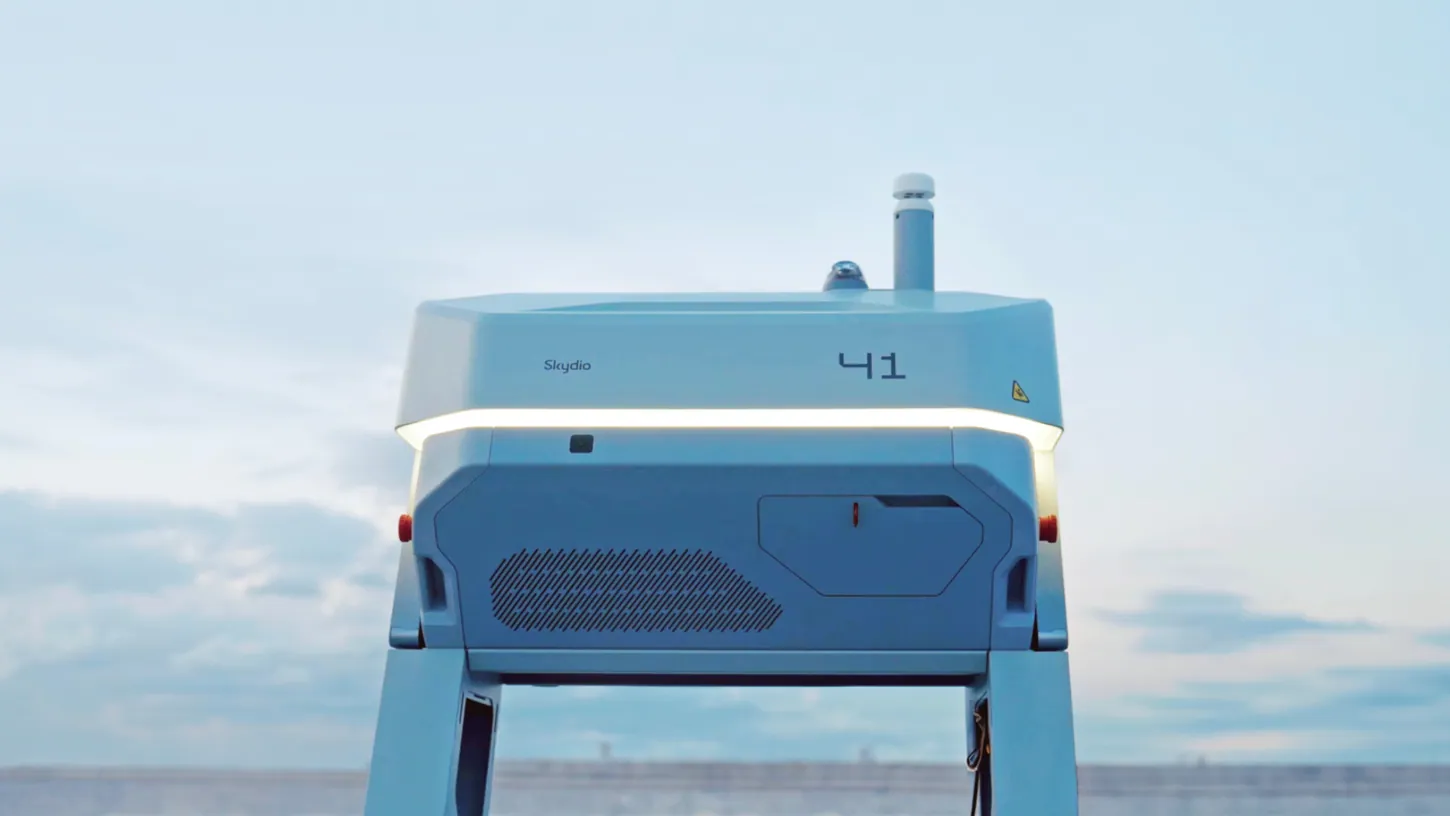
The Knoxville Police Department starts flying its Drone as First Responder program today, November 19, sending Skydio drones from 12 docks on city property in Knoxville, Tennessee to 911 calls. Pilots in the department’s Real Time Information Center fly them remotely, and KPD says a drone can reach almost any part of the city in 90 seconds or less.
The program runs under the city’s Axon contract. The City Council amended that contract on January 20 in an 8-1 vote, at an added cost not to exceed $9,407,699.82. DroneXL covered the proposal in January and KPD’s week-long trial around the Tennessee-Georgia game in September 2025.
KPD has published its 34-page drone policy and says every flight will be logged on a public dashboard. The same policy lets the department keep some flights off that dashboard for 30 days.
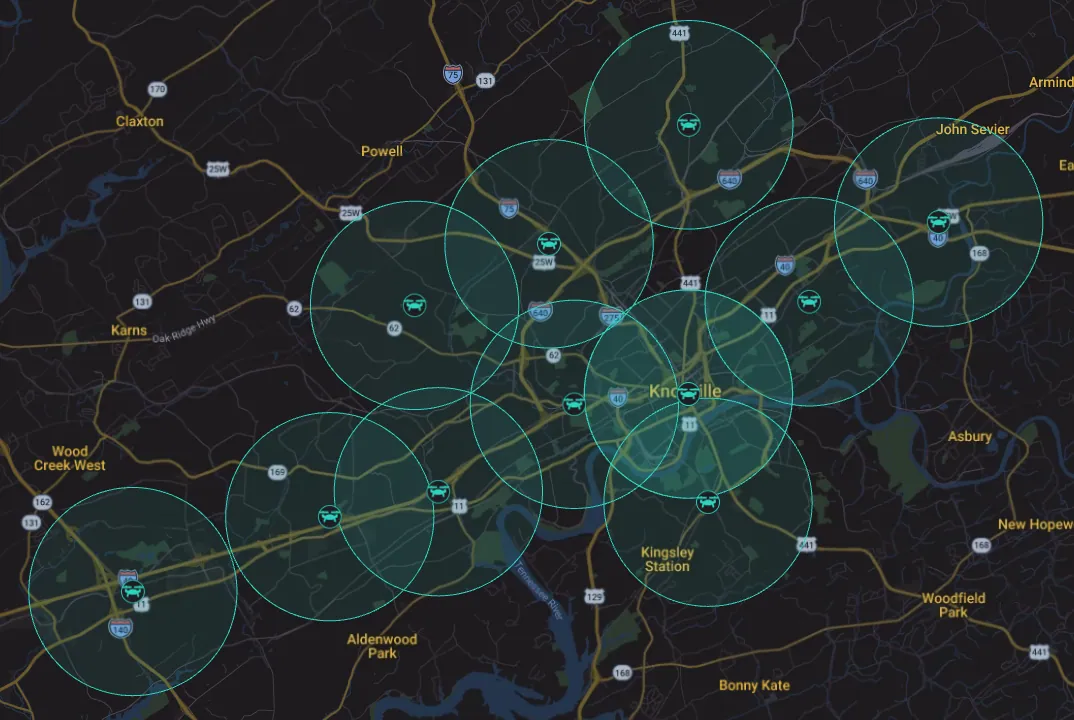
Twelve Skydio Docks Put Most Of Knoxville Within Two Miles
The 12 docks sit at 11 city-owned facilities, and each drone answers calls within a radius of about two miles (3.2 kilometers). The coverage map on KPD’s program page shows the circles overlapping across most of the city. Neither the page nor the policy lists the dock addresses.
A fully charged drone flies for 30 to 40 minutes, KPD spokesperson Scott Erland told Knox News, and staff launch one when they decide an aerial view of the scene would help. WVLT reports that the drones fly at 30 mph (48 km/h) and that heavy rain, snow and fog can keep them on the ground.
Chief Paul Noel said in the department’s announcement that officers often head to calls with wrong or changing information, and that with the drones “we will be able to get eyes on a call quickly.” The pilots are sworn and non-sworn KPD employees assigned to the Real Time Information Center, and the policy defines DFR flights as beyond visual line of sight (BVLOS).
KPD’s page names Skydio but not the aircraft. The proposal the council saw in January specified the Skydio X10, and the dock pictured on KPD’s page is Skydio’s Dock for X10.
KPD’s Written Policy Bars Facial Recognition, Plate Reads And Weapons
The department’s Unmanned Aircraft SOP, revised November 6, says DFR drones “do not perform facial recognition or collect ALPR data” and will not loiter to collect data passively. It also prohibits attaching a weapon of any type to a drone, including projectiles, firearms, chemical agents and electrical weapons.
Flights are limited to the uses listed in Tennessee’s Freedom from Unwarranted Surveillance Act (TCA 39-13-609). The list includes imminent danger to life, fugitive and missing-person searches, crash and fire scenes, crimes in progress, and security at public events such as concerts, games, festivals and protests. Without a warrant or a recognized exception, the department may not compile drone data in a way that tracks a person’s movements over consecutive days.
Pilots have to record from launch to landing. During transit they are told to point the main camera away from areas unrelated to the call when that is safe.
Footage that is not evidence gets deleted, and here the two KPD documents differ slightly. The program page says 15 days. The SOP says 15 business days after the flight, which is about three calendar weeks.
The plate-reader line sets Knoxville apart from part of the market, because Flock Safety sells its DFR camera on 2,000-foot (610-meter) plate reads.
KPD Can Hold Some Flights Off The Public Log For 30 Days
The SOP tells DFR pilots to publish each flight to the transparency portal when the call ends, or by the end of their shift at the latest. Flights supporting an organized crime investigation, an undercover operation or a tactical operation can be withheld for 30 calendar days.
A delay needs the Special Services Captain’s approval, and it is allowed only when publishing could reasonably compromise the integrity or safety of the operation. The Chief of Police or a designee can extend it past 30 days.
A second paragraph, which covers every department drone flight and not only DFR, words the deadline differently. It says a delayed flight is published within 30 calendar days or when the suspect is caught, whichever comes first, and it mentions no extension by the chief.
The policy also commits KPD to a review at least once a year that summarizes DFR use, any policy violations with the corrective action taken, and any air safety incidents reportable to the FAA. Audits are supposed to confirm that every flight reached the portal.
The dashboard runs on Skydio’s cloud, like the Bellingham police flight log I pulled in October. KPD says flights will start appearing on it on November 19. When I opened the link at 5:40 a.m. Eastern on launch morning, before any flight could have been logged, it returned “Dashboard Not Found.”
Knox County Voted To Remove Its Flock Plate Readers In August
The Knox County Commission voted 11-0 on August 31 to remove the Flock license plate readers installed by the Knox County Sheriff’s Office, the Farragut Press reported. Knox News reports that residents raised privacy concerns. Much of the anger was about how quietly the readers went up.
KPD is a separate agency and keeps its own plate readers. Knox News puts the count at 27 fixed cameras, in use since 2021, plus 30 mobile readers tied to patrol-car dash cameras. The drone policy’s ban covers the aircraft and nothing else.
The council’s 8-1 vote in January came after questions from three members. The League of Women Voters’ observer report on the January 20 meeting records council member Amelia Parker pressing for public workshops first.
DroneXL’s Take
Knoxville did this in the right order. The policy was public before the first flight, and it puts the bans on weapons and plate reads in writing. A resident can check the flight log against what the department promised before anyone has to file a records request.
I think KPD should fix the 30-day exception. One paragraph lets the chief extend a delay with no outer limit and another doesn’t. The department should pick one and say which. The annual review should also count how many flights were published late and why, because a public log only builds trust if residents know how much of the flying is missing from it. Montgomery County, Maryland had 345 flights on its dashboard in the first 13 days of November. A busy program can keep its log current.
If you live in Knoxville, open the dashboard this week and see whether the flights are there.
Sources: Knoxville Police Department, KPD Unmanned Aircraft (Drone) SOP, Knox News, WVLT, Farragut Press, League of Women Voters of Knoxville-Knox County.
DroneXL uses automated tools to support research and source retrieval. All reporting and editorial perspectives are by Haye Kesteloo. Read our editorial standards.
Advertise with DroneXLYour company hereReach 200,000+ drone readers a month with a sponsored article, a banner on your beat, or a partnership.See the options →


