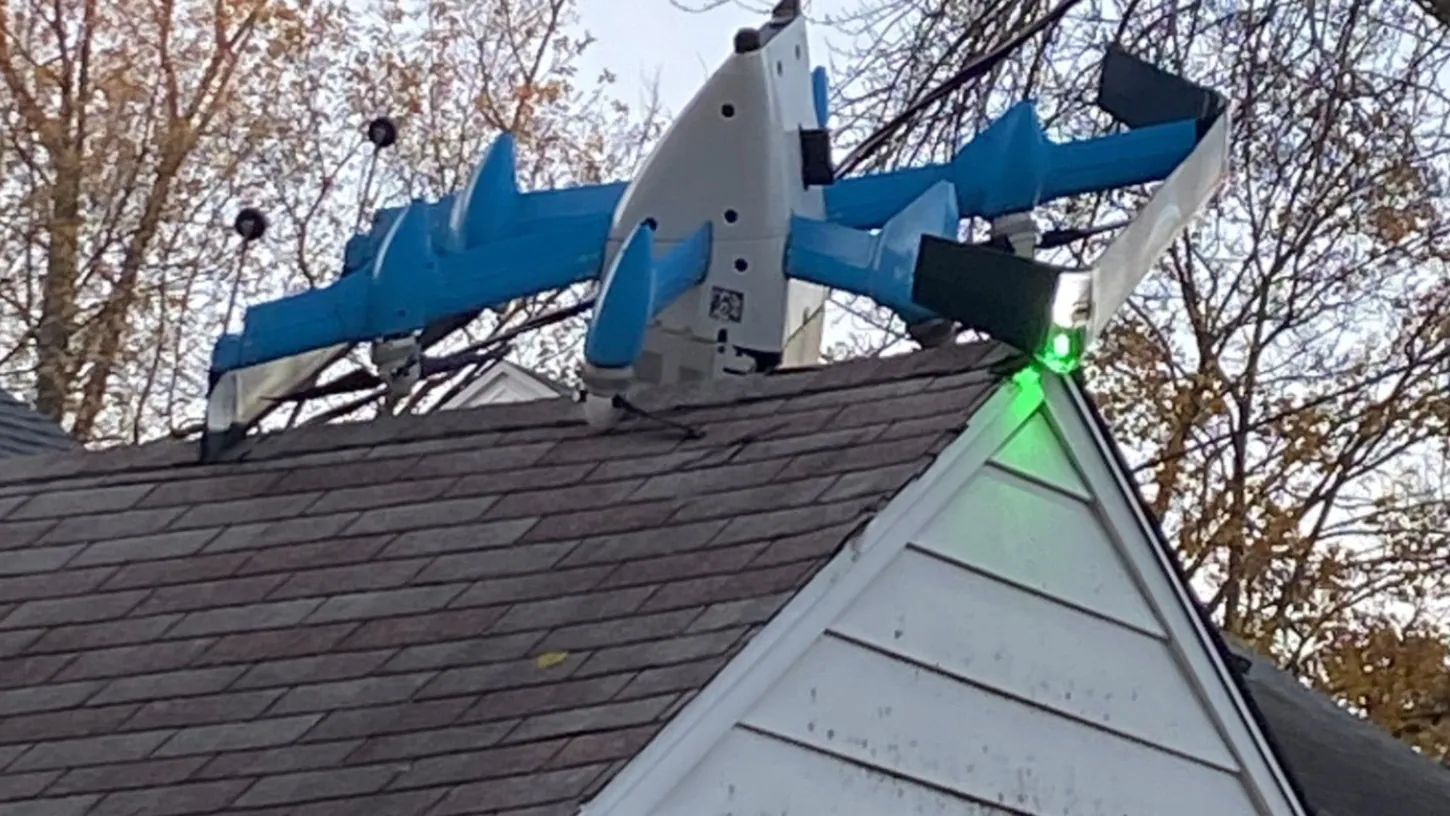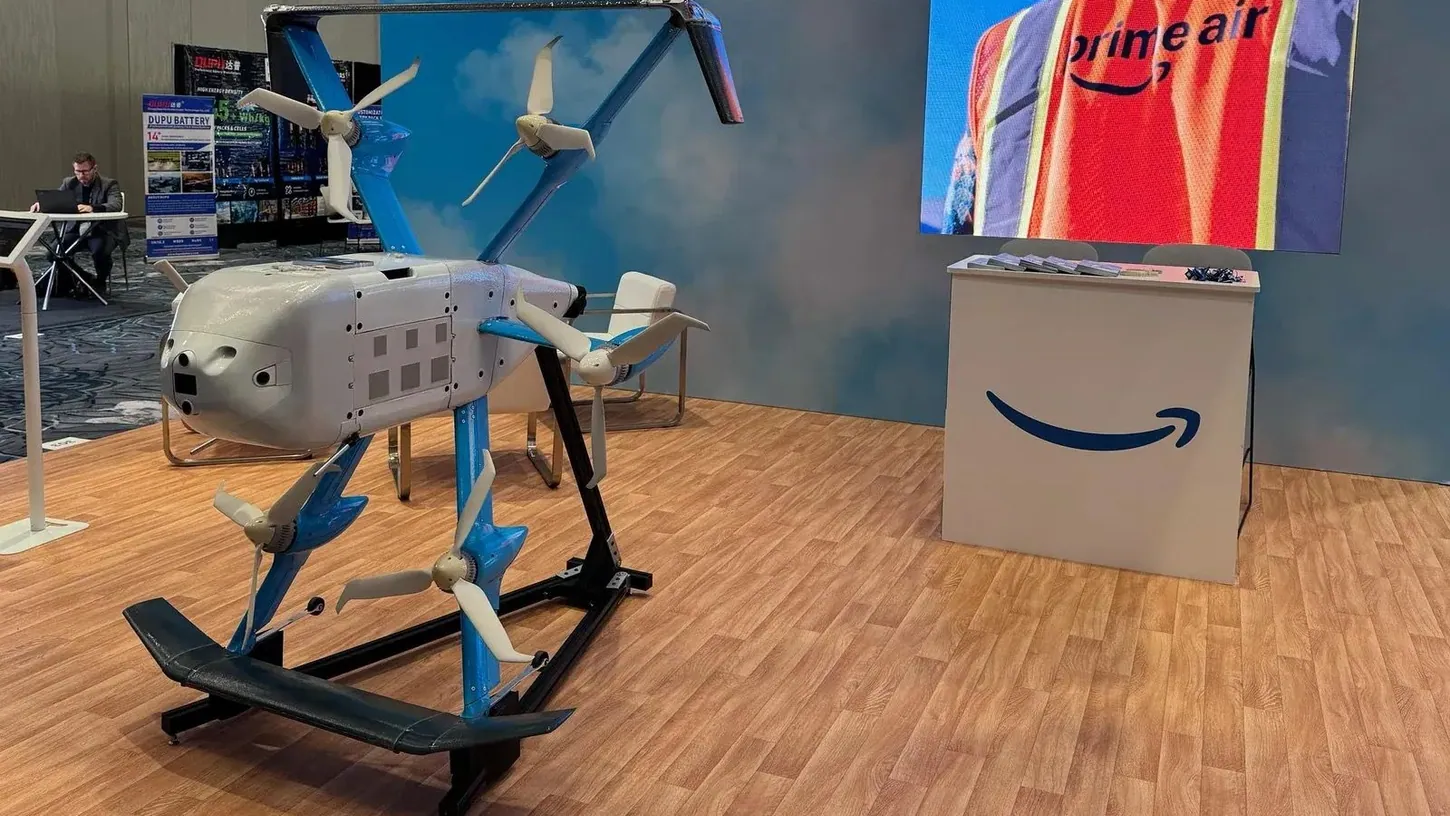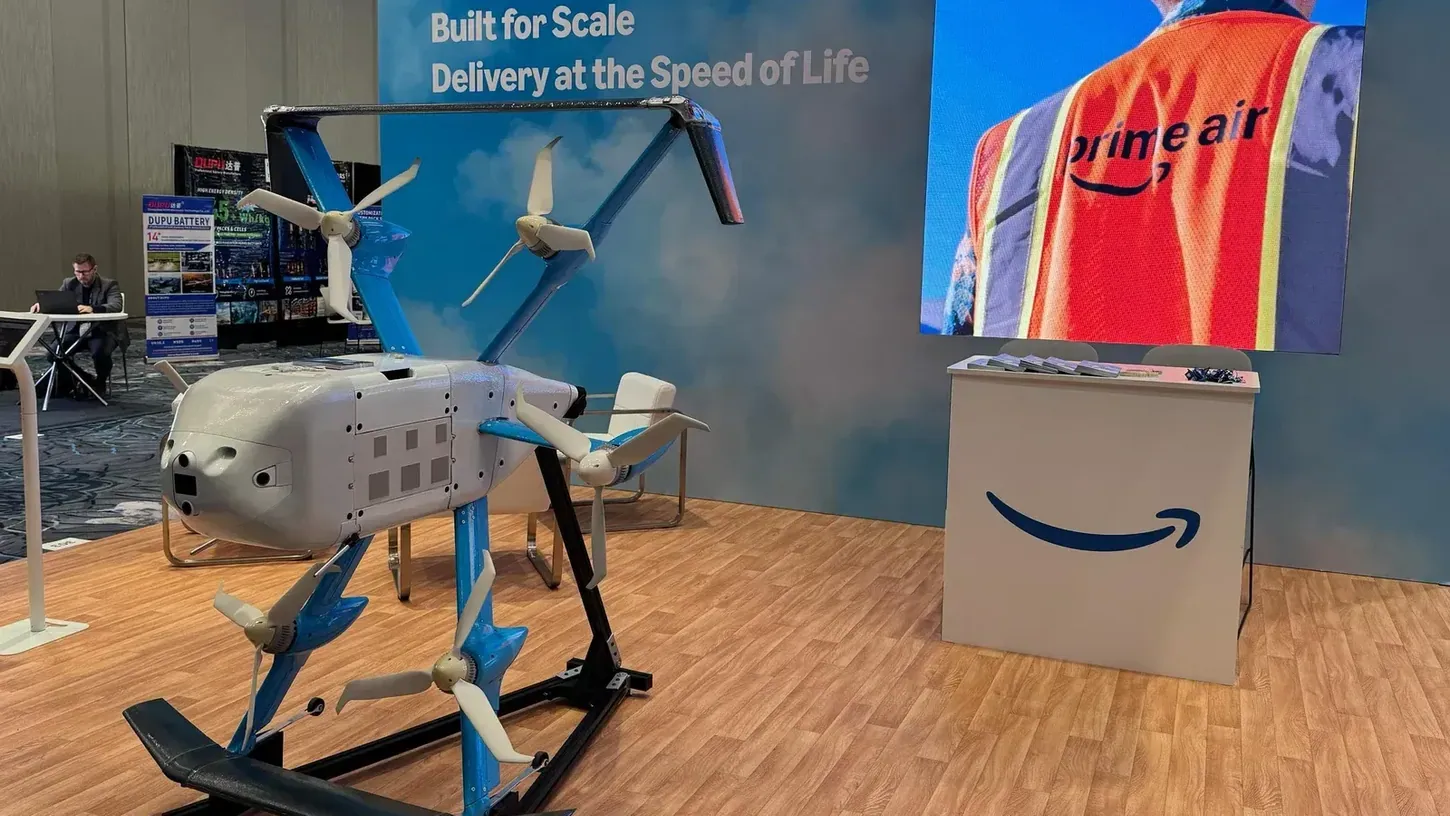
The National Transportation Safety Board (NTSB) is gathering information on Friday’s Amazon Prime Air drone crash in Huntington Woods, Michigan, and has not decided whether to open an investigation. Spokesman Peter Knudson told the Detroit Free Press on Sunday, November 22, that he would likely know more early this week. The MK30 had flown from Amazon’s Hazel Park hub on November 20 and ended up on a neighbor’s garage roof after dropping off a shampoo order. Nobody was hurt.
DTE Energy says its crew had to shut off a power line before the drone could come down. A media release from the Huntington Woods Department of Public Safety says the Federal Aviation Administration (FAA) and the NTSB were both notified, which is the question I raised when DroneXL first reported the flight on November 22. The release also says the NTSB will lead the follow-up, and the NTSB says it hasn’t decided to open a case.
The NTSB Says It Has Made No Decision on an Investigation
“No decision has yet been made as to whether we will open an investigation,” NTSB spokesman Peter Knudson told the Detroit Free Press on November 22. He said the agency was aware of the Huntington Woods incident and was continuing to gather information.
The department’s release, as the Free Press quotes it, says the NTSB “will be conducting the primary investigatory follow up of this incident.” The quoted passage doesn’t say who notified the two agencies. DroneXL did not find the release on the city’s website on November 23, so the wording here is the newspaper’s quotation.
The FAA did not immediately respond to the Free Press on Sunday. Its accident and incident statements page had no Huntington Woods entry when DroneXL checked it on the morning of November 23, and its newest entry was dated November 18. Amazon told CBS News Detroit that it reports all required incidents to the appropriate agencies and takes part in any investigation. Its statement calls incidents “extremely rare” and says Amazon investigates any delivery that does not go as planned. Amazon spokesman Jack Stelzner did not respond when the Free Press asked whether the company would change its service because of the crash. DroneXL did not ask Amazon about the flight.
DTE Says the Drone Was Caught in a Home’s Power Line
DTE spokeswoman Dana St. Coeur told the Free Press the drone got caught in a service drop, the line that runs from a utility pole to a single customer’s property. She said the crew de-energized the line, helped remove the drone, restored power and then reattached the line.
DTE told CBS News Detroit that the drone crashed into the roof after getting tangled in an electric line. Amazon’s statement says a Prime Air drone “landed on a resident’s shed during a delivery,” and it doesn’t mention a wire. The customer, Jim Brennan, told WXYZ the drone ended up pinned between the roof and an electrical cable. He said his home is now on a no-drone list as a precaution.
The garage belongs to Logan Coomes, who is 30. He told the Free Press the drone hit a neighbor’s fiber optic cable, spiraled, got tangled in the power line and came down on his garage, where it damaged shingles. He said Amazon’s crew made it a priority to remove the drone’s battery because it was so hot. The MK30 weighs 78 pounds (35 kilograms) empty and 83.2 pounds (37.7 kilograms) with a full load, according to the FAA’s environmental review of Amazon’s Detroit-area hubs.
Coomes said his wife orders from Amazon often, and he wants drone delivery to continue. He also wants Amazon to rethink which addresses qualify in neighborhoods like his, where small backyards have wires running over them and detached garages along the edges. If the drone had cut an electrical wire and started a fire, he told the paper, “then our whole house is in flames.” He said Amazon has signaled it will help repair the garage.
The Free Press calls this the first publicly reported crash in southeast Michigan since Amazon began flying from Pontiac and Hazel Park last year. DroneXL’s own list, published Sunday, counts 13 Amazon events since September 2024, including this one.
The NTSB Opened Cases on Amazon’s Tolleson Crane Strikes
Federal rules count a drone crash as an accident only when someone dies or is seriously hurt, or when an aircraft that holds an airworthiness certificate is substantially damaged. The NTSB still opened cases, which it labeled incidents, after two MK30s hit a crane in Tolleson, Arizona, in October 2025.
That definition is in 49 CFR 830.2, the NTSB’s own regulation. The board’s preliminary report on one of the Tolleson drones, case WPR26LA002, lists the damage as substantial and the investigation as Class 3, and notes that the NTSB did not travel to the scene. It says the drone’s battery ejected and caught fire on the ground.
Neither Tolleson case has a final report that I could find. When DroneXL pulled the newest report for each case from the NTSB’s database on November 23, both were still the preliminary ones, nearly 14 months after the crane strikes. An MK30 cut an internet cable in Waco, Texas, on November 18, 2025, and the FAA’s statements page still says of that flight, “The FAA is investigating.”
Residents under the Hazel Park circle can reach Amazon at 1-888-280-4331 or through its customer service chat, under “Something Else” and then “Amazon Drone Delivery.” DroneXL’s guide for residents explains the other complaint routes, the Hazel Park town guide covers Michigan law, and the Amazon Prime Air tracker page keeps the incident record.
DroneXL’s Take
The NTSB should take this one, and it should publish what it finds. By the accounts of the customer, the garage owner and the utility, an aircraft that weighs 78 pounds empty and has no parachute ended up caught in a home’s power line. Neither Waco nor Tolleson has produced a public finding that I could locate. If federal investigators know why an MK30 can fly into a cable on the way out of a yard, the people living under these routes have not been told.
Coomes has the right idea, and he is a customer who wants the service to stay. Brennan’s home went on a no-drone list after the crash, which tells me Amazon can already exclude an address. I’d want Amazon to exclude yards with wires over them before a drone finds the wires. Zipline lowers its packages on a tether from more than 300 feet (91 meters), and its aircraft stays above the lines. Amazon’s comes down to 13 feet (4 meters), and by Coomes’s and DTE’s accounts that put it among the lines in Huntington Woods.
Sources: Detroit Free Press, CBS News Detroit, WXYZ, FAA Final Environmental Assessment, Amazon Prime Air, Detroit, MI (May 2026), NTSB preliminary report WPR26LA002, 49 CFR 830.2, FAA accident and incident statements
DroneXL uses automated tools to support research and source retrieval. All reporting and editorial perspectives are by Haye Kesteloo. Read our editorial standards.
Advertise with DroneXLYour company hereReach 200,000+ drone readers a month with a sponsored article, a banner on your beat, or a partnership.See the options →