
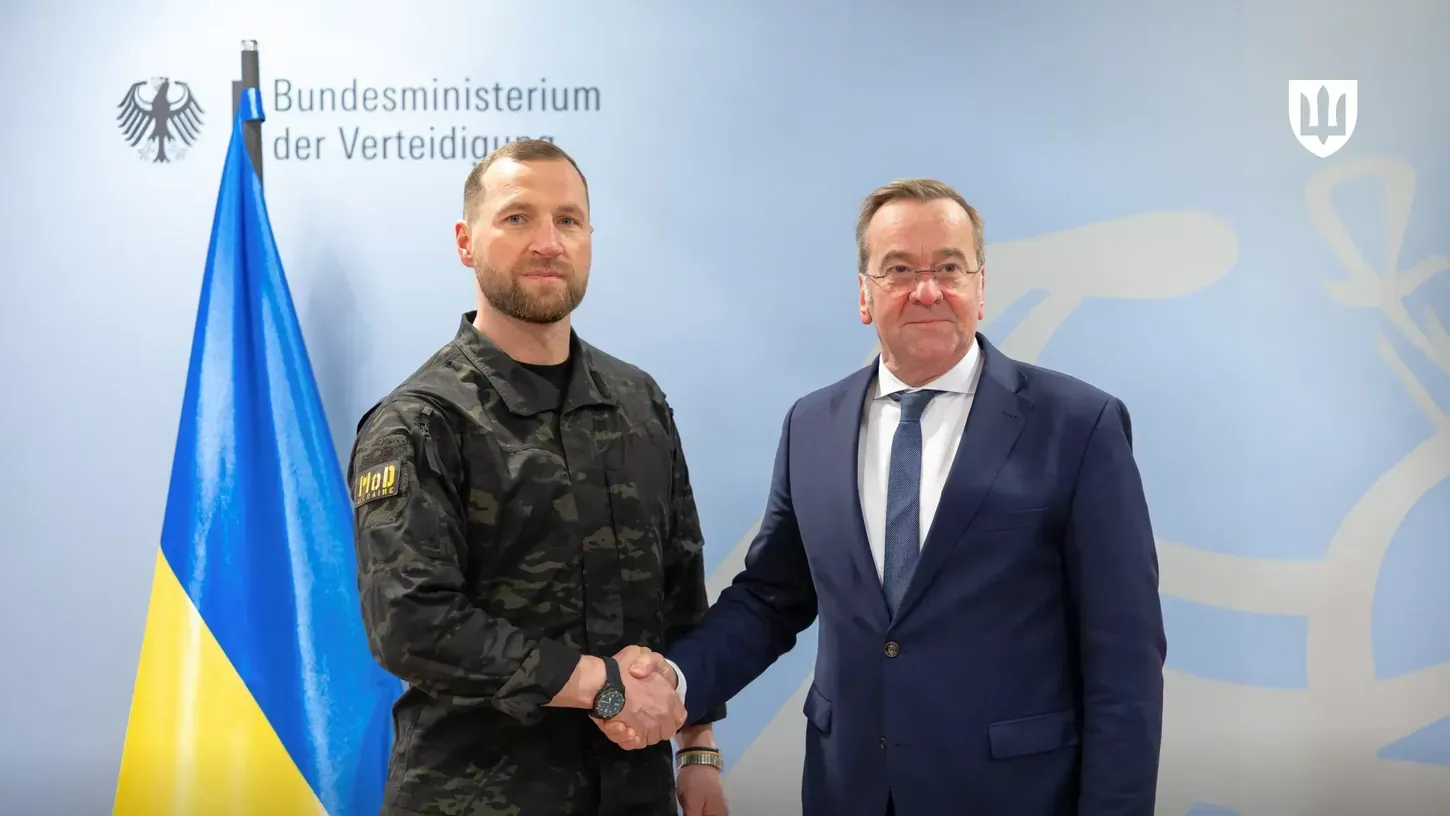
Germany will be the first country to get access to Delta, the battlefield software that runs Ukraine’s drone war. Ukrainian Defense Minister Yevhenii Khmara and German Defense Minister Boris Pistorius signed a letter of intent in Berlin on Monday, November 23, and Ukraine’s Defense Ministry announced it the next morning.
Germany would get the software. It would not get any of Ukraine’s combat or operational data.
DroneXL has covered Delta since March 2022. In August we reported that US Army Secretary Dan Driscoll told the Senate in May that the Army’s own network does not do what Delta does. The first foreign army in line for the software is Germany’s, and the announcement names no price and no start date.
Germany Gets The Software And Ukraine Keeps The Combat Data
The letter of intent covers developing, implementing and using Delta under an initiative Kyiv calls DELTA Lab. Germany may run the software for its own forces, adapt it and help write new features. Ukraine’s combat and operational data stays out of the deal, the Defense Ministry said.
Ukraine’s Defense Ministry said the next step is a separate agreement that sets the practical, technical and legal conditions. Germany also plans to support Delta’s development, in part through the IT Coalition for Ukraine. “German technological expertise will help develop and scale up the system’s capabilities,” Khmara said.
Pistorius described the goal to reporters after the meeting. Delta would merge separate views of the battlefield into “a real-time 360-degree situational picture,” he said, according to Reuters. He added that Germany wants to develop the system further with Ukraine and then make it available to the Bundeswehr.
It was Khmara’s first visit to Berlin as minister. He ran the Security Service of Ukraine’s Alpha special operations center and then the service itself as acting head, and he took over the ministry in July after Mykhailo Fedorov was pushed out.
The Bundeswehr Ran Delta In An October Drone Exercise First
German soldiers used Delta in October at a multinational drone exercise, with Ukrainian instructors and advisers beside them. Pistorius disclosed the test on November 17 at the Ukraine Defense Contact Group in Brussels. He said Germany would keep developing the software with Kyiv and keep testing it inside the Bundeswehr.
Germany’s defense ministry said in its account of that meeting that Berlin had already been supporting Delta’s operation in Ukraine. Six days later the test became a signed letter.
The German army does not plan to copy the system as it is. Lt. Gen. Christian Freuding said in a Bundeswehr podcast in early October, as the army’s inspector, that Delta uses AI agents to match, group and package reconnaissance for the commander, the German defense site Hartpunkt reported. He also said the Bundeswehr could not take it over whole. The army has to work out which parts fit its own procedures and structures.
None of the statements say which German units would get Delta. The army stands up its first drone regiment in 2027, with up to 600 soldiers.
A Ukrainian Recon Drone Goes Into German Production Too
Khmara and Pistorius also signed an implementation agreement for a joint venture that will build Ukrainian tactical reconnaissance drones in Germany. Ukraine’s Defense Ministry says the venture plans several thousand aircraft in 2027. Germany pays for the production and for setting up the factory capacity.
The ministry’s release names neither the drone nor the companies. Pistorius told reporters the aircraft is the Babka, that Germany is putting about €34 million into the production capacity, and that the German partner is Wingcopter, according to AFP. Wingcopter launched its own reconnaissance drone in September. In February it signed a joint-venture memorandum with TAF Industries, the Ukrainian company that makes the Babka. Kyiv counts this as its 12th joint production project with a partner country and its sixth with Germany.
Delta Logged 3 Million Drone Strike Missions In Seven Months
Delta’s Mission Control module recorded more than 3 million drone strike missions and nearly 3.6 million reconnaissance reports between March and October 1, 2026, Ukraine’s Defense Ministry says. In September alone, troops logged more than 1.8 million mission results, more than nine times the monthly volume in early 2026.
Those Mission Control figures also include nearly 500,000 missions to intercept aerial targets and more than 1 million drone logistics runs. Each record feeds the planning of the next mission. That archive is the part of Delta Germany does not get.
The software is already built to connect with allied equipment. At NATO’s REPMUS 2026 maritime exercise, led by the Portuguese Navy, Delta integrated every aerial, surface and underwater drone and radar that sent telemetry under the alliance’s STANAG 4817 standard, according to Ukraine’s account. In Estonia in May 2025, about ten Ukrainian drone operators running Delta mock-destroyed 17 NATO armored vehicles in about half a day.
DroneXL’s Take
In April 2025 Ukraine said a NATO member had formally asked to license Delta, and it never named the country. Kyiv has now named a first partner, and it is Germany. Neither government has said if Germany was that 2025 applicant.
Washington took a different road. Driscoll told the Senate in May that Delta puts every drone and every shooter on one network and that the Army’s system does not. The Army is building its own with Anduril and Palantir, and that program went from a $99.6 million prototype award to a production baseline in June. Berlin tried the Ukrainian software in one exercise and decided to start from it.
A letter of intent is not a fielded system, and Germany’s own army chief said Delta can’t be adopted whole. But I think Kyiv wrote the deal well. Germany gets software that has been used in combat since 2022, and Ukraine keeps the millions of logged missions that make Delta work at home.
Watch for the separate agreement the ministry promised. If it carries a price, we will learn what a NATO army pays for software that was written under fire.
Sources: Ministry of Defence of Ukraine, German Federal Ministry of Defence, Reuters, AFP, Hartpunkt, Militarnyi.
DroneXL uses automated tools to support research and source retrieval. All reporting and editorial perspectives are by Haye Kesteloo. Read our editorial standards.
Advertise with DroneXLYour company hereReach 200,000+ drone readers a month with a sponsored article, a banner on your beat, or a partnership.See the options →


