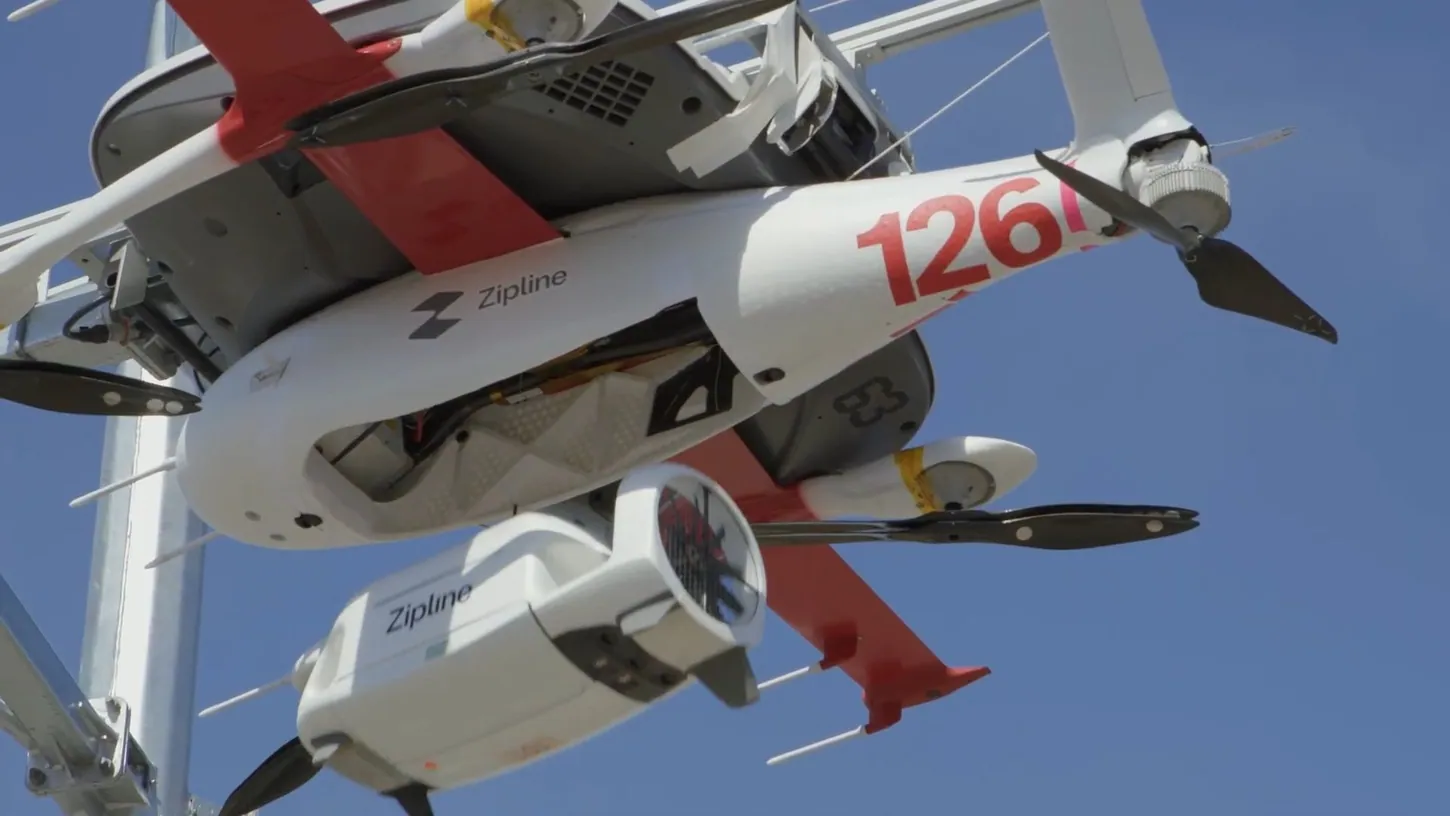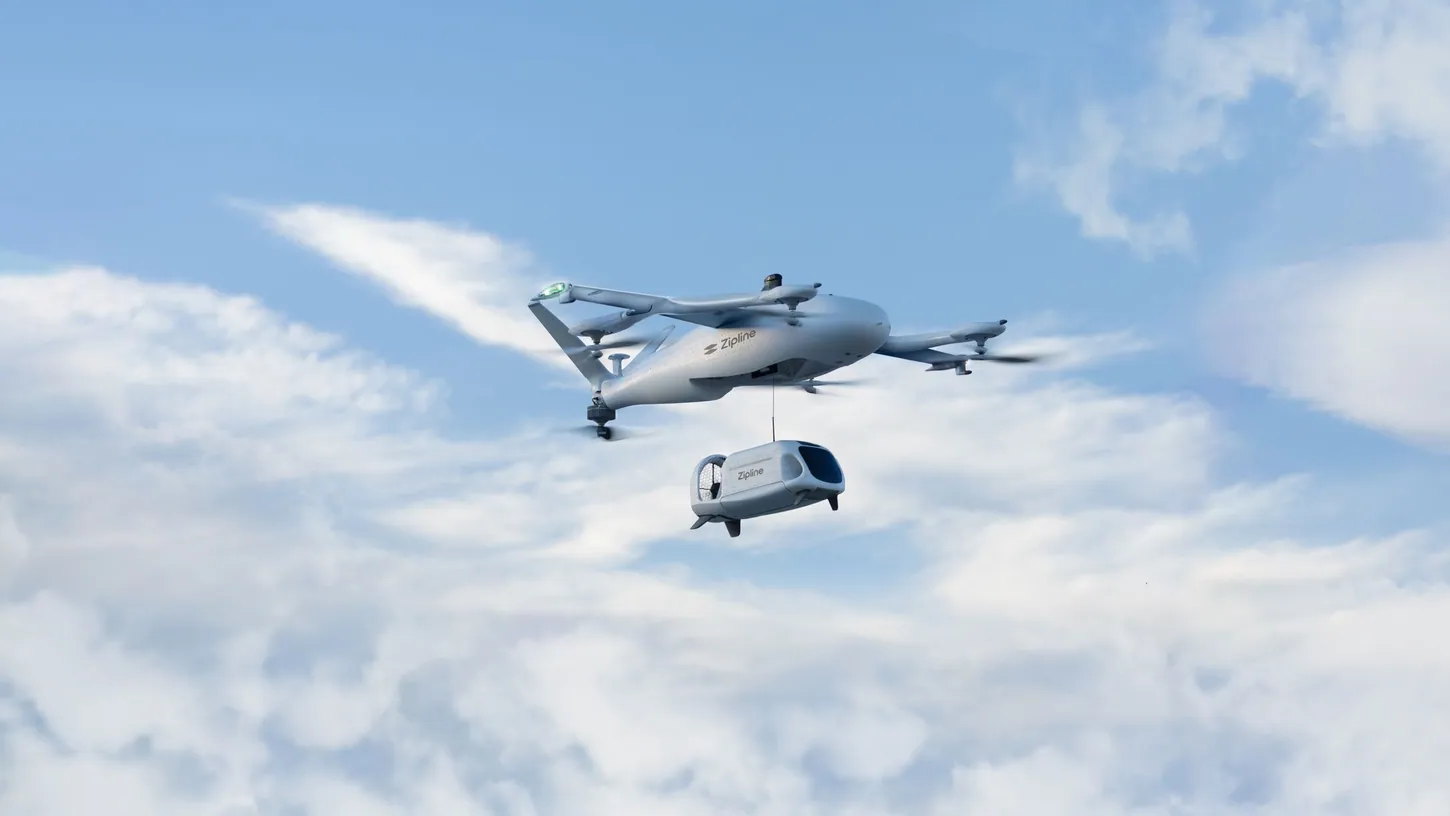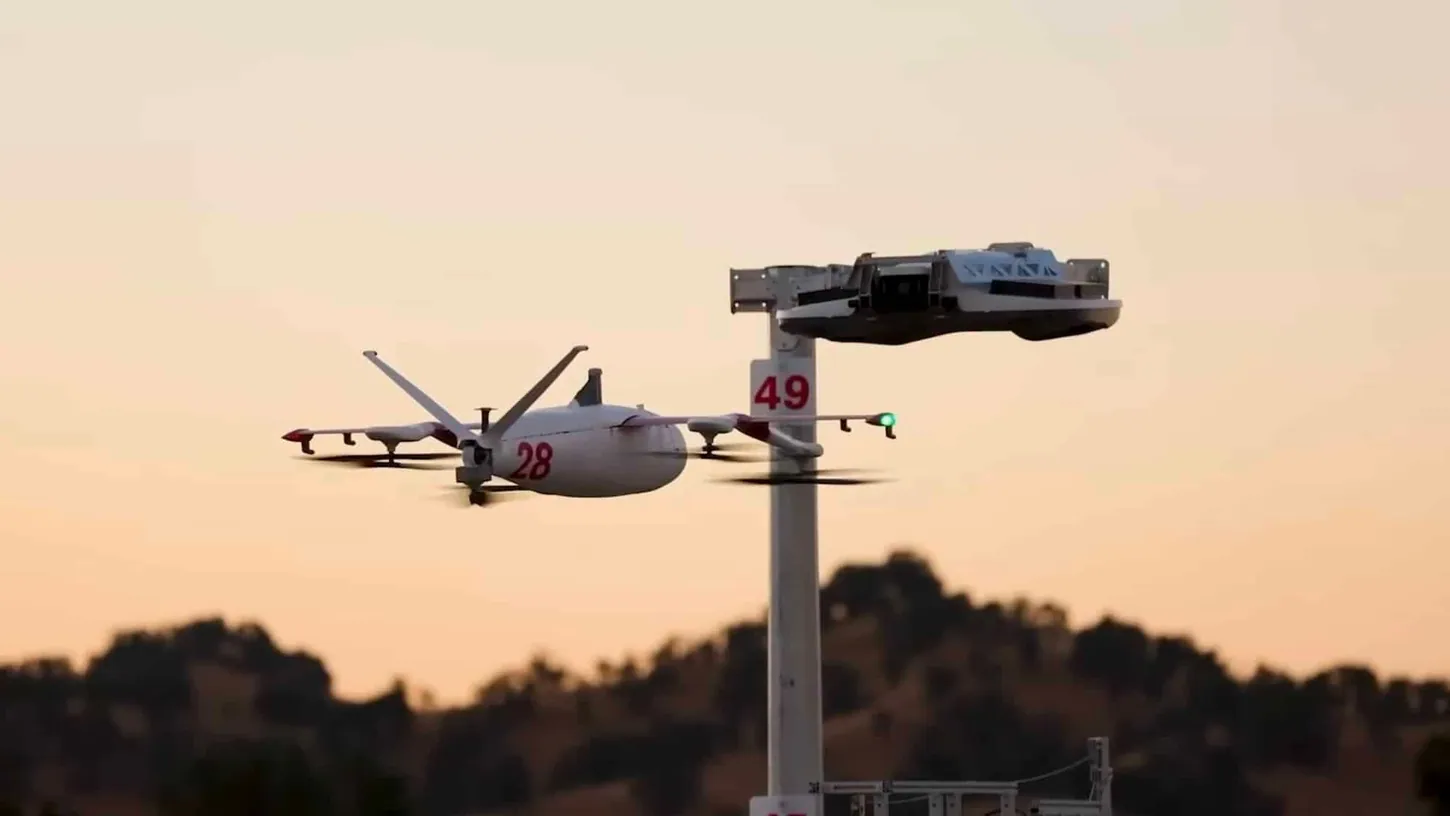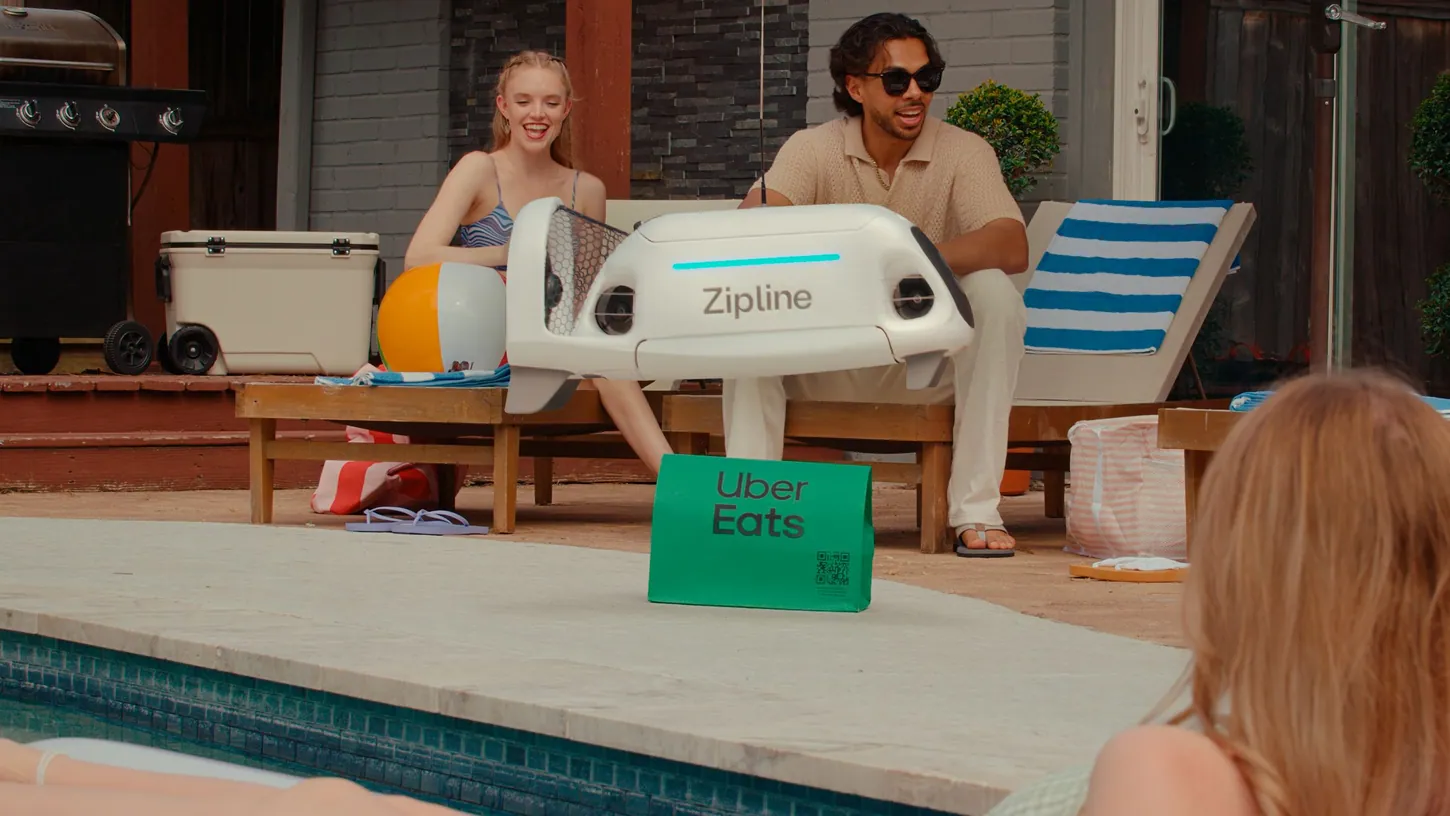
Uber Eats customers in Spring, Texas, a suburb north of Houston, can now order food by drone. The service started on Tuesday, November 17, with Zipline aircraft flying orders of up to 8 pounds (3.6 kilograms) from 8 a.m. to 10 p.m. It is the first launch under the partnership the two companies announced in August, and Dallas is next.
Customers tap a “Drone” icon in the app to see participating restaurants, including Jersey Mike’s, Zaxby’s, Urban Bird and Abu Omar Halal. Uber says a drone order carries no extra fee and no tip prompt.
Spring already has drones overhead. On November 13 a Bridgestone resident told Chron that about a dozen delivery drones cross her home every day and that the noise is driving her crazy. Chron blamed Amazon, and DroneXL found that the public record puts Wing, which flies Walmart orders from two Spring Supercenters, within range of her street. Zipline’s launch post pitches its own drones as the quiet ones.
Zipline Says It Delivers From 330 Feet While Rivals Hover at 32
Zipline’s launch post says its deliveries happen from 330 feet (101 meters), with the pod lowered on a tether, and puts the average drone delivery at 32 feet (10 meters). Zipline does not name the companies behind that average or say how it calculated it.
The 330-foot figure matches the cruise altitude in the FAA’s draft review of Zipline’s Texas operations. Wing, the operator already flying over Spring, hovers at about 23 feet (7 meters) and lowers orders on a tether. Amazon’s MK30 descends to about 13 feet (4 meters) and drops the box. Zipline’s post goes further than an altitude comparison and says “it’s not uncommon to see drones from other companies hovering outside people’s windows.”
Zipline also says its sound-optimized flight profile cuts peak loudness by 24% and makes every flight 53 seconds faster. It released those figures on October 27, and by Zipline’s own wording they are based on internal modeling, not ground microphones. Zipline says takeoff is the noisiest part of a flight, which is why it told Katy’s council last week it keeps chargers on commercial land. Neither its launch post nor its April Houston announcement says where the chargers serving Spring are. The FAA’s Texas draft, also a model, concludes Zipline’s flights would not produce meaningful noise anywhere in its study areas.
The FAA’s Houston Review for Zipline Is Still a Draft
The FAA’s drone environmental review page, which DroneXL checked on November 18, still lists Zipline’s five-metro Texas assessment only as a draft. That document covers Houston with up to 65 charging sites and 65,000 deliveries a day. Public comments closed October 11.
The draft environmental assessment would amend Zipline’s Part 135 operating authority to cover Houston, San Antonio, Austin, Amarillo and El Paso, and DroneXL broke down its numbers in September. Zipline was already flying in the Houston area before it was published. It opened an early-access program there in April, and on September 4 one of its aircraft came down under its parachute on Highway 6 in Cypress. Zipline has held a Part 135 air carrier certificate since 2022. As of November 18 it has not published which FAA approval covers its current Houston flights, and the FAA’s review page shows no Houston-specific Zipline review before the draft.
The national rule is stuck too. Part 108, the FAA’s rule to make beyond visual line of sight (BVLOS) flight routine, has been in White House review since July 10, which is 131 days as of Wednesday. The Federal Register had no final BVLOS rule on November 18. Zipline is filing city by city in the meantime: the FAA posted a draft review for its operations in several Arizona metros on November 4.
Zipline Puts Its Dallas Count at 1 Million Deliveries
Zipline says it has now completed 1 million drone deliveries in the Dallas-Fort Worth area alone, the region where Uber Eats drone orders start next. The company’s goal with Uber is 1 million deliveries a day by the end of 2029.
The Dallas figure is Zipline’s own, published in the launch post without a breakdown. In its April 29 Houston announcement, Zipline described its Dallas-Fort Worth total as hundreds of thousands of deliveries over the previous year. In August Zipline put its worldwide rate at one delivery every 20 seconds, about 4,320 a day, which is roughly a 230th of the 2029 target. Uber’s money is already in: it joined the $1.5 billion round Zipline closed this month, alongside Walmart’s order for 300 more sites. Neither company has disclosed the size of Uber’s stake. Aaron Emrich, Uber’s global head of autonomous delivery, said in Zipline’s post that Houston is “just the start.”
DroneXL’s Take
Zipline is right to pick the altitude fight, and I’d take a pod lowered from 330 feet over a drone parked at window height every time. But the company is now selling quiet in a suburb where a resident went to the press about other companies’ drones four days before launch, and its headline noise reductions come from a model, not a microphone. Spring is unincorporated Harris County, and a 2017 Texas law bars local governments from regulating drone operations, so residents there have no council to complain to. That makes measured data the only accountability they get. If Zipline wants Spring to believe its drones are the quiet ones, it should put a microphone under its own flight path in Spring and publish what it records, before Dallas, and before the FAA signs a Houston decision that allows 65,000 deliveries a day.
Sources: Zipline, TechCrunch, Engadget, FAA draft environmental assessment, Zipline Texas
DroneXL uses automated tools to support research and source retrieval. All reporting and editorial perspectives are by Haye Kesteloo. Read our editorial standards.